
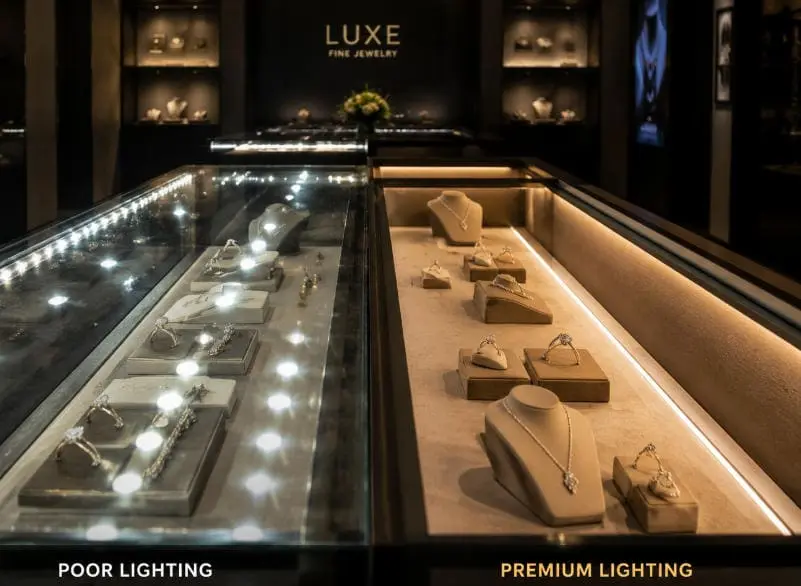
Visible LED dots behind glass ruin a premium window display instantly, I learned this the hard way during our first luxury retail project in Germany.
COB LED strip lights deliver seamless illumination, superior color consistency, efficient thermal management, and flexible design options that eliminate visible hotspots and dot patterns, making them the ideal lighting solution for professional window displays that demand flawless product visibility and visual merchandising impact.
Below, I will walk you through the specific advantages of COB technology for window display applications. Each section addresses a real question we hear from contractors, lighting designers, and distributors every week.
How can I achieve a seamless, dot-free glow for my luxury window displays?
A distributor in Melbourne once sent us photos of a jewelry store refit—the SMD strips behind the glass created a dotted reflection that cheapened the entire display overnight.
COB LED strip lights achieve a seamless, dot-free glow by densely packing LED chips beneath a single phosphor layer, producing a continuous light line with no visible individual diodes—perfect for luxury window displays where clean, uniform illumination defines the brand experience.

Why Dots Are the Enemy of Premium Displays
Window glass acts like a mirror under certain angles. When standard SMD LED technology 1 sits behind that glass, each individual LED chip becomes a bright point. These dots reflect and multiply across the surface. For luxury brands—think watches, handbags, cosmetics—this is a dealbreaker. The product should be the star, not the light source.
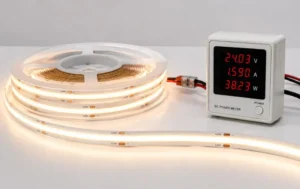
COB technology solves this by embedding hundreds of tiny chips per meter directly onto the circuit board, then covering them with a uniform phosphor coating 2. The result is a smooth, continuous ribbon of light. No dots. No hot spots. Just even, diffused illumination across the entire length.
The Visual Difference: COB vs. SMD in Window Applications
| Feature | SMD LED Strip | COB LED Strip |
|---|---|---|
| Light appearance | Individual dots visible | Continuous, dot-free line |
| Viewing angle | ~120 degrees | ~170 degrees |
| Reflection on glass | Dotted pattern | Smooth, even wash |
| Need for diffuser/profile | Usually required | Often eliminated |
| Ideal use case | General task lighting | Premium display, visual merchandising |
When we prototype samples for retail clients, we always ship both SMD and COB side by side. The difference is obvious within seconds. The COB strip looks like a solid bar of light. The SMD strip looks like a string of pearls. For high-end window displays, there is no contest.
Hidden Installation: The Light You Do Not See
The best display lighting is invisible. You see the product glowing, but you cannot find the light source. COB strips excel here because their slim profile and seamless output let them hide inside narrow channels, behind frames, or under shelf lips. Without the dotted pattern, there is no telltale LED signature visible to the passerby. To understand why this works so well, it helps to know why COB LED strip lights offer more continuous lighting than traditional LED strips.
In our experience shipping to contractors in Australia and Germany, this "hidden source" effect is the number-one reason specifiers choose COB for window display projects. One lighting designer told us: "I want the mannequin to look like it is glowing from within." COB makes that possible without expensive diffuser profiles, which also saves budget and simplifies installation.
Can I get custom-cut COB LED strips to fit the tight corners of my retail cabinets?
Last quarter, a project estimator from a German electrical contractor asked us to supply strips for a curved jewelry cabinet with 14 different segment lengths—none of them standard.
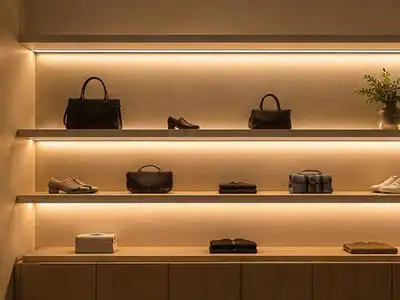
Yes, COB LED strips can be custom-cut at frequent intervals—some as small as every 25 mm—and their inherent flexibility allows them to bend around tight corners and irregular cabinet shapes without breaking the continuous light line or requiring rigid connectors.
Cutting Flexibility: More Points, More Freedom
Standard SMD strips typically allow cuts every 50–100 mm. COB strips, because of their dense chip arrangement, often offer cut points every 25–50 mm depending on the model and voltage. This means you can trim a strip to almost any length with minimal waste.
For retail cabinets with odd dimensions—say, a 237 mm shelf or a 412 mm recessed channel—this precision matters. Our engineering team regularly works with buyers to confirm exact cut lengths before production, so every piece arrives ready to install.
Bending Without Breaking the Light
COB strips are built on a flexible PCB 3. They bend smoothly around curves and corners. Because the light output is continuous, a gentle bend does not create a dark gap the way it would with spaced-out SMD chips. This is critical for curved display cases, L-shaped window frames, and serpentine shelving layouts.
| Cabinet Challenge | SMD Strip Solution | COB Strip Solution |
|---|---|---|
| Tight 90° inside corner | Rigid connector + gap in light | Flexible bend, continuous glow |
| Short odd-length shelf | Excess strip trimmed, waste created | Cut at 25 mm intervals, minimal waste |
| Curved display case | Multiple straight segments joined | Single strip follows the curve |
| Multiple varied lengths | Complex ordering, multiple SKUs | Custom-cut to spec in production |
Our Approach to Custom Orders
When a distributor or contractor sends us a cabinet drawing, we break it down segment by segment. We confirm the cut length, the color temperature, the IP rating, and the wattage per meter. Then we produce each segment labeled and packaged for easy on-site matching. This one-stop approach eliminates the multi-vendor coordination headache that so many contractors face.
Low MOQ capability also helps. A lighting designer testing a concept for a single storefront prototype does not need to order a full production run. We can handle small trial quantities with rapid prototyping so you can validate the design before committing to volume.
The flexible design of COB strips means fewer accessories, fewer joints, and cleaner results in tight spaces. That translates directly to faster installation and lower labor costs on site.
How do I ensure perfect color consistency across all my global storefront installations?
A purchasing manager we work with in Australia once rejected an entire batch of strips from another supplier because the color temperature shifted noticeably between rolls—half the storefronts looked warm, the other half looked clinical.
Perfect color consistency across global storefront installations requires strict LED binning during production, verified high CRI ratings of 90 or above, and batch-controlled manufacturing processes that guarantee uniform color temperature and brightness from the first meter to the last across every shipment.
Why Color Variance Happens—and Why It Matters
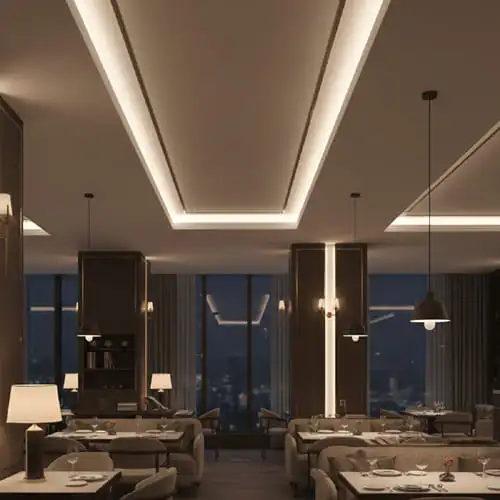
LED chips are not identical. Even chips from the same wafer can vary slightly in color temperature and brightness. When manufacturers do not sort and group these chips carefully—a process called binning 4—you get visible differences between strips. In a single window, this might mean one section looks 3000K warm white while another looks 3500K neutral. Across a chain of 20 storefronts, the inconsistency becomes a brand disaster.
For visual merchandising, color accuracy is non-negotiable. A fashion retailer needs every garment to look the same shade under light, whether the store is in Sydney or Stuttgart.
How We Control Color at the Production Level
Our quality control process addresses color consistency at three stages:
- Incoming chip binning. We specify tight binning tolerances with our chip suppliers. Chips that fall outside the agreed color temperature range and brightness bracket are not used.
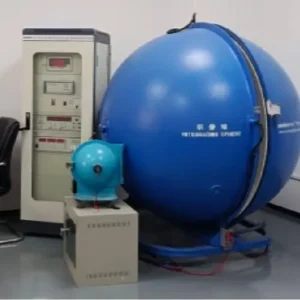
- In-line testing during assembly. Every reel is tested on a calibrated integrating sphere to measure actual color temperature, CRI, and lumen output before packaging.
- Batch documentation. Each shipment includes test data so the buyer can verify that all strips match. This is especially important for multi-site rollouts where strips from different production dates must look identical.
Color Temperature and CRI: What to Specify
| Parameter | Recommended Spec for Window Displays | Why It Matters |
|---|---|---|
| Color temperature | 3000K–4000K (warm to neutral white) | Flatters most products; avoids harsh blue tones |
| CRI (Color Rendering Index 5) | ≥90 (ideally ≥95) | Ensures true-to-life color of merchandise |
| MacAdam ellipse (SDCM) | ≤3 step | Human eye cannot detect color difference within 3 steps |
| Binning tolerance | ±100K or tighter | Prevents visible warm/cool shifts between strips |
High CRI is especially important for displays featuring clothing, food, jewelry, or cosmetics. A CRI of 80 might look "fine" in a warehouse, but under the scrutiny of a luxury window, it can make reds look dull and skin tones look flat. Understanding how color rendering differs between CRI 90 and CRI 95 COB LED strip lights can help you choose the right specification for your application.
Scaling Consistency Across Countries
When we ship to both Germany and Australia in the same quarter, we ensure that all strips for a given project come from the same production batch. If the order is too large for a single batch, we cross-check the test data between batches to confirm they fall within the agreed SDCM tolerance. This level of detail is what separates project-grade LED strip lighting from commodity product.
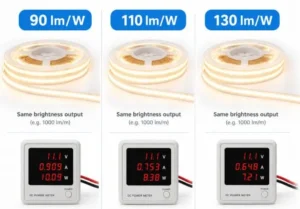
Energy efficiency also stays consistent when binning is tight. Strips with matched chips draw the same wattage and produce the same lumens per meter, so the electrical load calculations the contractor makes at the design stage hold true on site.
Will COB technology help me reduce the heat and maintenance issues in my window displays?
During a troubleshooting call last year, a contractor described a recurring problem: enclosed window frames in a retail chain were cooking their LED strips, causing premature yellowing and flickering within months.
Yes, COB technology significantly reduces heat and maintenance issues because its chip-on-board design bonds LEDs directly to the PCB for superior thermal management, resulting in lower junction temperatures, longer lifespan, and fewer replacements—even inside sealed or enclosed window display frames.
The Heat Problem in Enclosed Windows
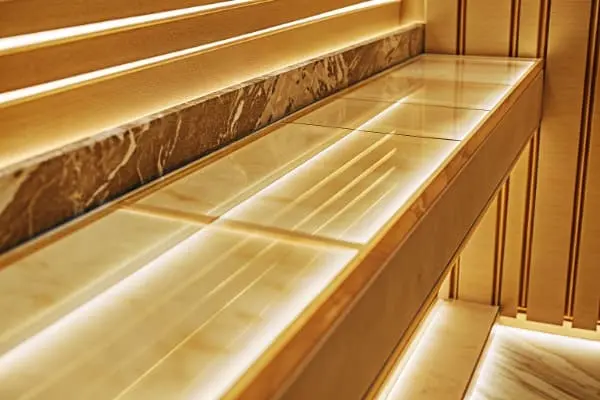
Window displays are often sealed environments. The glass traps heat. Air circulation is minimal. Standard strips with poor thermal management 6 overheat, which degrades the phosphor coating, shifts color temperature, and eventually kills the LEDs. This means frequent replacements, service calls, and unhappy store managers.
COB strips handle this better than traditional SMD LED technology for a simple reason: the chips are bonded directly to the copper traces on the PCB. There is no individual package or casing around each chip acting as a thermal bottleneck. Heat flows straight from the chip junction to the board and then to the aluminum backing or heat sink.
Thermal Performance Comparison
| Metric | Standard SMD Strip | COB LED Strip |
|---|---|---|
| Thermal path | Chip → package → solder → PCB | Chip → directly bonded to PCB |
| Typical junction temp (enclosed) | High — risk of thermal runaway | Lower — efficient heat spread |
| Lumen depreciation at 6,000 hrs | Noticeable in enclosed spaces | Minimal with proper installation |
| Maintenance frequency | Every 12–18 months in sealed frames | Typically 3+ years before attention needed |
| Hotspot risk | Higher due to spacing between chips | Lower due to uniform heat distribution |
Practical Steps to Maximize Longevity
Even though COB strips run cooler, enclosed window displays still benefit from smart installation practices:
- Use aluminum channel mounting. The channel acts as a passive heat sink, pulling heat away from the strip. This is inexpensive insurance.
- Choose the right wattage. Running a 15W/m strip in a sealed space with no ventilation is risky regardless of technology. A 5W/m or 9W/m option may deliver enough brightness with a much more comfortable thermal margin.
- Ensure adequate power supply sizing. An undersized driver forces the strip to work harder, generating unnecessary heat.
The Maintenance ROI
Fewer replacements mean lower total cost of ownership 7. A single service call to replace failed strips in a high-street window can cost more than the strips themselves when you factor in labor, scaffolding, and store downtime. COB technology stretches the interval between those calls significantly.
For retail display solutions that run 12–18 hours a day, 365 days a year, this reliability is not a luxury. It is a basic requirement. Our production line tests strips under continuous burn conditions to simulate real-world retail use. The goal is to catch thermal issues before the product ever ships, not after it is glued inside someone's window frame.
Product visibility depends on consistent light. When strips degrade unevenly, one section dims while another stays bright. The display looks patchy. COB's even thermal spread keeps the entire strip degrading at the same slow rate, so the visual effect remains uniform throughout its service life.
Conclusion
COB LED strip lights 8 solve the core challenges of window display lighting—dot-free seamless illumination, precise customization, guaranteed color consistency, and reliable thermal management—making them the smartest investment for any retail display project.
Footnotes
- Provides a comprehensive guide to Surface-Mount Device LED technology. ↩︎
- Replaced HTTP 404 with a detailed explanation of LED phosphors and their function from a specialized LED component manufacturer. ↩︎
- Explains the design, materials, and applications of flexible printed circuit boards. ↩︎
- Replaced HTTP 404 with a clear explanation of LED binning from a lighting product supplier. ↩︎
- Defines the quantitative measure of a light source's ability to reveal colors. ↩︎
- Explains the importance of controlling heat in electronic systems. ↩︎
- Explains the comprehensive financial estimate of a product's lifecycle cost. ↩︎
- Explains Chip-on-Board technology and its advantages in LED lighting. ↩︎

 English
 Spanish
 German
 Russian
 Arabic
 French
 Portuguese