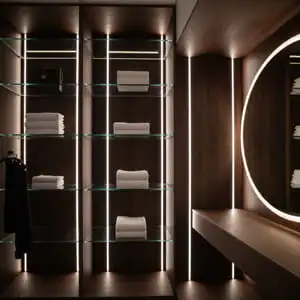
Retail stores lose sales every day because their lighting makes merchandise look dull, uneven, or cheap and most store owners never realize the problem until a competitor's shop looks noticeably better.
The top applications for COB LED strip lights in retail lighting include product display shelves, jewelry and cosmetic counters, clothing endcaps, under-cabinet accent lighting, cove and perimeter architectural lighting, signage illumination, and wayfinding — all benefiting from dot-free, high-CRI, uniform light output that elevates visual merchandising.
Below, I break down exactly how COB strips solve the most common retail lighting challenges,from achieving seamless illumination in luxury display cases to sourcing certified, project-grade strips for competitive bids.
How can I achieve dot-free lighting in my luxury retail display cases with COB LED strips?
A jewelry client in Germany once sent us photos of their display cases lit with traditional SMD strips, every single LED chip reflected off the glass shelves like a string of tiny flashlights, and it cheapened the entire presentation overnight continuous phosphor layer 1.
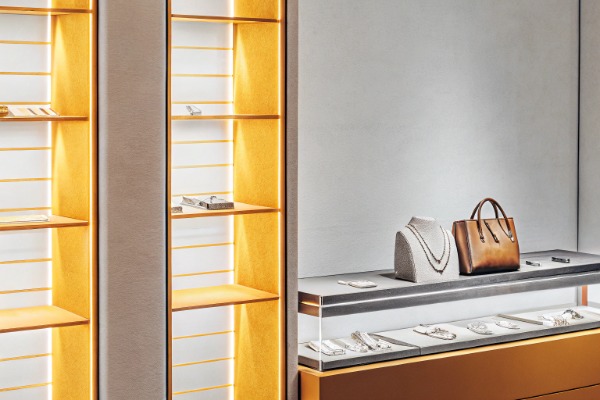
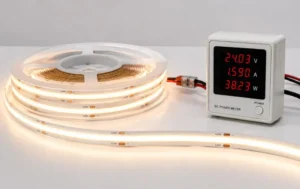
To achieve dot-free lighting in luxury retail display cases, use COB LED strips that encapsulate densely packed diodes under a continuous phosphor layer, producing a smooth, uniform light line with a 180° diffusion angle, eliminating visible hotspots and chip reflections on glass, mirrors, and polished surfaces.
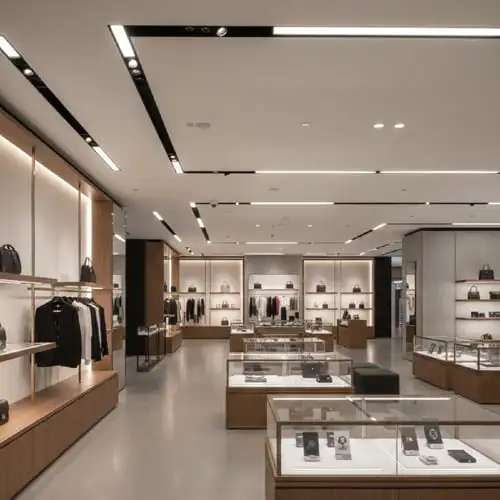
Why Dot-Free Matters More Than You Think
In retail, the lighting itself becomes part of the product presentation LM-80 lumen maintenance data 2. When customers lean in to examine a diamond ring or a high-end watch, they should see the product — not a row of individual LED dots reflected in the glass. Traditional SMD strips space their diodes several millimeters apart, and each chip creates a distinct point of light. On matte surfaces this is less noticeable. But on polished countertops, glass shelving, and mirror-backed cabinets, those dots multiply and distract.
COB technology solves this by placing hundreds of tiny LED chips per meter directly onto the flexible PCB, then covering them with a single phosphor coating. The result is one continuous line of light with no gaps and no visible chips. It looks more like a fluorescent tube — but thinner, dimmable, and far more flexible.
How We Achieve Seamless Results in Display Cases
When we work with contractors on luxury retail fitouts, the strip placement matters just as much as the strip itself. Here is a quick comparison of common installation methods:
| Installation Method | Best For | Dot-Free Result |
|---|---|---|
| Recessed aluminum channel with frosted diffuser | Glass-shelf display cases | Excellent — diffuser adds extra uniformity |
| Direct adhesive mount (3M™ backing) | Under-shelf or inside cabinet lip | Very good — keep strip hidden from direct view |
| Surface-mount aluminum profile | Perimeter cove lighting | Excellent — clean architectural lines |
| Silicone extrusion (IP65+) | Wet or outdoor display windows | Good — silicone slightly softens output |
For luxury display cases specifically, I almost always recommend a slim recessed aluminum channel. The channel acts as a heatsink, extends the strip's lifespan, and the frosted cover adds a final layer of diffusion. Even though COB strips are already dot-free on their own, the channel makes the light source virtually invisible.
Bending and Flexibility for Curved Cases
Many modern jewelry and cosmetics displays feature curved glass or rounded shelving. COB strips on a flexible PCB can bend smoothly around gentle curves without breaking solder connections. For tighter radii, we cut and reconnect with small solderless connectors. This flexibility is something rigid light bars simply cannot match, and it keeps the dot-free aesthetic intact even on non-linear surfaces.
The bottom line: if your display case has any reflective surface at all, COB is not optional — it is the standard that luxury retail now expects.
Why should I prioritize high-CRI COB strips to ensure my merchandise colors stay consistent across my entire store?
During a recent project review, a clothing retailer in Australia told us their customers kept returning items bought in-store because the colors looked different under home lighting, the root cause traced back to low-CRI shelf lighting that distorted fabric hues under fluorescent-like spectrums.
Prioritize high-CRI COB strips (95+ CRI, ideally 98 CRI) because they reproduce the full visible spectrum faithfully, ensuring reds stay rich, skin tones look natural, and fabric or cosmetic colors appear identical under your store lights and in daylight, directly reducing returns and increasing buyer confidence.
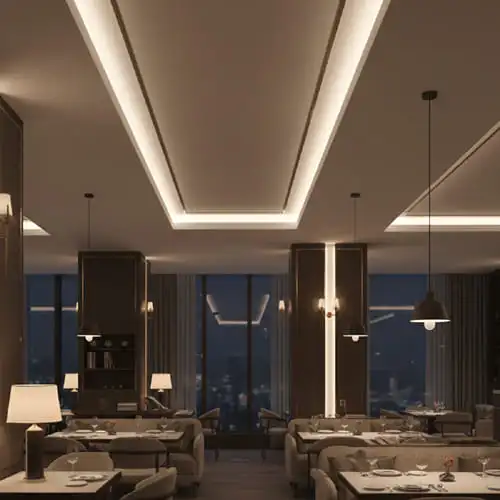
What CRI Actually Means for Your Bottom Line
CRI — Color Rendering Index 3 — measures how accurately a light source reveals the true colors of objects compared to natural sunlight (CRI 100). A strip rated at CRI 80 will make reds look washed out, blues appear grayish, and skin tones seem sallow. At CRI 95+, those same products look vivid, natural, and premium.
In retail, this directly affects purchasing decisions. Customers trust what they see. If a lipstick shade looks slightly off under your counter lights, or a navy blazer reads as black, the customer hesitates. Worse, they buy and then return. High-CRI lighting is not a luxury, it is a sales tool.
CRI Comparison Across LED Technologies
| LED Technology | Typical CRI Range | Best Retail Use | Color Accuracy |
|---|---|---|---|
| Standard SMD (2835/5050) | 70–85 | Budget general lighting | Moderate, noticeable color shift |
| Mid-range SMD (high-CRI bin) | 85–92 | General retail floor lighting | Good — acceptable for most products |
| COB LED strip (standard) | 90–95 | Shelf lighting, accent lighting | Very good — minimal color shift |
| COB LED strip (premium bin) | 95–98 | Jewelry, cosmetics, fresh produce | Excellent — near-sunlight accuracy |
Consistency Across Your Entire Store
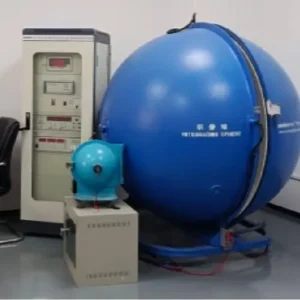
One area where our production process makes a real difference is batch-to-batch color consistency. Even if you specify CRI 95+, two batches from a careless supplier can produce noticeably different white tones when installed side by side. We bin-match every reel during production, testing color temperature (CCT) and CRI on calibrated integrating spheres. The tolerance we hold is typically within a 3-step MacAdam ellipse 4, which means the human eye cannot distinguish the difference between two strips mounted next to each other.
This matters enormously in retail. Imagine a long run of shelf lighting across an entire cosmetics wall — if the left side reads slightly warm and the right side reads slightly cool, the brand's carefully curated palette falls apart. Consistent, high-CRI COB strips eliminate this problem. Understanding how color rendering differs between CRI 90 and CRI 95 can help you make the right specification choice for your particular merchandise category.
Specific Retail Scenarios Where CRI Matters Most
- Fresh produce displays: High CRI makes fruits and vegetables look ripe, moist, and appetizing. Low CRI makes greens look dull and reds look brownish.
- Jewelry counters: Diamonds and gemstones need accurate spectral rendering to show their true fire and brilliance.
- Cosmetics and skincare: Customers test products in-store under your lights. If the color shifts at home, trust erodes.
- Clothing and footwear: Fabric dyes and leather finishes are formulated under D65 (daylight) standards. High-CRI product display lighting reproduces those conditions.
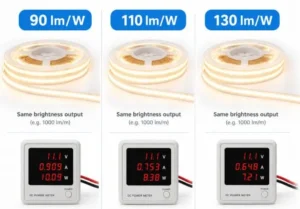
Energy efficient lighting does not have to sacrifice color quality. Premium COB strips deliver 100–145 lumens per watt while maintaining CRI above 95. You get accurate colors and lower electricity bills, both matter for commercial lighting solutions with long operating hours.
Can I customize the dimensions of COB LED strips to fit my specific retail shelving and cabinetry requirements?
One of the most common questions we get from contractors comes down to a simple frustration: standard 5-meter reels never match real-world shelf lengths, and leftover cut-offs pile up into wasted material and wasted budget.
Yes — COB LED strips can be customized in width, length, LED density, PCB thickness, and cut-point intervals to match exact retail shelving and cabinetry dimensions, reducing waste and ensuring seamless fit for under-shelf lighting, toe-kick runs, and curved cabinet profiles.
Standard vs. Custom Dimensions
Off-the-shelf COB strips typically come in standard configurations. But retail environments are never standard. A 437 mm shelf compartment, a 2.3-meter display cabinet, a curved checkout counter — these all demand precise lengths. Here is what can be customized:
| Parameter | Standard Range | Custom Capability |
|---|---|---|
| Strip width | 8 mm, 10 mm | 4 mm to 12 mm (for narrow or wide channels) |
| Cut interval | Every 25–50 mm | As small as 16.7 mm for fine-tuned lengths |
| LED density | 320, 480 LEDs/m | Up to 784 LEDs/m for ultra-uniform output |
| PCB thickness | 0.2 mm (FPCB) | 0.3 mm for stiffer installations; 0.12 mm for extreme flexibility |
| Pre-cut lengths | 5 m reels | Custom pre-cut to any specified length with pre-soldered leads |
| CCT options | 2700K, 3000K, 4000K, 6500K | Any CCT from 1800K to 6500K, including tunable white |
How the Customization Process Works
When a distributor or contractor sends us a shelving layout, our engineering team reviews the dimensions and recommends the optimal strip configuration. We consider:
- Physical fit — width of the mounting channel, depth of the recess, and bend radius of any curves.
- Light output needs — how bright the shelf needs to be, which determines LED density and drive current.
- Electrical planning — voltage drop 5 over long runs, number of power injection points, and driver sizing.
- Connector type — solderless snap connectors for tool-free installation, or pre-soldered wires for permanent joints.
For a recent retail shelving project, we pre-cut 247 strips to seven different lengths, each with factory-soldered leads and labeled for its specific shelf position. The contractor's installation time dropped dramatically because there was zero on-site cutting and no soldering. This kind of project-based supply is where flexible LED strips deliver maximum value — not just in physical flexibility, but in how they adapt to your exact project scope.
Narrow Strips for Slim Profiles
Many modern retail fixtures use slim aluminum profiles only 6 mm or 7 mm wide. A standard 10 mm COB strip will not fit. We produce 4 mm and 5 mm wide COB strips specifically for these applications. The narrower PCB still delivers smooth, dot-free illumination, it simply uses a single row of chips instead of a staggered layout. This makes architectural lighting details possible even in the thinnest shelf lips and cabinet edges.
Customization is not a luxury add-on — in retail fitouts, it is often the only way to achieve the clean, seamless look that visual merchandising 6 demands.
How do I source project-grade COB LED strips that meet the strict certification standards for my retail lighting bids?
A lighting specifier we work with once lost a six-figure tender because the strip supplier's CE documentation turned out to be self-declared rather than third-party tested — the project owner's compliance team rejected the entire submittal package two days before the deadline.
To source project-grade COB LED strips for retail bids, verify that suppliers provide third-party certification reports (CE, SAA, UL, or RCM as required by your market), IEC/EN test documentation, and batch-traceable quality records — not just self-declared labels and confirm the factory holds ISO 9001 or equivalent QMS credentials.
Why Certification Is Non-Negotiable in Retail Projects
Retail lighting installations must comply with local electrical codes and building regulations. In Australia, that means RCM (Regulatory Compliance Mark) and SAA approval. In Germany and the EU, CE marking with proper EN 61347 and EN 62031 test reports is mandatory. In the United States, UL or ETL listing is typically required.
For contractors and distributors bidding on commercial projects, submitting products without valid certification is a deal-breaker. It does not matter how good the light quality is, **if the paperwork fails, the bid fails.
What to Look for in a Supplier's Documentation
Not all certification claims are equal. Here is a practical checklist:
| Document | What It Proves | Red Flag If Missing |
|---|---|---|
| Third-party test report (e.g., TÜV, SGS, Intertek) | Product tested to specific standards | Supplier may be self-certifying |
| Certificate of compliance (CE, SAA, UL) | Formal approval for target market | Product may not legally be installed |
| ISO 9001 certificate 7 (factory level) | Quality management system in place | Inconsistent production quality likely |
| IEC 62717 8 / LM-80 lumen maintenance data | LED lifespan and depreciation verified | No proof of claimed lifespan |
| Bill of Materials (BOM) traceability | Components match what was tested | Supplier may substitute cheaper parts post-certification |
Our Approach to Project-Grade Supply
We maintain active CE and SAA documentation for our core COB strip product lines, and we update test reports whenever we change LED chip suppliers or modify PCB layouts. Every production batch is traceable back to its raw material lot numbers. When a distributor needs to submit a bid package, we provide a complete technical file: datasheets, photometric data (IES files when requested), wiring diagrams, installation guides, and the corresponding certification documents.
For private-label customers, we can include their branding on packaging and documentation while keeping the underlying certification valid — as long as the product specification remains unchanged. This gives distributors and contractors the professional appearance they need without the cost of running their own certification programs.
Avoiding Common Sourcing Pitfalls
Many buyers source from online platforms and receive strips with printed "CE" logos that have no traceable test report behind them. When the project owner or building inspector asks for proof, there is nothing to show. To avoid this:
- Always request the actual test report number and verify it with the issuing lab.
- Ask for a sample from the same production line that was certified — not a "marketing sample."
- Confirm that the supplier has not changed LED chips, drivers, or PCB materials since the certification date.
- For ongoing projects, request batch-level QC reports with color consistency and electrical safety data.
Retail ambiance matters, but so does compliance. The best commercial lighting solutions deliver both beautiful light and bulletproof documentation.
Conclusion
COB LED strip lights 9 solve the most pressing retail lighting challenges — from dot-free display cases to color-accurate shelf lighting and code-compliant project supply — making them the clear choice for any retailer serious about visual merchandising and brand image.
Footnotes
- Explains the function of the phosphor coating in COB LEDs. ↩︎
- Replaced with an authoritative guide to the LM-80 standard from a lighting company. ↩︎
- Defines CRI and its importance in accurately displaying colors. ↩︎
- Explains MacAdam ellipses for measuring LED color consistency. ↩︎
- Explains voltage drop in LED circuits and its effects. ↩︎
- Provides a comprehensive definition and purpose of visual merchandising. ↩︎
- Provides official information about ISO 9001 quality management systems. ↩︎
- Details the international standard for performance requirements of LED modules. ↩︎
- Explains the technology and characteristics of COB LEDs. ↩︎

 English
 Spanish
 German
 Russian
 Arabic
 French
 Portuguese