
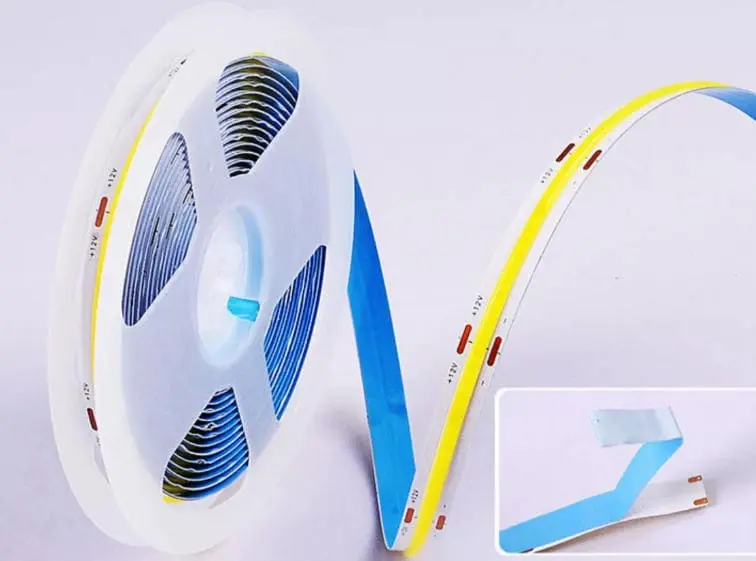
Last month, a lighting designer asked us to ship two sample reels — one CRI 90 COB strip and one CRI 95 — so she could test them side by side on a hospitality fitout.
CRI 95 COB LED strip lights render colors — especially reds, skin tones, and natural materials — more faithfully than CRI 90 strips. The difference is subtle in general spaces but clearly visible in color-critical environments like retail displays, art galleries, and premium hospitality projects where color accuracy directly affects perceived quality.
The gap between these two CRI tiers is not dramatic, but it is real Fidelity Index (Rf) 1. Below, I break down exactly where it matters, where it does not, and how to make the right call for your next project.
Can I see a noticeable difference between CRI 90 and CRI 95 in my high-end interior projects?
A distributor we work with in Germany once told me his electrician installed CRI 90 strips in a boutique clothing store, and the owner complained that the red dresses looked "washed out." That single callback taught us both a lesson about R9 value 2 and where those five CRI points actually show up.
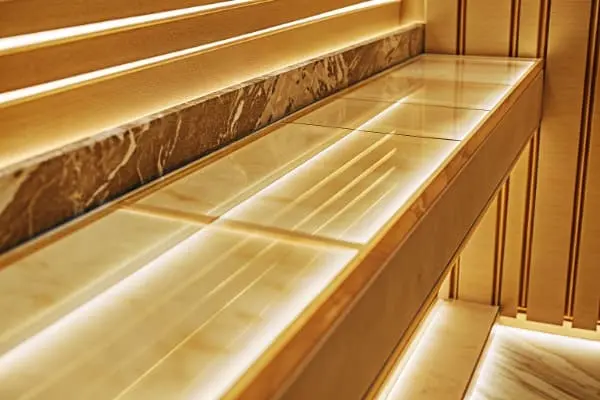
Yes, you can see a noticeable difference in high-end interiors — but mainly on saturated reds, warm skin tones, rich wood grains, and fine art. The improvement comes not just from the overall Ra number but from the R9 red-rendering score, which is typically much higher in genuine CRI 95 strips.
What CRI Actually Measures
CRI, or Color Rendering Index 3, rates how natural colors look under a given light source compared to a reference illuminant (daylight or incandescent, depending on the correlated color temperature 4). The scale goes to 100. A score of 90 is already considered excellent. A score of 95 is near the top of what commercial LED phosphor technology can achieve today Gamut Index (Rg) 5.
But here is the catch. The general CRI (Ra) is an average of the first eight test color samples (R1–R8). It does not weight the deep saturated red sample, R9, very heavily. Two strips can both claim CRI 90 and have wildly different R9 values — one might be R9 50, the other R9 30. That matters because red is everywhere in interiors: skin, brick, hardwood, upholstery, food.
Where Five CRI Points Actually Show Up
In my experience shipping project-grade LED strips to Australia and Germany, the feedback pattern is consistent. General corridors and storage areas? Nobody notices. But the moment you light a display wall, a vanity mirror, or a restaurant dining table, CRI 95 earns its keep.
| Scenario | CRI 90 Result | CRI 95 Result |
|---|---|---|
| White-painted office walls | Colors look clean and natural | Almost identical to CRI 90 |
| Red oak hardwood flooring | Slight grey cast under some strips | Warm, rich grain detail preserved |
| Skin tones under vanity lighting | Good, minor flatness in warm tones | More natural blush and warmth |
| Fresh food display (butcher, bakery) | Acceptable | Reds and warm hues pop noticeably |
| Art gallery with oil paintings | Fine for most palettes | Subtle hue shifts reduced |
| Clothing retail — red/orange garments | Noticeable desaturation possible | Colors closer to daylight appearance |
The R9 Factor
When our QC team tests production batches, we always log the R9 alongside Ra. A CRI 95 strip from our line typically returns R9 values above 80, sometimes above 90. A CRI 90 strip might land anywhere from 40 to 70 on R9. That spread is the real story.
If your project involves color-critical surfaces — think skin, food, natural stone, or warm textiles — ask your supplier for the R9 number, not just the Ra. This single data point predicts visual satisfaction far better than the CRI label alone.
Beyond CRI: A Quick Word on TM-30
More sophisticated evaluation uses the TM-30 standard 6, which reports a Fidelity Index (Rf) and a Gamut Index (Rg). These give a fuller picture of color saturation and hue shifts across 99 test samples instead of just 8 or 15. For specification-heavy projects in Germany and Australia, I have seen architects start requesting TM-30 data sheets. It is worth asking your supplier if they can provide them.
When should I specify CRI 95 COB strips instead of CRI 90 for my commercial lighting designs?
One trade-off I weigh on almost every quote request is whether the project actually needs CRI 95 or whether CRI 90 will perform just as well. Over-specifying costs the client money. Under-specifying leads to complaints after installation. Getting it right starts with understanding the space's primary visual task.
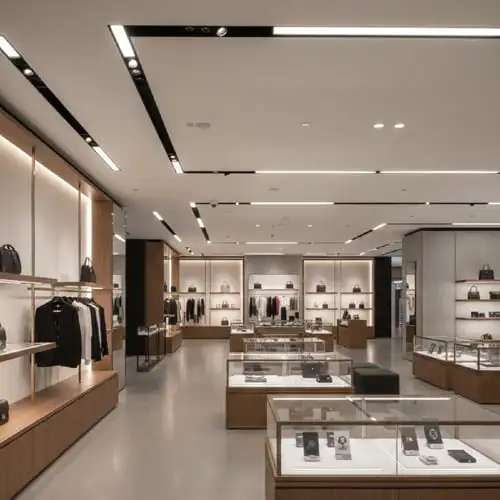
Specify CRI 95 COB strips when your commercial project involves close-range viewing of color-sensitive materials — retail merchandise, fresh food, artwork, cosmetics counters, or premium hospitality surfaces. For general ambient, task, and architectural accent lighting in offices, corridors, and parking areas, CRI 90 delivers excellent results at a better price-to-performance ratio.
A Simple Decision Framework
I use a three-question checklist when advising contractors and wholesalers:
- Will people judge color in this space? If yes — retail floors, salons, galleries — go CRI 95.
- Is the lighting primarily ambient or decorative? If it is cove lighting in a hotel hallway, CRI 90 is plenty.
- Does the end client's designer have a specification? If the spec says CRI 95, do not try to value-engineer it down. Designers notice, and they will call it out during commissioning.
Application Comparison Table
| Application | Recommended CRI | Why |
|---|---|---|
| Fashion retail display | 95 | Garment colors must match what customers see in daylight |
| Jewelry showcase | 95 | Diamonds and gemstones need full spectral power distribution to sparkle correctly |
| Art gallery / museum | 95 | Faithful hue reproduction protects curatorial intent |
| Restaurant dining area | 95 | Food and skin tones look more appetizing and flattering |
| General office | 90 | Color fidelity matters less than visual comfort and efficiency |
| Warehouse / parking | 80–90 | Functional visibility is the priority |
| Hotel corridor | 90 | Warm ambiance is important, but close color inspection is rare |
| Photography / video studio | 95+ | Color accuracy is the entire point |
| Kitchen under-cabinet | 90 | Good enough for food prep; CRI 95 is a nice-to-have, not a must |
| Cosmetics counter | 95 | Customers test makeup shades under this light |
The Luminous Efficacy Trade-Off
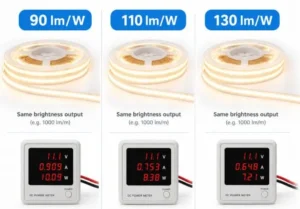
Higher CRI usually means lower luminous efficacy 7. To push CRI from 90 to 95, LED manufacturers adjust the phosphor blend 8 to broaden the red end of the spectrum. That broader spectrum "costs" some lumens — typically around 10 to 15 percent. So a CRI 90 strip rated at 120 lm/W might drop to roughly 105 lm/W at CRI 95.
For most commercial interiors, that efficiency gap is manageable. You might need slightly more strip per meter of cove, or a marginally higher wattage driver. But if you are lighting a 5,000-square-meter warehouse, those extra watts add up fast — another reason CRI 90 is the smarter pick for large-area general lighting.
COB Strips and High-CRI Synergy
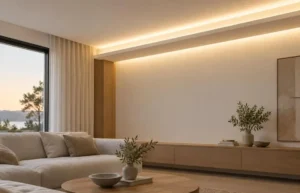
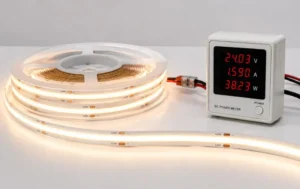
COB (chip-on-board) LED strips place dozens of tiny emitters per meter under a single phosphor layer. This design creates a smooth, dot-free light line. It also helps color consistency along the strip's length because the phosphor coating is continuous rather than applied to individual SMD packages. When you combine that uniform output with a CRI 95 phosphor formula, you get a strip that looks seamless and renders colors faithfully — a combination that is hard to beat for premium cove and display lighting.
A buyer in Sydney recently asked me to quote identical 5-meter reels in both CRI 90 and CRI 95 at 3000 K correlated color temperature. The price gap was around 15 to 20 percent. His first reaction was "that's a lot." His second reaction, after installing both samples in his client's jewelry showroom, was "we should have started with 95."
The CRI 95 premium — typically 15 to 25 percent over CRI 90 — is worth it when the space's commercial purpose depends on accurate color presentation, such as retail, hospitality, or gallery settings. For general-purpose lighting, CRI 90 offers the best value without a meaningful sacrifice in visual quality.

Breaking Down the Cost Drivers
Why does CRI 95 cost more? Three main factors:
- Phosphor formulation. CRI 95 phosphor blends use more expensive rare-earth compounds to extend the red spectrum.
- Tighter binning. Achieving consistent CRI 95 across a production run requires narrower LED bins. Tighter bins mean more waste and higher per-unit costs.
- Lower yield. Not every reel off the line hits CRI 95. The ones that do carry the cost of the ones that did not.
Cost-Benefit Table by Project Type
| Project Type | Strip Length (m) | CRI 90 Est. Cost | CRI 95 Est. Cost | Worth the Premium? |
|---|---|---|---|---|
| Boutique retail (50 m²) | 80 | Baseline | +15–20 % | Yes — color drives sales |
| Hotel lobby cove lighting | 200 | Baseline | +15–20 % | Often yes — perceived luxury |
| Open-plan office | 500 | Baseline | +15–20 % | Usually no — ROI is low |
| Art gallery (traveling exhibits) | 120 | Baseline | +15–25 % | Yes — curator requirement |
| Residential kitchen | 10 | Baseline | +15–20 % | Optional — nice but not critical |
When the Premium Pays for Itself
In retail environments, studies suggest that better lighting quality can increase dwell time and conversion rates. If a CRI 95 installation helps a clothing store sell even a few more garments per week, the strip-light premium pays back within months.
In hospitality, guests may not consciously notice the lighting, but they do notice how they feel. CRI 95 creates a subconscious sense of warmth and quality. That perception influences online reviews and repeat bookings — hard to measure, easy to lose.
For our wholesale partners, I usually recommend stocking CRI 90 as the standard line and CRI 95 as a premium tier. This way, they capture both budget-conscious contractors and specification-driven design firms without doubling their inventory risk.
The Hidden Cost of Getting It Wrong
One thing I always remind procurement teams: replacing strip after installation is far more expensive than choosing the right CRI upfront. Labor for tear-out and re-install, plus potential damage to finished surfaces, can dwarf the 15–20 percent premium you saved on the strip itself. If there is any doubt, request samples of both CRI levels and test them on-site before committing.
How do I ensure my supplier maintains consistent CRI 95 color accuracy across multiple batches?
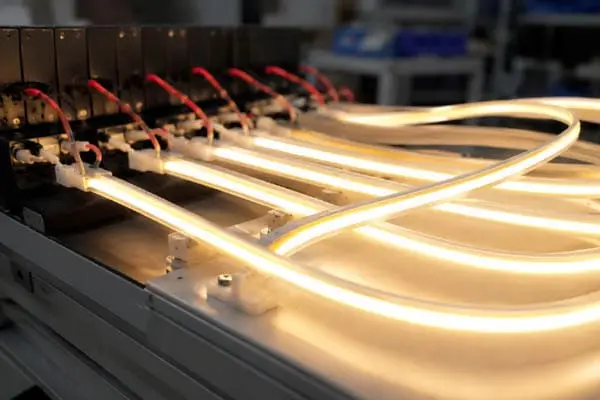
A lesson I learned early in our export business: the hardest part of CRI 95 is not hitting the number once — it is hitting it every time, on every reel, across every shipment. Batch-to-batch color variance is the single biggest pain point I hear from contractors who source from multiple factories.
To ensure consistent CRI 95 across batches, require your supplier to provide per-reel test reports with Ra, R9, and CCT data; insist on a defined LED binning standard (3-step MacAdam ellipse or tighter); and request spectral power distribution charts for each production lot. Ongoing third-party spot checks add another layer of confidence.
Why Batch Consistency Is Hard
LED chips are semiconductor devices. Even chips from the same wafer can vary in color point and CRI. Manufacturers sort them into bins — groups of chips with similar characteristics. The tighter the bin, the more consistent the output. But tighter bins cost more and reduce available inventory.
For CRI 95, the phosphor layer adds another variable. A slight shift in phosphor thickness or composition can push CRI down to 93 or skew the correlated color temperature by 100 K. Over a 20-meter cove run, that shift becomes visible as a color band — exactly the kind of defect that gets a contractor called back to site.
What to Ask Your Supplier
Here is a practical checklist I share with our wholesale and contractor partners:
- LED binning spec. Ask for 3-step MacAdam ellipse 9 or better. This controls color point variation so adjacent reels look the same.
- Per-reel test data. Every reel should ship with a test report showing Ra, R9, CCT, and forward voltage. If a supplier cannot provide this, consider it a red flag.
- Spectral power distribution (SPD) chart. An SPD chart shows the full wavelength breakdown. It is the most honest representation of what the LED actually emits. Compare SPDs across batches to spot drift.
- Phosphor lot traceability. Good factories track which phosphor lot went onto which production batch. If a problem appears, they can trace it back.
- Golden sample retention. Before mass production, approve a golden sample. The supplier keeps a reference reel so every future batch can be compared against it.
Verification Methods
| Method | What It Checks | Who Does It | Cost |
|---|---|---|---|
| Supplier test report (per reel) | Ra, R9, CCT, lumen output | Supplier's QC lab | Included in unit price |
| Third-party lab test (spot check) | Full spectral analysis, TM-30, CRI | Independent lab (e.g., SGS, TÜV) | Moderate — per sample |
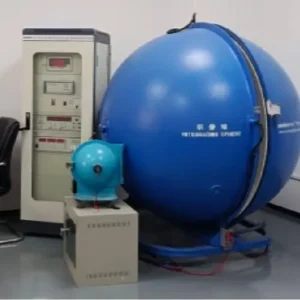
| On-site integrating sphere 10 | Quick CRI and CCT verification | Your own QC if equipped | Equipment investment |
| Visual side-by-side comparison | Perceivable color match | Anyone on site | Free but subjective |
Building a Long-Term QC Partnership
Consistency is easier when you work with one supplier over multiple orders rather than chasing the lowest quote each time. When we fulfill repeat orders for the same project specification, we lock the LED bin code and phosphor lot early. We also keep digital records of every reel's test data so that if a question arises six months later, we can pull the data instantly.
For our partners who resell under their own private label, we offer color-matching guarantees tied to specific bin and CCT windows. That way, their end customers see the same visual result whether they order in January or July. This kind of traceability — from phosphor lot to finished reel to shipping carton — is what separates a reliable supply chain from a transactional one.
Color fidelity at CRI 95 is achievable on a single sample. Maintaining it at scale, across months and multiple production runs, requires systems, discipline, and a supplier who understands that visual comfort and consistency are non-negotiable for professional installations.
Conclusion
CRI 90 and CRI 95 COB LED strips both deliver excellent color rendering, but the right choice depends on your project's visual demands, budget, and quality control expectations. If you are also evaluating how LED chip density impacts COB LED strip light specifications or exploring the difference between single-color and tunable white COB LED strip lights, those factors can further refine your selection alongside CRI.
Footnotes
- Explains one of the key metrics within the TM-30 standard for color fidelity. ↩︎
- Explains the significance of the R9 metric for red color rendering. ↩︎
- Defines the fundamental concept of CRI in lighting. ↩︎
- Provides context for how CCT relates to light source characteristics. ↩︎
- Explains another key metric within the TM-30 standard for color saturation. ↩︎
- Comprehensive explanation of TM-30, including its evolution and comparison to CRI. ↩︎
- Defines the efficiency metric in lighting, relating light output to power consumption. ↩︎
- Describes the material composition used to achieve specific LED light properties. ↩︎
- Explains a standard for LED color consistency and binning. ↩︎
- Detailed explanation of integrating sphere theory and various applications from a leading manufacturer. ↩︎

 English
 Spanish
 German
 Russian
 Arabic
 French
 Portuguese