
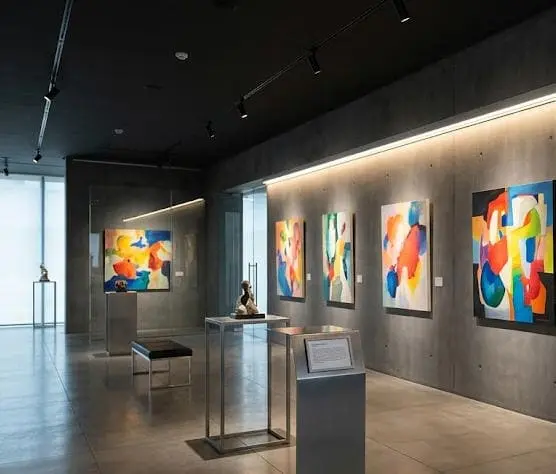
A lighting designer in Germany once asked me point-blank: "Can your COB LED strip lights handle a national gallery?" That question forced our entire team into months of research, testing, and honest self-assessment.
COB LED strip lights can meet professional museum and art gallery lighting needs, but only when they are truly museum-grade — featuring CRI above 98, R9 values over 94, UV-free emission, stable color temperature, and dotless light output designed specifically for artifact preservation and exhibition lighting design.
The gap between "good enough" and "museum-grade" is enormous lumen depreciation 1. Let me walk you through what actually matters and where most products fall short.
How do I ensure the CRI and color consistency of COB strips meet my museum's strict standards?
When we first started fielding inquiries from architectural lighting specifiers in Australia, the conversation always circled back to one thing: "Show me the Color Rendering Index 2 numbers — and prove they hold across every reel." That demand reshaped how our production line handles binning and quality control for high-CRI COB LED strip lights.
To ensure CRI and color consistency meet museum standards, specify COB strips with CRI above 98 and R9 values exceeding 94, then require batch-to-batch chromaticity reports within a 2-step MacAdam ellipse — this guarantees the color fidelity and uniformity that museum-grade illumination demands.
Why CRI Alone Is Not Enough
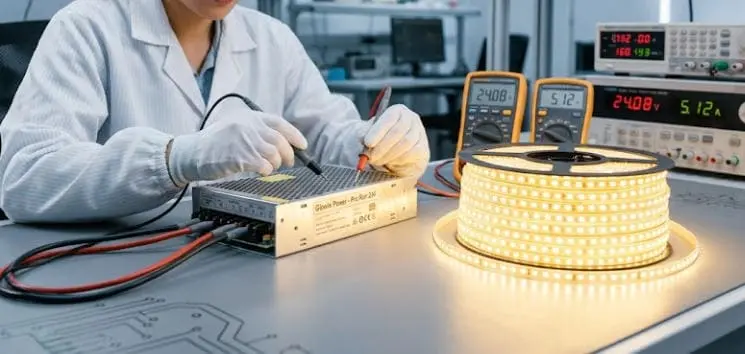
Most people stop at the CRI number. That is a mistake. CRI is an average of eight pastel color samples. It does not tell you how well reds render. In a gallery full of oil paintings, reds matter enormously. That is where the R9 value 3 comes in. A strip can score CRI 95 and still have an R9 below 50 — which means red tones look dull and lifeless. For museum work, I always push clients toward R9 above 90, ideally above 94. To understand how much difference a few CRI points make in practice, see our comparison of color rendering between CRI 90 and CRI 95 COB LED strip lights.
The MacAdam Ellipse Standard
Color consistency across a long run of COB strip is just as critical as the CRI rating. If you install 30 meters of strip around a gallery perimeter, even a slight color shift between reels is visible to the trained eye. The industry measures this with MacAdam ellipses 4 (also called SDCM steps). Here is what the steps mean in practice:
| MacAdam Ellipse Step | Color Difference | Suitability for Museums |
|---|---|---|
| 1-step | Virtually imperceptible | Ideal — laboratory grade |
| 2-step | Barely noticeable | Acceptable for museum-grade illumination |
| 3-step | Slightly noticeable | Marginal — risky for long runs |
| 5-step+ | Clearly visible | Unacceptable for professional galleries |
On our production line, we bin COB strips to a 2-step MacAdam ellipse for any project labeled as museum or gallery. This requires tighter LED chip selection, which raises cost. But the alternative — visible color banding on a gallery wall — is far worse.
What to Request from Your Supplier
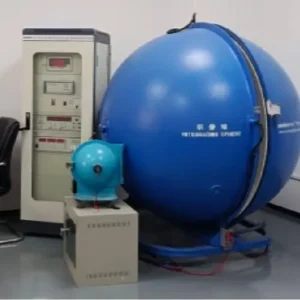
Ask for an Integrating Sphere test report 5 for every production batch. The report should list CRI (Ra), R9, R13, R15, chromaticity coordinates (x, y), correlated color temperature, and forward voltage. If a supplier cannot provide this, they are not producing at museum-grade level.
I also recommend requesting a spectral power distribution 6 (SPD) chart. This graph shows you exactly where the light energy falls across the visible spectrum. A smooth, full curve that closely mimics natural daylight is what you want for exhibition lighting design. Spiky curves with dominant blue peaks are a red flag for artifact preservation.
Color Temperature Selection
Museums typically specify color temperatures between 2700K and 4000K. Warmer tones (2700K–3000K) suit oil paintings and warm-toned sculptures. Neutral white (3500K–4000K) works well for contemporary art and mixed-media displays. The key is that whatever color temperature you choose, it must remain stable over the product's lifetime and across varying ambient temperatures.
Can I achieve a completely dot-free lighting effect in my gallery display cases using COB technology?
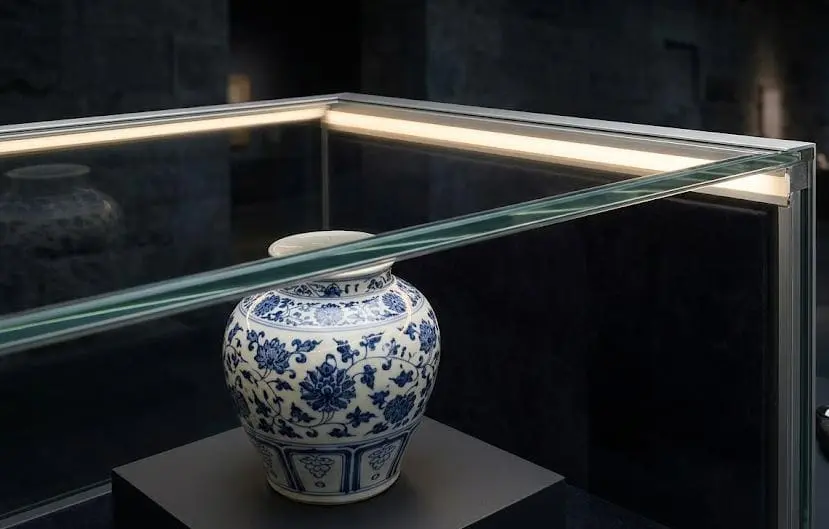
A contractor in Germany once sent us photos of a display case installation that used standard SMD strips. You could see every single LED dot reflected in the glass — a row of bright pinpoints marching across a 17th-century porcelain vase. He needed a fix, and fast. That project taught us why dotless light output is not a luxury in gallery work; it is a baseline requirement.
Yes, COB LED strip technology delivers a completely dot-free lighting effect because it integrates hundreds of tiny LED dies under a continuous phosphor layer, producing a smooth, uniform line of light with no visible hotspots — making it ideal for display case lighting where reflective surfaces expose every flaw.
How COB Achieves Dotless Illumination
Traditional SMD LED strips mount individual LED packages at fixed intervals — typically 60 or 120 LEDs per meter. Each package is a discrete point of light. When you place these inside a glass display case, every LED dot reflects. COB strips, by contrast, pack up to 1260 LED dies per meter directly onto the circuit board. A single phosphor-silicone coating covers them all. The result is a homogeneous light-emitting surface rather than a series of individual points. Understanding how LED chip density impacts COB LED strip light specifications helps explain why higher-density variants produce superior uniformity.
COB vs. SMD: A Practical Comparison for Display Cases
| Feature | SMD LED Strip | COB LED Strip |
|---|---|---|
| LED density | 60–120 LEDs/m typical | 320–1260 LEDs/m |
| Visible dots | Yes — clearly visible | No — smooth, continuous line |
| Hotspots on glass | Common and distracting | Eliminated |
| Reflection quality | Dotted reflections on glossy surfaces | Clean, even glow |
| Light uniformity | Moderate — gaps between LEDs | Excellent — seamless output |
| Typical use case | General commercial lighting | Museum display cases, architectural coves |
Inside the Display Case: Practical Considerations
Display case lighting is one of the most demanding applications. The strip is close to both the artwork and the glass. Any imperfection in light distribution is magnified. Here is what I tell our clients:
First, choose a COB strip with a diffused phosphor layer that is at least 8mm wide. Narrower strips can still show subtle striping under close inspection. Second, mount the strip behind a micro-profile aluminum channel with a frosted diffuser. Even though COB is already dotless, the diffuser adds an extra layer of uniformity and softens the very edges of the light line.
Third, pay attention to the beam angle. Most COB strips emit at roughly 180 degrees. In a shallow display case, this wide angle can cause unwanted spill on the frame or seams. A channel with an optical lens or controlled beam angle — say 60 or 90 degrees — keeps light focused on the artifacts inside.
I recall a project where the client was lighting a row of jade carvings. The curator insisted on zero reflection artifacts on the glass front. We shipped sample COB reels at 528 LEDs per meter and 1000 LEDs per meter. The higher-density version won because the light line was smoother at close range. For display case lighting, density matters.
Dimming Without Flickering
Museums often dim lights to protect sensitive pieces. But dimming can introduce flicker, which is both visually uncomfortable and harmful to people with photosensitive conditions. COB strips paired with a high-quality PWM driver at 20 kHz or above eliminate perceptible flicker even at very low dimming levels. This makes them compatible with dimmable LED systems that conservators require. Always verify the flicker percentage — anything below 1% at full range is what professional installations demand.
How do I protect sensitive artwork from heat and UV damage when installing COB LED strips?
The first lesson I learned in this business was not about lumens — it was about what light does to a 400-year-old textile. A conservator in a European project explained that even low levels of UV radiation at 405 nm can accelerate pigment degradation over months. That conversation permanently changed how we evaluate LED chips for our product lines and what we recommend for artifact preservation projects.
Protect sensitive artwork by selecting COB LED strips with verified UV-free emission (no radiation at 405 nm), pairing them with aluminum heat sinks to keep junction temperatures below 65°C, and maintaining a minimum distance of 300mm between the light source and the artwork to minimize both heat emission and cumulative light exposure.
Understanding UV Risk from LEDs
Many people assume all LEDs are UV-free. This is not entirely true. Standard white LEDs use a blue LED die coated with yellow phosphor. Some of that blue light extends into the near-UV range around 405 nm. For most applications this is harmless. But for organic materials — watercolors, textiles, photographs, aged paper — even trace UV contributes to cumulative photochemical damage 7 over years. Advanced COB solutions like those based on Nichia's Optisolis family are specifically engineered to emit zero harmful UV while still reproducing the full visible spectrum accurately.
Heat: The Silent Threat
Heat emission is the other concern. While COB strips run cooler than halogen track lighting systems (which can reach surface temperatures above 200°C), they still generate heat at the LED junction. Poor thermal management 8 leads to two problems: accelerated lumen depreciation (the strip gets dimmer over time) and radiant heat directed at the artwork.
Here is a practical thermal management checklist:
- Always mount COB strips on aluminum extrusion profiles. The aluminum acts as a heat sink and can reduce surface temperature by 15–25°C compared to mounting directly on wood or plastic.
- Ensure adequate airflow. Inside sealed display cases, heat builds up. Consider adding small ventilation slots or using lower-wattage strips to keep the ambient case temperature stable.
- Use a thermal camera during commissioning to verify that no surface near the artwork exceeds the conservator's specified limit (typically 25°C at the artwork surface).
Recommended Installation Parameters
| Parameter | Recommended Value | Why It Matters |
|---|---|---|
| UV emission at 405 nm | 0 µW/lm | Prevents photochemical degradation of pigments |
| Strip surface temperature | Below 55°C | Ensures long life and minimal radiant heat |
| Artwork surface temperature | Below 25°C | Conservator standard for organic materials |
| Minimum distance to artwork | 300 mm or more | Reduces both heat and lux intensity at surface |
| Maximum lux on oil paintings | 150–200 lux | Common museum conservation guideline |
| Maximum lux on textiles/paper | 50 lux | Highly sensitive materials need strict limits |
Cumulative Exposure and Smart Controls
Damage from light is cumulative. It is measured in lux-hours per year. A painting exposed to 150 lux for 10 hours a day accumulates 547,500 lux-hours annually. Smart controls can help. Occupancy sensors and timed dimming reduce exposure when no visitors are present. Some advanced systems log total light exposure per artwork — a feature increasingly requested by conservation departments. COB strips integrated with smart controls (including Matter, Alexa, or proprietary gallery management platforms) make this kind of proactive conservation strategy practical.
Our team has worked on projects where the lighting spec included maximum annual lux-hour budgets for each gallery zone. The dimmable LED systems we supplied had to interface with the building management system to track and limit exposure automatically. This kind of integration is where COB LED strip lights move from "product" to "system component."
How can I customize COB LED strip lengths and brightness for my specific gallery layout?
One trade-off I weigh constantly is flexibility versus consistency. A gallery layout is never standard. Alcoves, curved walls, varying ceiling heights, different artwork sizes — every zone demands different lengths and light levels. When a client in Australia sent us architectural drawings for a contemporary art space, no two walls were the same length. Off-the-shelf strips would have meant visible joints, wasted material, and inconsistent brightness from zone to zone.
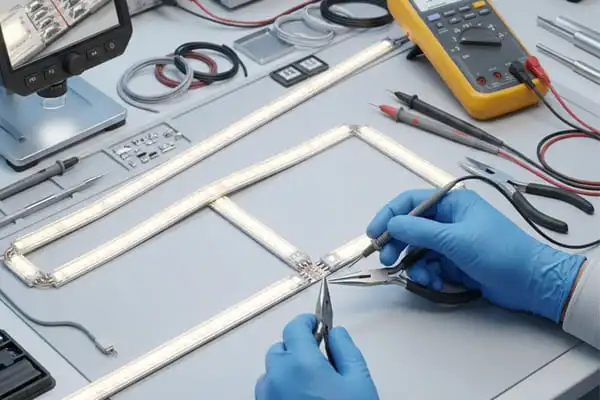
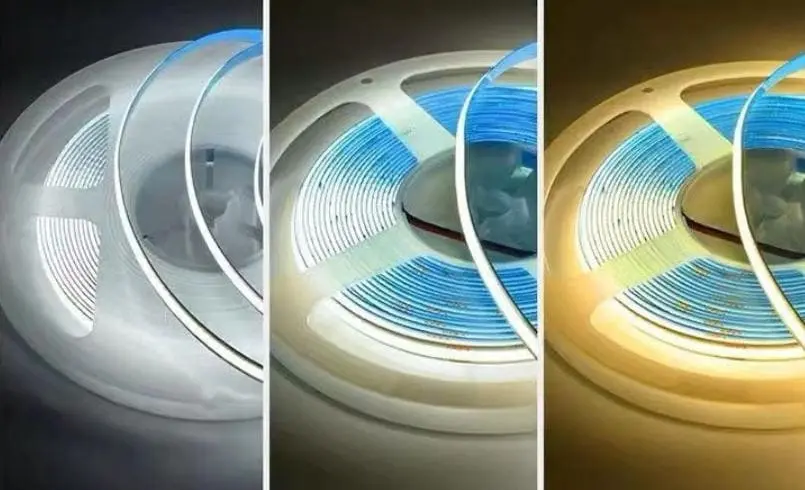
Customize COB LED strip lengths by cutting at designated solder pads (typically every 25–50mm) and adjusting brightness through compatible dimmable LED systems or by selecting strips with different wattages per meter — this lets you match lumen output precisely to each gallery zone's requirements without visible joints or uneven illumination.
Cutting and Joining Without Compromise
COB strips have designated cut points spaced at regular intervals. For museum work, I recommend strips with cut points every 25mm. This gives you fine control over length. After cutting, you join sections with solderless connectors or, better yet, professional soldering. Soldered joints are more reliable and introduce less electrical resistance, which matters for color consistency over long runs.
For runs exceeding 5 meters, voltage drop 9 becomes a real issue. The LEDs at the far end receive less voltage and appear dimmer or shift in color temperature. The solution is to use higher-voltage COB strips (24V or 48V) or to inject power at multiple points along the run. On our longer-run projects, we typically recommend power injection every 5 meters for 24V strips. For 48V strips, you can push to 10 meters or more before injection is needed.
Matching Brightness to the Space
Different zones in a gallery need different light levels. A sculpture alcove might need 300 lux on the surface, while a watercolor wall should stay below 50 lux. You achieve this by selecting strips with appropriate wattage per meter and pairing them with a high-quality dimmer.
Here is a general guide:
| Gallery Zone | Target Lux at Surface | Suggested Strip Wattage | Dimming Range |
|---|---|---|---|
| Oil painting wall | 150–200 lux | 10–14 W/m | 10–100% |
| Watercolor / textile display | 30–50 lux | 5–8 W/m | 5–50% |
| Sculpture alcove | 200–300 lux | 14–20 W/m | 20–100% |
| Display case interior | 50–150 lux | 5–10 W/m | 10–80% |
| Circulation / corridor | 100–150 lux | 8–12 W/m | 20–100% |
These numbers depend heavily on mounting distance, reflectance of surrounding surfaces, and whether you are using a channel with a diffuser. We always recommend a lighting mock-up during the design phase. Ship a sample reel, install it in the actual space, and measure with a lux meter before committing to the full order.
OEM Customization for Unique Layouts
For truly bespoke gallery projects, standard catalog items may not suffice. This is where OEM and ODM co-development services become valuable. We have produced custom COB strips with specific LED densities, non-standard widths, and pre-soldered connectors at exact intervals matching a client's architectural drawings. The minimum order quantities for these custom runs are lower than most people expect — we can prototype and iterate quickly, which matters when a gallery renovation has a fixed opening date.
Tunable white COB strips 10 (CCT adjustable from 2700K to 6500K) are another option gaining traction in exhibition lighting design. They allow curators to change the color temperature for different exhibitions without changing the hardware. A warm 2700K for a Renaissance show, then a cooler 4000K for a contemporary photography exhibit — all from the same installed strip. These tunable versions require a compatible multi-channel controller, so factor that into your system design early. For a deeper look at what to specify, see our guide on key specifications for 2700K-6500K tunable white COB LED strip lights.
Private Labeling and Project Documentation
Distributors and design firms that supply galleries often need branded products and complete documentation packages — including test reports, installation guides, and compliance certificates. We handle private-label packaging and can generate project-specific technical documentation. For bidding purposes, this kind of paperwork can make or break a supplier approval.
Conclusion
COB LED strip lights can absolutely serve professional museum and gallery environments — but only when every specification is intentional. Demand CRI 98+, verified UV-free emission, tight color binning, and proper thermal management. The technology is ready; the question is whether the product is truly museum-grade.
Footnotes
- Wikipedia defines lumen maintenance and depreciation, crucial for understanding LED lifespan. ↩︎
- Wikipedia provides a comprehensive definition and explanation of CRI in lighting. ↩︎
- Waveform Lighting offers a detailed explanation of the R9 value and its importance for color rendering. ↩︎
- Replaced with a Wikipedia article, an authoritative source, explaining MacAdam ellipses and their relevance to color perception and LED lighting. ↩︎
- Lighting Global provides a foundational overview of integrating spheres for light measurement. ↩︎
- Wikipedia defines spectral power distribution and its role in characterizing light sources. ↩︎
- The American Museum of Natural History details how light, UV, and IR impact collections. ↩︎
- Unibox explains the importance of thermal management in LED lighting for performance and longevity. ↩︎
- AspectLED provides a professional guide on voltage drop in LED and low-voltage lighting circuits. ↩︎
- USAI Lighting describes tunable white technology and its application in real-time color temperature adjustment. ↩︎

 English
 Spanish
 German
 Russian
 Arabic
 French
 Portuguese