
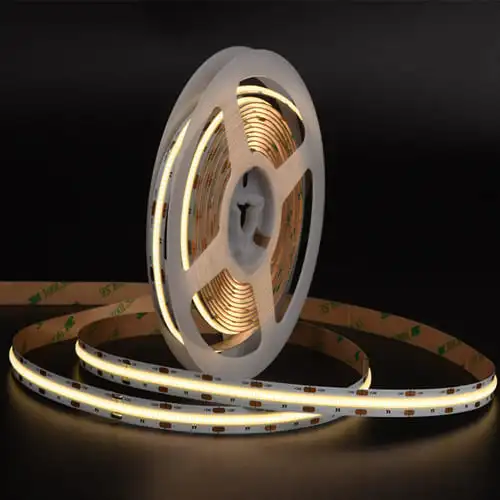
Many customers ask me "how many lumens per meter?" right away, but I rarely answer that number directly — because the real story is far more nuanced than a single spec.
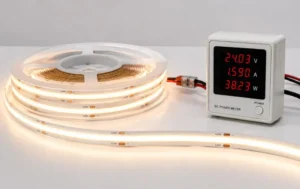
The typical luminous flux of COB LED strip lights ranges from approximately 900 to 2,500 lumens per meter for most commercial-grade products, with ultra-bright variants reaching up to 4,300 lm/m. Output depends heavily on wattage per meter, LED density, color temperature, and actual versus lab-rated performance.
That range is wide for a reason. The same COB technology can serve a quiet cove light or a brightly lit retail display typical luminous flux 1. Let me walk you through the details that actually matter when you are choosing a COB strip for a real project.
How do I determine the right lumen output for my specific commercial COB LED project?
A contractor once sent me a floor plan, a target lux level, and a ceiling detail — that single email saved us three rounds of back-and-forth and got his sample order shipped within a week.
To determine the right lumen output, first define the application type and target illuminance (lux), then calculate the required lumens per meter based on the mounting height, beam angle, and any diffuser losses. Match this to a COB strip with verified real-world lumen data rather than lab-peak claims.

Start With the Application, Not the Spec Sheet
The biggest mistake I see is buyers picking a strip based on lumens alone. A 2,500 lm/m strip is overkill for under-cabinet lighting. A 900 lm/m strip will disappoint in a retail display. The right starting point is always the application.
Here is a quick reference I share with our project customers:
| Application Type | Recommended Lux at Surface | Suggested COB Strip Output (lm/m) | Typical Wattage per Meter |
|---|---|---|---|
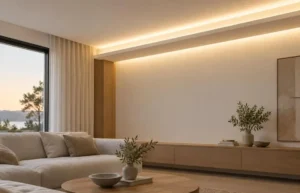
| Ambient / Cove Lighting | 100–200 lux | 900–1,400 | 5–14 W/m |
| Under-Cabinet / Task Lighting | 300–500 lux | 1,400–2,000 | 14–20 W/m |
| Retail Display / Showcase | 500–750 lux | 2,000–2,500 | 20–25 W/m |
| Large Commercial / Industrial | 750+ lux | 2,800–4,300 | 25+ W/m |
Factor in Losses
Raw lumen numbers never survive the journey from spec sheet to installation site. When our engineering team helps a customer spec a project, we always account for:
- Diffuser or profile cover loss: An opal diffuser can reduce output by 20–30%.
- Voltage drop: On long runs, especially with 12V strips, brightness can fall noticeably at the far end. 24V strips handle this better, often maintaining consistency for up to 7 meters without power injection.
- Thermal derating: If heat dissipation 2 is poor — for example, a strip mounted without an aluminum channel — the LED junction temperature rises and the actual lumens drop.
Verify the Data
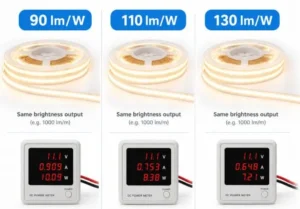
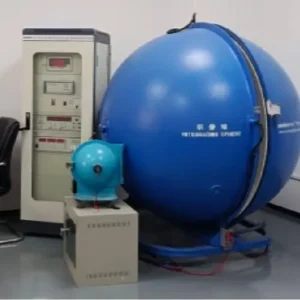
I always tell buyers: ask for the integrating-sphere test report 3. Many factories publish theoretical lumens based on the LED chip datasheet, not the finished strip. Our team tests every production batch on a finished reel, because the difference between chip-level data and strip-level data can be 10–15%. A strip rated at 2,000 lm/m on paper might deliver 1,700 lm/m in practice if the power supply efficiency and thermal path are not optimized. Lumens per watt 4 — the efficacy — is the metric that reveals true quality. A well-made COB strip should deliver around 100 lm/W or better for high-CRI white light.
The Color Rendering Index 5 matters here too. A CRI above 90 is standard on our project-grade lines. High-CRI phosphors can slightly reduce raw lumen output compared to a low-CRI chip at the same wattage, but the visual quality is dramatically better. For any commercial lighting project, especially in hospitality or retail, CRI 90+ is non-negotiable.
Will the luminous flux remain consistent across my entire long-run installation?
One lesson I learned early on is that a strip can look perfect on a 1-meter sample and then disappoint badly on a 10-meter run — the physics of voltage drop 6 and heat simply change the game at length.
Luminous flux will not remain perfectly consistent across long runs unless you manage voltage drop with proper power injection points, use 24V (or higher) strip architecture, and ensure adequate heat dissipation along the entire channel. Without these measures, brightness can fall 15–20% at the far end.
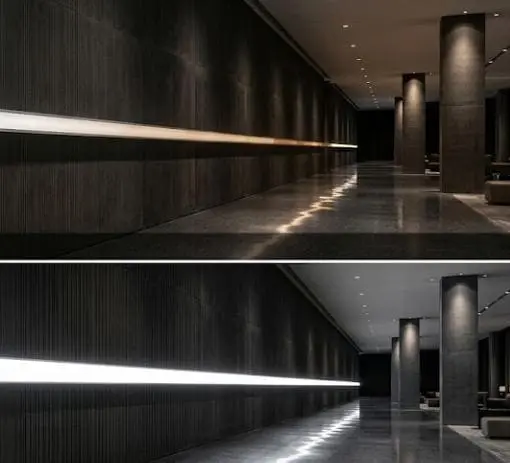
Why Brightness Drops Over Distance
Every COB LED strip is essentially a long, thin electrical circuit. Current flows through copper traces on a flexible PCB 7. The longer the run, the more resistance the current encounters. This resistance causes a voltage drop. The LEDs at the far end receive less voltage, so they produce less light. The effect is more severe on 12V strips than on 24V strips, because 24V circuits carry half the current for the same wattage, which means less resistive loss.
Here is how the voltage and brightness relationship typically plays out:
| Strip Voltage | Max Run Without Power Injection | Typical Brightness Loss at End | Recommended Power Injection Interval |
|---|---|---|---|
| 12V DC | ~5 meters | 15–25% | Every 3–5 m |
| 24V DC | ~7 meters | 8–15% | Every 5–7 m |
| 48V DC | ~10 meters | 5–10% | Every 8–10 m |
| High-Voltage AC (120/230V) | 25+ meters | Minimal | Per manufacturer spec |
Thermal Consistency Matters Too
Even if the voltage is perfect at every point, heat can degrade flux over the run. When our team designs a project solution, we always recommend aluminum extrusion profiles. The aluminum acts as a heat sink. Without it, especially on higher-wattage strips (20 W/m and above), the junction temperature rises and the phosphor efficiency drops. The LEDs do not burn out immediately, but their output dims faster than the rated 50,000-hour lifespan would suggest.
Practical Steps We Recommend
- Use 24V strips as a baseline. For most commercial projects, 24V is the right choice.
- Add power injection at both ends of any run over 5 meters, or every 5 meters for mid-power strips.
- Size the power supply correctly. A supply running at 80% load runs cooler and lasts longer than one at 100%.
- Use aluminum channels. Even a small profile makes a measurable difference in thermal management and therefore in flux stability.
- Request a dimmable LED strip option if the project requires variable scenes — dimming reduces heat and extends consistent output.
We have shipped 20-meter continuous runs to projects in Germany where the designer required less than 3% brightness variation end-to-end. We achieved it with dual-end power feed on a 24V, 14 W/m COB strip inside an extruded aluminum channel. The key was planning the electrical layout before ordering the strip, not after.
How does the high density of COB strips impact the overall brightness and efficacy I need for my design?
When we first started developing COB lines with 512 LEDs per meter, the immediate question from our product team was not "how bright is it?" but "can we keep the heat under control at this density?"
High LED density in COB strips — typically 384 to 960 chips per meter — creates a seamless, dot-free light line and increases total luminous flux per meter. However, density alone does not guarantee higher efficacy; thermal management and chip quality determine whether that density translates into reliable, efficient brightness over the strip's lifespan.
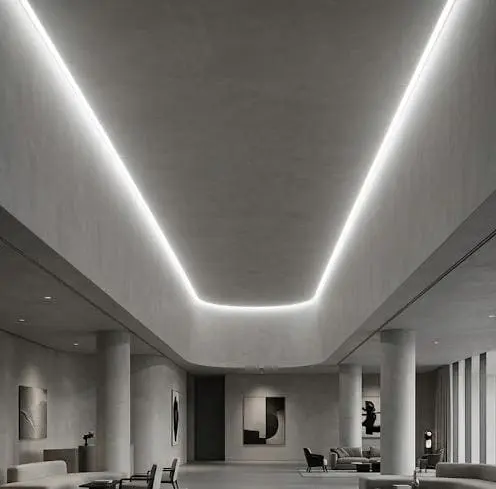
Density vs. SMD: The Visual Difference
The most obvious benefit of high LED density is uniform illumination. A traditional SMD LED strip with 60 or 120 LEDs per meter produces visible dots, especially when mounted inside a shallow profile without a heavy diffuser. A COB strip with 512 LEDs per meter eliminates this problem entirely. The phosphor layer covers the chips in a continuous band, and the result is a smooth, unbroken line of light — even without a diffuser.
This matters for design. Architects and interior designers specify COB strips specifically for this seamless quality. I have had lighting designers tell me that a COB strip at 1,400 lm/m actually looks brighter to the eye than an SMD strip at 2,000 lm/m, because the light is spread evenly across a wide beam angle of about 180 degrees instead of concentrated in sharp points. This is one of the key reasons COB LED strip lights offer more continuous lighting than traditional LED strips.
How Density Affects Efficacy
More chips per meter does not automatically mean more lumens per watt. Here is why:
- Each chip is driven at a lower current when density is high, which can actually improve efficacy because LEDs are most efficient at low drive currents.
- However, packing more chips into a small area generates more total heat per meter, even if each chip runs cool individually. If the PCB and mounting surface cannot dissipate that heat, the overall system efficacy drops.
The sweet spot we have found in our product development is a 512-chip-per-meter configuration at 14–20 W/m. This gives a strong 1,400–2,000 lm/m output while keeping junction temperatures manageable on a standard aluminum profile.
Comparing Density Tiers
| Chip Density (LEDs/m) | Typical Power Range (W/m) | Expected Flux (lm/m) | Visual Effect | Thermal Demand |
|---|---|---|---|---|
| 320 | 5–10 | 700–1,000 | Smooth, low-brightness glow | Low |
| 512 | 10–20 | 1,000–2,000 | Seamless bright line | Medium |
| 768 | 18–25 | 1,800–2,800 | Very bright, uniform | High |
| 960 | 24–30+ | 2,500–4,300 | Ultra-bright commercial | Very high |
The Color Temperature Factor
Color temperature also interacts with density and efficacy. A 6000K (cool white) COB strip will typically yield about 10–15% more raw lumens than a 3000K (warm white) strip of the same wattage and density. This is because cool-white phosphors convert blue light more efficiently. But most commercial interiors specify 2700K–4000K, so the "highest lumen" number on the datasheet — usually measured at 6000K — is rarely the one your project will see.
When I help a customer in Australia or Germany spec a project, I always confirm the color temperature first and then provide the lumen data at that specific Kelvin value. It avoids surprises during commissioning.
Can I customize the luminous flux to meet the strict technical requirements of my project bidding?
A distributor I work with in Germany once told me that his biggest frustration is finding a strip that matches the exact lumen spec in a tender document — most off-the-shelf products are close, but not exact, and the project engineer will not accept "close enough."
Yes, luminous flux can be customized. By adjusting LED chip binning, drive current, chip density, and PCB design, a capable OEM partner can engineer a COB strip to hit a specific lumen-per-meter target, CRI value, and color temperature required by your project bid — often with low minimum order quantities for prototyping.
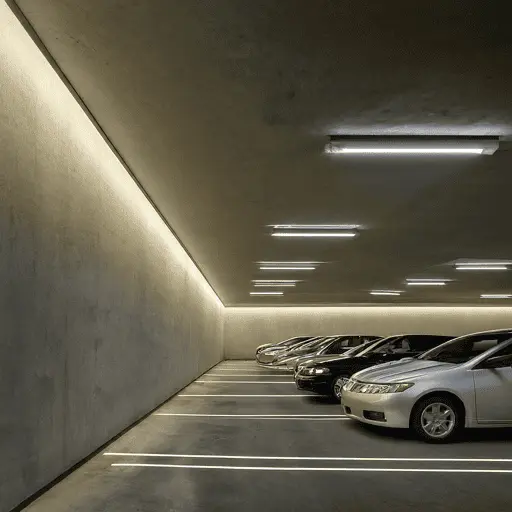
What Can Actually Be Customized?
Customization in COB LED strips is not just about slapping a private label on a standard product. When we work with contractors and wholesalers, the customization touches real engineering parameters:
- Drive current: Increasing or decreasing the current through the LED chips directly changes the lumen output. A standard 14 W/m strip can be tuned to 12 W/m or 16 W/m by adjusting the resistor values, shifting lumens up or down accordingly.
- Chip binning: LED manufacturers sort chips into "bins" by flux, forward voltage, and color point. By selecting a tighter bin, we can guarantee that the luminous flux stays within a narrow tolerance — critical for projects that demand visual uniformity across multiple reels.
- PCB trace width and copper weight: A heavier copper layer (2 oz vs. 1 oz) reduces resistance, improves current delivery, and helps maintain consistent brightness across long runs.
- Phosphor formulation: For specific CRI or color temperature targets, the phosphor blend on the COB layer can be adjusted.
The Prototyping Process
Our typical co-development workflow looks like this:
- Customer sends the spec: Target lm/m, color temperature, CRI, strip width, IP rating, and voltage.
- We propose a design: Chip selection, density, and PCB layout.
- Sample production: We build a small batch — often as few as 50 meters — and test it on our integrating sphere.
- Data sheet delivery: We provide measured lumen output, efficacy (lumens per watt), color coordinates, and thermal data.
- Approval and bulk production: Once the sample passes, we scale up with the same bin and process parameters locked in.
This process usually takes two to three weeks from initial request to sample shipment. For buyers bidding on a project with a tight timeline, that speed matters.
Why "Off-the-Shelf" Often Falls Short
Standard catalog products are designed to cover the broadest market. They hit round numbers — 1,000 lm/m, 1,500 lm/m, 2,000 lm/m. But a real project spec might call for 1,750 lm/m at 3000K with CRI 95 and a maximum strip width of 8 mm. No catalog product matches all of those parameters at once. That is where OEM/ODM co-development fills the gap.
I have also seen cases where a project requires specific certifications — SAA for Australia, TÜV for Germany — and the luminous flux claim on the certification documents must match the actual measured output within a tight tolerance. We handle this by testing every production batch and including the test data with the shipment. It protects the buyer during project inspection and commissioning.
For a dimmable LED strip application, the customization extends to ensuring the dimming curve is smooth from 100% down to 1% without flicker. This is especially important in hospitality environments where scene-setting is part of the design intent.
Conclusion
Luminous flux of COB LED strip lights 9 varies widely — from 900 to over 4,300 lm/m. Focus on verified, real-world data, thermal management, and project-specific customization rather than chasing the highest number on a datasheet.
Footnotes
- Defines luminous flux as the total perceived power of light. ↩︎
- Highlights the critical role of heat management in LED performance. ↩︎
- Describes the standard and authoritative method for lumen measurement. ↩︎
- Defines efficacy as a key metric for LED lighting efficiency. ↩︎
- Provides a clear definition of Color Rendering Index. ↩︎
- Explains the phenomenon of voltage reduction in electrical circuits. ↩︎
- Describes the substrate material used in LED strip construction. ↩︎
- Explains the manufacturing process for consistent LED characteristics. ↩︎
- Explains the fundamental construction of COB LED technology. ↩︎

 English
 Spanish
 German
 Russian
 Arabic
 French
 Portuguese