
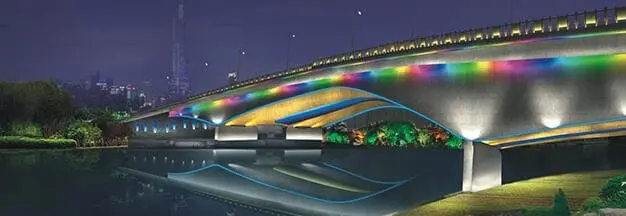
Every year, our production line ships thousands of meters of LED strip lighting 1 to infrastructure projects worldwide — and bridge and tunnel installations keep growing fast. The real challenge is not whether LED strips can work in these settings Color Rendering Index 2. It is whether the strips you choose can survive years of rain, vibration, and nonstop use.
Yes, LED strip lights can absolutely be used for outdoor bridge and tunnel lighting — but only when you select industrial-grade strips with proper IP ratings (IP65 or higher), corrosion-resistant materials, and stable power supply systems designed for long, continuous runs in harsh environments.
In this article, I will walk you through the key decisions you need to make when specifying LED strips for bridges and tunnels Correlated Color Temperature 3. We will cover IP ratings 4, long-run solutions, custom lengths, and color consistency — the four areas where most projects succeed or fail.
How do I choose the right IP rating for my outdoor bridge lighting project?
When we help contractors spec LED strips for bridge projects in Germany and Australia, the IP rating conversation always comes first. Picking the wrong one is the fastest way to guarantee a costly replacement within a year.
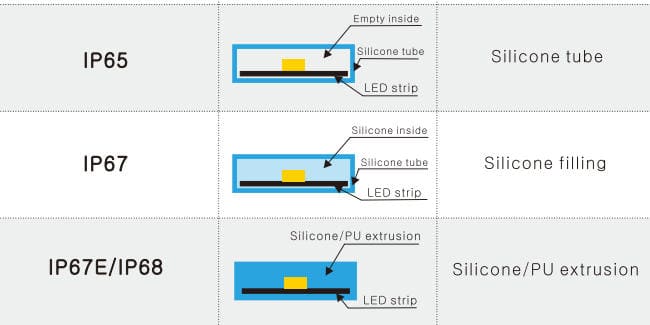
For outdoor bridge lighting, choose at least IP65 for sheltered areas, IP67 for exposed surfaces, and IP68 for any section subject to submersion or heavy water jet exposure. The rating must match the specific zone of the bridge where each strip will be installed.
What Does the IP Rating Actually Mean?
IP stands for Ingress Protection 5. The first digit rates dust resistance (0–6). The second digit rates water resistance (0–9). For bridges, dust is rarely the main concern. Water is. A bridge deck edge exposed to driving rain needs a very different strip than one mounted under a sheltered walkway canopy.
Here is a quick breakdown of the most common IP ratings we recommend for bridge zones:
| Bridge Zone | Recommended IP Rating | Reason |
|---|---|---|
| Underside / sheltered soffit | IP65 | Protected from direct rain but exposed to humidity and splashing |
| Railing / perimeter edge | IP67 | Direct rain, wind-driven spray, occasional debris impact |
| Near water level / submersible risk | IP68 | Possible flooding, wave splash, or full temporary submersion |
| Pedestrian walkway (covered) | IP54–IP65 | Light moisture, foot traffic vibration |
Beyond IP: Corrosion and UV Resistance
A high IP rating alone does not guarantee long life on a bridge. Saltwater bridges near coastlines need strips with UV-stabilized silicone encapsulation 6 and corrosion-resistant connectors. Standard PVC jackets degrade under prolonged UV exposure. In our testing, silicone-encased strips retain flexibility and seal integrity far longer than PVC alternatives — sometimes two to three times longer in accelerated aging tests.
Impact Resistance Matters Too
Bridges vibrate. Heavy trucks, wind loads, and thermal expansion create constant micro-movement. Our engineering team always recommends checking IK ratings 7 alongside IP ratings. IK10 is the highest impact resistance level, and it is worth specifying for any strip mounted in an exposed position. Even IK07 offers meaningful protection against accidental contact during maintenance.
Practical Selection Steps
- Map every mounting zone on the bridge and classify each by exposure level.
- Assign the minimum IP rating for each zone using the table above.
- Confirm that the strip's jacket material suits the local environment (coastal, urban, freshwater, industrial).
- Verify IK impact rating if the strip will be within reach of maintenance crews or debris.
- Request test certificates from the manufacturer — not just a claimed IP number on a datasheet.
When we supply strips for Australian bridge projects, we always provide third-party IP test reports. A claimed IP67 without documentation is just a marketing number. Insist on proof.
Can I use long-run LED strips to avoid visible joints in my tunnel installation?
Visible joints and light gaps are one of the top complaints we hear from contractors after a tunnel install goes wrong. The promise of continuous, seamless light is exactly what makes LED strips attractive for tunnels — but only if the product supports it.
Yes, long-run LED strips can eliminate visible joints in tunnel installations. Look for high-voltage (AC 220V/110V) or 48V DC strips that support continuous runs of 25 to 100 meters without repeaters, ensuring uniform brightness and seamless appearance across the full tunnel length.

Why Standard 12V/24V Strips Fall Short in Tunnels
Most standard LED strips operate at 12V or 24V DC. Voltage drop 9 is the enemy here. Over a run of just 5 meters on a 12V strip, you can see noticeable dimming at the far end. In a tunnel that might be 200 meters long, you would need dozens of power injection points. Each injection point is a potential failure and a visible joint.
High-voltage strips solve this. Our 220V AC LED strips can run continuously for 50 to 100 meters from a single feed point. The 48V DC option — increasingly popular for safety-conscious projects — supports runs up to 25–30 meters with minimal voltage drop.
| Strip Voltage | Max Single Run Length | Voltage Drop at Max Length | Power Injection Points Needed (per 100m) |
|---|---|---|---|
| 12V DC | 5 m | Severe (>15%) | 20+ |
| 24V DC | 10 m | Moderate (8–12%) | 10+ |
| 48V DC | 25–30 m | Low (3–5%) | 3–4 |
| 220V AC | 50–100 m | Minimal (<2%) | 1–2 |
Connector Design and Joint Visibility
Even with long-run strips, some connections are unavoidable. The key is using connectors that maintain the same LED pitch across the joint. When we design strips for tunnel projects, we use push-click connectors that keep the LED spacing consistent to within 1 mm of the standard pitch. This makes the connection point virtually invisible when the strip is lit.
Tunnel-Specific Installation Considerations
Tunnels bring unique challenges beyond just length:
- Vibration: Heavy vehicle traffic creates constant vibration. Mounting channels with vibration-dampening clips are essential.
- Ventilation air flow: Tunnel ventilation systems generate strong air currents. Strip mounting must resist wind lift.
- Emergency lighting integration: Many tunnel codes require emergency lighting circuits. Your strip system should integrate with backup power seamlessly.
- Maintenance access: Strips mounted on tunnel walls at vehicle height will get damaged. Ceiling or high-wall mounting with protective diffuser channels is safer.
Zoning for Tunnel Lighting
Tunnel lighting design typically divides the tunnel into zones: the threshold zone (entrance), transition zone, interior zone, and exit zone. Each zone has different lumen requirements. A good long-run LED strip system allows dimming by zone without breaking the continuous line of light.
In our experience working with tunnel contractors, pre-programming dimming profiles at the factory saves significant time on site. We can set zone-specific brightness levels before shipping, so the installer just connects power and the strip performs as designed.
Where can I find custom-length LED strips that meet my specific project dimensions?
Standard off-the-shelf LED strips come in 5-meter reels. That works for a kitchen. It does not work for a 347-meter bridge or a 1.2-kilometer tunnel. Finding a supplier who can deliver exact lengths, pre-cut and pre-wired, saves enormous time and cost on site.
Custom-length LED strips are available from specialized B2B manufacturers who offer OEM and ODM services. These suppliers can produce strips cut to your exact project dimensions, pre-terminated with connectors, and tested as complete assemblies before shipping.

Why Custom Lengths Matter for Infrastructure
When a contractor buys standard 5-meter reels and cuts them on site, several problems arise:
- Waste: Cutting points are fixed at every 3–6 LEDs. You will always have leftover material.
- Field soldering: On-site solder joints are unreliable in wet or dusty environments. Each joint is a future failure point.
- Time: A crew splicing hundreds of connections in a tunnel costs far more in labor than pre-terminated strips from the factory.
- Quality: Factory terminations are tested under controlled conditions. Field terminations are not.
What to Look For in a Custom Strip Supplier
Not every LED strip vendor can truly customize. Here is what separates a real custom manufacturer from a reseller who just cuts standard stock:
| Capability | Real Custom Manufacturer | Reseller / Distributor |
|---|---|---|
| Cut to exact millimeter length | Yes, based on cut-point intervals | Cuts standard reels on site |
| Pre-soldered connectors | Factory-soldered and tested | Ships bare ends or basic clips |
| Custom wire leads | Specified length and gauge | Generic leads |
| Waterproof termination | Potted or molded ends rated to IP67+ | Heat shrink (IP44 at best) |
| Batch testing before shipment | 100% electrical and optical test | Spot check or none |
| Private labeling | Full OEM packaging and branding | Sticker label at most |
Our Approach to Custom Orders
When a project lands on our desk — say, a pedestrian bridge in Melbourne that needs 186 meters of IP67 strip in warm white with specific connector pigtails — we go through a structured process:
- Dimension review: We get the full layout drawing and identify every segment length, bend point, and connection location.
- Prototype run: For new configurations, we produce a 3–5 meter sample first. The client tests mounting, brightness, and connector fit.
- Bulk production: Once approved, we manufacture the full order with each strip individually labeled by segment number and location.
- Pre-shipment testing: Every strip is powered on for a burn-in test. We check brightness, color temperature, and connector integrity.
- Packaging by zone: Strips ship in sequence, labeled to match the installation plan. The crew on site opens box 1 and starts at segment 1.
This approach typically cuts on-site installation time by 30–40% compared to field-cutting standard reels. For a contractor billing $80–$120 per labor hour, the savings are real.
Minimum Order Quantities
One concern buyers often raise is MOQ. Large infrastructure projects rarely struggle with minimums. But for smaller bridges or pedestrian tunnels, you might need only 50–100 meters. We keep our MOQ flexible — as low as 50 meters for custom-length orders — because we understand that not every project is a mega-tunnel.
How can I guarantee color consistency across multiple batches for a large-scale infrastructure project?
This is the question that keeps lighting designers up at night. A 500-meter bridge lit with warm white LED strips looks stunning — until one 50-meter section is noticeably yellower than the rest because it came from a different production batch. We have seen projects where this single issue caused partial tear-outs and re-orders.
To guarantee color consistency across batches, specify LED strips with tight binning tolerances (e.g., 3-step MacAdam ellipse or tighter), require the manufacturer to reserve LED chips from a single binning lot, and insist on pre-shipment spectral testing reports for every batch.
Understanding LED Binning
LED chips are manufactured in enormous quantities. No two chips are perfectly identical. Manufacturers sort chips into "bins" based on color temperature, brightness, and forward voltage. The tighter the bin, the more consistent the light output.
The industry standard for measuring color consistency is the MacAdam ellipse 10. Here is what different steps mean in practical terms:
| MacAdam Ellipse Step | Color Variation Visible? | Typical Application |
|---|---|---|
| 1-step | No — virtually identical | Laboratory reference |
| 2-step | Not to most observers | Premium architectural lighting |
| 3-step | Barely noticeable side by side | High-end commercial / infrastructure |
| 5-step | Noticeable when strips are adjacent | General commercial lighting |
| 7-step | Clearly different | Budget consumer products |
For bridge and tunnel projects, we strongly recommend 3-step MacAdam or tighter. Anything looser than 5-step will be visible, especially in long continuous runs where adjacent strips are directly comparable.
Chip Lot Reservation
The most effective way to ensure consistency across a large project is to reserve a single lot of LED chips at the beginning. When we take on a project that requires, say, 2,000 meters of strip produced in four batches over six months, we purchase the full chip quantity upfront from one wafer lot. This locks in the color bin and eliminates batch-to-batch variation at the source.
This approach does require a higher upfront material commitment. But the cost of a chip reservation is far less than the cost of tearing out and replacing inconsistent strips on a live infrastructure site.
Pre-Shipment Spectral Testing
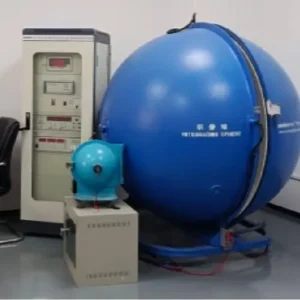
Every batch that leaves our facility includes a spectral test report. We measure:
- CCT (Correlated Color Temperature): Must fall within the specified range (e.g., 3000K ±100K).
- CRI (Color Rendering Index): Must meet or exceed the project specification (typically CRI 80+ for tunnels, CRI 90+ for architectural bridges).
- Duv (distance from the Planckian locus): This tells you whether the light looks greenish or pinkish. We hold Duv within ±0.003 for infrastructure projects.
- Luminous flux per meter: Consistency in brightness is just as important as color.
We send these reports to the client before shipment. If any measurement falls outside the agreed tolerance, we reproduce that batch. No exceptions.
What Happens Without Color Control
I want to be direct here. If you buy LED strips from a supplier who cannot provide binning data or spectral reports, you are gambling. On a small interior project, you might get lucky. On a 300-meter bridge visible to the entire city skyline, you will not. The human eye is remarkably sensitive to color differences when two light sources are side by side. A 200K difference in color temperature — say, 2900K next to 3100K — is obvious at night.
Long-Term Consistency Planning
For projects with phased construction or future expansion, we recommend ordering a small surplus (5–10%) from the same chip lot and storing it. This gives you matched replacement stock for maintenance or phase-two extensions years later. We can warehouse this surplus at our facility and ship on demand.
Conclusion
LED strip lights work for outdoor bridge and tunnel lighting — when you choose industrial-grade products with the right IP rating, long-run capability, custom dimensions, and guaranteed color consistency. Prioritize these four factors, and your infrastructure project will perform for years.
Footnotes
- Provides an overview of LED strip lighting technology and applications. ↩︎
- Replaced with the Wikipedia page for Color Rendering Index, an authoritative and comprehensive source. ↩︎
- Explains the measure of a light source's color appearance, from warm to cool. ↩︎
- Explains the international standard for ingress protection ratings for electrical enclosures. ↩︎
- Defines the meaning and significance of Ingress Protection (IP) ratings. ↩︎
- Discusses the properties and benefits of UV-stabilized silicone in harsh environments. ↩︎
- Describes the international standard for impact protection ratings for enclosures. ↩︎
- Refers to the international standard that defines Ingress Protection (IP) ratings. ↩︎
- Explains the electrical phenomenon of voltage drop in long circuit runs. ↩︎
- Details the standard for measuring color consistency in LED lighting. ↩︎

 English
 Spanish
 German
 Russian
 Arabic
 French
 Portuguese