
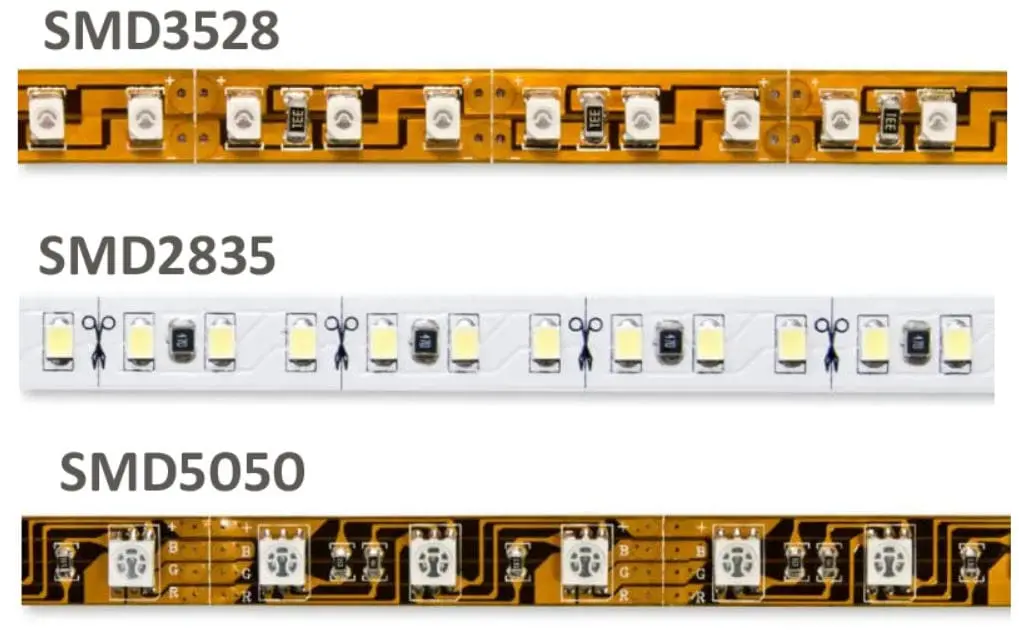
Some clients confused by LED chip numbers constant-current drivers 1. They wonder if a bigger number means a brighter light. It doesn't. And that confusion costs real money.
SMD 2835, 3528, and 5050 LED chips differ mainly in physical size, power consumption, brightness, and application. The numbers refer to chip dimensions in millimeters. SMD 2835 offers the best efficiency for modern projects, 5050 is ideal for RGB color-changing strips, and 3528 is an older, lower-output option best suited for basic accent lighting.
Understanding these differences matters whether you're specifying strips for a hotel lobby or sourcing inventory for your distribution business. Let me walk you through what actually matters — beyond the model numbers.
How do I determine which SMD chip provides the right brightness for my specific project needs?
Our engineering team tests every batch of chips that comes through our facility, and we've seen firsthand how confusing brightness specs can be. You see lumen numbers on a datasheet, but real-world output depends on more than just the chip type.
To determine the right brightness, focus on lumens per meter rather than chip model alone. SMD 2835 strips typically deliver 20–30 lumens per chip with high density options rivaling 5050 output. SMD 5050 produces 12–24 lumens per chip using three diodes, while 3528 offers only about 4 lumens per chip.
Start With Lumens Per Meter, Not Chip Size
Many buyers assume a larger chip means more brightness. That's only partly true. Yes, a single 5050 chip is brighter than a single 3528 chip. But brightness on a finished strip depends on chip density — how many chips sit on each meter of strip.
A high-density 2835 strip with 120 LEDs per meter can easily match or exceed a 5050 strip with 60 LEDs per meter. The total light output per meter is what lights your space, not the size of one chip.
Brightness Comparison Table
| Specification | SMD 3528 | SMD 2835 2 | SMD 5050 |
|---|---|---|---|
| Lumens per chip | ~4 lm | 20–30 lm | 12–24 lm |
| Common density (LEDs/m) | 60–120 | 60–120 | 30–60 |
| Lumens per meter 3 (typical) | 360–720 lm | 1200–2400 lm | 360–1000 lm |
| Power per chip | 0.06–0.08W | ~0.2W | 0.2–0.24W |
Match Brightness to Application
Here's a simple rule we share with our contractor clients in Germany and Australia:
- Accent lighting (shelves, coves, stairs): 300–500 lm/m is enough. SMD 3528 or low-density 2835 works fine.
- Task lighting (kitchens, workspaces, retail displays): 800–1200 lm/m. Mid-density 2835 strips are ideal.
- General illumination (replacing ceiling fixtures, commercial spaces): 1500 lm/m or higher. High-density 2835 or 5050 strips are needed.
When we spec strips for a project, we always ask: what is the viewing distance? What surface is the light bouncing off? A dark wood ceiling absorbs light. A white plaster wall reflects it. These details change how much brightness you actually need.
Don't Ignore CRI
Brightness isn't everything. A strip can be very bright but make colors look dull. That's where CRI (Color Rendering Index) 4 comes in. High-quality 2835 chips are available with CRI 90+ values. This matters in retail, hospitality, and residential projects where color accuracy affects the space. We always recommend CRI 90+ for any project where people will see the lit surface up close.
Why should I prefer 2835 chips over 5050 for my high-efficiency commercial lighting designs?
When we develop custom strip solutions for commercial projects, efficiency is almost always the top priority. Our clients in Australia face strict energy regulations, and every watt saved across a 200-meter hotel corridor adds up fast.
SMD 2835 chips deliver more lumens per watt than 5050 chips, making them the superior choice for commercial efficiency. Their flatter design allows better heat dissipation, higher density packing, and longer lifespan. They consume similar power per chip but produce comparable or greater brightness with less wasted energy.
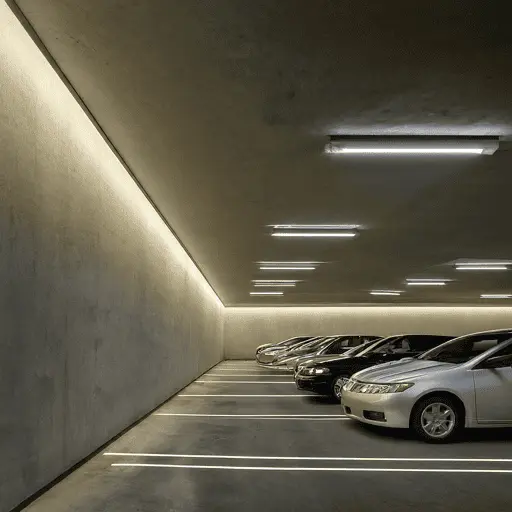
The Efficiency Gap Is Real
Let's put it plainly. SMD 5050 chips were designed over a decade ago. They house three diodes in a single package, which made them revolutionary at the time. But three diodes in one housing generate more heat and lose more energy to thermal waste.
SMD 2835 chips use a single, more advanced diode. The thermal path is shorter and wider relative to the chip's body. This means more of the electrical energy becomes light, not heat. In our testing, 2835 strips consistently deliver 15–25% more lumens per watt than equivalent 5050 strips from the same supplier.
Why This Matters for Commercial Projects
Commercial lighting runs for long hours. A retail store might keep its LED strips on for 12–16 hours a day. A hotel corridor runs 24/7. Here's a simple cost comparison over a year for a 100-meter installation:
| Factor | SMD 5050 Strip (60 LEDs/m) | SMD 2835 Strip (120 LEDs/m) |
|---|---|---|
| Power per meter | 14.4W | 9.6W |
| Total power (100m) | 1,440W | 960W |
| Daily runtime | 16 hours | 16 hours |
| Daily consumption | 23.04 kWh | 15.36 kWh |
| Annual consumption | 8,410 kWh | 5,606 kWh |
| Annual cost (at $0.25/kWh) | $2,102.50 | $1,401.60 |
That's roughly $700 saved per year on electricity for a single 100-meter run. Scale that across an entire building and the savings become significant.
Thinner Profile, More Design Flexibility
The 2835 chip has a flatter profile than the 5050. This matters when you're fitting strips into slim aluminum channels or recessed profiles. Thinner strips fit into tighter spaces without compromising light output. Architects and interior designers we work with prefer 2835 for exactly this reason — it disappears into the architecture.
When 5050 Still Makes Sense
We'd be dishonest if we said 2835 is always the answer. It's not. If your project requires RGB color-changing effects 7 — like a nightclub, event space, or dynamic retail display — you need 5050 chips. The 5050 package houses three separate diodes (red, green, blue) in one chip. SMD 2835 is typically single-color only. So for color control, 5050 remains the standard.
But for pure white commercial lighting where efficiency, longevity, and cost-per-lumen matter most, 2835 is the clear winner.
How can I ensure color consistency across my bulk orders of these different LED chip types?
Color consistency is one of the biggest pain points we hear from distributors and contractors. We've had clients in Germany who received strips from another supplier where one reel looked warm white and the next looked slightly greenish. When those strips go side by side on a ceiling, the visual result is unacceptable.
To ensure color consistency across bulk orders, request strips binned from the same LED chip lot, specify a tight MacAdam ellipse (3-step or tighter), and insist on pre-shipment spectrophotometer reports. Working with a single supplier who controls the entire production process — from chip sourcing to final QC — dramatically reduces batch-to-batch variation.

What Causes Color Inconsistency?
LED chips are manufactured in large wafers. Not every chip on a wafer produces exactly the same color temperature or brightness. Manufacturers sort chips into "bins" based on their measured performance. If your supplier mixes chips from different bins — or different wafer lots — your strips will look different under power.
This is true for all three chip types: 2835, 3528, and 5050. But the risk increases with larger orders because more wafer lots are involved.
Understanding MacAdam Ellipses
Color consistency in the LED industry is measured using MacAdam ellipses 8. Think of these as circles on a color chart. A 1-step MacAdam ellipse means the color variation is virtually invisible to the human eye. A 3-step ellipse is considered excellent for architectural lighting. A 5-step or larger ellipse produces noticeable differences.
Here's what we recommend for different applications:
| Application | MacAdam Step Tolerance | Chip Type Best Suited |
|---|---|---|
| Hospitality / high-end residential | 2–3 step | SMD 2835 (high-bin) |
| Commercial retail / office | 3 step | SMD 2835 |
| Decorative accent / cove | 3–5 step | SMD 3528 or 2835 |
| RGB dynamic lighting | N/A (color-mixed) | SMD 5050 |
Practical Steps for Buyers
Here are the steps we follow — and recommend to every procurement officer we work with:
- Specify bin codes upfront. Ask your supplier to confirm the chip bin range before production starts. Lock it into your purchase order.
- Request a golden sample. Before mass production, approve a physical sample. Keep it as your benchmark.
- Demand lot traceability. Every reel should be traceable to a specific chip lot. If a problem appears on site, you need to know which batch caused it.
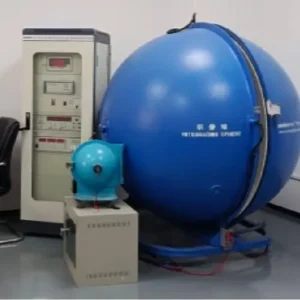
- Ask for spectrophotometer data. A good supplier measures CCT (correlated color temperature), CRI, and chromaticity coordinates for each production batch. We provide this data with every shipment — it's standard practice in our facility.
- Avoid mixing chip types in one project. If your design uses 2835 for main lighting and 5050 for accent RGB, specify them clearly. Never assume they will look the same in white mode.
Why Single-Source Matters
When you buy from multiple factories to save a few cents per meter, you're almost guaranteed to get inconsistent color. Each factory uses different chip suppliers, different phosphor coatings, and different soldering processes. We source all our chips from pre-qualified suppliers and test every incoming lot before it reaches our SMT line. That's how we keep color consistency tight across orders that span months.
For long-term projects — like a hotel chain rolling out lighting across multiple locations over a year — we reserve chip lots specifically for that client. It costs a bit more upfront but eliminates costly rework on site.
Which SMD chip offers the best heat dissipation and durability for my long-run strip installations?
Long-run installations — 10 meters, 20 meters, sometimes 50 meters or more in a continuous line — are where heat problems show up first. We've seen strips from other suppliers fail within months because the chips overheated and the phosphor coating degraded. The light turned yellow, then dim, then died.
SMD 2835 chips offer the best heat dissipation and durability for long-run strip installations. Their flatter package design features a larger exposed thermal pad relative to chip size, allowing heat to transfer more efficiently to the PCB and aluminum channel. This thermal advantage directly extends lifespan and maintains consistent brightness over tens of thousands of hours.
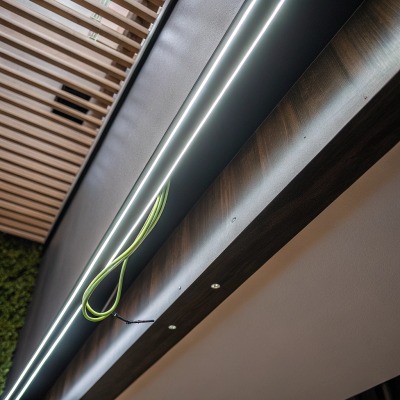
How Heat Kills LED Strips
LEDs don't burn out like incandescent bulbs. They degrade. As the chip junction temperature rises, two things happen: brightness drops and color shifts. This process is called lumen depreciation 9. Every LED chip has a maximum junction temperature rating. Exceed it regularly, and your 50,000-hour rated strip might fail in 15,000 hours.
In long-run installations, heat accumulates. The longer the strip, the more total heat it generates. Without adequate dissipation, sections in the middle of a run — farthest from the power feed — tend to run hottest and fail first.
Thermal Design Comparison
The 2835 chip was designed with thermal management 10 in mind. Its flat, wide body sits closer to the PCB surface. The thermal pad on the bottom of the 2835 chip is proportionally larger than that of the 3528, giving heat a wider path to escape into the copper traces and aluminum profile below.
The 5050 chip generates more total heat because it runs three diodes. While its larger body has more surface area, the heat density (watts per square millimeter) is higher. This makes proper heat sinking essential — you cannot run 5050 strips in long runs without aluminum channels. With 2835 strips, aluminum channels are still recommended for long runs, but the thermal margin is more forgiving.
SMD 3528 chips produce very little heat individually due to their low power (0.06–0.08W). But because they're often used without heatsinks, even their modest heat can build up in enclosed spaces.
Durability in Real-World Conditions
Durability isn't just about heat. It's also about mechanical stress, moisture resistance, and solder joint reliability. Here's what we've observed across thousands of installations:
- 2835 strips hold up best in long runs because the lower thermal stress reduces solder joint fatigue over time. The chips maintain their brightness rating longer.
- 5050 strips are durable but require more careful installation. Without aluminum profiles and adequate ventilation, they degrade faster in enclosed coves or behind diffuser covers.
- 3528 strips are durable for light-duty use but are rarely specified for long-run commercial projects anymore. Their lower output means you need more strips to cover the same area, increasing connection points and potential failure spots.
Installation Best Practices for Long Runs
Based on our project support experience, here are the non-negotiable practices for long-run installations:
- Always use aluminum extrusion profiles. They act as heatsinks and protect the strip physically.
- Feed power from both ends on runs longer than 5 meters. This prevents voltage drop and uneven brightness.
- Use constant-current drivers when possible. They maintain even current across the run, reducing hot spots.
- Leave ventilation gaps in enclosed channels. Sealed profiles trap heat and accelerate degradation.
- Choose 2835 strips with a rated junction temperature of 120°C or higher for maximum thermal headroom.
On our production line, we test every strip at elevated temperature before shipment. We run them at 10–15% above rated current for a set period and check for any early failures. This burn-in process catches weak chips before they reach your project site.
Conclusion
Choosing between SMD 2835, 3528, and 5050 comes down to your project's actual needs — not the chip number. For most modern commercial and architectural lighting, 2835 delivers the best balance of efficiency, brightness, and durability.
Footnotes
- Explains how constant-current drivers ensure stable and consistent power delivery to LEDs. ↩︎
- Provides detailed specifications and characteristics of the SMD 2835 LED chip. ↩︎
- Explains how lumens per meter is used to determine LED strip brightness. ↩︎
- Defines Color Rendering Index and its importance in accurately displaying colors under light. ↩︎
- Offers comprehensive technical specifications and applications for SMD 5050 LED modules. ↩︎
- Details lumens per watt as a key metric for evaluating LED lighting efficiency. ↩︎
- Describes how RGB LED technology creates a broad spectrum of color-changing effects. ↩︎
- Explains MacAdam ellipses as a method for measuring LED color consistency and deviation. ↩︎
- Defines lumen depreciation as the gradual decrease in light output over an LED's operational life. ↩︎
- Highlights the critical role of thermal management in maintaining LED performance and lifespan. ↩︎


 English
 Spanish
 German
 Russian
 Arabic
 French
 Portuguese