We see orders specifying IP65, IP67, or IP68—yet many buyers still confuse what these numbers actually promise Ingress Protection 1. Pick the wrong rating for a pool surround or a humid kitchen ceiling, and you risk short circuits, warranty claims, and project delays that cost far more than the strips themselves.
IP stands for Ingress Protection, an international standard that uses two digits to classify how well an LED strip resists dust and water. The first digit (0–6) rates solid-particle protection; the second digit (0–8) rates liquid protection. Higher numbers mean stronger defense against environmental intrusion.
Below, we break down how to match IP ratings to real commercial environments, when IP65 is enough for outdoor work, how ratings affect long-term reliability, and where to source custom IP-rated strips that meet your exact project specs.
How do I choose the right IP rating for my commercial project environment?
When we ship LED strips to contractors in Germany and Australia, the most common mistake we see is over-specifying or under-specifying the IP rating for the actual install location international standard 2. Both errors hurt your budget or your reputation.
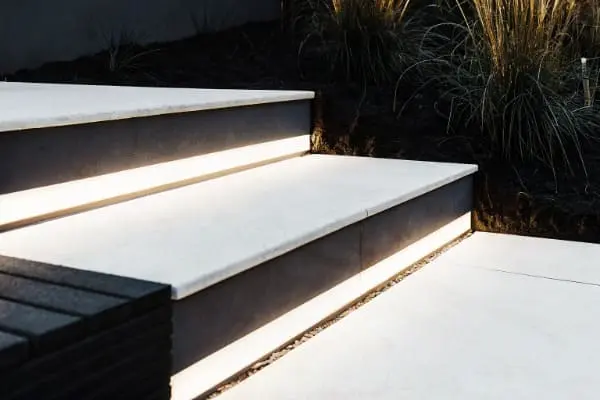
Choose your IP rating by mapping the installation environment to specific dust and water exposure levels. Indoor dry spaces need IP20, sheltered outdoor areas need IP54–IP65, rain-exposed facades need IP65, flood-risk zones need IP67, and permanent submersion demands IP68.
Start With the Environment, Not the Product
The biggest mistake in commercial lighting procurement is browsing product catalogs first solid-particle protection 3. Instead, start by listing every environmental hazard at the install site. Ask these questions:
- Will the strips be exposed to direct rain or only ambient humidity liquid protection 4?
- Is there a wash-down or cleaning protocol that uses pressurized water?
- Could flooding, condensation, or standing water reach the strips?
- How much airborne dust, debris, or particulate matter is present?
Once you have clear answers, matching to an IP rating becomes straightforward.
Quick-Reference Table: Environment to IP Rating
| Installation Environment | Dust Risk | Water Risk | Recommended IP Rating |
|---|---|---|---|
| Office ceilings, display cabinets | Low | None | IP20 |
| Retail shelving, residential coves | Low | None | IP20 |
| Bathroom mirrors, covered patios | Medium | Splashes | IP54 |
| Outdoor facades, garden paths | Medium | Rain / jets | IP65 |
| Docks, industrial wash-down zones | High | Temporary flooding | IP67 |
| Swimming pools, fountains | High | Continuous submersion | IP68 |
Don't Forget the First Digit
Most buyers fixate on waterproofing—the second digit. But in warehouses, workshops, and construction sites, dust is the silent killer. Fine particles work their way under conformal coatings and onto solder joints, accelerating corrosion. A rating of 5 in the first digit means only partial dust protection. If your site generates fine powder or sawdust, insist on a 6 in the first position.
Cost-Benefit Reality Check
Our quoting data shows that IP67 strips can cost 30–50 % more than IP20 strips of the same LED density. Specifying IP68 for a dry office ceiling wastes budget that could go toward better optics or aluminum profiles. On the other hand, specifying IP20 for a coastal café awning is a warranty claim waiting to happen. Match the rating to the actual hazard—nothing more, nothing less.
Regulatory and Zone Considerations
In Australia and parts of Europe, bathroom installations follow zone rules. Zone 0 (inside a bath or shower tray) typically requires IP67 or above. Zone 1 (above the bath to 2.25 m height) needs at least IP65. Zone 2 (the area extending 0.6 m beyond Zone 1) can often use IP54. Always check local building codes before finalizing your specification.
Can I use IP65 strips for my outdoor installations or do I need a higher rating?
This question comes up in almost every project consultation we handle. Contractors want reliable outdoor performance, but they also want to keep material costs under control. The answer depends on how close your strips get to standing water.
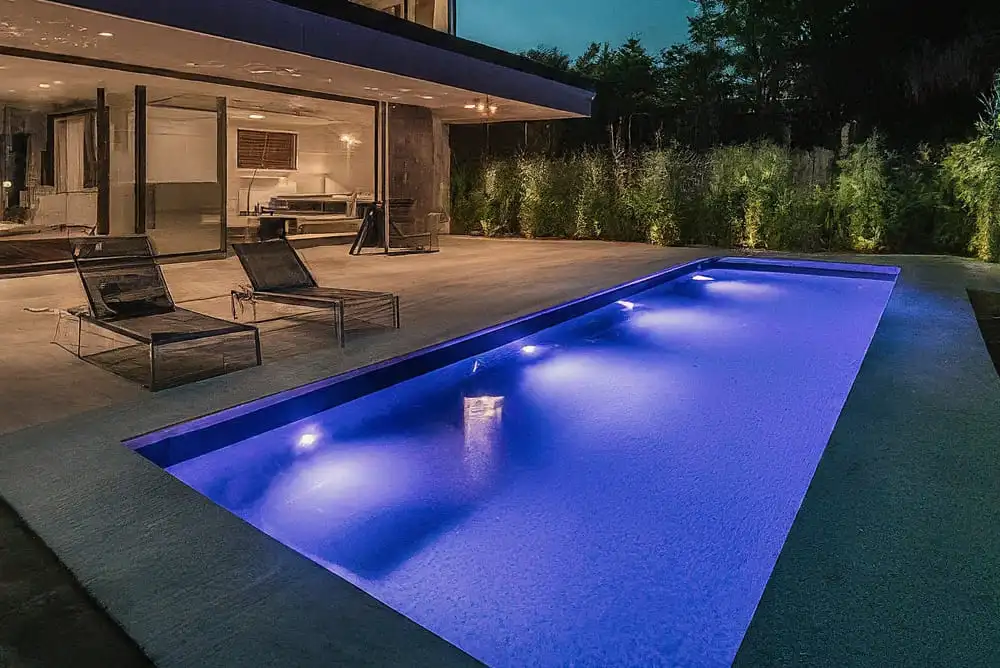
IP65 strips handle rain, wind-driven spray, and garden-hose splashes effectively. They are ideal for most general outdoor installations such as facades, eaves, and garden paths. However, if strips will be submerged—even temporarily—you need IP67 or IP68.
What IP65 Actually Protects Against
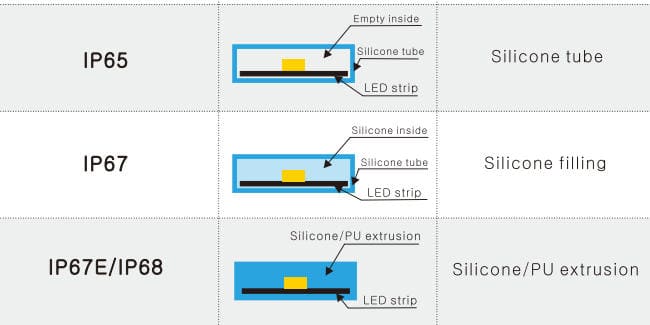
The "6" means complete dust-tightness. No particles get in—period. The "5" means the strip withstands low-pressure water jets from any direction. Think of a steady rain shower or someone rinsing a patio with a garden hose. That covers the vast majority of outdoor lighting scenarios where strips are mounted on vertical surfaces or under eaves.
Where IP65 Falls Short
IP65 was never designed for submersion. If rainwater pools around the mounting channel, if the strip sits at ground level in a planter that floods during storms, or if it lines a water feature's edge where splashing regularly submerges sections, IP65 will eventually fail. Water will find its way past the silicone sleeve through capillary action at cut points and connector joints.
Side-by-Side Comparison: IP65 vs. IP67 vs. IP68
| Feature | IP65 | IP67 | IP68 |
|---|---|---|---|
| Dust protection | Complete (6) | Complete (6) | Complete (6) |
| Water protection | Low-pressure jets (5) | Immersion up to 1 m / 30 min (7) | Continuous submersion beyond 1 m (8) |
| Typical construction | Silicone sleeve or nano-coating | Silicone extrusion tube | Full epoxy/silicone encapsulation |
| Heat dissipation | Good | Moderate | Reduced—needs aluminum profile |
| Relative cost index | 1.0× | 1.3× | 1.5–1.8× |
| Best applications | Facades, eaves, covered walkways | Docks, landscape near ponds, in-ground channels | Pools, fountains, permanent underwater |
| Can be cut & reconnected easily? | Yes, with re-sealing | Possible, but re-sealing is critical | Difficult; factory-terminated preferred |
A Practical Decision Framework
Here is a simple rule we share with our partners:
- Strips stay above any possible water line? → IP65 is sufficient.
- Strips might sit in standing water after heavy rain? → Go IP67.
- Strips will be permanently underwater? → IP68 is mandatory.
The Connector Trap
One detail that many specifiers overlook: cutting and reconnecting an IP65 or higher strip in the field compromises the seal. On our production line, we factory-terminate and seal every cut point with injection-molded end caps tested to the rated standard. If your installer cuts on site, they must use IP-rated connectors and apply proper heat-shrink tubing or silicone potting. Otherwise, even an IP68 strip becomes IP20 at the joint. Structure and installation discipline matter as much as—sometimes more than—the rating printed on the datasheet.
How does the IP rating impact the long-term reliability of my LED strip lights?
Over the years, our engineering team has analyzed hundreds of warranty returns. The single most common failure mode is moisture ingress—water creeping past a compromised seal and corroding solder joints or LED chips from the inside out.
A correctly matched IP rating directly extends the working lifespan of LED strips by preventing dust accumulation on circuits, blocking moisture-driven corrosion, and maintaining consistent electrical insulation. Under-rated strips in harsh environments degrade faster, while properly rated strips routinely exceed 50,000-hour lifespans.
How Moisture Destroys LED Strips
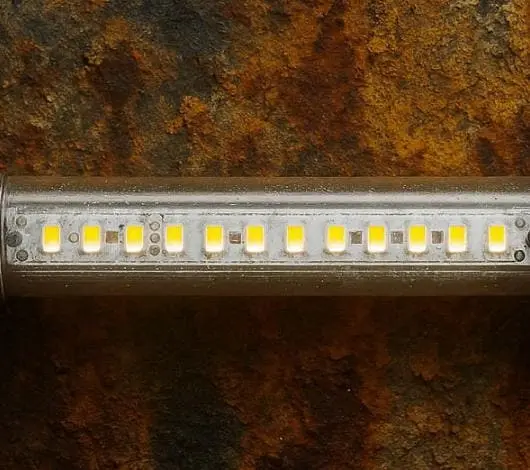
Water itself is not the only problem. Water carries dissolved salts, chlorine (in pool environments), and airborne pollutants. Once moisture reaches the copper traces on the flexible PCB, electrochemical migration 5 begins. Copper ions travel between traces under electrical bias, eventually forming conductive dendrites that cause short circuits. This process is invisible until the strip flickers, dims unevenly, or fails entirely.
A proper IP65, IP67, or IP68 seal blocks this chain of events at the source. But the seal must be maintained for the entire service life—not just on day one.
UV and Temperature: The Hidden Degraders
Higher-IP-rated strips use silicone or epoxy encapsulation. These materials face environmental stress too. UV radiation 6 breaks down polymer chains over time, causing yellowing and micro-cracking. Extreme heat softens silicone, while extreme cold makes it brittle. In our R&D lab, we accelerate these aging cycles to validate that our encapsulants hold up for at least five years under Australian sun exposure.
If your project is in a high-UV location, ask your supplier whether the silicone is UV-stabilized. Not all are. A cheap silicone sleeve may turn yellow and crack within 18 months, voiding the IP rating entirely.
Thermal Management and IP Ratings
Full encapsulation—especially IP68 epoxy potting—traps heat around the LEDs. LEDs produce less heat than incandescent sources, but they are far more sensitive to it. Junction temperatures above 80 °C accelerate lumen depreciation 7 exponentially. This is why we always recommend pairing IP67 and IP68 strips with aluminum extrusion profiles 8. The profile acts as a heat sink, pulling thermal energy away from the LEDs and dissipating it through the aluminum surface.
Maintenance Intervals and IP Ratings
| IP Rating | Typical Seal Material | Recommended Inspection Interval | Common Failure Mode |
|---|---|---|---|
| IP20 | None / open | Dust wipe every 6–12 months | Dust buildup reducing brightness |
| IP54 | Nano-coating | Annual visual check | Coating wear at flex points |
| IP65 | Silicone sleeve | Every 12–18 months | Sleeve shrinkage at end caps |
| IP67 | Silicone tube extrusion | Every 18–24 months | End-cap seal degradation |
| IP68 | Full potting / resin | Every 24–36 months | UV yellowing, micro-cracks |
The Real Lesson: Structure Over Sticker
I have always believed that an IP rating is a reference point, not an absolute guarantee. A strip certified IP67 in a lab may fail at IP54 levels in the field if the installer nicks the sleeve during mounting, if connectors are left unsealed, or if the mounting channel creates mechanical stress on the encapsulant. The rating tells you what the product can do under controlled conditions. Structural design—how the strip is mounted, channeled, connected, and maintained—determines what it actually does on your project.
Where can I find custom IP-rated solutions that meet my specific project bidding requirements?
When we work with distributors and design firms preparing tenders, one thing becomes clear fast: off-the-shelf IP ratings rarely align perfectly with the exact run lengths, color temperatures, and certifications the bid document demands.
For custom IP-rated LED strip solutions, look for manufacturers that offer OEM/ODM co-development, low minimum order quantities for prototyping, factory-sealed custom cut lengths, and certifications like CE, SAA, or TÜV that satisfy your local project bidding requirements.
Why Off-the-Shelf Often Falls Short
Commercial lighting bids rarely call for a generic "5-meter IP67 strip." Instead, they specify exact run lengths—say 11.2 meters with no visible joints—at a precise color temperature of 3000 K ±100 K, with an IP67 rating, and with SAA certification for the Australian market. Meeting all of these simultaneously requires a manufacturer who can customize the PCB layout, the cut points, the encapsulation method, and the certification paperwork as a package.
What to Look for in a Custom Supplier
Here are the key capabilities to evaluate:
- Rapid prototyping: Can they produce a small sample batch (50–100 meters) within 7–10 days so you can test before committing to a full order?
- Factory-sealed terminations: Do they seal cut points and connectors in-house to maintain the IP rating, or do they ship open-ended strips that need field sealing?
- Color consistency (binning): Do they guarantee a MacAdam step 9 of 3 or tighter across the entire order, including reorders months later?
- Certification flexibility: Can they provide the specific test reports (IEC 60529 10, IEC 62031, etc.) your project bid requires?
- Private labeling: If you are a distributor, can they package under your brand with your logo on the product and documentation?
How Our Process Works at Glowin
When a partner like Roy in Australia sends us a bid specification, our workflow looks like this:
- Spec review: Our engineers break down the bid document and flag any conflicts (e.g., IP68 requested but no aluminum profile specified—thermal risk).
- Prototype run: We produce a short sample in 7 days, factory-sealed and labeled, shipped via express courier.
- Testing and approval: Roy tests on-site. We adjust if needed—no extra tooling charge for minor revisions.
- Production and QC: Full batch goes through 100 % electrical testing and random IP verification (water immersion spot checks on IP67/IP68 orders).
- Shipping with documentation: Every shipment includes test reports, certification copies, and installation guides—ready to attach to the bid submission.
Avoiding the Multi-Vendor Headache
One major pain point we hear from contractors is coordination fatigue. They source strips from one vendor, aluminum profiles from another, power supplies from a third, and controllers from a fourth. When something fails, everyone points fingers. By consolidating with a single supplier who offers strips, profiles, drivers, and accessories as a tested system, you cut coordination costs and have one point of accountability. This is especially important for IP-rated installations, because the seal integrity depends on how the strip fits into the profile. A 1 mm mismatch between a third-party profile and the strip tube can compromise the entire encapsulation.
Certifications That Matter for Bidding
Depending on your market, your bid may require specific marks. Here is a quick guide:
| Market | Common Required Certification | Relevant IP Test Standard |
|---|---|---|
| Australia / New Zealand | SAA (AS/NZS) | IEC 60529 |
| European Union | CE, TÜV, ENEC | IEC 60529 |
| United Kingdom | UKCA | IEC 60529 |
| North America | UL, ETL, cUL | UL 2108 (references IEC 60529) |
| Middle East | G-mark, SASO | IEC 60529 |
Always verify that the IP rating on the datasheet is backed by a third-party lab report, not just a manufacturer's self-declaration. Reputable suppliers provide the test report number and the lab name. At Glowin, every IP-rated product ships with a traceable test certificate from an accredited laboratory.
Conclusion
IP ratings give you a clear, standardized way to match LED strip protection to your project's real-world hazards. Choose wisely, verify with certified test reports, and never underestimate the importance of proper installation and structural design—because the best IP rating in the world only works when the seal stays intact.
Footnotes
- Official IEC page defining the international standard for IP codes. ↩︎
- Wikipedia provides a comprehensive overview of the international standard for IP codes. ↩︎
- Authoritative source for IEC standards. ↩︎
- Authoritative source for IEC standards. ↩︎
- Provides a clear definition and explanation of electrochemical migration in electronics. ↩︎
- Explains how UV radiation causes photooxidative degradation and breaks down polymer chains. ↩︎
- Authoritative and comprehensive explanation of lumen depreciation. ↩︎
- Comprehensive guide explaining aluminum extrusion profiles for LED strips. ↩︎
- Explains MacAdam ellipses and their role in achieving LED color consistency and binning. ↩︎
- Authoritative source for the IEC 60529 standard. ↩︎

 English
 Spanish
 German
 Russian
 Arabic
 French
 Portuguese