
We often see buyers freeze over UL versus ETL, then lose time, budget, and bid confidence while real safety questions go unanswered OSHA-recognized lab 1. UL and ETL certification 2
UL and ETL certification for LED strip lights mean nearly the same thing: both show the product was tested by an OSHA-recognized lab to the relevant safety standard. For most buyers, the real issue is not UL or ETL, but whether the strip is listed for the job.
The details matter when a project spec, an inspector, and a purchasing deadline all pull in different directions.
Which certification should I prioritize for my large-scale commercial lighting projects?
In our project quotes, this is where buyers feel the most pressure: choose the wrong mark and a simple strip light can become a bid risk relevant safety standard 3.
For large-scale commercial lighting projects, prioritize a valid listing that matches the application, voltage, location rating, and project spec. UL may ease conversations with cautious owners, but ETL is usually just as acceptable when the strip is listed to the same standard.
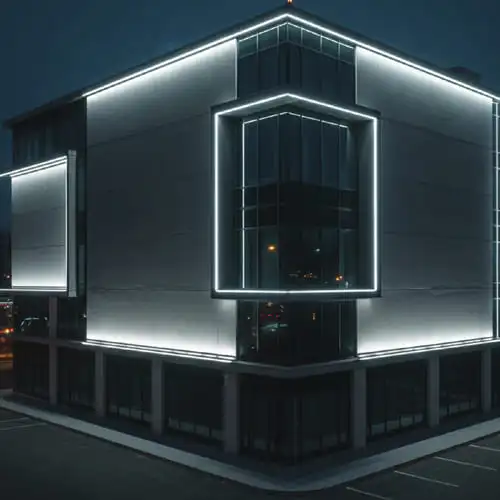
Start with the application, not the logo
The first filter for a commercial LED strip project is not brand prestige large-scale commercial lighting projects 4. It is fit. A strip for dry indoor millwork is not the same product as a strip for a wet exterior reveal, a refrigerated case, or a plenum-adjacent ceiling detail. When our team reviews project drawings, we check the use case before we even discuss UL or ETL procurement costs and lead times 5.
That is because a correct listing under the right standard matters more than the name on the mark. If the product is low-voltage tape light 6, the listing scope, power supply pairing, and installation method must all make sense together. If the strip will be used in a wet location 7, the enclosure, connectors, coating, and field joints all matter. A buyer who chooses a famous mark on the wrong product still creates risk.
| Priority check | Why it matters | What you should ask the supplier |
|---|---|---|
| Correct listing type | A finished product needs a proper listing, not only recognized parts | Is this strip listed as a complete product or only built from recognized components? |
| Application match | The same strip cannot fit every environment | Is it approved for dry, damp, or wet locations? |
| Voltage and system match | Wrong driver or control gear can void the safe setup | Which driver, dimmer, and accessories were evaluated with it? |
| Installation method | Channels, splices, and field cuts can change compliance | Can installers cut, extend, or solder this on site without affecting the listing? |
| Documentation | Submittals often decide approval speed | Can you provide cut sheets, file numbers, and marking photos? |
Where UL can be the easier choice
UL still has stronger name recognition with some consultants, owners, and old-school spec writers. In some bid reviews, that familiarity saves time. Nobody on the approval side needs a history lesson. They see the mark and move on. That is real, and it has value.
But that is different from saying UL is safer. It is not automatically safer than ETL. Both can certify to the same published safety standard. In many projects, ETL works just as well. I have seen buyers overpay or delay a purchase because they chased the logo instead of checking the scope of listing.
My practical rule for commercial work
The simple rule is this: first confirm that the strip is truly certified for the intended use. Then confirm that the full system around it also fits the job. That includes driver class, location rating, wire gauge, mounting method, and any custom changes.
From a project risk view, the order of importance is clear. Correct certification comes first. Correct application comes next. Logo preference comes after that. If a spec or owner clearly demands UL, follow the spec. If the spec allows UL or ETL, do not treat ETL as second tier by default. The bigger mistake is buying an uncertified or wrongly rated strip and hoping the paperwork can be fixed later.
Will my local building inspectors accept ETL-listed LED strips as an equivalent to UL?
When we prepare files for overseas projects, inspector acceptance is the point that creates the most last-minute anxiety and costly rework.
Yes, in most jurisdictions local building inspectors can accept ETL-listed LED strips as equivalent to UL because both marks come from OSHA-recognized NRTLs. The real issue is documentation, proper product category, and whether the listing fits the actual installation conditions.

Why inspectors usually accept both
Most inspectors do not start with brand loyalty. They start with code compliance. If ETL and UL are both recognized testing labs under OSHA, and the product is listed to the right standard, the mark can satisfy the same safety intent. For LED strip lights, the inspector or plan reviewer usually cares about whether the product is properly listed, correctly installed, and suitable for the environment.
That means ETL can be fully acceptable. The confusion often comes from market habit. UL has a longer public history, so people assume it must be the only safe option. In reality, ETL can test to the same standard and apply an equivalent listing mark. The authority having jurisdiction 8, often called the AHJ, has the final say, but the mark itself is usually not the real problem.
| Inspector checkpoint | What they usually want to see | Common reason for rejection |
|---|---|---|
| Valid NRTL mark | UL or ETL mark on product and packaging | Missing mark or fake label |
| Listing scope | Product category matches the installation | Components are recognized, but the finished strip is not listed |
| Location rating | Dry, damp, or wet use is clearly stated | Using indoor strip in a wet location |
| Electrical match | Driver and strip ratings align | Wrong power supply or mixed system parts |
| Installation method | Field cuts and connections follow instructions | Unapproved splices or modified assemblies |
| Technical documents | Cut sheets, instructions, and file details are available | No paperwork at inspection time |
Where acceptance still breaks down
Many approval failures have little to do with ETL versus UL. They happen because the product was changed after approval, the supplier sent incomplete files, or the installed system does not match the certified configuration. We have seen cases where a buyer had a real ETL-listed strip, but paired it with a non-matching driver and then lost inspection time.
Another common issue is the difference between "Listed" and "Recognized." A recognized component is not the same as a listed finished product. Listed and Recognized 9 This matters a lot in custom assemblies. A strip built from recognized LEDs, wire, and drivers may still need separate evaluation as a finished system. Inspectors can catch that.
How we reduce approval friction before shipment
The safest approach is paperwork discipline. Before a project order leaves our side, we try to line up the mark, the file details, the cut sheet, the driver information, and the installation notes as one package. That gives the contractor something clean to submit. It also helps when there is a site question later.
If you expect an inspector to review the product, ask for the evidence early. Do not wait until the fixtures are already on site. A valid ETL listing is usually enough, but only if it is real, traceable, and matched to the installed condition. That is why I treat documentation as part of the product, not an afterthought.
How does the choice between UL and ETL impact my procurement costs and lead times?
Our team feels this question during sampling season, when every extra week or added test fee can upset a tender schedule.
UL and ETL can affect cost and lead time, but not because one is safer. ETL is often faster and less expensive to obtain, while UL may reduce friction with conservative specifiers and shorten internal approval on some projects.

Where the cost difference really comes from
Buyers often ask whether UL products cost more because UL is "better." That is usually the wrong frame. The cost difference is more about certification path, lab scheduling, follow-up process, sample iterations, and the supplier's internal setup. In many factories, ETL can be faster to process and less expensive to obtain. Those savings can show up in tooling decisions, sample timing, and final quotation.
Still, the lab mark is only one line inside the total cost. On a mature product that already holds a valid listing, the price gap at unit level may be small. The larger cost shows up when a buyer asks for a new private-label version, a different connector, a custom waterproof build, or a project-specific packaging change. Then the supplier may need extra review, new samples, or even partial retesting.
| Procurement factor | ETL tendency | UL tendency | Buyer impact |
|---|---|---|---|
| Initial certification timeline | Often faster | Often longer | Faster sampling and launch |
| Certification cost to supplier | Often lower | Often higher | Can affect quotation and MOQ |
| Specifier familiarity | Good | Usually stronger | May reduce approval debate |
| Resubmittal risk | Low when documents are clear | Low when documents are clear | Depends more on paperwork than mark |
| Private-label flexibility | Often easier to discuss quickly | Can be slower in some cases | Matters for OEM and ODM work |
How this affects real purchasing work
In day-to-day procurement, three costs matter more than the logo itself. The first is delay cost. If your project misses a site milestone, even a cheap strip becomes expensive. The second is approval cost. If a consultant rejects the submittal and asks for a different mark, you lose time and labor. The third is rework cost. If the listed scope does not match the delivered product, everyone pays.
This is why some buyers still choose UL even when ETL would be technically fine. They want smoother conversations with brand-sensitive stakeholders. That can be rational. On the other hand, if the project team accepts ETL and the supplier can move faster with ETL-listed stock, it may be the smarter commercial choice.
Do not confuse certification path with product quality
I have seen excellent ETL-listed strips and poor UL-marked offers, just as I have seen the opposite. The mark proves safety compliance to a defined scope. It does not promise tight color binning, strong adhesive, stable voltage drop performance, or clean soldering. Those quality factors come from engineering and process control.
So when you compare quotes, look beyond the mark. Ask about lead time, stock position, color consistency, driver pairing, production batch control, and warranty handling. The safest buying decision is rarely the lowest lab fee or the most famous logo alone. It is the offer that keeps your project moving without approval surprises.
Can I rely on the same level of safety and quality testing for my custom LED strip orders?
When we develop custom strip builds, clients usually worry that special lengths or materials might weaken the safety review.
You can expect the same safety standard when a custom LED strip order is listed by UL or ETL under the same scope, but you still need to confirm the final assembly, components, use environment, and test coverage match your custom design.

Same safety standard does not mean every custom version is covered
This is where many buyers get caught. They hear that a factory has UL or ETL certification for one LED strip series, then assume every variation is automatically covered. That is not always true. Safety certification applies to a defined construction and scope. If a custom order changes major elements, the original file may no longer be enough.
Changes that can matter include PCB width, copper weight, LED density, wattage, connector type, waterproof coating, wire specification, reel length, or driver pairing. Some changes are minor. Some require review. A serious supplier should be able to tell you which changes stay inside the approved family and which ones need lab confirmation.
| Custom change | Likely impact on certification scope | What to verify |
|---|---|---|
| Different LED density | May change heat and power loading | Is this wattage included in the listed family? |
| New waterproof process | Can affect insulation and flammability | Is the IP version covered by the file? |
| Different connector or lead wire | Can affect current handling and strain relief | Were these connection parts evaluated? |
| Longer run length | Can change temperature rise and voltage behavior | Is the maximum run length defined? |
| New driver pairing | Can change system safety | Is the driver approved for use with this strip? |
| Custom housing or channel | May affect temperature and installation | Does the listing assume open air or a specific mounting condition? |
Listed product versus recognized parts
Another point matters here. Many custom strips are built from recognized parts. That is useful, but it is not the same as saying the final custom strip is listed as a complete product. For B2B project work, that distinction can decide whether your submittal is smooth or painful.
When we review custom requests, we separate the question into two layers. First, is the safety path still valid for the final assembly? Second, does the product still meet the visual and functional targets? Those are connected, but they are not identical.
Safety certification is not the full quality test
UL and ETL mainly address electrical and fire safety 10. They do not fully cover every performance concern that commercial buyers care about. A custom strip can be safely listed and still disappoint on color consistency, lumen uniformity, adhesive strength, bend performance, or long-run brightness balance.
That is why custom orders need two checkpoints. One is certification scope. The other is quality validation. On our side, that often means pilot samples, thermal checks, color review across batches, and confirmation of the exact driver and dimming setup. For architectural strip lighting, those practical checks matter just as much as the mark.
So yes, you can rely on the same level of safety testing when the custom product stays within the right certified scope or is properly re-evaluated. But do not assume that the safety mark alone confirms the full project quality you need. For custom work, good engineering and good paperwork have to travel together.
Conclusion
For most LED strip projects, the smart priority is simple: make sure the product is correctly certified for the job. Between UL and ETL, proper listing matters more than logo.
Footnotes
- Official OSHA page detailing the Nationally Recognized Testing Laboratory (NRTL) program. ↩︎
- Provides information about UL Solutions, a global safety science company offering certification services. ↩︎
- Details the UL 8750 standard for LED equipment, a key safety standard in the industry. ↩︎
- The Illuminating Engineering Society is a recognized authority on illumination and lighting standards. ↩︎
- The Institute for Supply Management is a leading professional organization for supply chain management. ↩︎
- Provides access to the National Electrical Code (NFPA 70), which governs electrical installations. ↩︎
- The National Electrical Manufacturers Association sets standards for electrical enclosures and environmental ratings. ↩︎
- Official NFPA definition of Authority Having Jurisdiction (AHJ) in the context of codes. ↩︎
- Explains the critical differences between UL Listed and UL Recognized certifications. ↩︎
- The National Fire Protection Association provides comprehensive codes and standards for fire and electrical safety. ↩︎


 English
 Spanish
 German
 Russian
 Arabic
 French
 Portuguese