

We test COB LED strips that look identical on the outside but perform completely differently once powered up — and the difference almost always comes down to the drive circuit inside.
Constant current drive circuits stabilize COB LED strip lights by continuously regulating the electrical current flowing through every LED chip, regardless of voltage fluctuations, temperature changes, or voltage drop over long runs. This keeps brightness uniform, prevents color shift, avoids thermal runaway, and significantly extends the lifespan of the entire lighting system.
Most people focus on LED chip brands and color temperature 1 when choosing COB strips COB LED strip lights 2. But the real secret to long-term performance is the drive circuit. In the sections below, I will walk you through exactly how constant current technology works, why it matters for your projects, and when it truly makes a difference over constant voltage alternatives.
How can I ensure uniform brightness across my long-run COB LED strip installations?
Long-run COB strip installations are where brightness problems show up first — and where our engineering team spends the most time helping clients troubleshoot failed specs from other suppliers electrical current 3.
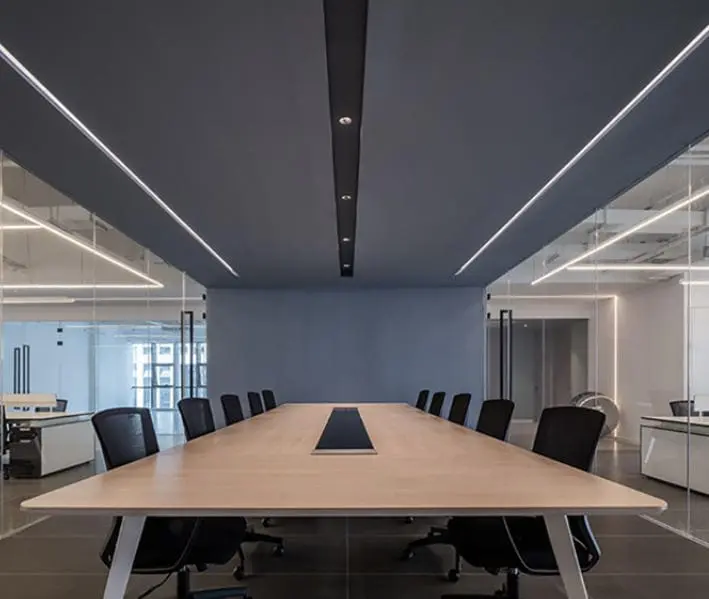
To ensure uniform brightness across long COB LED strip runs, use constant current drive circuits that regulate current locally along the strip. These circuits compensate for voltage drop over distance, so LED chips at the far end receive the same current as those near the power source, maintaining consistent light output end to end.
Why Voltage Drop Is the Root Cause
Every copper trace on a flexible LED strip has resistance. The longer the strip, the more resistance the current encounters. In a constant voltage system, this resistance causes voltage to gradually decrease along the length. LEDs near the power feed receive full voltage. LEDs at the far end get less. Since LED brightness is directly tied to the current flowing through them, this voltage drop 4 means dimmer light at the end of the run.
This is not a minor cosmetic issue. On a 10-meter constant voltage strip, the brightness difference between the first and last meter can be visible to the naked eye. On a 20-meter run, it can be dramatic.
How Constant Current Circuits Fix This
Constant current COB strips use driver ICs 5 distributed along the strip itself. These small integrated circuits sit within each LED segment or group. They monitor the current flowing through the LEDs in their section and dynamically adjust the voltage they deliver. If the incoming voltage drops slightly due to line resistance, the IC compensates. The result is that each LED group receives a stable, target current — regardless of where it sits on the strip.
This local regulation is the key difference. Instead of relying on one power supply at the beginning of the run, the intelligence is spread across the entire strip.
Real-World Run Length Comparison
| Parameter | Constant Voltage COB Strip | Constant Current COB Strip |
|---|---|---|
| Typical max single-feed run | 5–10 meters | Up to 20 meters |
| Brightness uniformity at max run | Noticeable drop-off (10–20%) | Less than 3% variation |
| Mid-run power injection needed? | Often required beyond 5m | Rarely needed up to 20m |
| Installation complexity | Higher for long runs | Lower for long runs |
In our experience exporting to Australia and Germany, the most common complaint from contractors is visible brightness inconsistency in cove lighting and under-cabinet runs. When we switched those clients to constant current COB strips, the complaints stopped. One distributor in Melbourne told us he cut his on-site troubleshooting calls by more than half after making the switch.
A Note on Wiring and Connections
Even with constant current strips, poor wiring and loose solder joints can introduce problems. Constant current technology compensates for normal line resistance, but it cannot fix a bad connection. Always use quality connectors, proper gauge wire, and ensure solid solder joints at every link. The technology helps you — but clean installation practices still matter.
Will constant current technology prevent the color variance issues I face in my large-scale projects?
Color consistency is one of the hardest things to guarantee at scale — and when we run QC on outgoing shipments, the drive method is one of the first things our team checks alongside binning data.
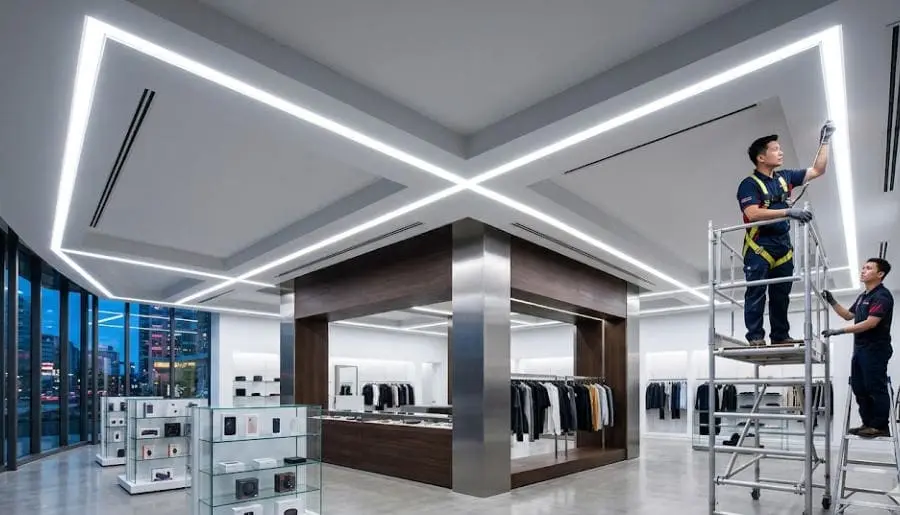
Yes, constant current technology significantly reduces color variance in large-scale COB LED projects. By keeping current stable through every LED chip, it prevents the subtle shifts in correlated color temperature and chromaticity that occur when LEDs are over-driven or under-driven, ensuring the entire installation looks visually unified.
How Current Affects LED Color
LED chips do not just change brightness when current fluctuates. They also shift color. This is a well-documented characteristic of LED semiconductors 6. When you push more current than the rated value, the color temperature can shift warmer. When less current flows, it can shift cooler. The change is subtle per chip, but across dozens of meters of COB strip, the cumulative effect becomes visible.
In a constant voltage setup running a long distance, the LEDs near the power source may appear slightly warmer, while the far end looks slightly cooler. This is not a chip defect. It is a drive problem.
Constant Current Eliminates the Variable
When every LED group receives the same target current, every group operates at the same point on its characteristic curve. This means the same brightness, the same color temperature, and the same chromaticity coordinates from start to finish. The result is a seamless wash of light — which is the whole point of choosing COB in the first place.
Color Variance Factors and How They Are Addressed
| Factor Causing Color Variance | Constant Voltage Response | Constant Current Response |
|---|---|---|
| Voltage drop over distance | Current drops, color shifts | Current regulated, color stable |
| Temperature rise during operation | Forward voltage changes, current drifts | Driver IC adjusts voltage to hold current |
| LED chip binning differences | Differences amplified by uneven current | Differences minimized by uniform current |
| Dimming at low levels | Color shift common at low PWM duty | Smoother current control, less color shift |
Batch-to-Batch Consistency
One thing I want to address honestly: constant current technology reduces color variance caused by the electrical drive, but it does not eliminate variance caused by poor chip binning. If the LED chips themselves are from inconsistent bins, even perfect current regulation cannot make them look identical. That is why, on our production line, we combine tight bin control with constant current drive design. Both matter. But if you have to pick one thing that makes the biggest difference for a long-run installation, it is current regulation.
Dimming and Color Stability
Many architects and designers specify dimmable COB strips for hospitality and residential projects. When you dim a constant voltage strip, the current drops in an uncontrolled way, and color shift at low levels is common. Constant current systems allow precise current control during dimming, which means smoother transitions and more consistent color temperature from 100% down to very low output. This is a real advantage for high-end applications where mood lighting must look perfect.
How does a constant current drive circuit protect my lighting investment from voltage fluctuations?
Voltage fluctuations are an everyday reality on construction sites and in commercial buildings — and when we consult with contractors on project specs, protecting the LED system from these fluctuations is always a core concern.
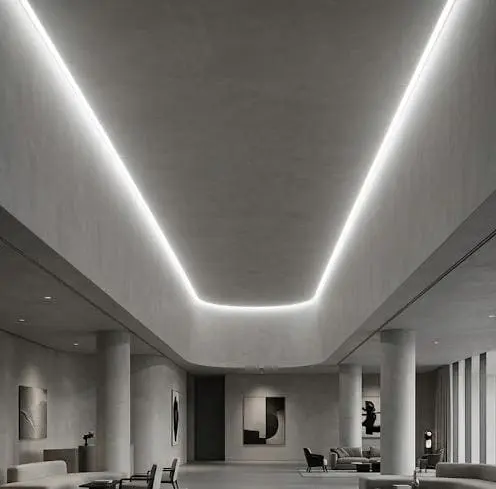
A constant current drive circuit protects your lighting investment by continuously monitoring and adjusting its output so that the current through the LEDs stays fixed, even when input voltage rises or falls. This prevents overcurrent damage, thermal runaway, flickering, and premature LED degradation, extending system life and preserving visual quality.
What Voltage Fluctuations Do to LEDs
LEDs are nonlinear devices. A small increase in voltage across an LED can cause a disproportionately large increase in current. This is why LEDs are classified as current-driven devices, not voltage-driven. If a power supply delivers slightly higher voltage — due to grid fluctuations, load changes in the building, or even temperature changes in the driver — the current through the LEDs can spike. That spike generates excess heat, accelerates phosphor degradation, and shortens the life of every chip in the strip.
Conversely, if voltage dips, LEDs can flicker or dim noticeably. In a commercial environment — a hotel lobby, a retail display, a museum — visible flicker is unacceptable.
The Constant Current Protection Mechanism
A constant current driver works like a smart regulator. It measures the actual current flowing to the LEDs in real time. If the current starts to rise above the target value, the driver reduces its output voltage. If the current falls, the driver increases voltage to compensate. This feedback loop happens continuously and very quickly. The LEDs never see the fluctuations that the input power line experiences.
Thermal Runaway Prevention
Thermal runaway 7 is one of the most dangerous failure modes for LEDs. Here is how it works: as LED temperature rises, forward voltage drops. In a constant voltage system, this lower forward voltage means more current flows. More current means more heat. More heat means even lower forward voltage. The cycle accelerates until the LED burns out.
Constant current circuits break this cycle. Because the driver holds current steady regardless of forward voltage changes, the thermal feedback loop never gets started. This single feature alone can add years to the life of a COB LED strip installation.
Protection Features in Quality Constant Current Drivers
| Protection Feature | What It Does | Why It Matters |
|---|---|---|
| Over-current protection 8 | Shuts down or limits output if current exceeds safe threshold | Prevents LED burnout from sudden surges |
| Over-temperature protection | Reduces output or shuts down if driver temperature is too high | Prevents driver failure in enclosed spaces |
| Short-circuit protection | Detects short circuits and disconnects output | Prevents fire risk and component damage |
| Over-voltage protection | Limits output voltage if load conditions change | Protects LEDs from voltage spikes |
| Soft-start function | Gradually ramps up current at power-on | Prevents inrush current stress on LEDs |
When we design driver specifications for OEM clients, we always include at least the top four protections in the table above. Some budget suppliers skip one or more of these to save cost. The result is a strip that works fine for a few months, then starts failing in the field. The driver is the insurance policy for the entire system.
A Personal Observation
I have seen project returns where strips from another supplier looked great on day one but showed visible degradation within six months. When we opened up the strips, there was no real current regulation — just a simple resistor network. The LEDs had been running 15–20% over their rated current since installation. Constant current drive is not a luxury. It is basic engineering for any product that needs to last.
Why should I prioritize constant current COB strips for my high-end commercial specifications?
When our team works with lighting designers and specifiers on commercial projects, the conversation always comes back to one thing — long-term reliability that matches the visual promise of the design.
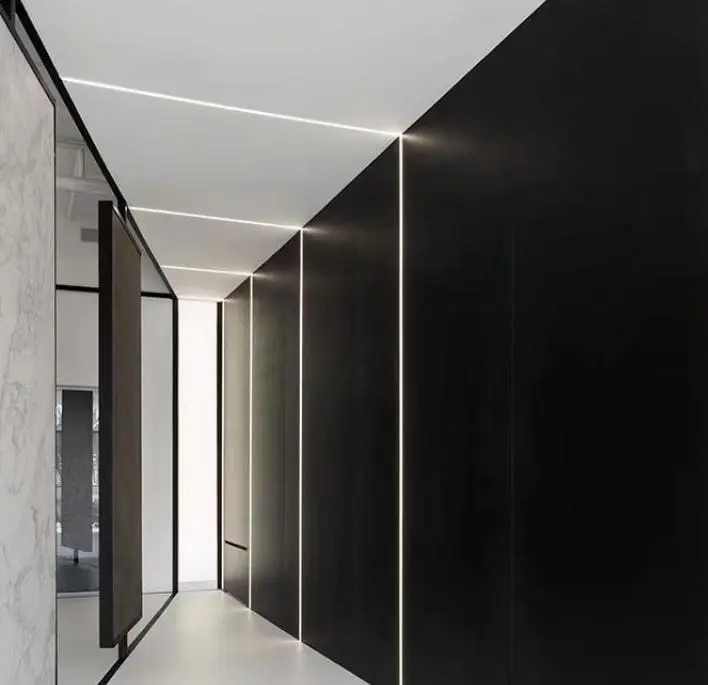
You should prioritize constant current COB strips for high-end commercial specifications because they deliver superior brightness uniformity, color consistency, dimming performance, and lifespan compared to constant voltage alternatives. These qualities reduce warranty claims, simplify long-run installations, and meet the strict visual standards that premium projects demand.
The Commercial Specification Challenge
Commercial lighting projects have requirements that go far beyond residential installs. Specifications often demand:
- Uniform brightness across runs exceeding 10 meters
- Color temperature consistency within a 2-step or 3-step MacAdam ellipse
- Smooth, flicker-free dimming from 100% down to 1% or lower
- Minimum 50,000-hour rated lifespan at L70
- Compliance with safety certifications (CE, SAA, UL, etc.)
Constant voltage strips can meet some of these requirements in short runs with careful power injection planning. But for long continuous runs in cove lighting, feature walls, retail displays, and architectural facades, constant current COB strips are simply more reliable.
Constant Current vs. Constant Voltage: A Specification Comparison
| Specification Requirement | Constant Voltage COB Strip | Constant Current COB Strip |
|---|---|---|
| Brightness uniformity over 15m+ | Requires multiple power injection points | Single-feed, uniform end to end |
| Color temperature consistency | Degrades with distance and dimming | Stable across length and dimming range |
| Dimming smoothness | Can flicker at low levels | Smooth and consistent |
| Rated lifespan at full load | Moderate (varies with thermal management) | Extended (current never exceeds target) |
| Installation complexity for long runs | High (extra wiring, multiple feeds) | Low (single-point feed, fewer components) |
| Total system cost for 20m run | Lower strip cost, higher installation cost | Higher strip cost, lower installation cost |
Total Cost of Ownership
One of the most common pushbacks I hear from procurement teams is price. Constant current COB strips do cost more per meter than their constant voltage equivalents. But look at the total project cost. Constant voltage long runs need mid-point power injection, additional wiring, extra labor for routing cables, and often more power supplies. Constant current strips eliminate most of this. When we quote projects end to end, the total installed cost is often comparable — and the long-term maintenance cost is lower because there are fewer failure points and longer-lasting components.
Smart System Integration
Modern constant current drivers can interface with DALI 9, 0-10V, PWM, and wireless control systems. This is increasingly important for commercial buildings that use building management systems. The precision of constant current regulation means the dimming response is predictable and repeatable. When a lighting designer programs a scene, the output matches the intent — every time, on every strip, across every zone.
When Constant Voltage Is Still Acceptable
I want to be fair. Constant voltage strips are not bad products. For short runs under 5 meters, simple accent lighting, and budget-sensitive residential projects, they work perfectly well. The engineering is simpler, the cost is lower, and the performance is adequate. The point is to match the technology to the application. For high-end commercial specifications where uniformity, longevity, and control matter, constant current is the right choice.
What to Check in Product Specifications
If you are writing a commercial lighting specification, here are the key items to verify with your supplier:
- Confirm the strip uses active constant current driver ICs, not passive resistor-based current limiting
- Ask for the rated drive current per LED group and the tolerance range
- Request photometric data showing brightness uniformity across the maximum rated run length
- Verify the dimming protocol compatibility and minimum dimming level
- Check for integrated protection features: over-current, over-temperature, and short-circuit
- Ask for reliability test data: LM-80 reports 10, thermal cycling test results, and salt spray test data if applicable
On our side, we provide all of this documentation as standard with every OEM project quote. If a supplier cannot provide this data, that is a red flag.
Conclusion
Constant current drive technology is the hidden foundation behind every reliable, long-lasting COB LED strip installation. Choose it when uniformity, color stability, protection, and long-term performance truly matter for your project.
Footnotes
- Explains the concept of color temperature in lighting. ↩︎
- Explains the basic concept of COB LED strips. ↩︎
- Replaced 404 link with authoritative Wikipedia page on electrical current. ↩︎
- Replaced 404 link with updated and working page from the original domain. ↩︎
- Provides information on integrated circuits used in LED drivers. ↩︎
- Details the fundamental nature of LEDs as semiconductors. ↩︎
- Describes the dangerous thermal runaway phenomenon in electronics. ↩︎
- Explains the function of over-current protection in circuits. ↩︎
- Provides details on the DALI lighting control standard. ↩︎
- Explains the industry standard for LED lumen maintenance testing. ↩︎


 English
 Spanish
 German
 Russian
 Arabic
 French
 Portuguese