

Every project has unique lighting needs, and off-the-shelf strips rarely check every box. Our production line handles hundreds of custom orders each year, and the most common frustration we hear is this: buyers waste weeks trying to force standard products into non-standard spaces.
You can customize nearly every LED strip specification, including color temperature, CRI, strip length and width, voltage, LED density, IP rating, connector type, and even private label packaging. Most parameters are adjustable at the production level with reasonable MOQs.
Below, we break down the most requested customization areas so you know exactly what to ask for in your next quote.
Can I request specific color temperatures and CRI levels to ensure visual consistency across my project?
Color consistency is one of the top complaints we hear from contractors and designers. When strips from different batches look slightly different on the same ceiling, the whole project suffers.
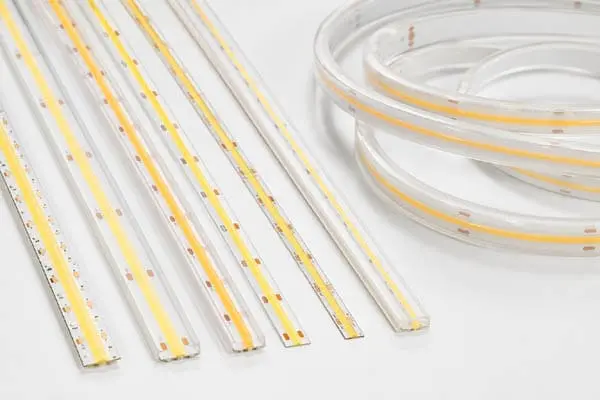
Yes, you can specify exact color temperatures (2700K–6500K or custom values) and CRI levels (typically 80, 90, or 95+). Reputable manufacturers also offer tight LED binning within a 2–3 step MacAdam ellipse to guarantee batch-to-batch color uniformity.
Why Color Temperature Matters
Color temperature 1 sets the mood. Warm white (2700–3000K) suits hospitality and residential spaces. Neutral white (4000K) works well in offices and retail. Cool white (5000–6500K) is common in commercial and industrial settings. When you order custom strips, you can lock in a specific CCT value rather than accepting whatever the factory has in stock.
Understanding CRI
CRI 2 measures how accurately a light source renders colors compared to natural light. A CRI of 80 is acceptable for general use. But for retail displays, art galleries, or high-end residential projects, you want CRI 90 or above. We regularly produce CRI 95+ strips for designers who need skin tones and fabrics to look natural under artificial light.
The Role of LED Binning
Even LEDs from the same production run vary slightly in color. Binning is the process of sorting LEDs into groups based on how close their color output is. A 3-step MacAdam ellipse 3 means the human eye cannot detect color differences between LEDs. A 5-step ellipse means slight differences may be visible when strips are placed side by side.
| Specification | Standard Option | Custom Option |
|---|---|---|
| Color Temperature | 3000K or 6000K fixed | Any value from 2200K–6500K, or tunable white |
| CRI | 80 | 90, 93, 95+ |
| MacAdam Ellipse | 5-step | 3-step or 2-step |
| Color Type | Single white | RGB, RGBW, tunable CCT, amber, custom wavelength |
Tunable White and RGBW
Some projects need the ability to shift color temperature throughout the day. Tunable white strips 4 combine warm and cool LEDs on one strip, controlled by a compatible driver. RGBW strips add a dedicated white LED chip alongside red, green, and blue, giving you both color effects and clean white light. We find RGBW is especially popular among Australian contractors who install in hospitality venues.
If you need guaranteed consistency across a 500-meter order, ask your supplier about binning reports and sample matching before production.
How can I customize the length and width of the strips to fit my unique architectural designs?
We get requests every week for strips that are just a little narrower, just a little longer, or cut to an exact millimeter. Standard 5-meter reels simply do not work for every installation.
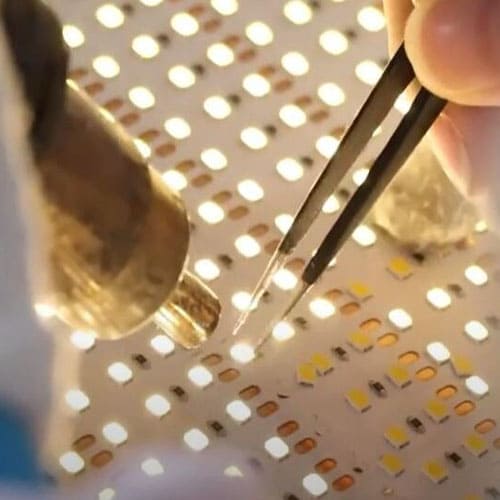
LED strips can be customized in width (typically 5mm to 20mm), length (from a few inches to continuous 50-meter runs), and cut-point intervals. Custom PCB widths and specific reel lengths are produced at the factory level to match your architectural requirements.
Width Options
Strip width affects where you can install it and how much light it produces. Narrow 5mm or 8mm strips fit inside slim aluminum channels and tight coves. The most common width is 10mm, which balances flexibility and output. Wider 12mm and 20mm strips accommodate higher-density LED layouts and brighter output.
| Strip Width | Best Use Case | Typical LED Rows |
|---|---|---|
| 5mm | Ultra-slim profiles, furniture edge lighting | Single row |
| 8mm | Recessed cove lighting, small channels | Single row |
| 10mm | General architectural, under-cabinet | Single row |
| 12mm | Higher brightness applications, retail | Single or dual row |
| 20mm | High-output task lighting, signage | Dual row |
Length and Cut Points
Standard strips come on 5-meter reels. But our factory can produce continuous runs of 10, 20, or even 50 meters on a single reel, depending on voltage. Cut points are typically every 25mm, 50mm, or 100mm. For projects where every centimeter matters — like a display case or a curved ceiling detail — we can adjust cut intervals or pre-cut strips to your exact measurements.
Custom PCB Design
The PCB (printed circuit board) 5 is the backbone of the strip. If you need a non-standard width, a specific copper thickness for better heat dissipation, or a flexible-rigid combination for corners, these are all possible with a custom PCB. The minimum order for a fully custom PCB is usually 500–1,000 meters, but some factories, including ours, offer lower MOQs for prototyping.
Flexibility and Bending
Standard flexible strips bend in one plane. If your design requires bending around corners or in three dimensions, you can request side-emitting strips or strips with special flex zones. Some designers also use strip-to-strip connectors at corners rather than bending the strip itself.
When specifying custom dimensions, always share your aluminum profile or channel drawings with the supplier. This avoids mismatches between strip width and housing.
What are my options for custom voltage and long-run configurations to simplify my installation process?
Voltage drop 6 is the silent killer of long LED strip installations. When we first started working with Australian contractors running 10-meter-plus strips, the brightness fade at the far end was their number one complaint.
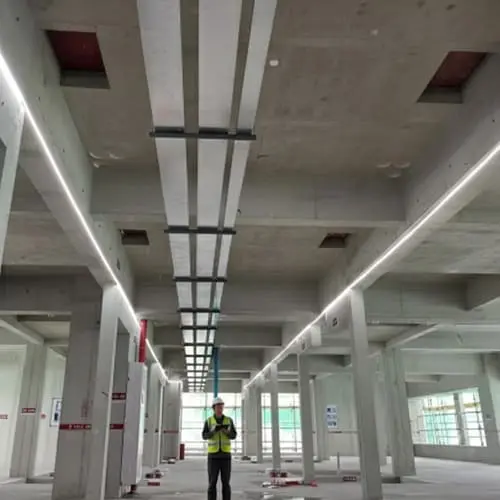
LED strips are available in 12V, 24V, 48V, and even 120V/220V AC configurations. Higher voltages like 24V and 48V allow longer continuous runs with less voltage drop, reducing the need for multiple power injection points and simplifying installation significantly.
Voltage Options Explained
The voltage you choose directly impacts how long a single strip run can be before brightness drops noticeably.
12V strips are the most common for short runs and DIY projects. They are easy to work with and widely compatible. But on runs longer than 5 meters, voltage drop becomes visible — the end of the strip looks dimmer than the beginning.
24V strips double the run length before voltage drop becomes an issue. They are the standard choice for professional installations. Most of our orders from contractors and distributors are 24V.
48V strips push the limit even further. They are ideal for long corridor lighting, parking garages, and large retail spaces where you want minimal power feeds.
120V and 220V AC strips eliminate the need for a separate DC power supply entirely. They plug directly into mains power. These are popular for outdoor perimeter lighting and signage where runs of 50 meters or more are common.
| Voltage | Max Recommended Run (Single Feed) | Best For | Power Supply Needed |
|---|---|---|---|
| 12V DC | 5 meters | Short runs, DIY, furniture | Yes, 12V DC adapter |
| 24V DC | 10 meters | Professional installs, coves, architecture | Yes, 24V DC driver |
| 48V DC | 15–20 meters | Long corridors, commercial spaces | Yes, 48V DC driver |
| 120V/220V AC | 50+ meters | Outdoor, signage, perimeter | No, direct to mains |
Constant Current vs. Constant Voltage
Most strips are constant voltage (CV). The driver supplies a fixed voltage, and resistors on the strip regulate current to each LED. This works well for most applications.
Constant current (CC) strips 7 have the driver regulate current directly. This eliminates voltage drop entirely and ensures every LED receives identical power. CC strips are more expensive but deliver perfectly uniform brightness on very long runs. We recommend them for high-end architectural projects where even slight brightness variation is unacceptable.
Power Injection
For long runs on 12V or 24V strips, power injection is a practical alternative to switching to a higher voltage. You feed power into the strip at multiple points — both ends, or every 5 meters — to maintain consistent brightness. Our engineering team provides power injection diagrams with every custom order to make installation straightforward.
Simplifying the Installation
The goal of custom voltage selection is fewer components and less labor on site. A 48V strip that runs 20 meters from a single driver saves your installer from running extra wires, adding junction boxes, or troubleshooting dim sections. When we scope a project, we calculate total wattage, run length, and recommend the voltage that keeps the install clean.
Can I get private label packaging and branded markings to help grow my own lighting brand?
Building a brand in the lighting industry is tough when your products arrive in generic packaging with someone else's labels — or no labels at all. We have helped several distributors in Germany and Australia launch their own branded LED strip lines from scratch.
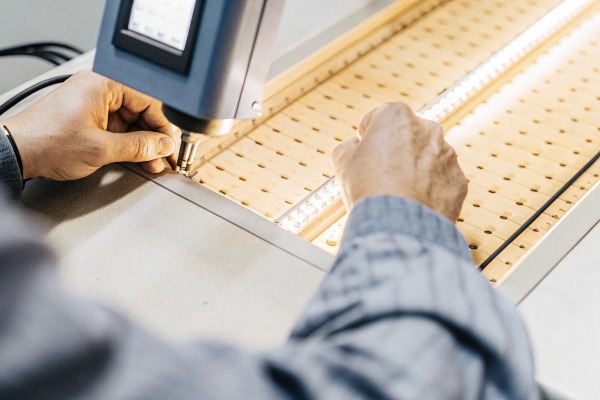
Yes, most LED strip manufacturers offer private label services including custom packaging, branded reel labels, printed PCB markings, custom product codes, and co-branded documentation. This allows distributors and resellers to present a professional, consistent brand identity to their customers.
What Can Be Branded
Private labeling goes far beyond slapping a sticker on a box. Here is what you can customize:
- Reel labels with your logo, product code, specs, and barcodes
- PCB printing — your brand name or model number printed directly on the strip's circuit board
- Retail or project packaging — custom boxes, tubes, or bags in your brand colors
- Technical documentation — spec sheets, installation guides, and warranty cards with your branding
- Certification marks — if you hold your own SAA, CE, or other certifications, these can appear on the product
MOQ and Lead Time
Private label orders typically require a minimum of 100–500 meters per SKU, depending on the complexity. Simple label changes can be done in as little as 3–5 days. Full custom packaging with unique box designs and printed PCBs usually takes 2–3 weeks for the first run.
Why It Matters for Your Business
When a contractor opens a box on site and sees professional, branded packaging with clear specs and installation instructions, it builds trust. It also reduces support calls because the information is right there. For distributors selling through trade counters or online, branded packaging is essential for repeat orders and brand recognition.
Protecting Your Brand
We also offer exclusivity agreements for specific product configurations. If you develop a unique strip spec with us — say a 4000K, CRI 95, 24V strip at 120 LEDs/m in a custom 8mm width — we can agree not to sell that exact configuration to other buyers in your market. This protects your investment in product development.
One of our Australian partners started with a single private-label SKU three years ago. Today he carries twelve SKUs under his own brand, all produced on our lines with his packaging and documentation. The key is starting with one product, getting the branding right, and scaling from there.
Conclusion
LED strip customization covers color, dimensions, voltage, and branding. Define your project needs clearly, share them with your supplier early, and you will get strips that fit perfectly every time.
Footnotes
- Explains color temperature, its measurement in Kelvin, and applications in lighting. ↩︎
- Provides a comprehensive definition and explanation of the Color Rendering Index. ↩︎
- Explains MacAdam ellipses as regions of indistinguishable colors for the human eye. ↩︎
- Explains tunable white lighting, how it works by blending warm and cool LEDs. ↩︎
- Provides a fundamental explanation of printed circuit boards and their composition. ↩︎
- Explains voltage drop in LED strips, its causes, and effects on brightness. ↩︎
- Compares constant current and constant voltage drivers, highlighting benefits for LEDs. ↩︎
- Defines private label manufacturing as a third-party producing goods sold under a retailer's own brand. ↩︎

 English
 Spanish
 German
 Russian
 Arabic
 French
 Portuguese