

we see buyers lose projects because a clean-looking certificate can still hide a costly compliance gap.
To verify CE and RoHS claims from an LED strip supplier, request the signed Declaration of Conformity, matching test reports, material compliance records, and lab details. Then check model numbers, dates, standards, and issuing bodies through official databases or direct lab confirmation.
Once you know what to ask for, fake paperwork becomes much easier to spot.
How do I verify that the CE certificate from my LED strip supplier is actually authentic?
When our team prepares tender files for contractors, one vague CE file can slow approval, raise doubt, and put the whole shipment at risk.
To verify a supplier's CE paperwork, ask for the signed EU Declaration of Conformity, matching test reports, exact model references, and the issuing lab details. Then confirm the lab, standards, dates, and report number on official databases or directly with the issuer.

Start with the right CE document
Many buyers ask for a "CE certificate," but that phrase can be misleading European Commission's NANDO database 1. For most LED strip lights 2, CE is not a license issued by one central EU office. It is usually a manufacturer declaration supported by technical documents homogeneous materials 3. That is why the first file you should request is the EU Declaration of Conformity 4, often called the DoC. It should be signed, dated, and tied to the exact product model.
In our export work to Germany, we have found that serious buyers do not stop at a logo on the label. They ask whether the DoC lists the right directives, the right standards, and the right product description. That is the correct habit. If the supplier only sends a pretty one-page "certificate" with no test report and no signed declaration, I would treat that as incomplete.
Match the document to the real product
The biggest mistake is checking the paper but not the model. A real report for one strip does not cover every strip in the catalog. Compare the model number, input voltage, IP rating, PCB width, wattage, and even the LED package if it affects safety or EMC behavior. A 24V indoor strip and a 24V silicone-filled IP67 strip may not share the same compliance file.
| What to compare | Why it matters | Red flag |
|---|---|---|
| Model number | The file must match the exact sold item | Report shows a similar but different SKU |
| Voltage and power | Safety and EMC scope depend on electrical data | Label says 24V, report says 12V |
| Product construction | Coating, connectors, and enclosure can change risk | Report covers bare strip, shipment is IP67 |
| Standards and directives | The DoC must cite applicable EU rules | Only vague wording like "meets CE" |
Check the issuer, not just the stamp
Some markets only trust files from specific testing groups, and that matters in real purchasing work. I have seen buyers ask for SGS, TUV, Intertek, or another named lab because their internal compliance team knows those formats and can verify them quickly. That does not mean smaller labs are always invalid. It means the issuer must be real, traceable, and properly accredited.
If the supplier claims notified body involvement 5, verify that organization in the European Commission's NANDO database. But for many LED strip products, notified body involvement is not normally required. So a random notified body number printed next to the CE mark can be a warning, not a comfort. Also remember that the CE logo itself proves very little. Poor letter shape or suspicious spacing can suggest bad artwork, but the real proof is still the document trail behind the mark.
Simple signs that the CE file may be weak
Weak CE files often share the same patterns. The signature is missing. The manufacturer address is incomplete. The report is expired, blurry, or cropped. The standards are old and unrelated to the product. The applicant name does not match the seller or the factory. The lab name appears on the first page, but there is no report number you can verify.
A reliable supplier should be able to explain what each file covers, who issued it, and whether the tested sample matches the current production version. When we revise a strip design, even a small BOM change can trigger a document review. A supplier who cannot discuss that process probably does not manage compliance tightly.
What specific RoHS documentation should I request to ensure my project meets environmental standards?
When we lock BOMs for export orders, the biggest risk is not the finished strip. It is one small component with no substance traceability.
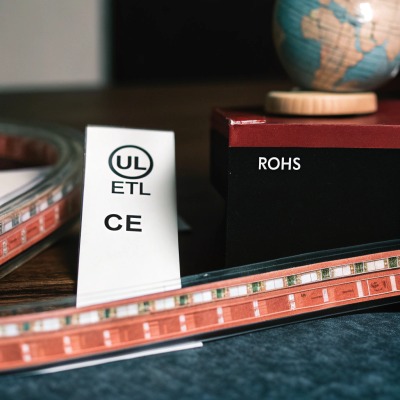
For RoHS verification, request a signed RoHS Declaration of Conformity, recent test reports based on recognized methods, homogeneous material data where relevant, and supplier declarations for key components. Also ask for BOM traceability and change-control records, because RoHS compliance can fail when one sub-supplier changes materials.
Ask for more than one RoHS file
A single page that says "RoHS compliant" is not enough for project-grade buying. The stronger document set starts with a signed RoHS Declaration of Conformity 6. Then you should ask for supporting test reports. For electronics, many labs use methods aligned with IEC 62321 7 to test restricted substances. That does not mean every component must be tested every time, but the supplier should show how compliance is controlled across the product.
In sourcing checks, we pay close attention to solder, PVC wire, connectors, silicone sleeves, adhesives, and packaging inks when they form part of the supplied assembly. For LED strips, the risky point is often not the LED chip itself. It is the solder paste, cable insulation, connector plating, or another small material that changed without notice.
The most useful RoHS documents
| Document | What it proves | What you should check |
|---|---|---|
| RoHS Declaration of Conformity | Legal statement of compliance | Signature, date, product model, directive reference |
| RoHS test report | Analytical evidence from a lab | Test method, sample description, issue date, result table |
| Material declaration | Substance data for parts or materials | Coverage of solder, PCB, wire, connector, adhesive |
| BOM and traceability record | Link between parts and final product | Part numbers, revision control, supplier names |
Understand the scope of testing
RoHS applies to restricted substances 8 in homogeneous materials. That point matters. A supplier may show a finished-product summary, but the better question is whether the underlying materials have been assessed properly. For example, a strip can pass appearance inspection and function testing while still failing on lead in solder or phthalates in a cable jacket. That is why material-level declarations are valuable.
Another point is exemptions. Some suppliers use the word "RoHS" loosely, without stating whether any exemption applies. A good declaration should be clear. It should identify the applicable directive version and any claimed exemption if relevant. Vague paperwork creates risk later, especially when a project consultant asks for exact wording.
Do not accept MSDS as a substitute
Buyers often receive a Material Safety Data Sheet 9 and assume it covers RoHS. It does not. An MSDS is not the same as a RoHS compliance record. It serves a different purpose. I would treat it as supplementary information only.
The best suppliers also keep change-control records. That matters more than many buyers realize. A compliant strip in January can become non-compliant in June if a sub-supplier swaps wire insulation or adhesive. For project work, ask the supplier how they manage engineering changes and whether they notify customers before material substitutions. In our experience, that answer tells you a lot about whether the paperwork is living compliance data or just sales support.
How can I cross-check my manufacturer's certification numbers against official testing lab databases?
We often double-check report numbers before sending samples, because one mismatched digit can mean a copied file, a wrong model, or an outdated test.
You can cross-check certification numbers by verifying the issuer first, then searching official lab portals, accreditation databases, and the EU NANDO database when a notified body is involved. Always compare the result against the report holder, model, date, standard edition, and factory details on your supplier's file.
Know what can and cannot be verified online
This is the point that confuses many buyers: there is no single master database for all CE-marked LED strips. CE is not a universal certificate number system. So when a seller says, "Just enter the CE number online," be careful. In practice, you verify the notified body, the test lab, the accreditation, and the report details. You do not verify CE in one central lookup tool.
For LED strips, the first official source to know is NANDO. NANDO confirms whether a claimed notified body is real and what scope it has. But NANDO does not confirm every product report. For the actual report or certificate number, you usually need the issuing lab's own verification page or direct email confirmation.
Use the right database for the right claim
| Source | What it helps verify | What it does not prove by itself |
|---|---|---|
| NANDO database | Notified body identity and scope | That your exact product report is valid |
| Lab verification portal | Report or certificate number issued by that lab | That the tested sample matches current production |
| ILAC or national accreditation body | Lab accreditation status | That every report from the lab is current and applicable |
| Direct email to the lab | Authenticity of a suspicious file | Full compliance without reviewing the product details |
Compare five data points every time
When we review compliance files, we compare the report number, applicant name, manufacturer name, model number, and issue date before anything else. Then we check the test standard edition. This step matters because old reports may refer to standards that no longer fit the product category or current market expectation.
Some labs make this easy. Large groups often have online certificate search tools. Others require manual confirmation. If the result looks incomplete, send the first page of the report to the issuing lab and ask whether it is genuine and whether it has been altered. That simple step can expose copied or edited documents.
Cross-check the production reality too
Number verification is useful, but it is not enough on its own. A real report can still be used dishonestly if it belongs to another factory or another product version. Match the report holder to the company you are buying from. Match the product photos or description to the actual strip. Match the factory address if it appears. In our project supply work, we also look at whether the current BOM still aligns with the report date. A genuine old report does not automatically cover a new design revision.
The practical rule is simple. First, confirm that the issuer exists. Next, confirm that the number exists. Then confirm that the file belongs to the exact product you will receive.
What are the legal risks for my business if I accidentally import LED strips with fake certifications?
We have seen buyers focus on price first, then lose weeks when customs or a project consultant asks for proof behind the CE and RoHS claims.
Importing LED strips with fake CE or RoHS claims can expose your business to customs holds, forced re-export, recalls, fines, contract disputes, project delays, and reputational damage. In many markets, the importer shares legal responsibility for product compliance, even when the supplier created the false documents.
The importer is not just a passive buyer
This is where many businesses get surprised. If you import electrical products into the EEA, you are not only a purchaser. You can become the responsible economic operator 10 in the chain. That means authorities may expect you to hold or obtain the Declaration of Conformity, identify the manufacturer, and cooperate if they ask for technical documents. If the CE or RoHS files are fake, saying "my factory sent them to me" usually does not end the problem.
In our work with contractors and wholesalers, I have seen the business damage start before any fine appears. A project consultant rejects the submittal package. A shipment is delayed at customs. A customer asks for updated reports and finds contradictions. The result is missed installation dates, penalty exposure, and rushed re-sourcing.
Common legal and commercial impacts
| Risk area | What can happen | Business effect |
|---|---|---|
| Customs and border control | Hold, inspection, refusal, re-export, destruction | Extra freight, storage, delay |
| Market surveillance | Corrective action, withdrawal, recall | Lost stock, admin cost, public record |
| Contract performance | Tender rejection or breach claim | Back charges, lost project margin |
| Civil liability | Damage or injury claim after failure | Legal cost, compensation, insurance issues |
Fake certification can trigger more than one problem at once
A false CE claim is rarely an isolated paperwork issue. It can connect to safety, EMC interference, environmental non-compliance, and misleading product information. For example, if an LED strip causes interference in a commercial installation, the buyer may face not only a product replacement issue but also a claim for labor, access cost, and disruption to the site. If the RoHS claim is false, some customers may treat that as a material contractual breach, especially in public or spec-driven projects.
Another risk is reputational. Once a distributor or contractor is known for weak compliance control, future approvals get harder. In some sectors, that hurts more than a one-time fine. Buyers remember who caused paperwork trouble on a live project.
How to reduce the risk before import
The practical fix is not complex. Build a written verification step before payment or shipment. Keep copies of the DoC, test reports, RoHS support files, and your verification notes. In our team, we treat this as part of quality control, not just office admin. If the supplier changes factory, power supply, PCB material, or major component, we review the compliance pack again.
You should also align your purchase terms with compliance responsibility. Ask who pays if documents are false, who handles re-testing, and what happens if customs blocks the shipment. Good paperwork will not remove every risk, but weak paperwork almost guarantees more of it.
Conclusion
Check the issuer, check the scope, check the model, and keep records. That routine is far cheaper than a blocked shipment, failed tender, or recall.
Footnotes
- Direct link to the official NANDO (New Approach Notified and Designated Organisations) information system managed by the European Commission. ↩︎
- Provides a general definition and overview of LED strip lights. ↩︎
- Explains the definition and examples of homogeneous materials in RoHS. ↩︎
- Official European Commission page on CE marking, which covers the Declaration of Conformity. ↩︎
- Wikipedia page providing a general overview of notified bodies and their role in conformity assessment. ↩︎
- Defines the RoHS Declaration of Conformity and its legal requirements. ↩︎
- Provides information about the international standard for testing restricted substances in electronics. ↩︎
- Official EU information on the RoHS Directive and its restricted substances. ↩︎
- OSHA's explanation of Safety Data Sheets (formerly MSDS) and their purpose. ↩︎
- Authoritative .gov source (NIST) explaining the role and requirements of an economic operator for CE-marked products in the EU. ↩︎


 English
 Spanish
 German
 Russian
 Arabic
 French
 Portuguese