
Escolher a classificação errada de impermeabilidade 1 para as suas fitas LED pode significar avarias dispendiosas, dores de cabeça com garantias e clientes insatisfeitos a olhar para luzes avariadas seis meses após a instalação.
As fitas LED à prova de água IP65 funcionam melhor em áreas exteriores abrigadas e interiores húmidos. As fitas IP67 suportam chuva direta e contacto temporário com água no exterior. As fitas IP68 são concebidas para utilização subaquática permanente em piscinas, fontes e elementos aquáticos. A escolha da classificação correta depende da quantidade de água a que a fita estará realmente exposta.
Ao longo dos anos, a nossa linha de produção enviou dezenas de milhares de metros de fitas impermeáveis para empreiteiros em Portugal e na Austrália. As perguntas são sempre as mesmas: de que classificação preciso realmente e onde pertence cada uma? Este guia explica tudo de forma clara para que possa especificar a fita certa para cada zona do seu projeto.
Como decido qual a classificação IP mais adequada para o meu projeto de iluminação arquitetónica exterior?
Cada projeto exterior traz diferentes exposições meteorológicas, e já vimos demasiados empreiteiros optarem pela opção mais barata apenas para enfrentarem reclamações de garantia dentro de um ano.
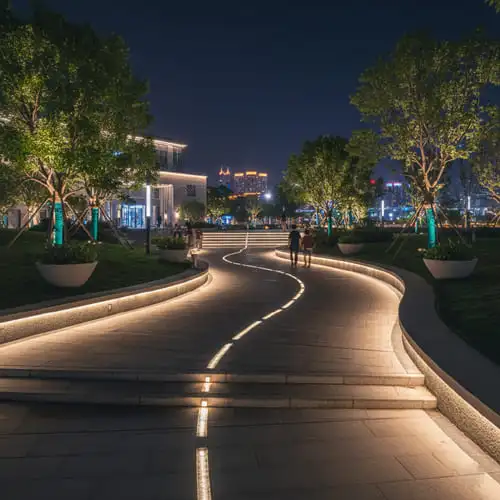
Para iluminação arquitetónica exterior, escolha IP65 para fachadas cobertas e beirais, IP67 para paredes expostas e instalações ao nível do solo, e IP68 apenas quando as fitas estiverem em contacto com água parada. Ajuste a classificação à exposição real à água, e não apenas ao rótulo "exterior".
Compreender o Sistema de Classificação IP
O Código IP 2 tem dois dígitos. O primeiro dígito refere-se à proteção contra o pó. O segundo dígito refere-se à proteção contra a água 3. Todas as três classificações—IP65, IP67 e IP68—têm um "6" como primeiro dígito. Isso significa que são todas totalmente à prova de pó. A verdadeira diferença está no segundo dígito.
| Classificação IP | Proteção contra pó 4 | Proteção contra água | Condição de Teste Típica |
|---|---|---|---|
| IP65 | 6 – Totalmente à prova de pó | 5 – Jatos de água de qualquer direção | Bocal de 6,3 mm, 12,5 litros/min, distância de 3 metros |
| IP67 | 6 – Totalmente à prova de pó | 7 – Imersão temporária até 1m durante 30 minutos | Submerso a 1 metro de profundidade durante 30 minutos |
| IP68 | 6 – Totalmente à prova de pó | 8 – Submersão contínua além de 1m | Profundidade e duração especificadas pelo fabricante |
Como as Métodos de Construção Diferem
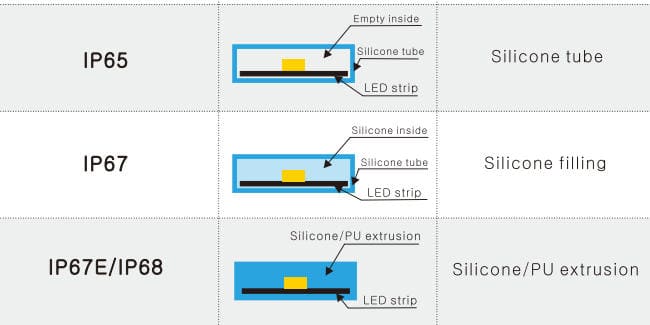
Quando produzimos tiras IP65, aplicamos uma camada espessa de silicone ou epóxi 5 na parte superior da PCB. Isto cobre os LEDs e resistores, mas deixa a parte de trás exposta. É o método mais simples. Resiste a salpicos e chuva de cima, mas não consegue sobreviver a ficar numa poça de água.
Para IP67, toda a tira nua é colocada dentro de um tubo de silicone. Depois, selamos ambas as extremidades com cola de silicone. Esta encapsulação completa impede a entrada de água de todas as direções. Resiste a ser molhada na chuva ou até a submersões breves.
Tiras IP68 levam isto mais longe. Usamos extrusão de silicone ou injetamos um selante adicional dentro do tubo para eliminar bolsas de ar. Isto permite que a tira fique debaixo de água continuamente sem falhas.
Correspondência da Classificação com a Zona
Pense na fachada do seu edifício. A platibanda sob a linha do telhado permanece seca na maior parte do tempo. IP65 é suficiente. Mas uma tira que corre ao longo da base de uma parede, onde a água da chuva salpica para cima e se formam poças, precisa de IP67. Uma tira dentro de uma cortina de água decorativa na fachada precisa de IP68.
Aqui está uma divisão prática para zonas arquitetónicas:
| Zona de Instalação | Classificação IP Recomendada | Porquê |
|---|---|---|
| Sob beirais / platibandas | IP65 | Protegido da chuva direta |
| Lavagem de parede exposta | IP67 | Chuva direta e água conduzida pelo vento |
| Iluminação de balcão ao nível do chão | IP67 | Risco de poça e respingos |
| Iluminação de balaustrada / corrimão | IP67 | Exposto às intempéries de todos os lados |
| Fonte ou parede de água | IP68 | Contacto contínuo com água |
| Pátio coberto ou gazebo | IP65 | Abrigo parcial, humidade indireta |
O Verdadeiro Segredo: A Qualidade da Vedação Importa Mais do que o Número
Sempre acreditei que a classificação IP impressa numa ficha técnica só é tão boa quanto a fábrica que a produziu. Testámos amostras de concorrentes rotuladas como IP67 que falharam após apenas algumas semanas ao ar livre. As vedações de cola nas extremidades dos tubos racharam. A água infiltrou-se ao longo das juntas de solda. Os LEDs ficaram pretos.
Na nossa linha de produção, realizamos testes reais de imersão em cada lote. Verificamos a aderência das tampas das extremidades. Inspecionamos o tubo de silicone para micro-rasgos. A classificação é uma orientação. A execução é o que mantém o seu projeto iluminado durante anos.
Ao especificar para um projeto, peça sempre ao seu fornecedor relatórios de testes. Pergunte como vedam os pontos de corte e os conectores. Esses são os pontos fracos. Uma fita só é tão impermeável quanto a sua vedação mais fraca.
Posso usar fitas LED IP65 nos meus projetos de casa de banho ou preciso de um nível de proteção superior?
As casas de banho parecem simples, mas na verdade são um dos ambientes mais difíceis para especificar iluminação — e a nossa equipa de suporte técnico recebe esta questão quase semanalmente de empreiteiros e designers.
Pode usar fitas LED IP65 em zonas secas da casa de banho, como sancas de teto e iluminação traseira de espelhos. No entanto, áreas próximas de duches, banheiras e saunas necessitam de IP67 ou IP68. O essencial é identificar o nível real de exposição à água de cada zona antes de escolher a classificação.
Zonas de Casa de Banho e Exposição à Água
Nem todas as partes de uma casa de banho recebem a mesma quantidade de água. Códigos elétricos 6 em Portugal e Alemanha dividem as casas de banho em zonas com base na proximidade às fontes de água. A classificação da sua fita LED deve seguir a mesma lógica.
Uma luz de sancas no teto a 2,4 metros do chão raramente vê mais do que vapor. O IP65 resolve isso. Uma fita escondida atrás de um espelho de casa de banho pode apanhar um ou outro salpico ao lavar as mãos. O IP65 continua a ser adequado aí.
Mas ao aproximar-se do duche, tudo muda rapidamente. Uma fita instalada dentro de um nicho de duche é atingida diretamente por jatos de água. Aí é necessário, no mínimo, IP67. Uma fita ao longo da base de uma banheira, onde a água se acumula e molha, também precisa de IP67.
Para saunas e banhos turcos, a combinação de calor extremo e condensação intensa exige IP68. A água escorre literalmente de todas as superfícies. Qualquer coisa inferior irá falhar.
Guia de Aplicação para Casas de Banho
| Localização na Casa de Banho | Nível de Exposição à Água | Classificação IP Recomendada |
|---|---|---|
| Sanca do teto (afastada do duche) | Apenas vapor | IP65 |
| Luz de fundo do espelho / toucador | Salpico ocasional | IP65 |
| Debaixo do armário perto do lavatório | Pequenos salpicos | IP65 |
| Nicho / recanto do duche | Jatos de água diretos | IP67 |
| Em volta / base da banheira | Imersão e salpicos | IP67 |
| Borda do jacuzzi / banheira de hidromassagem | Risco de imersão | IP67 |
| Sauna / banho turco | Condensação extrema | IP68 |
| Realce de banheira subaquática | Submersão total | IP68 |
Porque o vapor é frequentemente subestimado
Uma coisa que alertamos sempre os nossos clientes de projetos é sobre o vapor. O vapor quente condensa em superfícies frias. Com o tempo, mesmo uma pequena abertura no revestimento de silicone de uma fita IP65 pode permitir que a humidade penetre na placa de circuito. Não verá o problema durante meses. Depois, um dia, os LEDs começam a piscar ou uma secção apaga-se.
Na nossa experiência a enviar para empreiteiros em Portugal que fazem renovações de casas de banho de alto padrão, recomendamos sempre subir um nível de proteção acima do mínimo quando a instalação é num ambiente constantemente húmido. Se IP65 for tecnicamente suficiente, opte por IP67. A pequena diferença de custo garante-lhe anos de fiabilidade.
Corte e Resealing em Casas de Banho
Aqui está um detalhe que muitas pessoas ignoram. Quando corta uma fita à prova de água ao comprimento, quebra o selo. Uma fita IP67 cortada numa zona de soldadura já não é IP67 nesse ponto de corte. É necessário voltar a selar com tampas de silicone e selante.
Fornecemos kits de selagem com as nossas fitas à prova de água por este motivo. Mas mesmo o melhor trabalho de selagem pode apenas restaurar a proteção ao nível IP65 na união. Portanto, se o seu nicho de casa de banho exige IP67, planeie cuidadosamente os comprimentos para minimizar cortes em zonas húmidas. Ou melhor ainda, diga-nos as suas dimensões exatas para podermos cortar e selar de fábrica.
Onde devo instalar fitas IP68 para garantir que a minha iluminação subaquática é segura e duradoura?
IP68 é o padrão mais elevado de proteção contra água para fitas LED, e quando desenvolvemos a nossa linha de produtos IP68, concebemo-la especificamente para ambientes onde a falha não é apenas inconveniente — é perigosa.
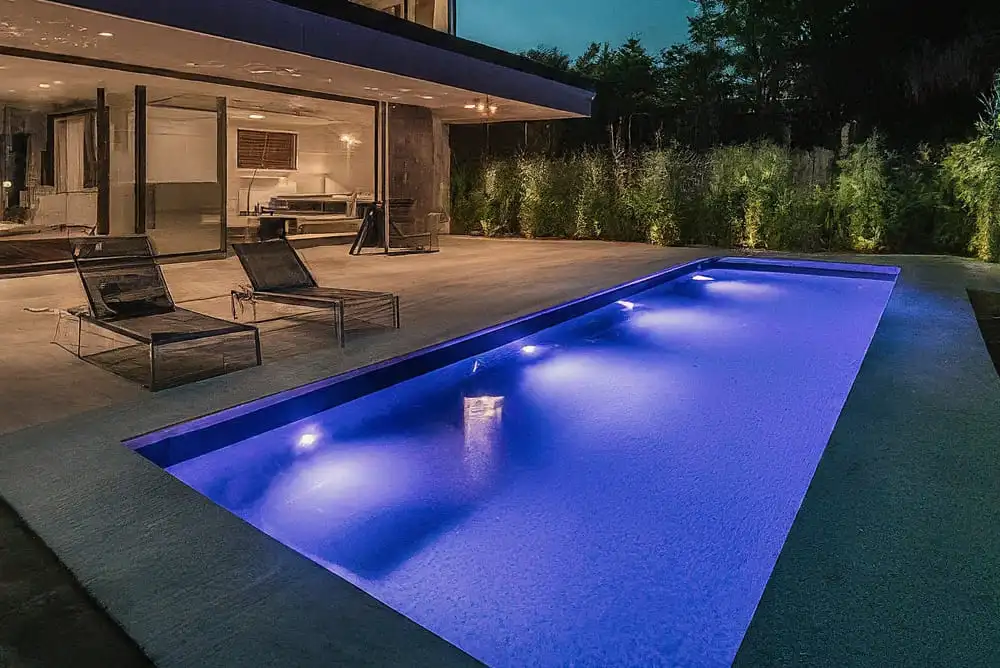
Instale fitas LED IP68 em piscinas, fontes, lagoas, elementos decorativos de água e em qualquer local onde a fita permaneça submersa por longos períodos. O IP68 é também essencial para aplicações marítimas e aquários onde o contacto contínuo com a água é inevitável.
Onde IP68 É Incontornável
Existem certas aplicações onde nada menos do que IP68 serve. Se a fita ficar submersa durante mais de alguns minutos, precisa de IP68. Ponto final.
Piscinas são o caso de uso mais comum. Quer a fita esteja a delinear o perímetro da piscina ao nível da água ou no fundo para um brilho ambiente, tem de suportar submersão contínua sob pressão. Fontes e exibições de água são outro caso claro. A fita funciona dentro do reservatório, totalmente submersa, muitas vezes em água circulante com tratamento químico.
Lagos e tanques de carpas usam fitas IP68 para iluminar a vida aquática de baixo para cima. Aplicações marítimas e em barcos — onde a exposição à água salgada acrescenta outra camada de agressividade — exigem absolutamente IP68 juntamente com materiais resistentes à corrosão.
Melhores Práticas de Instalação para Fitas LED Subaquáticas
Colocar fitas IP68 na água é apenas metade do desafio. A forma como as instala determina se duram cinco anos ou cinco meses.
Primeiro, utilize as presilhas transparentes e parafusos de aço inoxidável que vêm classificados para uso subaquático. Fita adesiva sozinha não irá segurar em condições submersas. A pressão e o movimento da água irão descolá-la.
Segundo, encaminhe todas as ligações de energia para fora de água sempre que possível. A junção do conector é o ponto mais vulnerável. Se a ligação tiver de ficar submersa, utilize conectores classificados IP68 e aplique selante adicional de grau marítimo.
Terceiro, evite cortes desnecessários. Cada corte é um potencial ponto de falha. Quando os nossos clientes nos fornecem as dimensões exatas, cortamos e selamos cada peça de fábrica. Isto garante uma vedação muito mais forte do que qualquer selagem feita no local.
Considerações sobre Água Salgada vs. Água Doce
Água salgada é muito mais corrosiva 7 do que água doce. Mesmo uma tira IP68 com encapsulamento de silicone perfeito pode degradar-se se o material da capa exterior reagir com o sal. Para aplicações marítimas 8, recomendamos tiras extrudadas de silicone em vez de tiras com tubo de PVC. O silicone resiste melhor à corrosão pelo sal e mantém-se flexível em temperaturas de água fria.
Considere também exposição aos UV 9. Tiras próximas à superfície da água em piscinas exteriores ou lagoas recebem radiação UV através da água. O silicone estabilizado contra UV prolonga significativamente a vida útil da capa exterior.
Ambientes de aplicação comuns IP68
- Piscinas residenciais e comerciais
- Fontes públicas e elementos de água cívicos
- Lagoas decorativas e elementos de água de jardim
- Aquários e tanques marinhos
- Iluminação de destaque no convés e casco de embarcações
- Instalações de sauna e banho de vapor
- Áreas industriais de lavagem
Segurança elétrica subaquática
Qualquer iluminação subaquática deve cumprir com requisitos de segurança de baixa tensão 10. Fornecemos as nossas fitas IP68 em configurações de 12V e 24V DC. Utilizar um driver IP67 ou IP68 devidamente certificado, instalado fora de água numa caixa ventilada, mantém o risco elétrico no nível mais baixo possível. Nunca ligue tensão de rede a uma fita submersa. Utilize sempre uma fonte de alimentação Classe III (SELV).
Em Portugal, toda a iluminação subaquática deve cumprir as regras de cablagem em vigor. Na Alemanha, aplicam-se as normas DIN VDE. Fornecemos documentação de conformidade para ajudar os nossos clientes a passar as inspeções dos projetos sem problemas.
Como posso obter fitas LED impermeáveis de comprimento personalizado que se ajustem às dimensões específicas do meu projeto?
Uma das partes mais frustrantes de qualquer projeto de iluminação é receber rolos padrão de 5 metros e ter de cortar, voltar a selar e esperar que corra tudo bem — especialmente quando está envolvida a impermeabilização.
Para obter fitas LED impermeáveis de comprimento personalizado, trabalhe diretamente com um fabricante ou fornecedor especializado que ofereça fitas pré-cortadas e seladas de fábrica conforme as suas dimensões exatas. Isto elimina cortes no local, preserva a classificação IP original e garante um desempenho consistente em toda a instalação.

Porque é que os comprimentos padrão criam problemas
Os rolos padrão de fitas LED vêm em comprimentos de 5 metros. Para um projeto com percursos de 3,7 metros, corta-se o excesso. Para um projeto com percursos de 8 metros, unem-se duas peças. Cada corte e cada conector introduz um potencial ponto de falha — especialmente para fitas IP67 e IP68.
Quando se corta uma fita IP67 encapsulada em tubo, abre-se o tubo selado. É então necessário voltar a selar com uma tampa de extremidade e selante de silicone. Esta selagem feita em obra quase nunca é tão fiável como a selagem de fábrica. Com o tempo, o ciclo térmico (dias quentes, noites frias) faz com que os materiais expandam e contraiam. Uma selagem fraca racha. A água entra. A fita falha.
Na nossa linha de produção, podemos pré-cortar as fitas para qualquer comprimento nas marcas de corte designadas e depois aplicar uma tampa de extremidade termo-retrátil de qualidade de fábrica com selante injetado. O resultado é uma fita que chega ao local da obra pronta a instalar, sem necessidade de cortes em obra.
O que procurar num fornecedor de comprimentos personalizados
Nem todos os fornecedores oferecem verdadeiros comprimentos personalizados. Alguns simplesmente cortam rolos padrão e enviam-nos sem voltar a selar. Eis o que deve verificar:
- Selagem de fábrica: O fornecedor sela as extremidades cortadas num ambiente controlado? Peça fotos ou vídeos do processo.
- Quantidade mínima de encomenda: Algumas fábricas exigem um mínimo de 100 metros para trabalhos personalizados. Mantemos o nosso MOQ baixo especificamente para encomendas de projetos onde cada percurso pode ter um comprimento diferente.
- Prazo de entrega: Os comprimentos personalizados acrescentam etapas de produção. Conte com mais 5–10 dias além dos prazos de entrega padrão. Oferecemos prototipagem rápida para projetos urgentes.
- Opções de conectores: O fornecedor pré-fixa conectores para que não seja necessário abrir o selo no local? Cabos pré-conectados economizam tempo de instalação e protegem a integridade à prova de água.
Como Lidamos com Pedidos Personalizados
Quando um empreiteiro ou distribuidor nos contacta com as dimensões do projeto, seguimos um processo claro:
- O cliente envia uma lista de cortes — cada comprimento de tira necessário, além da classificação IP desejada, temperatura de cor e voltagem.
- Nossos engenheiros verificam se cada comprimento corresponde a um ponto de corte válido. As tiras de LED só podem ser cortadas em intervalos específicos (geralmente a cada 50mm ou 100mm). Arredondamos para o ponto válido mais próximo e confirmamos.
- Produzimos as tiras, cortamos no comprimento, selamos todas as extremidades na fábrica, pré-fixamos conectores se solicitado e testamos cada peça.
- Cada tira é rotulada com seu comprimento e código de posição para que o instalador saiba exatamente onde deve colocá-la.
Isso elimina suposições no local. Reduz o tempo de instalação. E preserva a classificação à prova de água pela qual pagou.
Comparação de Custos e Valor
| Abordagem | Custo Inicial | Mão de obra no local | Confiabilidade à Prova de Água | Desperdício |
|---|---|---|---|---|
| Bobines padrão + corte no campo | Mais Baixo | Mais alto | Reduzido (selos no campo) | Mais sobras |
| Pré-cortado personalizado na fábrica | Ligeiramente mais alto | Mais Baixo | Mantido (selos de fábrica) | Quase zero |
| Pré-cortado personalizado + pré-conectado | Moderado | Mais baixo | Mais alto | Quase zero |
Para projetos de grande escala, a economia de mão-de-obra muitas vezes compensa o pequeno prémio por comprimentos personalizados. E para instalações IP67/IP68, manter a integridade selada de fábrica não é opcional — é a diferença entre uma vida útil de cinco anos e uma dor de cabeça de cinco meses.
Opções de Marca Privada e Embalagem
Muitos dos nossos clientes distribuidores em Portugal e Austrália também solicitam embalagens de marca própria com os seus pedidos personalizados. Oferecemos branding OEM na embalagem das fitas, etiquetas e até na impressão da capa de silicone. Isto significa que recebe um produto pronto para o projeto, com marca, que vai diretamente da caixa para a parede — sem reembalagem, sem reetiquetagem, sem atrasos.
Se a sua empresa necessita de certificações específicas para concursos de projetos (como CE, SAA ou TÜV), incluímos a documentação relevante com cada envio. Isto ajuda a sua equipa a passar as etapas de aprovação mais rapidamente e mantém o projeto dentro do prazo.
Conclusão
Escolher a classificação IP correta mantém o seu projeto seguro, os seus clientes satisfeitos e a sua reputação intacta. Combine a fita com a exposição real à água, exija vedação de qualidade de fábrica e planeie os comprimentos antes de encomendar.
Notas de rodapé
- A Wikipédia fornece uma explicação abrangente e autoritária do código IP, que define as classificações de impermeabilidade. ↩︎
- Página oficial da IEC que define o código IP e o seu propósito para equipamentos elétricos. ↩︎
- A página do código IP da Wikipédia detalha o segundo dígito, que cobre especificamente os níveis de proteção contra água. ↩︎
- A página do código IP da Wikipédia detalha o primeiro dígito, que cobre especificamente os níveis de proteção contra poeira. ↩︎
- Explica como os revestimentos conformais de silicone protegem PCBs e componentes eletrónicos. ↩︎
- Fornece uma visão geral dos códigos elétricos nacionais e internacionais e da sua importância. ↩︎
- Explica como a água salgada, enquanto eletrólito, acelera o processo de corrosão nos metais. ↩︎
- Explica a durabilidade e resistência às intempéries exigidas para iluminação LED de grau marítimo. ↩︎
- Descreve a fotodegradação, o processo pelo qual a radiação UV degrada materiais. ↩︎
- Explica a segurança de baixa tensão, riscos e normas e regulamentos internacionais relevantes. ↩︎

 English
 Spanish
 German
 Russian
 Arabic
 French
 Portuguese