
Picking the wrong waterproof rating 1 for your LED strips can mean costly failures, warranty headaches, and unhappy clients staring at dead lights six months after install.
IP65 waterproof LED strip lights work best for sheltered outdoor and damp indoor areas. IP67 strips handle direct rain and temporary water contact outdoors. IP68 strips are built for permanent underwater use in pools, fountains, and water features. Choosing the right rating depends on how much water the strip will actually face.
Over the years, our production line has shipped tens of thousands of meters of waterproof strips to contractors in Germany and Australia. The questions are always the same: which rating do I actually need, and where does each one belong? This guide breaks it down clearly so you can spec the right strip for every zone in your project.
How do I decide which IP rating is best for my outdoor architectural lighting project?
Every outdoor project brings different weather exposure, and we have seen too many contractors default to the cheapest option only to face warranty claims within a year.
For outdoor architectural lighting, choose IP65 for covered facades and soffits, IP67 for exposed walls and ground-level installations, and IP68 only when strips will sit in standing water. Match the rating to actual water exposure, not just the "outdoor" label.
Understanding the IP Rating System
The IP code 2 has two digits. The first digit covers dust protection. The second digit covers water protection 3. All three ratings—IP65, IP67, and IP68—share a "6" for the first digit. That means they are all completely dust-tight. The real difference is in the second digit.
| IP Rating | Dust Protection 4 | Water Protection | Typical Test Condition |
|---|---|---|---|
| IP65 | 6 – Dust-tight | 5 – Water jets from any direction | 6.3mm nozzle, 12.5 liters/min, 3 meters distance |
| IP67 | 6 – Dust-tight | 7 – Temporary immersion up to 1m for 30 min | Submerged at 1 meter depth for 30 minutes |
| IP68 | 6 – Dust-tight | 8 – Continuous submersion beyond 1m | Manufacturer-specified depth and duration |
How Construction Methods Differ
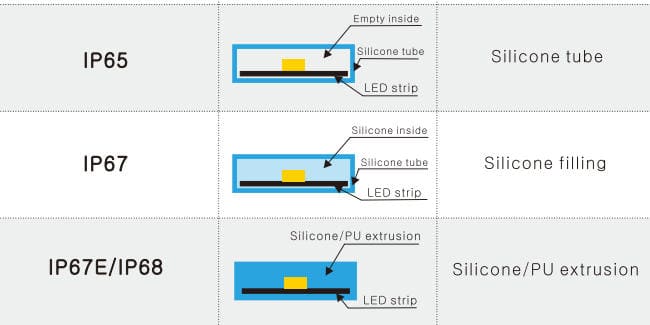
When we produce IP65 strips, we apply a thick silicone or epoxy coating 5 on the top side of the PCB. This covers the LEDs and resistors but leaves the back exposed. It is the simplest method. It handles splashes and rain from above, but it cannot survive sitting in a puddle.
For IP67, the entire bare strip goes inside a silicone tube. We then seal both ends with silicone glue. This full encapsulation blocks water from all directions. It handles being drenched in rain or even briefly submerged.
IP68 strips take it further. We use silicone extrusion or inject additional sealant inside the tube to remove any air pockets. This lets the strip sit underwater continuously without failure.
Matching the Rating to the Zone
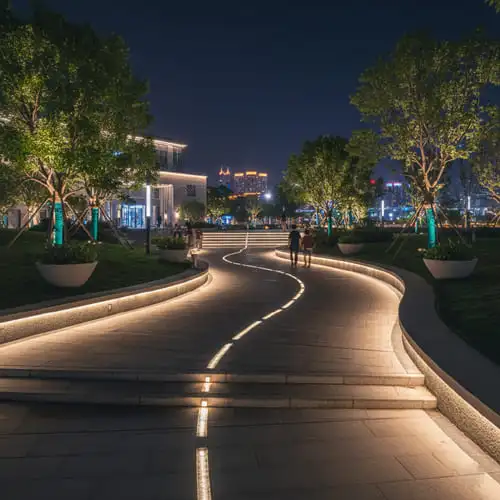
Think about your building facade. The soffit under the roofline stays dry most of the time. IP65 is enough. But a strip running along the base of a wall, where rainwater splashes back up and puddles form, needs IP67. A strip inside a decorative water curtain on the facade needs IP68.
Here is a practical breakdown for architectural zones:
| Installation Zone | Recommended IP Rating | Why |
|---|---|---|
| Under eaves / soffits | IP65 | Sheltered from direct rain |
| Exposed wall wash | IP67 | Direct rain and wind-driven water |
| Ground-level cove lighting | IP67 | Puddle risk and splash-back |
| Balustrade / handrail lighting | IP67 | Exposed to weather on all sides |
| Fountain or water wall | IP68 | Continuous water contact |
| Covered patio or gazebo | IP65 | Partial shelter, indirect moisture |
The Real Secret: Seal Quality Matters More Than the Number
I have always believed that the IP rating printed on a spec sheet is only as good as the factory that made it. We have tested competitor samples labeled IP67 that failed after just a few weeks outdoors. The glue seals at the tube ends cracked. Water crept in along the solder joints. The LEDs turned black.
On our production line, we run actual immersion tests on every batch. We check the adhesion of the end caps. We inspect the silicone tube for micro-tears. The rating is a guideline. The execution is what keeps your project lit for years.
When specifying for a project, always ask your supplier for test reports. Ask how they seal the cut points and connectors. Those are the weak spots. A strip is only as waterproof as its weakest seal.
Can I use IP65 LED strips in my bathroom projects, or do I need a higher protection level?
Bathrooms seem simple, but they are actually one of the trickiest environments to spec lighting for — and our technical support team fields this question almost weekly from contractors and designers.
You can use IP65 LED strips in dry bathroom zones like ceiling coves and mirror backlighting. However, areas near showers, bathtubs, and saunas need IP67 or IP68. The key is to identify each zone's actual water exposure level before choosing a rating.
Bathroom Zones and Water Exposure
Not every part of a bathroom gets the same amount of water. Electrical codes 6 in Australia and Germany divide bathrooms into zones based on proximity to water sources. Your LED strip rating should follow the same logic.
A ceiling cove light 2.4 meters above the floor rarely sees more than steam. IP65 handles that. A strip tucked behind a vanity mirror might get the occasional splash from handwashing. IP65 still works there.
But move closer to the shower, and things change fast. A strip installed inside a shower niche gets hit by direct water jets. That needs IP67 at minimum. A strip running along the base of a bathtub, where water pools and soaks, also needs IP67.
For saunas and steam rooms, the combination of extreme heat and heavy condensation demands IP68. Water literally drips from every surface. Anything less will fail.
Bathroom Application Guide
| Bathroom Location | Water Exposure Level | Recommended IP Rating |
|---|---|---|
| Ceiling cove (away from shower) | Steam only | IP65 |
| Mirror backlight / vanity | Occasional splash | IP65 |
| Under-cabinet near sink | Light splash | IP65 |
| Shower niche / recess | Direct water jets | IP67 |
| Bathtub surround / base | Soaking and splash | IP67 |
| Hot tub / jacuzzi rim | Immersion risk | IP67 |
| Sauna / steam room | Extreme condensation | IP68 |
| Underwater bathtub accent | Full submersion | IP68 |
Why Steam Is Often Underestimated
One thing we warn our project clients about is steam. Hot steam condenses on cool surfaces. Over time, even a tiny gap in the silicone coating of an IP65 strip can let moisture seep into the circuit board. You will not see the problem for months. Then one day, the LEDs start flickering or a section goes dark.
In our experience shipping to Australian contractors who do high-end bathroom renovations, we always recommend stepping up one rating from the minimum when the installation is in a consistently steamy environment. If IP65 is technically sufficient, go IP67. The small cost difference buys you years of reliability.
Cutting and Resealing in Bathrooms
Here is a detail that many people overlook. When you cut a waterproof strip to length, you break the seal. An IP67 strip cut at a solder pad is no longer IP67 at that cut point. You need to reseal it with silicone end caps and sealant.
We supply resealing kits with our waterproof strips for this reason. But even the best resealing job might only restore the strip to IP65-level protection at the joint. So if your bathroom niche demands IP67, plan your lengths carefully to minimize cuts in wet zones. Or better yet, let us know your exact dimensions so we can pre-cut and seal in the factory.
Where should I install IP68 strips to ensure my underwater lighting is safe and durable?
IP68 is the highest standard of water protection for LED strips, and when we developed our IP68 product line, we designed it specifically for environments where failure is not just inconvenient — it is dangerous.
Install IP68 LED strips in swimming pools, fountains, ponds, decorative water features, and any location where the strip will remain submerged for extended periods. IP68 is also essential for marine applications and aquariums where continuous water contact is unavoidable.
Where IP68 Is Non-Negotiable
There are certain applications where nothing less than IP68 will do. If the strip will be under water for more than a few minutes, you need IP68. Period.
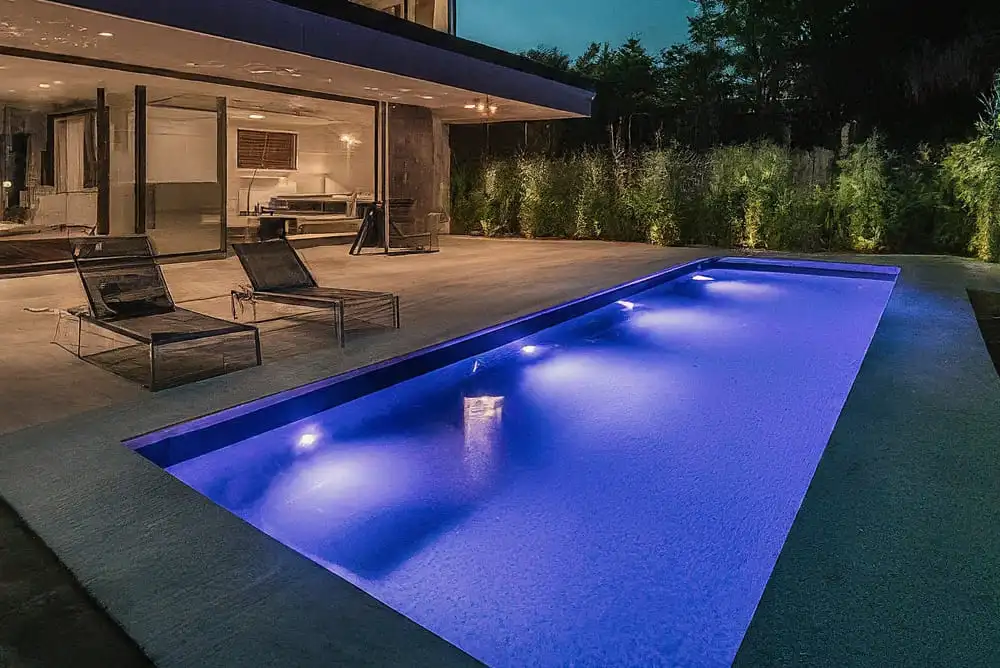
Swimming pools are the most common use case. Whether the strip lines the perimeter of the pool at the waterline or sits at the bottom for an ambient glow, it must handle continuous submersion at pressure. Fountains and water displays are another clear case. The strip runs inside the basin, fully submerged, often in circulating water with chemical treatment.
Ponds and koi pools use IP68 strips to illuminate aquatic life from below. Marine and boat applications — where saltwater exposure adds another layer of aggression — absolutely demand IP68 along with corrosion-resistant materials.
Installation Best Practices for Underwater LED Strips
Getting IP68 strips into the water is only half the challenge. How you install them determines whether they last five years or five months.
First, use the clear clips and stainless steel screws that come rated for underwater use. Adhesive tape alone will not hold in submerged conditions. Water pressure and movement will peel it away.
Second, route all power connections outside the water whenever possible. The connector junction is the most vulnerable point. If the connection must be underwater, use IP68-rated connectors and apply additional marine-grade sealant.
Third, avoid unnecessary cuts. Every cut is a potential failure point. When our clients give us exact dimensions, we pre-cut and factory-seal each piece. This gives a much stronger seal than any field resealing can achieve.
Saltwater vs. Freshwater Considerations
Saltwater is far more corrosive 7 than freshwater. Even an IP68 strip with perfect silicone encapsulation can degrade if the outer jacket material reacts with salt. For marine applications 8, we recommend silicone-extruded strips rather than PVC-tubed ones. Silicone resists salt corrosion better and stays flexible in cold water temperatures.
Also consider UV exposure 9. Strips near the water surface in outdoor pools or ponds get UV radiation through the water. UV-stabilized silicone extends the life of the outer jacket significantly.
Common IP68 Application Environments
- Residential and commercial swimming pools
- Public fountains and civic water features
- Decorative ponds and garden water elements
- Aquariums and marine tanks
- Boat deck and hull accent lighting
- Sauna and steam room installations
- Industrial wash-down areas
Electrical Safety Underwater
Any underwater lighting must comply with low-voltage safety requirements 10. We supply our IP68 strips in 12V and 24V DC configurations. Using a properly rated IP67 or IP68 driver, installed outside the water in a ventilated enclosure, keeps the electrical risk at the lowest possible level. Never run mains voltage to a submerged strip. Always use a Class III (SELV) power supply.
In Australia, all underwater lighting must meet AS/NZS 3000 wiring rules. In Germany, DIN VDE standards apply. We provide compliance documentation to help our clients pass project inspections smoothly.
How can I source custom-length waterproof LED strips that fit my specific project dimensions?
One of the most frustrating parts of any lighting project is receiving standard 5-meter rolls and having to cut, reseal, and hope for the best — especially when waterproofing is involved.
To source custom-length waterproof LED strips, work directly with a manufacturer or specialized supplier who offers pre-cut, factory-sealed strips to your exact dimensions. This eliminates field cutting, preserves the original IP rating, and ensures consistent performance across your entire installation.

Why Standard Lengths Create Problems
Standard LED strip rolls come in 5-meter lengths. For a project with 3.7-meter runs, you cut the excess. For a project with 8-meter runs, you join two pieces. Every cut and every connector introduces a potential failure point — especially for IP67 and IP68 strips.
When you cut an IP67 tube-encased strip, you open the sealed tube. You must then reseal it with an end cap and silicone sealant. This field seal is almost never as reliable as a factory seal. Over time, thermal cycling (hot days, cool nights) causes materials to expand and contract. A weak seal cracks. Water enters. The strip fails.
On our production line, we can pre-cut strips to any length at the designated cutting marks and then apply a factory-grade heat-shrink end cap with injected sealant. The result is a strip that arrives at your job site ready to install, with no field cutting needed.
What to Look for in a Custom-Length Supplier
Not every supplier offers true custom lengths. Some simply cut standard rolls and ship them without resealing. Here is what to check:
- Factory sealing: Does the supplier seal the cut ends in a controlled environment? Ask for process photos or videos.
- Minimum order quantity: Some factories require 100-meter minimums for custom work. We keep our MOQ low specifically for project-based orders where each run might be a different length.
- Lead time: Custom lengths add production steps. Expect 5–10 days beyond standard lead times. We offer rapid prototyping for urgent projects.
- Connector options: Will the supplier pre-attach connectors so you do not have to open the seal on site? Pre-wired leads save installation time and protect the waterproof integrity.
How We Handle Custom Orders
When a contractor or distributor contacts us with project dimensions, we follow a clear process:
- The client sends a cut list — every strip length needed, plus the desired IP rating, color temperature, and voltage.
- Our engineers verify that each length falls on a valid cutting point. LED strips can only be cut at specific intervals (usually every 50mm or 100mm). We round to the nearest valid point and confirm.
- We produce the strips, cut to length, factory-seal all ends, pre-attach connectors if requested, and test every piece.
- Each strip is labeled with its length and position code so the installer knows exactly where it goes.
This eliminates guesswork on site. It reduces installation time. And it preserves the waterproof rating you paid for.
Cost and Value Comparison
| Approach | Upfront Cost | On-Site Labor | Waterproof Reliability | Waste |
|---|---|---|---|---|
| Standard rolls + field cutting | Lower | Higher | Reduced (field seals) | More offcuts |
| Custom pre-cut from factory | Slightly higher | Lower | Maintained (factory seals) | Near zero |
| Custom pre-cut + pre-wired | Moderate | Lowest | Highest | Near zero |
For large projects, the labor savings alone often offset the small premium for custom lengths. And for IP67/IP68 installations, maintaining factory-sealed integrity is not optional — it is the difference between a five-year lifespan and a five-month headache.
Private Label and Packaging Options
Many of our distributor clients in Germany and Australia also request private-label packaging with their custom orders. We offer OEM branding on the strip packaging, labels, and even the silicone jacket printing. This means you receive project-ready, branded product that goes straight from the box to the wall — no repackaging, no relabeling, no delays.
If your firm needs specific certifications for project bidding (such as CE, SAA, or TÜV), we include the relevant documentation with each shipment. This helps your team pass approval stages faster and keeps the project on schedule.
Conclusion
Choosing the right IP rating keeps your project safe, your clients happy, and your reputation intact. Match the strip to the actual water exposure, demand factory-quality seals, and plan your lengths before you order.
Footnotes
- Wikipedia provides a comprehensive and authoritative explanation of the IP code, which defines waterproof ratings. ↩︎
- Official IEC page defining the IP code and its purpose for electrical equipment. ↩︎
- Wikipedia's IP code page details the second digit, which specifically covers water protection levels. ↩︎
- Wikipedia's IP code page details the first digit, which specifically covers dust protection levels. ↩︎
- Explains how silicone conformal coatings protect PCBs and electronic components. ↩︎
- Provides an overview of national and international electrical codes and their importance. ↩︎
- Explains how saltwater, as an electrolyte, accelerates the corrosion process in metals. ↩︎
- Explains the durability and weather resistance required for marine-grade LED lighting. ↩︎
- Describes photodegradation, the process where UV radiation breaks down materials. ↩︎
- Explains low voltage safety, risks, and relevant international standards and regulations. ↩︎

 English
 Spanish
 German
 Russian
 Arabic
 French
 Portuguese