We understand the anxiety of placing a large order for thousands of meters of COB strips without physically stepping onto the production floor. In our daily operations, we frequently host inspectors sent by our overseas clients, and we have seen firsthand how effective remote quality control can be when managed correctly.
To commission a third-party inspection without traveling, select an accredited agency with local offices in China, such as QIMA or V-Trust, to minimize travel fees. You must provide them with a detailed technical specification sheet and a COB-specific inspection checklist, then pay for a "man-day" service to receive a comprehensive digital report containing photos, videos, and test results before authorizing shipment.
If you are unsure where to start, the process breaks down into selecting the right partner, defining the checklist, understanding the costs, and handling the results.
How do I choose a reliable third-party inspection agency for my LED lighting orders?
We often work with various inspection teams that visit our facility, and the difference in professionalism between a generalist and a lighting specialist is immediately obvious to our engineers. The best inspectors come prepared with knowledge about PCB circuitry and silicone encapsulation PCB circuitry 1, rather than just checking box labels.
You should choose an agency that specializes in electrical and lighting products to ensure they have the necessary equipment, such as integrating spheres and safety testers. Prioritize firms with physical offices in the manufacturing hub, typically Guangdong province, to avoid paying excessive travel expenses for the inspector, and verify they offer same-day reporting with high-resolution video evidence.

Criteria for Selecting an Agency
When you cannot visit China personally, the agency becomes your eyes and ears. Do not simply pick the first name you find on Google. You need a partner who understands the nuances of Chip-on-Board (COB) technology. Chip-on-Board (COB) technology 2 Chip-on-Board (COB) technology 3 A general inspector might miss subtle issues like phosphor displacement which causes color shifting over time.
1. Geographic Location
Most LED strip factories, including ours, are clustered in the Guangdong region (Shenzhen, Zhongshan, Dongguan). If you hire an agency based in Shanghai for a factory audit in Shenzhen, you will pay for flights and hotels. Always ask: "Do you have inspectors based in the city where my factory is located?" This alone can save you $200–$300 per visit.
2. Product Expertise
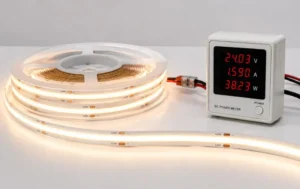
Lighting requires specific tools. Does the inspector bring a portable power meter? Do they have a fast-spectrometer to check the Color Rendering Index (CRI)? Color Rendering Index (CRI) 4 If they only rely on the factory's equipment, the data might be manipulated. A reliable agency must have its own calibrated portable gear.
3. Reporting Speed and Format
In the fast-paced electronics market, waiting a week for a report is unacceptable. electronics market 5 Look for agencies that provide digital reports within 24 hours. Modern services now offer "Live Video Walkthroughs" where you can watch the testing of random reels in real-time via WeChat or Zoom.
Types of Inspection Partners
There are generally three tiers of partners you can commission. Your choice depends on your budget and the complexity of your order.
| Agency Type | Examples | Pros | Cons | Best For |
|---|---|---|---|---|
| Global Giants | SGS, Bureau Veritas, Intertek | Highly trusted, recognized by customs globally. | Expensive, slower booking, less flexible. | Large retail orders requiring strict compliance. |
| Specialized QC Firms | QIMA, V-Trust, AsiaInspection | Good balance of tech-focus and speed; strong online platforms. | Moderate cost; strict standard terms. | Mid-sized importers needing consistent QC. |
| Freelance / Boutique | Local independent agents | Very cheap ($150-$200), highly flexible, personal communication. | High risk of bribery; inconsistent reporting standards. | Small orders or when you have a personal relationship. |
A Cost-Saving Alternative
If you have been importing for a while, here is a strategy we have seen savvy buyers use. If you have a trusted supplier in China with whom you have worked for years—let's say you buy power supplies from Factory A and LED strips from Factory B—you can pay Factory A a small fee to inspect Factory B. We have done this for long-term clients. It builds trust and is often cheaper than a formal agency, though it requires a very strong relationship with the inspecting partner.
What specific defects should I look for in a COB LED strip quality control checklist?
When we develop new COB products, our internal quality team focuses heavily on the flexibility of the silicone and the integrity of the chip bonding. These are the most common failure points that external inspectors must verify to ensure the product survives installation.
Your checklist must specifically target COB-related defects, including silicone cracking during bending, phosphor layer delamination, and color inconsistency beyond a 3-step MacAdam Ellipse. You should also mandate a full functionality test at 100% power to identify dead chips and a "Cross-Section Peel Test" to verify that the encapsulation glue is properly bonded to the PCB.
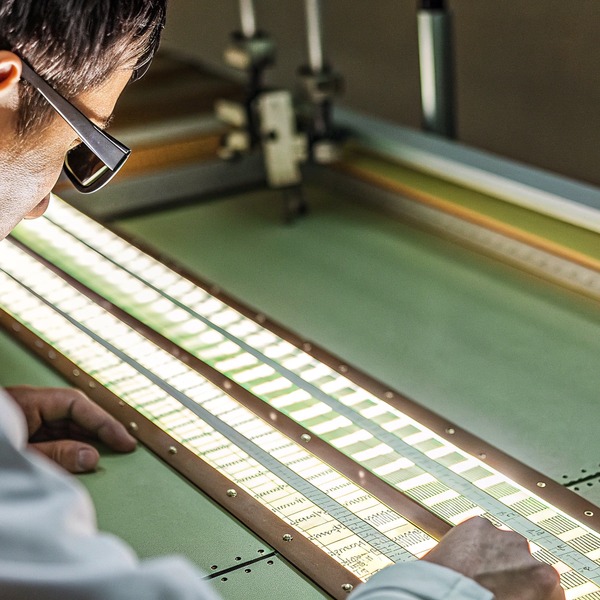
The Critical COB Checklist
COB strips are different from traditional SMD strips. The LEDs are directly mounted on the PCB and covered by a continuous layer of phosphor-mixed silicone. This construction introduces unique risks that a standard generic checklist will miss. You must provide your third-party agency with a technical specification sheet (Tech Spec) that acts as the "Law" for the inspection.
Visual and Mechanical Checks
1. The Bending Test
The most common issue with COB strips is the silicone cracking when bent.
- Action: Instruct the inspector to wrap a sample strip around a cylinder (e.g., 2cm diameter) five times.
- Fail Criteria: Any visible cracks in the yellow phosphor layer or the PCB circuit breaking.
2. The Peel Strength Test
If the silicone glue is cheap or the curing process was rushed, the phosphor layer will peel off.
- Action: Perform a cross-section peel test.
- Fail Criteria: The silicone lifts away from the PCB with minimal force, exposing the bare chips.
3. Appearance Consistency
- Action: Check for "bubbles" in the silicone.
- Fail Criteria: Air bubbles are a critical defect. They expand when the LEDs heat up, eventually destroying the wire bonds inside.
Optoelectronic Performance
You cannot rely on the naked eye to judge light quality. Your checklist must require instrument-based data.
1. CCT and CRI Verification
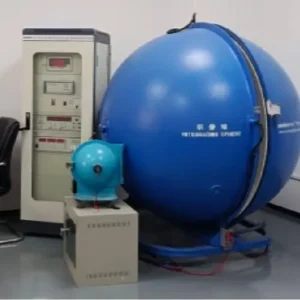
The inspector must use an integrating sphere (either their own portable one or the factory's lab under supervision). integrating sphere 6
- Standard: If you ordered 3000K, the tolerance is usually ±150K.
- Defect: A batch measuring 3300K when you ordered 3000K is a "Major Defect."
2. MacAdam Ellipse (SDCM)
For high-end projects, color consistency is vital.
- Requirement: Verify the SDCM (Standard Deviation Colour Matching) is within 3 steps or 5 steps as promised. This ensures that the start of the strip looks exactly the same color as the end of the strip.
Defect Classification Table
To help the inspector make a pass/fail decision, organize your defects into these three standard categories. This uses the AQL (Acceptable Quality Limit) standard. Acceptable Quality Limit 7 Acceptable Quality Limit 8
| Defect Category | Definition | AQL Threshold (Typical) | Examples in COB Strips |
|---|---|---|---|
| Critical | Hazardous or unsafe; likely to cause injury. | 0 (Not allowed) | Exposed live copper, failed Hi-Pot test, wrong voltage (24V label on 12V strip). |
| Major | Functional failure; product cannot be sold. | 2.5 | Dead LED chips, color temperature off by >200K, silicone cracking, low brightness (-10%). |
| Minor | Cosmetic issue; does not affect function. | 4.0 | Smudged logo printing, dirty packaging, slight scratch on the reel (not on the strip). |
How much does it typically cost to hire an inspector for a factory audit in China?
When calculating the landed cost for our clients, we always advise them to budget for quality control as an insurance policy rather than an expense. The cost of an inspection is negligible compared to the loss of shipping a defective container back to China.
The standard market rate for a professional third-party inspector in China ranges from $200 to $350 USD per man-day, which covers the inspector's time, equipment, and report generation. You may also incur additional travel expenses if the factory is in a remote location, bringing the total cost for a typical one-day visit to approximately $300 to $500.

Understanding the "Man-Day" Model
Inspection pricing is almost always based on "Man-Days." One man-day equals one inspector working for one day (usually 8 hours including travel).
- Low-Cost Providers ($180 - $220): Often freelancers or smaller local agencies. Good for simple visual checks but may lack advanced equipment.
- Standard Professional Agencies ($280 - $350): Companies like V-Trust or QIMA. They offer online booking systems, liability insurance, and standardized English reports.
- Global Certification Bodies ($500+): Companies like SGS or TÜV. Necessary if you need a certificate for compliance (like SASO for Saudi Arabia) SASO for Saudi Arabia 9, but often overkill for routine quality checks.
Breakdown of Potential Costs
It is important to know exactly what you are paying for so there are no surprises on the invoice.
- Service Fee: The base rate ($200-$350).
- Travel Expenses: If the inspector is based in Shenzhen and your factory is in Zhongshan, you might pay $50-$100 for a car or train. Tip: Ask for an "all-inclusive" price to avoid inflated travel receipts.
- Overtime: If you require them to stay late to watch a night-time loading process.
- Sample Shipping: If the inspector pulls "Golden Samples" to mail to your office in the US or Australia, you pay the DHL/FedEx fees.
Cost vs. Risk: Is it Worth It?
Let's look at the ROI. Suppose you are buying 5,000 meters of COB strips valued at $15,000.
- Scenario A (No Inspection): The factory uses the wrong phosphor mix. The lights look green. You pay $1,000 for shipping + $2,000 for import duties. The goods arrive, the client rejects them. You lose $18,000 total plus your reputation.
- Scenario B (With Inspection): You pay $300 for an inspection. The inspector finds the green tint issue. You force the factory to rework the batch before shipping. Total loss: 1 week of time. Savings: $18,000.
Factory Audit vs. Product Inspection
Be careful not to confuse these two services. They have different costs and purposes.
| Service Type | Cost Estimate | Purpose | When to Use |
|---|---|---|---|
| Factory Audit (MA) | $300 - $600 | Check if the factory exists, their capacity, and machinery (e.g., do they have auto-dispensing machines?). | Before you place your first deposit. |
| Pre-Shipment Inspection (PSI) | $250 - $400 | Check the finished goods for defects, quantity, and packaging. | After production is finished, before final payment. |
| During Production Check (DUPRO) | $250 - $350 | Check raw materials and early production units to catch issues early. | For very large or time-sensitive orders. |
What should I do if the inspection report shows my LED strips failed the quality tests?
Seeing a "Fail" result on a report is stressful, but in our production management experience, it is actually a success because the system worked—it stopped a bad product from leaving the factory. We always advise clients to stay calm and use the data to negotiate a solution.
If your report shows a failure, immediately hold the final balance payment and analyze the specific defect list to distinguish between critical functional failures and minor cosmetic issues. You must then share the report with the factory, demand a detailed rework or replacement plan, and require them to pay for a re-inspection to verify the corrections.
Analyzing the "Fail" Result
Not all "Fails" are equal. Inspection agencies are strict; they follow your AQL standards exactly. If you set the cosmetic standard too high, they might fail a batch for having slightly crooked labels on the box, even if the lights are perfect.
Step 1: Categorize the Failure
- Functional Failure: The lights don't turn on, the PCB is too thin, or the voltage drop is too high. This is non-negotiable. The factory must remake or rework the goods.
- Cosmetic Failure: Dirty fingerprints, messy wiring in the box, or labels slightly off-center. If your client is a high-end designer, this matters. If you are selling to a budget contractor, you might accept it with a discount.
The Negotiation Process
Once you have the report, email it to your sales representative at the factory immediately.
- The "Golden Sample" Defense: Factories will often argue, "The inspector is too strict, our product is standard industry quality." This is why having a "Golden Sample" (a perfect sample signed by both parties before production) is vital. You can compare the report photos to the Golden Sample.
- Rework vs. Remake:
- Rework: Packaging issues, short leads, or missing accessories can be fixed.
- Remake: Bad phosphor (wrong color), low CRI, or internal wire bond failures cannot be fixed. The strips must be scrapped and remanufactured.
Who Pays for Re-Inspection?
This is a critical point to establish in your initial Purchase Order (PO).
- Best Practice: Your contract should state: "If the product fails the third-party inspection based on the agreed AQL standards, the Supplier is responsible for the cost of rework and the cost of the re-inspection."
- Without a Contract: If you didn't agree to this beforehand, you might have to pay for the second inspection yourself ($300), but you should insist the factory deducts this from the final balance payment.
Long-Term Quality Strategy
As you gain experience, you will learn that third-party inspections are also a learning tool for the factory. When you consistently send inspectors who check for specific issues (like peel strength), the factory learns that you are a serious buyer. Over time, their internal QC (Quality Control) will align with your standards QC (Quality Control) 10 because they know you will check.
Eventually, once a supplier has passed five or six inspections in a row with flying colors, you might switch from "Every Shipment Inspection" to "Random Surprise Inspections" to save costs. This is the ultimate goal of supply chain management: building enough trust to reduce oversight expenses while maintaining quality.
Conclusion
Commissioning a third-party inspection for COB LED strips without traveling is a standard, safe, and cost-effective practice in modern trade. By selecting a locally-based agency with lighting expertise, defining a clear checklist that targets COB-specific vulnerabilities like silicone cracking and color consistency, and budgeting roughly $300 per man-day, you can secure your investment. Remember, the cost of an inspection is a fraction of the cost of a failed project. Use the inspection report not just as a pass/fail gate, but as a tool to hold your supplier accountable and drive long-term quality improvements.
Footnotes
- Global standards body for the assembly and production of printed circuit boards. ↩︎
- Technical documentation from a leading manufacturer of COB LED components. ↩︎
- Definition of the specific LED packaging technology. ↩︎
- General background on the metric used to measure light source color accuracy. ↩︎
- Coverage of current trends and supply chain issues in the global electronics industry. ↩︎
- Leading manufacturer of light measurement equipment. ↩︎
- Link to ISO 2859-1 standard for AQL sampling. ↩︎
- Official ISO standard for sampling procedures used in quality inspections. ↩︎
- Official website of the Saudi Standards organization. ↩︎
- Definition from the American Society for Quality. ↩︎


 English
 Spanish
 German
 Russian
 Arabic
 French
 Portuguese