
When we review project requirements with our partners in Australia and Germany, the conversation often starts with a simple price-per-meter inquiry. However, seeing a quotation for high-density COB strips transform from a budget-friendly figure into a project-stalling expense is a frustration we witness too often. In production facility, we know that the "sticker price" of the LED strip is just the tip of the iceberg. A seamless, dotless lighting effect requires more than just the strip itself; it demands a thermal management system 1, specific power injection strategies, and precise customization. If these aren't calculated upfront, your profit margins on the installation or resale will vanish before the goods even leave the factory floor.
To identify hidden fees in COB LED strip quotations, you must look beyond the base unit price and scrutinize five specific areas: omitted essential accessories like aluminum profiles and power supplies, surcharges for custom packaging and private labeling, labor costs for soldering and cutting to size, Incoterms that hide import duties, and technical downgrades in PCB thickness or adhesive quality.
Let’s dismantle a typical quotation to reveal where the extra costs are usually hiding, ensuring your next import lands exactly on budget.
Are essential accessories like end caps and mounting clips included in the unit price?
We frequently receive frantic messages from contractors who have received a shipment of COB strips only to realize they cannot install them immediately. In our experience supplying commercial projects, the assumption that "strip light" implies a "complete lighting system" is the most common cause of budget overruns.
Standard industry quotations for COB LED strips almost never include essential accessories; the unit price covers the bare strip only, while necessary components like aluminum profiles for heat dissipation, end caps, mounting clips, and power supplies are billed as separate line items that can increase the total material cost by 40% to 60%.
When you are sourcing high-density dotless COB strips, you are buying a product that behaves differently than traditional SMD strips. Because COB (Chip-on-Board) technology 2 packs hundreds of chips per meter (often 480 or more) under a continuous phosphor layer, heat management is not optional—it is mandatory.
Many suppliers will quote you a low base price for the strip to secure your interest. However, if you install a high-density COB strip directly onto wood or drywall without an aluminum profile, the heat cannot escape, leading to rapid phosphor degradation 3 and yellowing. Therefore, the "hidden" fee here is actually a mandatory technical requirement. You must ask your supplier to itemize the cost of aluminum channels, diffusers, and end caps.
Furthermore, consider the power supply units (PSUs). A quote might list a 24V COB strip, but it rarely includes the 24V driver required to run it. Unlike standard strips, COB variants often have higher wattage requirements (12W to 20W per meter) to achieve that seamless brightness. This means you need more robust, expensive power supplies. If you are comparing two quotes and one is significantly cheaper, check if the competitor has conveniently left out the drivers or the mounting hardware.
Component Cost Breakdown Analysis
To help you visualize the gap between the "strip price" and the "system price," we have broken down the typical costs for a 10-meter run of high-quality COB lighting.
| Component | Included in Base Quote? | Estimated Add-on Cost | Why it is Essential |
|---|---|---|---|
| COB LED Strip | Yes | $0 | The core light source. |
| Aluminum Profile | No | $3 - $15 / meter | Required for heat sinking and straight installation. |
| Diffuser Cover | No | Included w/ Profile | Protects the phosphor coating from dust and damage. |
| Power Supply (200W) | No | $30 - $80 / unit | Converts AC to 24V DC; must match total wattage. |
| End Caps & Clips | No | $0.50 - $2.00 / set | Ensures a finished, professional look and secure fit. |
By using this checklist, you can force suppliers to reveal the "System Price" rather than just the "Strip Price," preventing an unpleasant surprise when the invoice arrives.
Does the quotation include custom packaging costs for my private label requirements?
Working with wholesalers who resell our products under their own brand names has taught us that packaging is rarely a "standard" inclusion. When we finalize a product specification, the default assumption in the factory is always bulk, generic packaging to keep the EXW (Ex Works) price as low as possible.
Unless explicitly stated, quotations do not include custom packaging costs; suppliers typically default to generic anti-static bags, meaning you will face additional setup fees for printing plates, higher unit costs for branded blister packs or color boxes, and potential MOQ surcharges for private label materials.
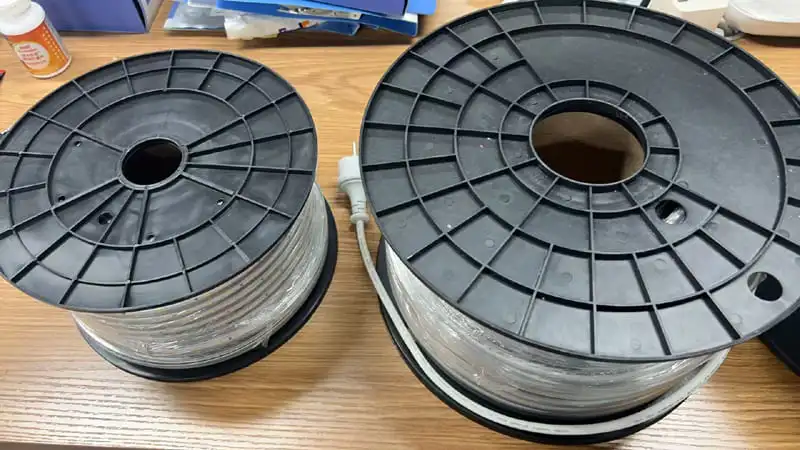
If you are a distributor or a brand owner, receiving products in generic silver anti-static bags 4 with a simple sticker is often unacceptable for retail or high-end project supply. However, this is exactly what a standard quote covers. The "hidden fee" here comes in two stages: the one-time setup cost and the per-unit packaging upgrade.
First, there is the printing plate fee. If you want your logo on the reel or the bag, the manufacturer has to create a custom mold or printing plate. This is usually a one-time fee ranging from $50 to $200, depending on the complexity.
Second, there is the material upgrade. A standard anti-static bag costs pennies. A custom-printed color box or a rigid blister pack with an insert card is significantly more expensive. For a high-density COB strip, which is a premium product, you might want premium packaging. This can add $0.50 to $1.50 per unit to your cost.
The MOQ Trap in Packaging
The most significant hidden factor in packaging is the Minimum Order Quantity (MOQ) for the packaging materials themselves. While we might be willing to produce 500 meters of LED strip for you, the packaging factory we work with might require a minimum run of 1,000 or 2,000 boxes.
If your LED order is smaller than the packaging MOQ, you have two costly options:
- Pay for the excess: You pay for 2,000 boxes, use 500, and we store the rest for your next order. This ties up your cash flow.
- Pay a "start-up" fee: The packaging factory charges a penalty fee for running a small batch, which inflates your unit cost drastically.
Packaging Tier Comparison
| Packaging Type | Typical Cost Adder | MOQ Requirement | Best For |
|---|---|---|---|
| Generic Anti-Static Bag | Included | None | Contractors / Bulk Install |
| Label with Your Logo | $0.05 - $0.10 | Low (100+ units) | Wholesalers / B2B |
| Custom Color Box | $0.50 - $1.00 | High (1000+ units) | Retail / E-commerce |
| Blister Pack + Card | $0.80 - $1.50 | High (2000+ units) | Big Box Retail Stores |
Always clarify if the quote includes "Neutral Packing" or "OEM Packing." If it says OEM, ask for the specific MOQ of the boxes to avoid paying for empty cardboard.
Are there extra charges for soldering lead wires to specific lengths before shipment?
In our assembly workshop, we have specific stations dedicated to manual soldering. While automated machines handle the surface mounting of the chips 5, attaching the lead wires to the PCB is often a manual process, especially for custom lengths. This labor is rarely accounted for in a bulk pricing model.
Standard quotations assume 5-meter reels with wires on only one end; requesting specific cut lengths, dual-ended power feeds, or non-standard wire gauges triggers additional labor and material charges that are almost never included in the initial price-per-meter offer.
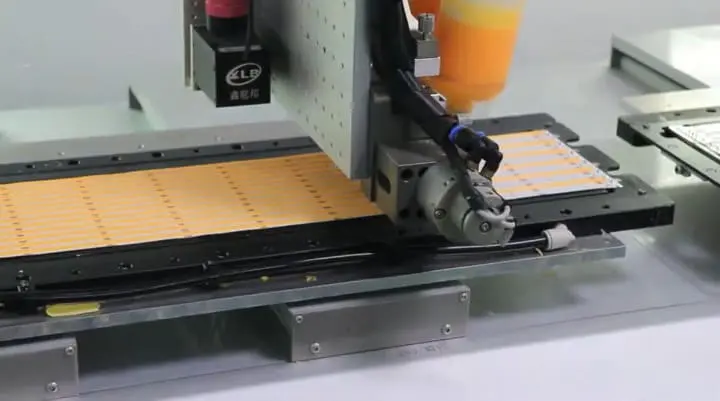
This is a critical area for COB strips specifically. Unlike SMD strips, COB strips have a continuous phosphor coating that covers the PCB pads. To solder wires, our technicians must carefully scrape away this coating without damaging the circuit underneath. This process takes more time and skill than soldering standard strips.
Consequently, many "solderless connectors" found on the market fail with COB strips because they cannot penetrate the phosphor layer effectively, or they are too wide and create dark spots in the light line. This forces many installers to rely on factory soldering for reliability.
If your project requires 200 segments of 1.2 meters each, do not assume the factory will cut and solder them for free. The "hidden fees" here include:
- Cutting Fee: Measuring and cutting strips to precision lengths.
- Soldering Labor: The manual time to prep, tin, and solder wires.
- Wire Material: If you need 2 meters of lead wire instead of the standard 15cm, the copper cost adds up.
- Waterproofing Sealing: If the strip is IP65/IP67, resealing the cut ends with silicone and end caps is a slow, manual process.
The "Connector Incompatibility" Cost
A major hidden cost often ignored is the "Connector Incompatibility Cost." If you decide to save money on factory soldering and plan to do it on-site or use clip-on connectors, you face high risks.
- On-Site Labor: An electrician in Australia or Germany charges significantly more per hour than our factory technicians. Paying an electrician to solder 200 connections on-site will cost 10x more than having us do it pre-shipment.
- Connector Failure: Cheap clip connectors often cause flickering or thermal hotspots on COB strips.
Factory vs. On-Site Connection Costs
| Service | Factory Cost (Estimated) | On-Site Cost (Estimated) | Risk Factor |
|---|---|---|---|
| Pre-soldering (Standard) | Included (1 end) | N/A | Low |
| Custom Cut & Solder | $0.50 - $1.50 / cut | $10 - $20 / cut (Labor) | Low (QC Tested) |
| Solderless Connectors | $0.30 / piece | $2.00 / piece (Part + Labor) | High (Contact Failure) |
| Waterproof Sealing | $1.00 / end | $15.00 / end (Labor + Dry time) | Medium (Leak Risk) |
Always ask: "Is this price for 5m reels, or does it include cutting and soldering to my schedule?" The difference in your final project P&L can be massive.
How do I confirm if the shipping terms cover customs duties and import taxes?
When we arrange logistics for our global clients, we see the most confusion surrounding Incoterms. A price that looks incredibly low is often an "EXW" (Ex Works) price, which essentially means you are buying the goods as they sit on our warehouse shelf, and you are responsible for every step of the journey from there.
To confirm coverage of duties and taxes, you must verify the specific Incoterm used in the quotation; EXW and FOB terms leave the buyer responsible for all import duties, VAT, and final delivery costs, whereas only DDP (Delivered Duty Paid) terms indicate that the supplier covers these fees.

The difference between EXW and DDP can be 20% to 30% of the total invoice value. If a supplier quotes you $12/meter EXW, and another quotes $15/meter DDP, the $15 quote might actually be cheaper once you factor in sea freight, insurance, port handling fees, customs clearance fees 6, import duty (often 5-10%), and VAT (10-20% depending on your country).
The Volumetric Weight Surprise
For COB strip projects, there is a specific logistics trap: Aluminum Profiles.
While LED strips are heavy and dense (charged by actual weight), aluminum profiles are light but bulky. Couriers and freight forwarders charge based on "Volumetric Weight" (Length x Width x Height / 5000).
If your quote includes profiles, the shipping cost will skyrocket compared to shipping just the strips. A quote that estimates shipping based on the strips alone but forgets the volume of the profiles will result in a nasty "balance payment" request before the goods are released.
Hidden "Non-Tariff" Barriers
Beyond simple taxes, there are administrative costs:
- Customs Bond: Do you have a bond to import into the US? If not, you pay a fee to use the forwarder's bond.
- Inspection Fees: If customs flags your shipment for an X-ray or physical inspection, you pay that fee, not the supplier.
- Storage Fees: If your paperwork (like the Bill of Lading) isn't ready when the ship arrives, the port charges demurrage fees daily.
Incoterm Responsibility Matrix
| Incoterm | Factory Price | China Transport | Sea/Air Freight | Import Duty & VAT | Final Delivery |
|---|---|---|---|---|---|
| EXW (Ex Works) | Buyer Pays | Buyer Pays | Buyer Pays | Buyer Pays | Buyer Pays |
| FOB (Free on Board) | Included | Included | Buyer Pays | Buyer Pays | Buyer Pays |
| CIF (Cost Ins. Freight) | Included | Included | Included | Buyer Pays | Buyer Pays |
| DDP (Delivered Duty Paid) | Included | Included | Included | Included | Included |
If you are a smaller business or want to avoid headaches, ask for a DDP quote. It will look higher, but it is a "landed cost" with no hidden surprises.
Are hidden technical downgrades like PCB thickness and adhesive quality lowering the base price?
Our engineering team spends a significant amount of time testing competitors' samples, and we often find that a "cheaper" quote is simply a lower-spec product disguised as an equivalent. In the world of high-density COB, the physical materials used in the construction of the strip are where manufacturers cut costs to improve their margins.
Volumetric Weight 7
Low-cost quotations often hide technical downgrades such as using thinner 2oz PCBs instead of 3oz, substituting gold wire bonding with alloy, or using generic thermal tape instead of genuine 3M VHB; these reductions lower the price but drastically shorten the lifespan and increase installation failure risks.
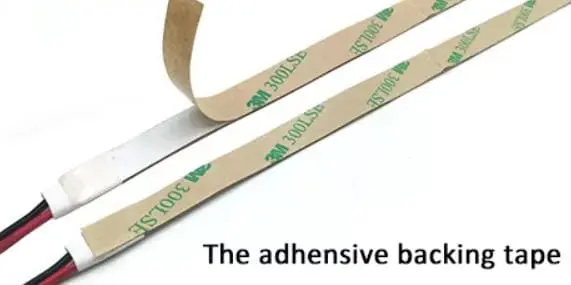
These are the "invisible" hidden fees. You don't pay them on the invoice; you pay them in replacements, repairs, and reputation damage six months later.
MacAdam Ellipse step 9
The Copper Weight Deception
High-density COB strips draw significant current. To manage this current and the associated heat, and to prevent voltage drop (where the light gets dimmer at the end of the strip), we recommend a PCB with 3oz or 4oz copper thickness.
However, copper is expensive. A supplier can save money by using a standard 2oz PCB.
- The Result: The strip runs hotter, the voltage drops faster (requiring more power injection points), and the lifespan is reduced.
- The Hidden Cost: You have to run more copper cabling to inject power every 3 meters instead of every 5 or 10 meters. The cost of the extra cabling and labor often exceeds the savings on the cheap strip.
The Adhesive Failure
COB strips are often installed in aluminum profiles. If the adhesive tape on the back fails, the strip detaches from the aluminum. Once it detaches, it loses its heat sink. The strip overheats and burns out.
- Genuine 3M VHB Tape: Expensive, but holds permanently.
- Generic "Blue" Tape: Cheap, but often dries out or loses adhesion when heated.
- The Hidden Cost: The cost of sending a technician back to a client's site to re-glue falling LED strips is astronomical compared to the $0.50/meter savings on tape.
Binning and Color Consistency
Does the quote guarantee a specific MacAdam Ellipse step (e.g., 3-step)?
Cheap quotes often use "B-grade" stock—chips that fell outside the tight color binning requirements.
- The Risk: You buy 50 reels. 20 of them look slightly pink, 30 look slightly green. When installed together in a cove, the difference is obvious and unprofessional.
- The Hidden Cost: The cost of ripping out the installation and replacing it with matched batches.
Conclusion
Identifying hidden fees in COB LED strip quotations requires a shift in mindset from comparing unit prices to comparing "total installed costs." By scrutinizing the quote for missing accessories like profiles and drivers, clarifying packaging and labor inclusions, verifying Incoterms, and auditing the technical specifications for material quality, you protect your project's bottom line. A transparent conversation with your manufacturer about these details upfront is the hallmark of a successful long-term partnership.
sea freight, insurance 10
Footnotes
- Technical specifications for thermal interface materials used in LED heat dissipation systems. ↩︎
- Technical definition and research on Chip-on-Board LED packaging from the IEEE standards database. ↩︎
- Research from the Lighting Research Center on the causes of phosphor color shift and degradation. ↩︎
- Technical specifications for anti-static shielding bags used in the standard packaging of electronic components. ↩︎
- General overview of Surface-mount technology used in the automated assembly of LED components. ↩︎
- US Customs and Border Protection guide on the legal requirements and fees for importing commercial goods. ↩︎
- Explanation of how dimensional weight affects shipping costs for bulky items like aluminum profiles. ↩︎
- Technical guide on power supply selection and power injection for LED strips to prevent voltage drop. ↩︎
- The International Commission on Illumination defines color consistency standards like MacAdam ellipses. ↩︎
- Official information on maritime shipping regulations and requirements for international trade. ↩︎