
When we see photos of crushed boxes arriving at a client's site, we know the frustration it causes. Damaged goods delay project timelines and strain budgets.
To file a successful claim, immediately inspect the shipment upon arrival and note any damage on the delivery receipt. Collect timestamped photos of the goods and packaging, then file a formal claim within the carrier's strict deadlines. Liability depends on your agreed Incoterms, determining whether you or the supplier handles the insurance process.
Let's examine the specific evidence and procedures required to ensure you recover your losses without unnecessary delays.
What immediate evidence must I collect to support a damage claim?
Our logistics team always advises clients that the first ten minutes after a truck arrives are the most critical. Missing evidence during this window often leads to automatic claim denials.

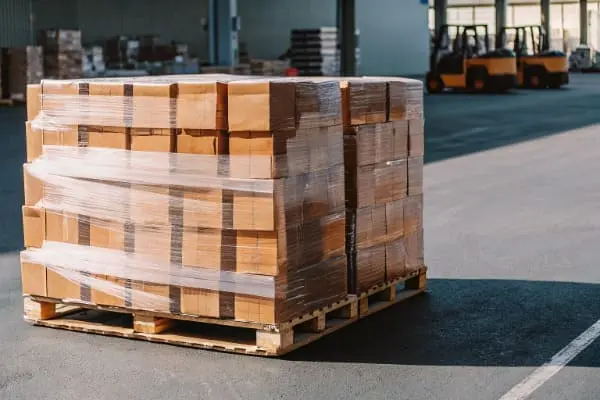
You must capture high-resolution photos of the damaged goods and all external packaging immediately. Retain the original boxes and cushioning for inspection. Explicitly note specific damages on the Proof of Delivery (POD) before signing, as a clean signature is often used by carriers to deny liability.
The Trap of the "Clean Receipt"
The single most common reason claims are denied is the "clean receipt." When you or your warehouse staff sign the delivery paperwork without noting exceptions, you are legally stating that the cargo arrived in good condition. Carriers will use this signature to argue that the damage occurred after delivery, while the goods were in your possession.
Even if the driver is in a rush, you must inspect the exterior. If there is a crease in the box, a puncture, or crushed corners, write "Received Damaged" and describe the issue on the Bill of Lading (BOL) or electronic device. General phrases like "Subject to Inspection" hold very little legal weight. You need specific notes like "Pallet 3 crushed" or "Box 4 wet."
Bill of Lading (BOL) 1
Visual Evidence Checklist
Photos are your primary weapon in a dispute. We recommend taking photos before you even touch the pallet. If the shrink wrap is torn, photograph it. Once you open the box, photograph the internal cushioning before removing the LED reels. Carriers often claim that "insufficient packaging" caused the damage to shift blame to the manufacturer. By documenting that the bubble wrap, foam, and dividers were correctly placed, you protect your claim.
Retaining the "Corpse"
A critical mistake many contractors make is discarding the damaged packaging to clear up space. Do not throw anything away. The carrier has the right to inspect the packaging. If you discard the crushed box, you have destroyed the evidence proving that the damage was caused by external force rather than a product defect. Keep the damaged goods and packaging in a segregated area until the claim is fully resolved.
Essential Documentation Matrix
To streamline your process, ensure your receiving team gathers the following documents immediately.
| Document Type | Purpose | Critical Action |
|---|---|---|
| Proof of Delivery (POD) | Proves damage was noted at handover. | Write "DAMAGED" clearly near the signature. |
| Photo Evidence | Visual proof of condition. | Take wide shots of the pallet and close-ups of the label. |
| Commercial Invoice | Establishes the value of the goods. | Highlight the specific line items that are damaged. |
| Packing List | Verifies quantity sent vs. received. | Circle missing or damaged items. |
| Temperature Logs | For sensitive electronics (optional). | Check for extreme heat exposure if relevant. |
How does the agreed Incoterm determine who is responsible for the claim?
In our export contracts, we define Incoterms clearly because they dictate who carries the financial risk during transit. Misunderstanding these terms can leave you waiting for a payout that isn't coming.
Incoterms dictate the transfer of risk between buyer and seller. Under Ex Works (EXW) or Free on Board (FOB), the buyer bears the risk and must claim against their insurer or carrier. Under Cost, Insurance, and Freight (CIF) or Delivered Duty Paid (DDP), the seller is responsible for filing the claim.

Understanding Risk Transfer
Many buyers assume that if they haven't paid for the goods yet, or if the goods haven't arrived, the supplier is automatically responsible. This is incorrect. The responsibility shifts at a specific physical point defined by the Incoterm.
If you buy on FOB (Free on Board) terms, our responsibility as the manufacturer ends once the goods cross the ship's rail or are loaded onto the aircraft in China. If the container falls off a crane in Sydney or gets wet in Hamburg, that is your risk. You must contact your freight forwarder or your cargo insurance provider. We can assist by providing packing photos, but we cannot file the claim for you.
The CIF/DDP Scenario
If you purchase on CIF (Cost, Insurance, and Freight) or DDP (Delivered Duty Paid) terms, we retain the risk until the goods reach the destination port or your door. In this scenario, if goods arrive damaged, you notify us. We then file the claim with our insurance company or logistics provider.
However, there is a nuance here: Control vs. Speed.
- FOB Advantage: Since you control the freight and insurance, you deal directly with local agents in Australia or Germany. You don't have to wait for a supplier in China to communicate with an insurer in Beijing.
- CIF Disadvantage: You are reliant on the supplier's diligence. If the supplier bought cheap insurance with high deductibles, the payout might be slow or partial.
Insurance vs. Carrier Liability
It is vital to distinguish between claiming against the carrier and claiming against insurance.
- Carrier Liability: This is often limited by international treaties (like the Warsaw Convention for air or Hague-Visby for sea). The payout might be capped at a low amount, such as $20 per kilogram, which rarely covers the cost of high-end architectural LED strips.
- Cargo Insurance: This covers the commercial value of the goods. Regardless of the Incoterm, always ensure "All-Risk" cargo insurance is in place. If you are on FOB terms, buy it yourself. If on CIF, ask us for the insurance certificate before shipment.
| Incoterm | Risk Transfer Point | Who Files the Claim? | Typical Insurance Holder |
|---|---|---|---|
| EXW (Ex Works) | Factory Floor | Buyer | Buyer |
| FOB (Free on Board) | Port of Origin (Loaded) | Buyer | Buyer |
| CIF (Cost, Insurance, Freight) | Port of Destination | Seller (on Buyer's behalf) | Seller |
| DDP (Delivered Duty Paid) | Buyer's Door | Seller | Seller |
What are the critical time windows for filing compensation requests?
We have seen legitimate claims rejected simply because the email was sent 24 hours too late. In logistics, the clock starts ticking the moment the truck pulls away from your dock.
Deadlines vary by carrier and damage type. Visible damage should be noted immediately, while concealed damage often has a strict 3-to-5-day reporting window. General freight claims may allow up to nine months, but insurance policies usually require notification within 30 days to remain valid.
The "Concealed Damage" Trap
The most dangerous timeline is for concealed damage. This happens when the outer box looks fine, but you open it a week later to find the LED aluminum profiles are bent or the PCB is cracked.
Most carriers have a "5-Day Rule" (sometimes even 3 days). If you do not report concealed damage within this window, the carrier will deny the claim, arguing that the damage could have happened in your warehouse after delivery.
- Best Practice: Open and inspect a percentage of boxes immediately, even if you don't plan to use the stock for weeks.
- Strategy: If you cannot inspect everything, file a preliminary "Notice of Intent to Claim" immediately to stop the clock, stating that inspection is ongoing.
Notification vs. Filing
There is a difference between notifying the carrier and filing the formal claim.
- Notification: This must happen ASAP (within days). It puts the carrier on notice that a problem exists.
- Formal Filing: This is the submission of all documents (invoice, photos, claim form). You usually have more time for this (e.g., 9 months for US truck freight, but often less for international air freight).
Do not wait until you have every single document perfect before notifying the carrier. Send the notification first to preserve your rights.
packaging meets standards 3
Statute of Limitations by Mode
Different transport modes have different legal backstops. While you should never wait this long, it is helpful to know the absolute limits.
- Air Freight: Usually 14-21 days for damage.
- Ocean Freight: 3 days for non-apparent damage.
- Domestic Trucking: Often 9 months, but tariff rules can shorten this.
Don't Withhold Freight Payment
A common reaction when goods are damaged is to refuse to pay the shipping bill. Do not do this. In almost all jurisdictions, freight charges and cargo claims are separate legal issues. If you withhold payment, the carrier can legally refuse to process your claim because you are in breach of contract. Pay the freight bill, then claim the full amount back through the insurance process.
Summary of Critical Deadlines
| Damage Type | Transport Mode | Notification Deadline | Formal Claim Deadline |
|---|---|---|---|
| Visible Damage | All Modes | Immediate (on receipt) | Varies (check contract) |
| Concealed Damage | Truck/LTL | 3 - 5 Days | 9 Months (Standard) |
| Concealed Damage | Air Freight | 7 - 14 Days | 14 - 21 Days |
| Concealed Damage | Ocean Freight | 3 Days | 1 Year |
| Non-Delivery (Lost) | All Modes | After reasonable delay | 9 Months |
Will the supplier assist if damage occurred before handover?
At our production facility, we implement strict quality controls, but we know that proving when damage occurred is difficult. Collaboration between the buyer and manufacturer is essential to pinpoint the root cause.
Ocean Freight 4
Reputable suppliers will provide loading reports, quality control logs, and CCTV footage to prove goods left the factory intact. If evidence shows improper factory packing caused the damage, the supplier should bear responsibility regardless of the carrier, usually resolving it through replacement or credit.
The Importance of the Loading Report
When we ship a container, we generate a Loading Report. This document includes photos of the empty container (to show it's clean and dry), photos of the stacking process, and photos of the final seal.
If you receive goods that are water-damaged, we can check the Loading Report.
- If our photos show a dry container and your photos show water stains, the damage likely occurred during transit (Carrier/Insurance liability).
- If our photos show poor stacking that likely collapsed, we accept responsibility.
Warsaw Convention 6
Ask your supplier for these photos immediately. If they cannot provide them, it weakens their defense that the goods were shipped in good condition.
Cost, Insurance, and Freight 7
Improper Packing vs. Rough Handling
This is the main battleground. Carriers will reject claims if they believe the goods were not packed to withstand "normal rigors of transport."
- Supplier Fault: If we used thin cardboard for heavy drivers, or failed to palletize correctly, that is "Improper Packing." The carrier is not liable; the supplier is.
- Carrier Fault: If the packaging meets standards (e.g., ISTA rated) but the forklift drove through the box, that is "Rough Handling." The carrier is liable.
We use reinforced corners and wooden crates for long-run LED strips specifically to prevent this dispute. If you are sourcing from a new supplier, approve the packaging standards before the order is shipped.
agreed Incoterms 8
The Duty to Mitigate
Even if the goods are damaged, you have a legal "Duty to Mitigate" the loss. You cannot simply dump the goods and demand a full refund if they have salvage value.
- Sort and Segregate: Separate the good units from the bad.
- Repair: Can the LED strips be salvaged by cutting off the damaged connector and soldering a new one? If so, the claim should be for the repair cost, not the total value.
- Salvage Sale: Can the goods be sold as "B-grade" stock?
Carriers and insurers will often reduce the payout if they see you made no effort to minimize the loss. We often work with our clients to send spare parts for local repair, which is faster and cheaper than shipping a whole new batch.
file a formal claim 9
Collaboration Protocol
If you suspect the damage happened before handover (e.g., manufacturing defects found inside sealed, undamaged boxes), the process changes. This is a warranty claim, not a transport claim.
- Send Video: Static photos aren't enough. Send a video showing the unboxing of a sealed unit.
- Check Batch Codes: We trace the production lot to see if other clients reported issues.
- Negotiate Resolution: For genuine pre-shipment issues, we typically issue a credit note or ship free replacements with the next order to save on logistics costs.
Conclusion
Recovering losses requires speed, precise documentation, and a clear understanding of liability. Inspect immediately, photograph everything, and file within the deadline.
inspect the shipment 10
Footnotes
- Authoritative US government maritime agency overseeing shipping documentation standards. ↩︎
- Legal definition from a reputable law school explaining the obligation to minimize damages. ↩︎
- The International Safe Transit Association (ISTA) sets the global standards for shipping packaging. ↩︎
- Reference to a major shipping line's specific timelines for sea cargo claims. ↩︎
- Major logistics provider documentation explaining policies on non-visible damage. ↩︎
- Provides necessary background on the international treaty governing air carrier liability limits. ↩︎
- The International Chamber of Commerce (ICC) is the official governing body for Incoterms rules. ↩︎
- Official US government resource defining Incoterms and their role in international trade. ↩︎
- Direct link to a major carrier's claims procedure, illustrating the formal process. ↩︎
- Official US Customs guidance on receiving and inspecting imported goods. ↩︎




 English
 Spanish
 German
 Russian
 Arabic
 French
 Portuguese