When we consult with designers on luxury projects, the most frequent complaint we hear is that colors feel "flat" despite high brightness specs. We know that raw lumen output means nothing if the light quality fails to showcase the true vibrancy of the space.
To determine if a COB LED strip meets high-end requirements, you must verify a CRI (Ra) of at least 90, confirm an R9 value above 50 for red saturation, and demand a 3-step MacAdam Ellipse binning for consistency. Always validate manufacturer claims using a handheld spectrometer or independent photometric reports.
Let's break down the specific metrics that separate commercial-grade lighting from premium solutions.
What is the difference between CRI 90 and CRI 95 for high-end retail displays?
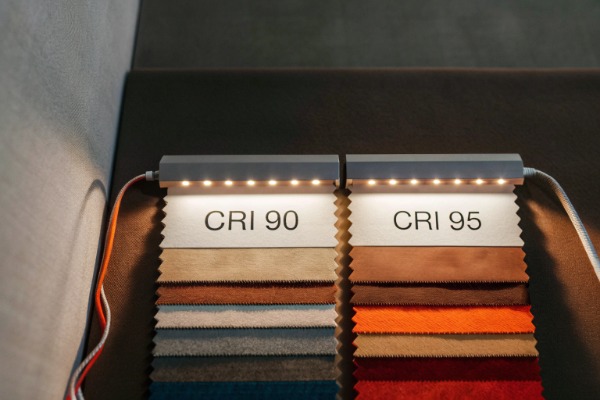
In our experience supplying lighting for jewelry and fashion retailers, clients often ask if the extra cost for the highest tier is justified. We usually demonstrate this by placing a standard strip next to a premium one over a colorful fabric sample.
The primary difference lies in color fidelity; CRI 90 is excellent for general commercial use, while CRI 95+ is critical for luxury retail where distinguishing subtle hue variations is essential. Higher values ensure that merchandise appears exactly as it would under natural daylight, directly influencing customer purchasing decisions.
Understanding the Nuances of Color Fidelity
When we engineer LED strips for the global market, we categorize them based on application strictness. While a Color Rendering Index 1 (CRI) of 80 was once the industry standard, it is now considered insufficient for any project involving product displays, art, or hospitality. The leap from CRI 90 to CRI 95 might seem mathematically small, but visually, it represents the "last mile" of perfection.
For high-end retail, the goal is to mimic natural sunlight 2 (CRI 100). A CRI of 90 captures about 90% of the color fidelity of the reference source. However, that missing 10% often contains the subtle spectral peaks required to make gold sparkle or fabrics look rich rather than muddy.
The Impact on Merchandise Appeal
We have observed that lower CRI light sources can introduce a subtle green or grey cast, particularly on white surfaces or complex textures. In a high-end boutique, this is unacceptable. A CRI of 95+ typically indicates a fuller spectral power distribution 3 (SPD). This means the LED phosphor mix has been optimized to fill in the gaps in the cyan and red regions of the spectrum.
Below is a breakdown of how we recommend CRI levels based on specific project applications:
Recommended CRI Levels by Application
| CRI Level | Suitability | Ideal Applications | Visual Characteristics |
|---|---|---|---|
| CRI < 80 | Industrial | Warehouses, Parking Garages, Streetlights | Colors look desaturated; skin tones appear sickly or grey. |
| CRI 80-90 | Commercial | Offices, Hallways, General Residential | Acceptable for tasks; colors are distinguishable but lack "pop." |
| CRI 90+ | Premium | High-end Retail, Hotels, Restaurants | Colors are vibrant; textures are clear; standard for modern luxury. |
| CRI 95+ | Professional | Art Galleries, Jewelry Stores, Medical | Near-perfect color matching; critical for evaluating true hues. |
Beyond the Single Number
It is important to note that the standard CRI (Ra) is an average of only the first 8 pastel colors (R1-R8). It does not account for saturated colors. Therefore, a strip could technically achieve CRI 95 while failing to render deep reds or blues accurately. This is why, when we develop our "Pro Series" strips, we look beyond the Ra value and analyze the full 15-color sample set, which leads us to the next critical metric.
How can I verify the R9 value to ensure red colors look vibrant in my project?
We frequently encounter spec sheets that boast a high overall CRI but hide the specific breakdown of color samples. When we test competitor samples in our integrating sphere 4, we often find the red spectrum is severely lacking, which ruins the warmth of a space.
You verify the R9 value by requesting a detailed photometric report or LM-79 test data from the supplier, specifically looking for the "R9" score in the R1-R15 breakdown. For high-end projects involving wood, skin tones, or food, you must insist on an R9 value of at least 50, with 80+ being ideal.
Why R9 is the "Secret" Metric
The R9 value corresponds to a saturated red sample. This specific color is notoriously difficult for standard LED phosphors to reproduce efficiently. Increasing the red output reduces the overall luminous efficacy 5 (lumens per watt), which is why many manufacturers sacrifice R9 to claim higher brightness on their datasheets.
However, red is the most important color for human perception in interior design. It is the dominant underlying tone in:
- Human Skin: Without sufficient R9, people look pale, sickly, or greenish.
- Wood Finishes: Flooring and furniture lose their warmth and grain depth.
- Food Displays: Meat, produce, and bakery items look unappetizing.
Interpreting the Data
When we send our products for third-party lab testing, we focus heavily on the R9 score. A standard CRI 80 LED might have an R9 value that is negative (e.g., -10). Even a generic CRI 90 LED might only have an R9 of 10 or 20. For a truly high-end installation, this is insufficient.
We recommend using the following benchmarks when evaluating the R9 data provided by your supplier:
R9 Value Benchmarks for Project Specification
| R9 Value Range | Visual Effect | Recommended Use Case |
|---|---|---|
| < 0 | Colors look flat; skin looks grey/green. | Utility areas only; avoid for human-centric spaces. |
| 0 - 50 | Acceptable but not vibrant. | General office lighting or corridors. |
| 50 - 75 | Good red reproduction; skin looks natural. | Standard retail, residential living areas, hospitality. |
| > 80 | Excellent vibrancy; rich, deep reds. | High-end fashion, art galleries, grocery fresh food displays. |
The Relationship Between CRI and R9
It is a common misconception that a high CRI automatically guarantees a high R9. While they are correlated, they are not identical. We have seen LEDs with a CRI (Ra) of 92 but an R9 of only 35. This happens because the Ra is an average of R1 through R8, none of which are saturated red.
To protect your project's integrity, do not just ask "What is the CRI?" Instead, ask: "Can you send me the spectral power distribution graph and the R1-R15 value table?" If a supplier hesitates to provide this, it is often a red flag that their R9 values are low.
Do I need a handheld spectrometer to check the color accuracy of sample strips?
We always advise our distributors that a datasheet is a promise, but a measurement is a fact. While we maintain strict quality control on our production lines, we encourage our partners to verify incoming shipments to ensure they match the approved "Golden Sample."
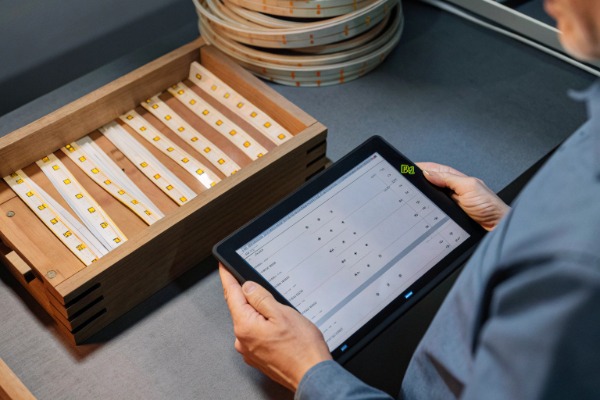
Yes, using a handheld spectrometer is highly recommended for high-stakes projects to verify that the delivered LED strips match the sample specifications. It allows you to instantly measure CRI, R9, and CCT on-site, ensuring that the lighting reality aligns perfectly with the designer's vision before installation begins.
The Reality of Manufacturing Tolerances
Even with the best intentions, LED manufacturing involves variances. Phosphor mixes can vary slightly between production runs. While we implement strict binning (sorting) processes, not all suppliers do. Relying solely on a printed label can lead to disaster if you install 500 meters of strip light only to realize later that the color rendering is poor 6.
A handheld spectrometer 7 gives you power. It moves the conversation from subjective opinions ("This light looks a bit weird") to objective data ("This light measures CRI 82, but we ordered CRI 90").
Tools of the Trade
You do not necessarily need a laboratory-grade device costing thousands of dollars. For on-site verification, there are several tiers of equipment available to lighting designers and contractors:
- Professional Spectrometers (e.g., Sekonic, UPRtek): These provide highly accurate readings of CRI, R9, TM-30, and spectral graphs. They are essential for commissioning agents.
- Mobile Sensors (e.g., Opple Light Master): These are affordable, pocket-sized sensors that connect to a smartphone. While not as precise as lab gear, they are excellent for spotting major discrepancies (e.g., catching a CRI 80 strip labeled as 90).
- Smartphone Apps: Generally unreliable for color measurement. The camera hardware on phones applies its own color processing, making it impossible to get raw spectral data without an external sensor.
How to Conduct a Field Test
When we assist clients with on-site mockups, we follow a specific protocol to ensure accuracy. Simply pointing a meter at a light strip can give skewed results due to ambient light contamination.
Field Testing Protocol for LED Color Quality
| Step | Action | Why it Matters |
|---|---|---|
| 1. Warm Up | Turn on the LED strip for at least 15 minutes. | LEDs shift color slightly as they reach thermal equilibrium. |
| 2. Isolate | Turn off all other light sources (sunlight, overheads). | Ambient light will mix with the LED light and corrupt the reading. |
| 3. Distance | Hold the sensor ~1 meter away, or use a cosine corrector. | Measuring too close to a single chip can cause saturation errors. |
| 4. Background | Measure against a neutral grey or black background. | Colored walls can reflect light back into the sensor, skewing tint. |
By incorporating this verification step into your workflow, you eliminate the risk of installing sub-par products. It also signals to your suppliers that you are technically proficient, which often results in them sending you their highest quality batches.
Why does the SDCM step matter for color consistency across different batches?
One of the most frustrating issues we resolve for new clients is the "patchwork quilt" effect, where two rolls of LED tape installed next to each other emit slightly different shades of white. This is rarely a CRI issue; it is a binning issue.
The SDCM (Standard Deviation of Colour Matching) step matters because it defines the visible color difference between LED batches; a lower step number means tighter consistency. For high-end projects, you need a 3-step or 2-step MacAdam Ellipse to ensure that separate LED strips appear visually identical to the human eye.
Defining the MacAdam Ellipse
In our factory, "binning" is the process of sorting LED chips based on their exact color coordinates and voltage. The industry standard for measuring this variance is the MacAdam Ellipse 8. Imagine a target on a color chart. The center is the perfect color temperature (e.g., 3000K).
- 1-Step Ellipse: The variance is so small that no human can see the difference.
- 3-Step Ellipse: The difference is virtually imperceptible to most people. This is the standard for premium lighting.
- 5-Step or 7-Step: The difference is clearly visible. One strip might look pinkish-white while the other looks yellowish-white.
The Consequence of Poor Binning
Many budget suppliers sell "CRI 90" strips that are binned to a 5-step or 7-step tolerance. This means you could buy ten rolls of 3000K tape, and they will all look slightly different. In a cove lighting application where the strips are hidden, this might be passable. But in a direct-view application or when washing a white wall, these inconsistencies look cheap and unprofessional.
We prioritize 3-step binning for all our project-grade COB strips. This ensures that if a client buys 100 meters today and another 50 meters in six months for a renovation, the new lights will match the old ones (accounting for slight aging of the old phosphors).
COB Technology and Consistency
COB (Chip on Board) technology inherently aids in consistency because hundreds of tiny chips are mounted directly under a continuous phosphor layer. However, the phosphor mix itself must be consistent.
When specifying products, do not just look at the CCT (Correlated Color Temperature 9). A 3000K light can have a green tint (positive Duv) or a pink tint (negative Duv). SDCM controls this deviation.
Checklist for Ensuring Consistency
To guarantee uniformity across your project, we recommend the following specification requirements:
- Specify the Bin: Explicitly state "3-Step MacAdam Ellipse" on your purchase order.
- Single Batch Ordering: Whenever possible, order the full quantity of lighting for a project at once. We can produce everything from a single phosphor batch, guaranteeing a perfect match.
- Bin Codes: Ask your supplier to label the reels with the specific Bin Code. If you need to reorder, providing this code helps the factory find the closest matching inventory.
By controlling the SDCM, you ensure that the high CRI you paid for is delivered with the professional uniformity your client expects.
Conclusion
Determining if COB LED strips meet high-end requirements requires looking beyond the basic CRI number. By verifying R9 values for red saturation, conducting on-site spectrometer tests, and demanding tight SDCM binning, you ensure the lighting elevates the luxury aesthetic rather than diminishing it.
color coordinates 10
Footnotes
- Official US government guidance on LED color characteristics and CRI. ↩︎
- General background on the spectral properties of natural sunlight as a reference. ↩︎
- Research from the Lighting Research Center on spectral power distribution and color rendering. ↩︎
- General background on the optical component used for measuring light flux and color. ↩︎
- Official government technical specification for lighting efficiency and luminous efficacy. ↩︎
- The Illuminating Engineering Society standard for measuring light source color rendition. ↩︎
- Product documentation for professional-grade handheld spectrometers mentioned in the text. ↩︎
- The International Commission on Illumination defines colorimetry standards including MacAdam ellipses. ↩︎
- ANSI standard for chromaticity and color temperature of solid-state lighting products. ↩︎
- Technical documentation from a major LED manufacturer explaining the chip binning process. ↩︎