
Currently we ship thousands of meters of RGB LED strips to contractors and wholesalers across Germany and Australia. Yet one question keeps coming back in emails and WeChat messages: "How exactly do these strips create so many colors?" It sounds simple. But getting the colors right—really right—is where most suppliers fall short.
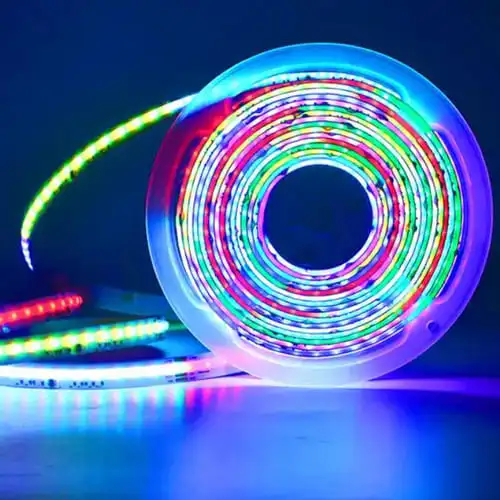
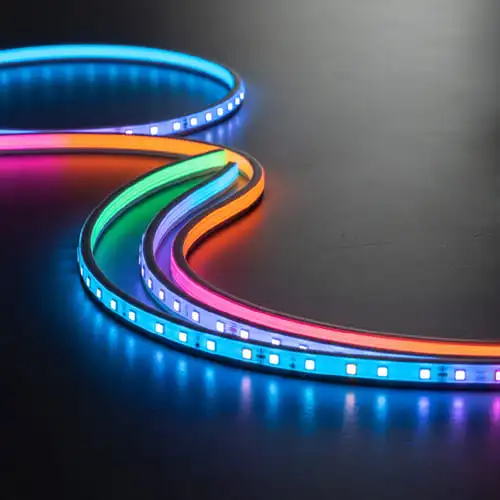
RGB LED strip lights achieve full-color effects by combining red, green, and blue LED chips within each module. Each color channel adjusts independently across 256 brightness levels using PWM signals, producing over 16.7 million possible color combinations perceived as unified hues by the human eye.
In this article, I will walk you through the core technology behind RGB color mixing, the control systems that drive smooth transitions, how we maintain batch-to-batch color consistency, and what specifications matter most for outdoor reliability. Let's get into the details.
How do my LED strips mix red, green, and blue to create millions of colors?
When we first started supplying RGB strips for architectural projects in Melbourne, one lighting designer asked us why our strips looked "cleaner" than a competitor's. The answer came down to how well the three primary colors mixed inside each LED module. Poor mixing means muddy, impure colors. Great mixing means vivid, true-to-life hues.
RGB LED strips mix colors through additive color mixing. Each LED module contains three separate chips—red, green, and blue. A controller adjusts each chip's brightness from 0 to 255 using Pulse-Width Modulation, and the human eye blends these three light outputs into a single perceived color.
The Physics of Additive Color Mixing
Additive color mixing 1 is different from mixing paint. When you combine red and green paint, you get a muddy brown. But when you combine red and green light, you get yellow. This is because light wavelengths add together rather than absorb each other. Red light sits around 620–750 nm, green around 495–570 nm, and blue around 450–495 nm. When all three hit your eye at full intensity, you see white.
Each RGB LED module on a strip contains three tiny semiconductor chips. Each chip emits one primary color. By varying how bright each chip glows, you create different colors. Equal parts red and green with no blue gives you yellow. Full blue and full green with no red gives you cyan. The combinations are nearly endless.
How PWM Controls Brightness
The secret to smooth color control is Pulse-Width Modulation 2, or PWM. Instead of reducing voltage to dim an LED (which shifts its color), PWM rapidly switches the LED on and off. The ratio of on-time to off-time determines perceived brightness. A 50% duty cycle means the LED is on half the time, so it looks half as bright. This happens thousands of times per second—far too fast for the human eye to detect any flicker.
With 256 steps per channel and three channels, the math is simple: 256 × 256 × 256 = 16,777,216 possible colors.
Why Chip Quality Matters More Than Color Count
Here is something most suppliers won't tell you. The 16.7 million number is theoretical. In practice, the actual color quality depends on LED chip consistency, phosphor coatings, and controller resolution. On our production line, we use chips that are tightly binned for wavelength and luminous flux. This means every red chip emits the same shade of red, every green the same green. Without tight binning, your "white" might look pink on one section and greenish on another.
| Color Component | Wavelength Range (nm) | 256 Levels | Role in Mixing |
|---|---|---|---|
| Red | 620–750 | 0–255 | Warm tones, oranges, pinks |
| Green | 495–570 | 0–255 | Yellows, cyans, natural tones |
| Blue | 450–495 | 0–255 | Cool tones, purples, violets |
| Combined | Full visible spectrum | 16.7M colors | Any perceivable hue |
Addressable vs. Non-Addressable Strips
Basic RGB strips change the entire length to one color at a time. Every LED receives the same signal. Addressable RGB strips are different. Each LED or pixel has its own tiny IC chip. The controller sends a data stream down the strip. Each IC reads its assigned color data, applies it, and passes the rest of the message forward. This allows chasing effects, gradients, and animations pixel by pixel.
For most architectural and commercial projects we supply, addressable strips open up far more creative possibilities. But they also require more careful engineering in the control system.
Which control system should I use to achieve seamless RGB transitions in my lighting project?
We have seen projects go wrong not because of the LED strips, but because of the controller. A contractor in Stuttgart once told us his strips "stuttered" during color fades. The strips were fine. The controller was using only 8-bit PWM with no gamma correction 3. Choosing the right control system is just as important as choosing the right strip.
To achieve seamless RGB transitions, select a controller that matches your strip type—basic RGB or addressable—and supports high-frequency PWM with at least 8-bit resolution. For professional projects, use DMX512, DALI, or dedicated IC-based protocols like WS2812 or APA102 with gamma correction enabled.
Understanding Controller Types
At the most basic level, an RGB controller sends PWM signals to three channels: red, green, and blue. Simple IR remote controllers are fine for home accent lighting. But for commercial or architectural projects, you need something more robust.
DMX512 4 is the industry standard for professional lighting control. It uses a serial data protocol to manage up to 512 channels per universe. Each RGB LED takes three channels (one per color), so one DMX universe can control about 170 individual RGB points. For larger installations, you daisy-chain multiple universes.
DALI (Digital Addressable Lighting Interface) 5 is common in European commercial buildings, especially in Germany where many of our clients operate. DALI integrates with building management systems and supports dimming curves, scene recall, and feedback from luminaires.
For addressable strips, the IC protocol matters. WS2812B is popular and affordable—it uses a single data line. APA102 uses both a data line and a clock line, which makes it more reliable at high refresh rates and long data runs.
Gamma Correction: The Hidden Difference
Human eyes do not perceive brightness linearly. A 50% duty cycle does not look "half as bright." It looks much brighter than that. Without gamma correction, your color fades will look unnatural—jumping quickly through darks and crawling through highlights.
Good controllers apply a gamma curve (typically gamma 2.2 or 2.8) to make brightness steps look even to the human eye. This is one of the most overlooked aspects of RGB control, and it makes a massive difference in perceived quality.
| Control System | Best For | Channels | Gamma Support | Typical Use Case |
|---|---|---|---|---|
| IR Remote | Home accent lighting | 3 (RGB) | Rarely | Bedroom, TV backlight |
| RF Remote | Small commercial | 3–4 | Sometimes | Retail shelving, signage |
| DMX512 | Professional installs | 512 per universe | Yes | Stage, architecture, facades |
| DALI | Building integration | 64 devices per bus | Yes | Office, commercial buildings |
| WS2812B Protocol | Addressable pixel | 1 data line | Controller-dependent | Dynamic effects, art installations |
| APA102 Protocol | High-speed addressable | Data + clock | Controller-dependent | Video walls, long pixel runs |
Matching Controller to Project Scale
For a 10-meter residential install, an RF remote with a decent receiver works fine. For a 200-meter facade project, you need DMX with multiple decoders and signal amplifiers. We always recommend our clients map out total LED count, desired effects, and control integration (smart home, BMS, standalone) before selecting hardware.
One common mistake: using a cheap Wi-Fi controller for a large commercial job. These controllers often have limited channel depth, poor refresh rates, and no support for professional protocols. The cost saving upfront leads to frustration later when the transitions look choppy.
How can I maintain uniform color consistency across multiple batches of my RGB strips?
This is the question that keeps our quality team up at night. A distributor in Sydney once ordered 500 meters across three months. The first batch looked perfect on his showroom wall. The second batch, installed next to the first, had a slightly warmer white. The client noticed immediately. That kind of mismatch can kill a project—and a business relationship.
Maintaining color consistency across batches requires strict LED binning, where diodes are sorted by wavelength, brightness, and forward voltage. Suppliers must use chips from the same bin code for every order and verify uniformity with spectrophotometer testing before shipping.
What Is LED Binning?
LED manufacturing produces chips with slight variations. Even chips from the same wafer can differ in dominant wavelength, luminous intensity, and forward voltage. Binning is the process of testing every chip and sorting them into groups (bins) with matching characteristics.
A tight bin means the chips in that group are very close in color and brightness. A loose bin means wider variation. When you buy LED strips from a supplier that does not control binning, you are gambling with consistency.
On our end, we specify bin codes from our chip suppliers and require that each production run uses the same bin. If a bin sells out, we re-match and verify before switching. This takes more effort, but it is the only way to guarantee visual uniformity across orders placed months apart.
The Role of Spectrophotometer Testing
Visual inspection is not enough. Human eyes adapt to ambient lighting and can miss subtle shifts. We use spectrophotometers to measure dominant wavelength (in nm), correlated color temperature (CCT) 6, and CRI for every production batch. spectrophotometer testing 7 These instruments give objective, repeatable data.
Here is how we set our tolerance ranges:
| Parameter | Acceptable Tolerance | Measurement Tool |
|---|---|---|
| Dominant Wavelength (Red) | ±2 nm | Spectrophotometer |
| Dominant Wavelength (Green) | ±3 nm | Spectrophotometer |
| Dominant Wavelength (Blue) | ±2 nm | Spectrophotometer |
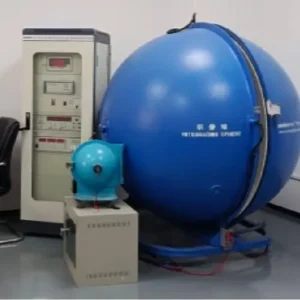
| Luminous Flux | ±10% | Integrating sphere |
| Forward Voltage | ±0.1V | Multimeter / auto tester |
| CCT (White Mix) | ±100K | Spectrophotometer |
Practical Steps for Buyers
If you are a contractor or wholesaler, here is what you can do to protect yourself:
- Request bin codes with every order. Keep a record. When reordering, specify the same bin.
- Ask for test reports showing spectrophotometer data for each batch.
- Order extra from the first batch for future repairs or extensions. Matching later is always harder than stocking ahead.
- Test samples side by side before approving a new batch for installation next to an existing one.
Color consistency is not glamorous. But it is the difference between a project that looks professional and one that looks patchy. We spend significant resources on this because our clients—especially those doing multi-phase commercial fit-outs—depend on it.
What technical specifications should I look for to ensure my RGB strips perform reliably in outdoor environments?
Our team learned this lesson early on. A project in coastal Queensland required 150 meters of RGB strips for an outdoor dining area. Salt air, rain, UV exposure, and temperature swings from 10°C to 45°C. The client's previous supplier used indoor-rated strips with a silicone coating slapped on top. They failed within six months. Corrosion ate through the solder joints.
For reliable outdoor RGB strip performance, prioritize IP65 or higher ingress protection, UV-stabilized materials, marine-grade PCB coatings, proper heat dissipation through aluminum profiles, and verified compliance with IEC or UL outdoor-rated standards. Voltage drop management is also critical for long runs.
IP Ratings Explained
IP stands for Ingress Protection 9. The first digit rates protection against solids (dust). The second rates protection against liquids (water). For outdoor use, you need at minimum IP65. For installations where water submersion is possible—like ground-recessed strips or fountain lighting—IP67 or IP68 is required.
But here is the catch: not all IP ratings are created equal. The method of waterproofing matters enormously. A simple silicone sleeve (IP65) protects against splashing but can trap moisture over time if the end caps fail. Silicone extrusion coating (IP67) bonds directly to the PCB and offers better long-term protection. Fully potted strips (IP68) can handle submersion but are harder to repair and have slightly different thermal characteristics.
Key Outdoor Specifications
| Specification | Minimum for Outdoor | Recommended for Harsh Environments |
|---|---|---|
| IP Rating | IP65 | IP67 or IP68 |
| Operating Temperature | -20°C to +50°C | -30°C to +60°C |
| UV Resistance | UV-stabilized lens/sleeve | UV-stabilized + anti-yellowing coating |
| PCB Coating | Conformal coating | Marine-grade conformal + anti-corrosion |
| Connector Type | Sealed waterproof | IP68-rated injection-molded connectors |
| Voltage | 24V DC | 24V or 48V DC for long runs |
| Certification | CE | CE + IEC 60529, UL Wet Location |
Voltage Drop and Long Runs
Outdoor installations often cover long distances. As current flows through the copper traces on the PCB, voltage drop 10s. The LEDs at the far end of the strip receive less voltage and appear dimmer. For RGB strips, this means the color also shifts—because each color chip has a slightly different voltage-current relationship.
To manage this, we recommend:
- Use 24V or 48V strips instead of 12V. Higher voltage means lower current for the same power, which reduces voltage drop.
- Feed power from both ends of the strip, or add mid-run power injection points.
- Use wider copper PCB traces. Our standard outdoor strips use 2oz copper instead of the typical 1oz, which cuts resistive losses significantly.
- Keep total run length per power feed under manufacturer specifications. We provide maximum run charts for every product SKU.
Heat Dissipation Outdoors
People assume outdoor means "cooler." But LED strips mounted on south-facing walls in Australia can reach extremely high surface temperatures in summer. Heat is the number one enemy of LED longevity. Aluminum extrusion channels serve a dual purpose: they spread heat away from the LEDs and protect the strip mechanically. We always recommend mounting outdoor strips in aluminum profiles with thermal paste or adhesive thermal tape for proper heat transfer.
Certifications That Matter
For project bidding in Australia, you will likely need SAA/RCM compliance. In Germany, CE marking and often TÜV or ENEC certification are expected. UL listing for wet locations is increasingly requested even outside North America, because it signals a higher level of third-party testing. We maintain current certifications and can provide documentation for tender submissions—saving our distributors weeks of approval time.
Conclusion
RGB full-color effects come down to precise mixing of red, green, and blue light—controlled by smart electronics and manufactured with tight quality standards. The real challenge is not producing colors. It is producing them beautifully, consistently, and reliably in real-world conditions.
Footnotes
- Replaced HTTP 404 with authoritative Wikipedia page on additive color. ↩︎
- Replaced HTTP 404 with authoritative Wikipedia page on Pulse-width modulation. ↩︎
- Describes gamma correction's role in image processing to match human vision's non-linear perception. ↩︎
- Replaced HTTP 404 with authoritative Wikipedia page on DMX512. ↩︎
- Explains DALI as a manufacturer-independent protocol for intelligent lighting management. ↩︎
- Replaced HTTP 405 with authoritative Wikipedia page on correlated color temperature (CCT). ↩︎
- Discusses using spectrophotometers for accurate LED optical output and color parameter measurements. ↩︎
- Replaced HTTP 404 with a comprehensive explanation of LED binning from a reputable commercial source. ↩︎
- Replaced HTTP 404 with an authoritative source (IEC) on Ingress Protection ratings. ↩︎
- Replaced HTTP 404 with authoritative Wikipedia page on voltage drop. ↩︎

 English
 Spanish
 German
 Russian
 Arabic
 French
 Portuguese