

Chaque semaine, sur la ligne de production, nous recevons la même demande de la part des entrepreneurs : “ Donnez-moi la bande la plus dense que vous avez. ” Mais plus de LEDs par mètre n'est pas toujours la bonne réponse.
Une densité plus élevée de LEDs offre une lumière plus douce et plus uniforme, mais ce n'est pas toujours mieux. Les bandes plus denses consomment plus d'énergie, génèrent plus de chaleur et coûtent plus cher à faire fonctionner. La meilleure densité dépend de la profondeur de votre profil, de la distance de vision, de la gestion thermique et du budget du projet.
Laissez-moi vous expliquer les véritables compromis afin que vous puissiez spécifier la bonne bande pour votre prochain projet, plutôt que de dépenser trop ou de sous-performer.
Comment déterminer si des bandes LED à haute densité sont nécessaires pour éliminer les points lumineux dans mes conceptions architecturales ?
Lorsque nous envoyons des échantillons à des cabinets d'architecture en France et en Australie, la plainte numéro un concernant les bandes standard est la présence de points visibles. designs architecturaux 1 Cela ruine les lignes de conception épurées et donne à un projet haut de gamme un aspect bon marché.
Les bandes à haute densité (120–480 LEDs/m) sont nécessaires lorsque la bande est montée près d'une surface de diffuseur, directement visible, ou éclairant un profilé en aluminium peu profond. Si la bande est cachée derrière une corniche ou éloignée de la surface de vision, une norme de 60 LEDs/m fonctionne souvent très bien.
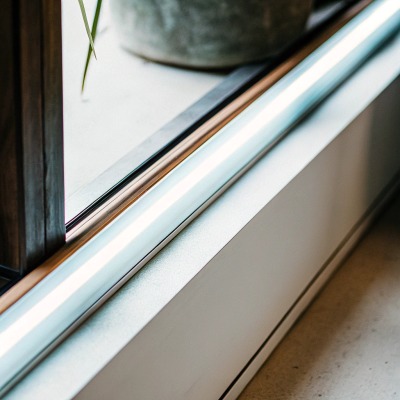
Qu'est-ce qui cause les taches ?
Les taches se produisent lorsque l'espace entre les LEDs individuelles est trop large par rapport à la distance entre la bande et le diffuseur. Chaque LED crée un point lumineux. Les espaces entre elles restent sombres. Votre œil voit des points au lieu d'une ligne.
Plus la bande est proche du diffuseur ou de la lentille de votre profil en aluminium 2, moins la lumière ambiante a de place pour se mélanger. C'est ici que la densité est la plus importante.
La règle de la distance de vision
Une règle simple que nous utilisons en interne : si le diffuseur est à moins de 15 mm des puces LED, vous avez besoin d'au moins 120 LEDs/m. S'il est à moins de 10 mm, optez pour 240 LEDs/m ou plus. Pour des profils profonds avec une distance de diffuseur de plus de 20 mm, 60 LEDs/m peuvent sembler parfaitement uniformes.
| Distance du diffuseur par rapport aux LEDs | Densité minimale recommandée | Application typique |
|---|---|---|
| Moins de 10 mm | 240–480 LED/m | Profils de surface ultra-fins |
| 10–15mm | 120–160 LED/m | Profils encastrés standard |
| 15–25mm | 60–120 LED/m | Profils encastrés profonds ou en corniche |
| 25mm+ | 60 LED/m | Corniche cachée, éclairage indirect |
Lorsque la densité standard suffit
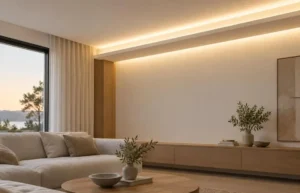
Tous les projets n'ont pas besoin d'une haute densité. Si la bande est cachée derrière une étagère, à l'intérieur d'une corniche pointant vers le plafond, ou dissimulée derrière une recess où personne ne voit la source directement, 60 LED/m standard permet d'économiser de l'argent. Nous avons fourni de nombreux grands projets hôteliers en France où 60 LED/m dans des corniches profondes ont donné des résultats impeccables.
La question clé est toujours : le spectateur peut-il voir la bande ou son reflet ? Si non, économisez votre budget.
CRI et cohérence des couleurs comptent aussi
Même avec une haute densité, le spotting peut apparaître comme un banding de couleurs si la cohérence des lots est mauvaise. Sur nos séries de production, nous trions les LED par des lots de couleurs serrés (3 étapes Ellipse de MacAdam 3) afin que les LED adjacentes soient assorties. Une haute densité avec un mauvais tri rend en réalité l'incohérence plus visible, pas moins.
Choisir une densité de LED plus élevée va-t-il créer des problèmes de gestion thermique pour mes installations à long terme ?
Sur notre banc d'essai, nous mesurons régulièrement la température des bandes sur des longueurs continues de 10 mètres et 20 mètres. Les résultats montrent systématiquement une chose : plus de LED signifie plus de chaleur, et la chaleur est le tueur silencieux de la durée de vie des LED.
Oui, une densité de LED plus élevée génère beaucoup plus de chaleur par mètre. Pour les installations sur le long terme dépassant 5 mètres, vous devez associer des bandes à haute densité avec des dissipateurs de chaleur en extrusion d'aluminium et vérifier que la puissance totale par mètre reste dans la capacité thermique de votre profil choisi. Passer cette étape entraîne une dépréciation prématurée du flux lumineux et un décalage de la couleur.
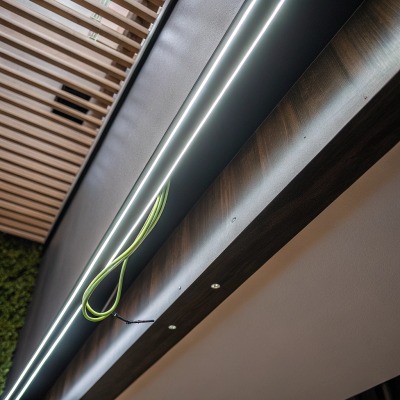
Comment la chaleur endommage les bandes LED
Les LED ne brûlent pas comme les ampoules à incandescence. Elles se dégradent. Des températures de jonction élevées accélèrent la perte de flux lumineux et décalent la température de couleur vers le jaune. la dépréciation du lumen 4 Une bande évaluée pour 50 000 heures à 25°C d'ambiance peut ne durer que 20 000 heures à 55°C.
Pour les longues distances, la chaleur s'accumule. Le centre d'une bande de 10 mètres fonctionne souvent à une température plus élevée que les extrémités car la chaleur a moins de chemin pour se dissiper.
Puissance et chaleur par densité
| Densité de LED | Puissance typique (W/m) | Production de chaleur par rapport à 60 LED/m | Profil en aluminium requis ? |
|---|---|---|---|
| 60 LED/m | 4,8–7,2W | Référence (1x) | Recommandé |
| 120 LED/m | 9,6–14,4W | ~2x | Oui |
| 240 LED/m | 19,2–24W | ~3–4x | Oui, profil plus large |
| 480 LED/m | 28–38W | ~5–6x | Oui, profil robuste |
Étapes pratiques pour les longues distances
Tout d'abord, toujours monter des bandes à haute densité sur des profils en aluminium. Le profil agit comme un dissipateur thermique. Deuxièmement, pour des longueurs supérieures à 5 mètres, alimenter l'énergie des deux extrémités pour réduire chute de tension 5 et le chauffage localisé. Troisièmement, garder à l'esprit la température ambiante. Une bande à l'intérieur d'une plinthe de plafond fermée chauffe plus qu'une dans une corniche ouverte.
Nous avons une fois fait installer par un entrepreneur à Melbourne des bandes de 240 LEDs/m dans un canal de plafond scellé sans profil en aluminium. En six mois, la luminosité avait considérablement diminué. Après leur avoir aidé à rénover avec une extrusion appropriée, les bandes de remplacement sont restées stables.
Réduction de puissance pour les espaces fermés
Si votre installation se trouve dans une zone confinée ou mal ventilée, réduire votre densité. Cela signifie choisir 120 LEDs/m au lieu de 240, ou utiliser un profil en aluminium plus large pour répartir la chaleur. L'objectif est de maintenir la bande en dessous de 60°C pendant une utilisation continue.
Comment puis-je justifier le coût plus élevé des bandes à haute densité à mon équipe d'approvisionnement pour des projets à grande échelle ?
Lorsque nous proposons des bandes à haute densité aux grossistes, la première objection est toujours le prix. Un responsable des achats voit le double du coût par mètre et demande pourquoi. La réponse réside dans coût total de possession 6, pas dans le prix unitaire.
Justifiez les coûts élevés de densité en présentant la valeur totale du projet : moins de rappels pour des plaintes, moins de reprises, une durée de vie plus longue avec une gestion thermique appropriée, et la perception de premium qui fidélise les clients. Calculez le coût par lumen et le coût par année d’éclairage uniforme — pas seulement le coût par mètre.
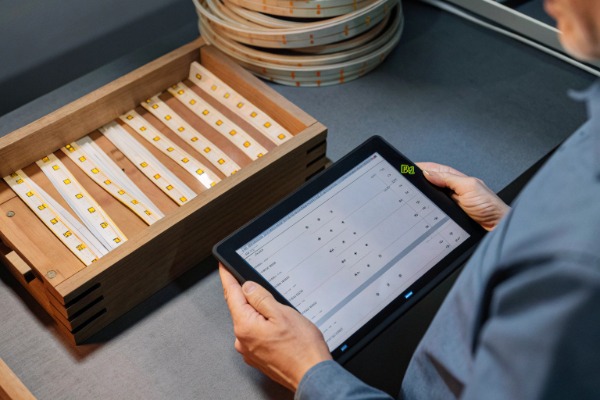
La véritable comparaison des coûts
Les équipes d'approvisionnement pensent en prix unitaire. Vous devez reformuler la conversation. Voici une comparaison que nous partageons souvent avec nos partenaires de distribution :
| Facteur de coût | Standard 60 LEDs/m | LED haute densité 120 LEDs/m | LED haute densité 240 LEDs/m |
|---|---|---|---|
| Coût du ruban par mètre | $3–5 | $6–10 | $12–20 |
| Dimensionnement de l'alimentation électrique | Standard | Plus grand | Significativement plus grand |
| Profil en aluminium | Optionnel | Obligatoire | Requis (plus large) |
| Coût annuel en énergie (par 10m, 8h/jour) | ~$14 | ~$28 | ~$48 |
| Risque de rappel/retravail | Plus élevé (décalage) | Faible | Très faible |
| Satisfaction du client | Adéquat pour caché | Élevé | Premium |
Encadrer le Risque
Les rappels coûtent de l'argent. Si un entrepreneur installe 200 mètres de bande à densité standard dans des profils visibles et que le client se plaint de points, le coût de la reprise dépasse déjà la différence de prix. Nous avons vu cela se produire lors d'aménagements commerciaux où le designer a spécifié une “ bande LED ” sans préciser la densité, et l'entrepreneur a choisi l'option la moins chère.
Utiliser Lumens Par Dollar
Les bandes à haute densité offrent environ deux fois plus de lumens par mètre. Si vous divisez le coût par la sortie de lumen, l'écart de prix se réduit. Pour des applications nécessitant une forte luminosité comme la vitrine ou l’éclairage de tâche, la haute densité offre en réalité un meilleur rapport qualité-prix par lumen.
Argument sur la Durée de Vie
Avec une gestion thermique 7, les bandes à haute densité durent entre 30 000 et 50 000 heures. Sur un projet commercial de 10 ans fonctionnant 10 heures par jour, cela représente 36 500 heures. Une bande haute densité de qualité peut couvrir toute la durée du projet sans remplacement. Les bandes standard bon marché avec une mauvaise conception thermique peuvent nécessiter un remplacement à la 5ème ou 6ème année.
Créer un Cas d'Affaires en Une Page
Nous aidons nos partenaires à élaborer des comparaisons de coûts simples en une page pour leurs équipes d'approvisionnement. Cela inclut le coût de la bande, le coût de l'alimentation, le coût du profil, le coût énergétique sur 5 ans, et le risque estimé de rappel. Lorsque les cinq colonnes sont visibles, la haute densité l'emporte dans la plupart des scénarios d'installation visible.
Quelle densité spécifique de LED dois-je spécifier pour garantir une lumière parfaitement uniforme à travers mes profils en aluminium choisis ?
Sur notre chaîne de fabrication, nous testons chaque nouvelle combinaison de bande et de profil avant de la recommander à nos clients. La correspondance entre la densité de LED et la géométrie du profil est le facteur le plus important pour obtenir une lueur homogène.
Pour les profils peu profonds (moins de 12 mm de profondeur), spécifiez 240–480 LED/m. Pour les profils moyens (12–20 mm), 120–160 LED/m offrent une excellente uniformité. Pour les profils profonds (20 mm et plus), 60–90 LED/m suffisent. Confirmez toujours avec un échantillon physique dans votre profil exact avant de vous engager dans une commande complète.
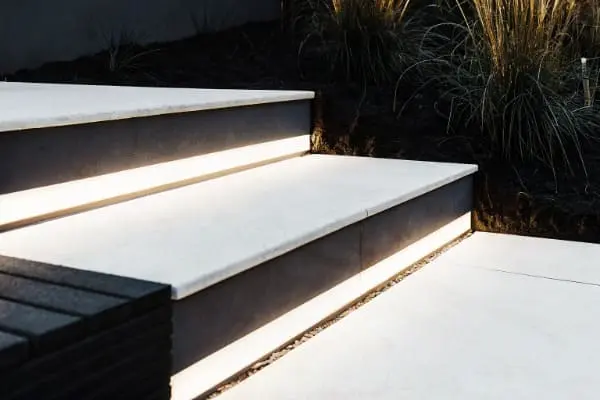
Pourquoi la profondeur du profil est le facteur décisif
Le diffuseur à l'intérieur d'un profil en aluminium a besoin de distance pour mélanger la lumière des LED individuelles. Pensez-y comme à une pomme de douche : tenez-la près de votre main et vous sentez des jets individuels. Tenez-la loin et l'eau ressemble à une feuille. Même physique, médium différent.
Correspondance entre densité et profil
Voici le guide de spécifications que nous fournissons à nos partenaires en éclairage architectural :
| Type de profil | Profondeur interne jusqu'au diffuseur | Densité de LED recommandée | Notes |
|---|---|---|---|
| Slim en montage en surface | 7–10mm | 240–480 LED/m | Doit utiliser un diffuseur laiteux |
| Standard encastré | 12–18mm | 120–160 LED/m | Diffuseur laiteux ou givré |
| Encastrement profond | 20–30mm | 60–120 LED/m | Diffuseur clair ou laiteux, les deux fonctionnent |
| Profil d'angle/45° | 10–15mm | 120–240 LED/m | L'angle influence le mélange |
| Suspendu/pendant | 15–25mm | 90–160 LED/m | Visible de dessous ; tester les deux côtés |
Le type de diffuseur est important
Un diffuseur laiteux (opal) diffuse la lumière plus agressivement qu'un diffuseur clair ou givré. Avec un diffuseur laiteux, vous pouvez parfois réduire d'un niveau la densité. Mais les diffuseurs laiteux réduisent aussi la sortie lumineuse totale de 20 à 40 %. Il y a donc un compromis : meilleur mélange contre luminosité moindre.
Demandez toujours des échantillons
Aucune fiche technique ne remplace un véritable échantillon. Nous envoyons régulièrement des échantillons de bandes de 300 mm pré-montés dans des profils en aluminium afin que nos clients puissent voir le résultat avant de commander 500 mètres. Si votre fournisseur ne peut pas fournir un échantillon monté dans un profil, c'est un signal d'alarme.
Bandes COB comme alternative
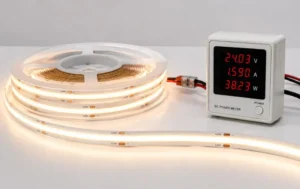
Les bandes LED Chip-on-Board (COB) utilisent de minuscules LED regroupés sous une couche de phosphore. bandes LED COB 8 Elles produisent une ligne de lumière totalement sans points, même à proximité du diffuseur. Si vous avez besoin d'une sortie sans couture dans des profils ultra-fins et que votre budget le permet, le COB vaut la peine d'être évalué. Nous produisons des bandes COB à 320 et 528 LED/m qui s'associent bien avec des profils aussi peu profonds que 6 mm.
Chute de tension sur les longues distances
Une densité plus élevée signifie une consommation de courant plus importante. Sur des longueurs supérieures à 5 mètres, la tension chute vers l'extrémité éloignée, provoquant un assombrissement et un décalage de couleur. Spécifiez une bande avec une tension plus élevée (24V ou 48V) pour les longues distances, et alimentez en courant depuis les deux extrémités lorsque cela est possible. Cela est particulièrement important pour les bandes de plus de 240 LED/m qui consomment un courant important.
Conclusion
Une densité plus élevée de LED offre une meilleure uniformité, mais la densité appropriée dépend de votre profil, de votre configuration thermique et de votre budget. Adaptez la bande à l'application, faites des échantillons avant de vous engager, et vous obtiendrez un résultat qui paraît haut de gamme sans dépenser excessivement.
Notes de bas de page
- Présente les principes fondamentaux et les considérations pour une conception d’éclairage architectural efficace. ↩︎
- Détaille comment les profils en aluminium améliorent la dissipation thermique, la diffusion de la lumière, et protègent les bandes LED. ↩︎
- Explique le rôle des ellipses de MacAdam dans la garantie de la cohérence des couleurs des LED et la perception de la qualité. ↩︎
- Définit la dépréciation du lumen et son impact sur la durée de vie des LED et la sortie lumineuse au fil du temps. ↩︎
- Explique la chute de tension dans les systèmes LED, ses causes, et les méthodes de calcul et de mitigation. ↩︎
- Explique comment le coût total de possession prend en compte l'achat, l'énergie, la maintenance et l’élimination des systèmes LED. ↩︎
- Fournit un aperçu complet de la gestion thermique des LED provenant d'une source autorisée. ↩︎
- Décrit la technologie des bandes LED COB, ses avantages pour une lumière sans couture, et ses applications. ↩︎

 English
 Spanish
 German
 Russian
 Arabic
 French
 Portuguese