
When our production team first started shipping high-density COB LED strips 1 overseas, we quickly learned that even a perfect product can fail if stored poorly after it arrives. Buyers would report yellowed phosphor layers 2, weakened adhesive backing, and inconsistent color temperature—problems that had nothing to do with manufacturing defects and everything to do with storage conditions. If you're a procurement officer or distributor sitting on inventory, improper storage can silently erode your margins and your reputation.
To properly ask suppliers about storage requirements for high-density dotless COB LED strips, request specific data on ideal temperature and humidity ranges, moisture-proof packaging specs, maximum shelf life before performance degrades, and physical stacking or coiling limits—any reliable manufacturer should provide clear, documented answers.
This guide walks you through the exact questions to ask your supplier, the red flags to watch for in their answers, and the technical reasons behind every storage requirement. Whether you're holding stock in a warehouse in Melbourne or a distribution center in Hamburg, the details below will protect your investment.
How do I verify the specific temperature and humidity ranges required for my COB LED strip inventory?
Every year, we receive cases from buyers who stored LED strips in non-climate-controlled spaces. The result is always the same: warped flexible PCBs 3, discolored silicone encapsulants, and adhesive that peels off on first use. Temperature and humidity are the two silent killers of COB LED strip inventory.
Ask your supplier for a documented storage temperature range (typically 20°C–25°C) and relative humidity range (40%–60%). High-density COB strips are more sensitive than standard SMD strips because their dense phosphor layers and silicone encapsulants react faster to environmental extremes.
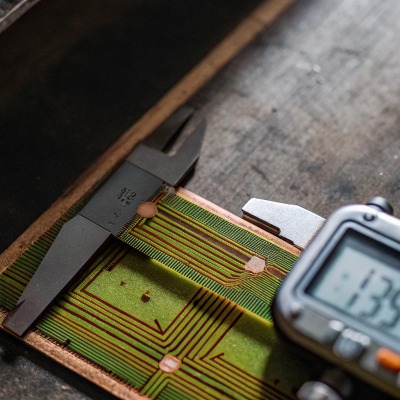
Why COB Strips Are More Sensitive Than Standard LED Strips
Standard SMD LED strips have individual diodes spaced apart with resin lenses. COB strips, on the other hand, pack 500 or more tiny chips per meter under a continuous phosphor and silicone layer. This design creates seamless, dotless light—but it also means there is a large, unbroken surface of encapsulant material exposed to ambient conditions.
When we test strips in our lab at elevated temperatures (above 35°C for extended periods), the silicone encapsulant 4 begins to yellow. Humidity above 70% introduces moisture into the flexible PCB substrate, causing micro-corrosion on solder joints 5. These issues don't show up immediately. They appear weeks or months later, sometimes after installation.
Key Questions to Ask Your Supplier
Here are the specific questions you should send to your supplier, and what their answers should look like:
| Question | Good Answer | Red Flag Answer |
|---|---|---|
| What is the recommended storage temperature? | 20°C–25°C (68°F–77°F), documented in datasheet | "Room temperature" with no specific range |
| What is the recommended humidity range? | 40%–60% RH, with silica gel packets recommended | "Just keep it dry" |
| Does high density change storage needs vs. standard strips? | Yes, denser chip arrays increase heat sensitivity | "No, it's the same as any LED strip" |
| Do you provide environmental test reports? | Yes, with aging test data at specified conditions | No test data available |
Understanding the Impact of Atmospheric Contaminants
Beyond temperature and humidity, ask about contaminants. Sulfur compounds and chlorine 6 in the air—common in industrial warehouses—can corrode the silver plating on LED chip reflectors. This causes irreversible lumen depreciation. In our experience exporting to industrial regions in Germany, we always recommend buyers confirm whether their storage facility is near chemical plants or heavy traffic corridors, and adjust ventilation accordingly.
A good supplier will mention contaminant sensitivity without you having to ask. If they don't, bring it up. Ask: "Do you have recommendations for storage in environments with potential sulfur or chlorine exposure?" The answer tells you how deeply they understand their own product.
Temperature Monitoring Tips
For buyers holding large inventories, we recommend placing digital temperature and humidity loggers inside storage areas. These cost under $20 each and provide timestamped records. If a quality issue arises later, you have data to determine whether it was a storage problem or a manufacturing defect. This simple step has saved several of our long-term partners from costly disputes.
What questions should I ask about moisture-proof packaging to ensure my high-density strips don't degrade?
Packaging might seem like an afterthought, but we've seen entire shipments rejected because of inadequate moisture barriers during ocean freight. A 30-day sea journey from Shenzhen to Sydney exposes cargo to dramatic humidity swings, and the packaging is your product's last line of defense.
Ask your supplier whether they use vacuum-sealed anti-static (ESD) bags with desiccant sachets, whether packaging materials are chemically inert to avoid off-gassing reactions with the silicone encapsulant, and whether individual reels are protected against physical crushing during transit and storage.
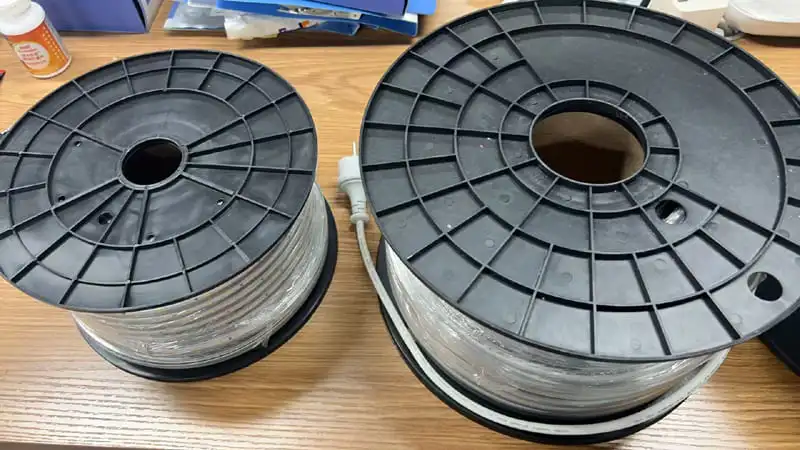
Anti-Static vs. Moisture Barrier: They're Not the Same
Many buyers assume that anti-static bags also block moisture. They don't—at least not all of them. ESD bags prevent electrostatic discharge damage 7 to sensitive LED chips. Moisture barrier bags (often aluminum-laminated) prevent water vapor from reaching the product. The best suppliers use packaging that combines both properties.
When we prepare shipments for our Australian and German partners, each reel goes into an aluminum-laminated ESD bag with two silica gel sachets and a humidity indicator card. The indicator card changes color if internal humidity exceeds the safe threshold. This way, the buyer can check packaging integrity upon arrival without opening the seal.
Packaging Questions Checklist
| Packaging Feature | What to Ask | Why It Matters |
|---|---|---|
| ESD protection | "Are reels packed in anti-static bags?" | Prevents electrostatic damage to LED chips |
| Moisture barrier | "Do bags have aluminum lamination or equivalent?" | Blocks water vapor during ocean freight |
| Desiccant | "How many grams of desiccant per reel?" | Absorbs residual moisture inside sealed bags |
| Humidity indicator | "Do you include humidity indicator cards?" | Allows non-destructive quality check on arrival |
| Chemical inertness | "Will packaging materials off-gas or react with silicone?" | Prevents encapsulant degradation during storage |
| Crush protection | "Are reels placed in rigid boxes or just poly bags?" | Prevents physical damage to flexible PCB |
The Off-Gassing Problem Most Buyers Miss
This is a detail that separates experienced suppliers from basic ones. Certain packaging foams and plastics release volatile organic compounds 8 (VOCs) over time. These compounds can react with the silicone encapsulant on COB strips, causing cloudiness or surface tackiness. We learned this the hard way during an early shipment where foam inserts were sourced from a new vendor. The strips arrived with a slight haze on the encapsulant surface.
Now, we test all inner packaging materials for chemical compatibility before use. Ask your supplier: "Have your inner packaging materials been tested for VOC off-gassing compatibility with your encapsulant?" If they pause or seem confused, that's a red flag.
Repackaging After Opening
Once you break the original seal for inspection or partial use, the moisture barrier is compromised. Keep resealable bags and fresh desiccant on hand. We provide our distributors with resealing guidelines and even offer replacement desiccant sachets with orders. Ask your supplier if they do the same. It's a small detail that shows they care about post-delivery performance.
How can I confirm the maximum shelf life of dotless LED strips with my supplier before performance drops?
In our production records, we track aging data for every COB product line. But not every factory does this, and not every supplier can tell you how long their product can sit in storage before performance drops. If you're holding inventory for three to six months before resale, this question is critical.
Request documented shelf life data from your supplier, including any aging test results. Most high-quality COB LED strips maintain full specs for 6–12 months in proper storage conditions. Beyond that, luminous flux, color consistency, and adhesive bond strength may begin to degrade—especially if packaging has been opened.
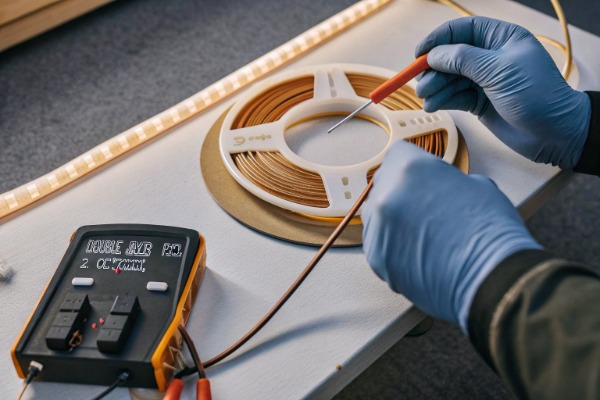
What "Shelf Life" Actually Means for LED Strips
Shelf life for LED strips is not the same as operational lifespan. A COB strip rated for 50,000 hours of use can still degrade on the shelf if storage conditions are poor. Shelf life refers to the period during which an unused, properly stored product retains its original electrical and optical specifications.
The main factors that limit shelf life are:
- Adhesive degradation: The 3M-grade adhesive backing 10 loses tack over time, especially in warm or dry environments.
- Phosphor aging: Even without power, the phosphor layer in COB strips can slowly shift in color temperature when exposed to UV light or heat.
- Solder joint oxidation: Microscopic oxidation on solder joints can increase electrical resistance, causing uneven brightness across the strip.
How to Structure Your Shelf Life Questions
When you email your supplier, be specific. Vague questions get vague answers. Here are sample questions that work:
- "What is the maximum recommended shelf life from the date of manufacture?"
- "Do you have accelerated aging test data that simulates 12 months of storage?"
- "At what point does adhesive bond strength drop below the original specification?"
- "Does your warranty cover products stored for more than 6 months?"
- "Should we use FIFO (first in, first out) inventory management for your products?"
A responsible supplier will recommend FIFO rotation and provide a clear shelf life window. In our case, we print the manufacturing date on every reel label and recommend a maximum storage period of 12 months in sealed, original packaging at 20°C–25°C and 40%–60% RH.
Shelf Life Comparison Table
| Storage Condition | Expected Shelf Life | Notes |
|---|---|---|
| Sealed original packaging, 20–25°C, 40–60% RH | 12 months | Full performance retained |
| Sealed original packaging, 25–35°C, 60–75% RH | 6–8 months | Adhesive and phosphor may begin degrading |
| Opened packaging, climate-controlled room | 1–3 months | Moisture barrier compromised; use quickly |
| Uncontrolled environment (garage, outdoor shed) | 1–2 months | Rapid degradation of adhesive, encapsulant, and PCB |
Batch Traceability and Its Role in Shelf Life Management
Ask your supplier about batch traceability. Every reel should have a traceable batch number that links back to the manufacturing date, component lot numbers, and quality control records. This matters for two reasons. First, if a performance issue appears after storage, traceability helps determine whether the root cause was a material defect or a storage failure. Second, it ensures you can implement effective FIFO inventory rotation.
Our labeling system includes the model number, CCT, CRI, voltage, length, manufacturing date, and batch code. We encourage our partners to scan or photograph these labels upon receipt. It takes 30 seconds per reel and can save weeks of dispute resolution later.
What are the best ways to ask my manufacturer about stacking limits and physical storage precautions?
We once received photos from a distributor who stacked 15 cartons of 5-meter COB reels on top of each other in a warehouse. The bottom three cartons showed visible flex deformation on the reels, and the strips had subtle but permanent bends. Physical storage precautions matter just as much as environmental ones—but buyers rarely ask about them.
Ask your manufacturer about maximum carton stacking height, recommended reel orientation during storage, coiling radius limits for flexible COB strips, and whether aluminum profiles or rigid packaging should be used for longer cuts. Also confirm whether gloves should be worn when handling strips to avoid oil contamination on the adhesive surface.
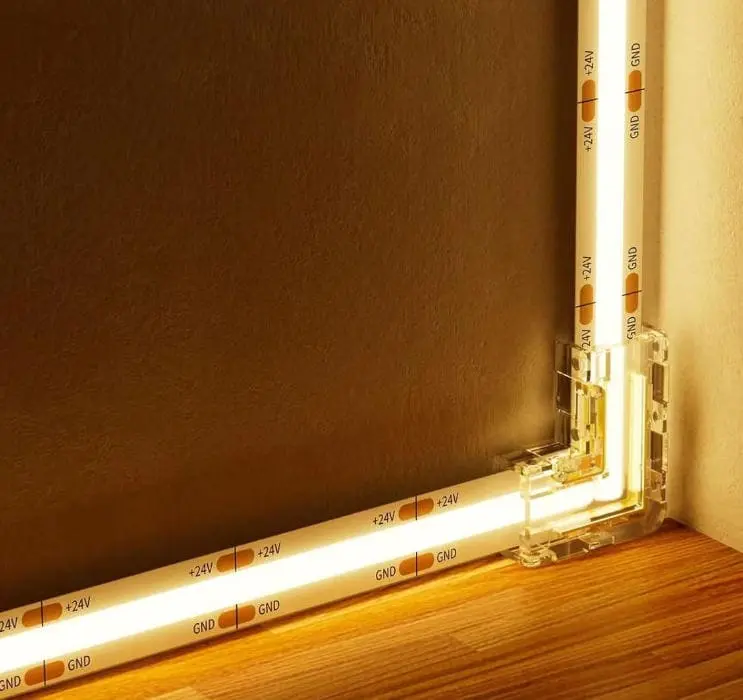
Why Physical Damage Is Harder to Detect
Environmental damage—like yellowing or corrosion—is usually visible. Physical damage is sneaky. A COB strip that has been over-bent may look fine but fail weeks after installation. The flexible PCB develops micro-cracks in the copper traces that create intermittent connections. Under thermal cycling (the strip heats up during use and cools when off), these cracks propagate and eventually cause dead spots.
This is especially critical for high-density COB strips on FPC (flexible printed circuit) substrates made from polyimide film. Polyimide is flexible, but it has a minimum bend radius. Going below that radius causes permanent damage.
Physical Storage Best Practices
Here are the key physical precautions to discuss with your supplier:
Stacking limits: Ask for the maximum number of cartons that can be stacked. For our products, we recommend no more than 5 standard cartons stacked vertically. Each carton contains reels with internal cardboard dividers.
Reel orientation: Reels should be stored flat (horizontal), not standing on edge. Standing reels on edge concentrates weight on a narrow surface, potentially deforming the strip.
Coiling radius: High-density COB strips on FPC should not be coiled tighter than their natural reel diameter. If you need to cut and repackage strips, maintain a coiling radius of at least 50mm. Tighter coils stress the copper traces.
Handling: Always wear lint-free gloves. Skin oils contaminate the adhesive backing and can cause delamination after installation. Avoid touching the light-emitting surface as well—fingerprint oils on the phosphor layer can create visible blemishes.
Questions for Your Supplier About Physical Storage
| Question | Why It Matters |
|---|---|
| What is the maximum stacking height for cartons? | Prevents crushing of bottom reels |
| Should reels be stored horizontally or vertically? | Prevents deformation from uneven pressure |
| What is the minimum safe bend radius for your FPC substrate? | Prevents micro-cracking of copper traces |
| Do you recommend gloves for handling? If so, what type? | Prevents adhesive and phosphor contamination |
| Are rigid boxes or tubes recommended for cut lengths? | Protects custom-cut strips from bending damage |
| Should strips be stored away from sharp objects or abrasive surfaces? | Prevents scratching of encapsulant and PCB |
A Note on Custom-Length Storage
If you order custom-cut strips for specific projects—say, 1.2-meter lengths for shelf lighting—these are harder to store than standard 5-meter reels. They can't be coiled and must lie flat. We ship custom lengths in rigid cardboard channels with foam end caps. Ask your supplier how they package and recommend storing non-standard lengths. If they say "just lay them flat somewhere," push for more detail. Proper rigid packaging prevents the strips from flexing, sliding, and rubbing against each other, which damages both the encapsulant and the adhesive.
Long-Term Physical Storage Setup
For buyers holding significant inventory, consider these setup tips:
- Use metal shelving rated for the total weight of your stock. Avoid wire shelves that create pressure points.
- Keep strips away from loading dock doors where temperature swings and dust infiltration are highest.
- Store away from direct lighting. Even warehouse fluorescents emit small amounts of UV that can age phosphor layers over months.
- Label each shelf location with the product model, batch number, and received date to support FIFO rotation.
These precautions add minimal cost but significantly reduce the risk of physical damage claims. In our experience working with contractors and distributors across Germany and Australia, the buyers who invest 30 minutes in organizing their storage area save thousands in warranty returns over a year.
Conclusion
Good storage starts with good questions. If your supplier cannot clearly explain temperature ranges, packaging specs, shelf life limits, and physical handling precautions for their high-density COB LED strips, treat that as a warning sign. The questions in this guide give you a framework to separate serious manufacturers from those who haven't thought beyond the production line. Protect your inventory, and you protect your projects.
Footnotes
- Comprehensive guide explaining COB LED strip technology and their high-density nature. ↩︎
- Explains how phosphor materials convert light to produce white light in LEDs. ↩︎
- Comprehensive guide explaining flexible printed circuit boards. ↩︎
- Discusses properties, advantages, and applications of silicone materials in LED packaging. ↩︎
- Explains solder joint formation, reliability, and factors affecting their performance in electronics. ↩︎
- Details how sulfur and chlorine compounds contribute to electronic corrosion. ↩︎
- Authoritative source explaining electrostatic discharge and damage prevention in electronics. ↩︎
- Defines volatile organic compounds and discusses their sources and presence in materials. ↩︎
- Describes the function, materials, and importance of moisture barrier packaging for sensitive products. ↩︎
- Discusses mechanisms of adhesive degradation and factors influencing bond reliability. ↩︎
 English
  Spanish
  German
  Russian
  Arabic
  French
  Portuguese