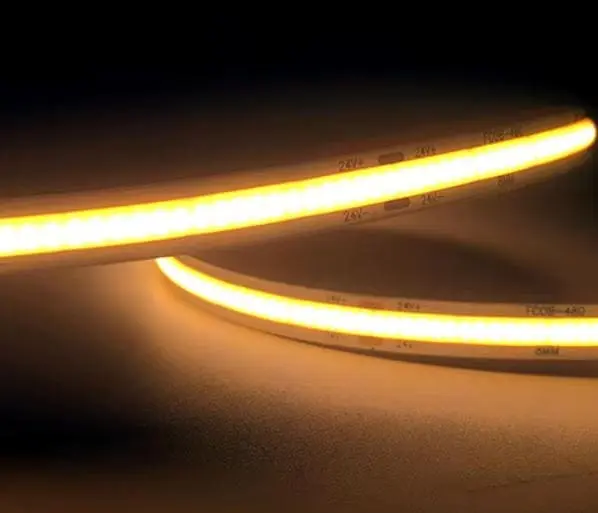
When we analyze the export data to distributors in Sydney and Melbourne, a clear pattern emerges regarding lighting preferences. Many of our new clients struggle with the "goldilocks" dilemma of color temperature—fearful that 3000K might look too yellow against modern white walls, yet worried that 4000K will feel too clinical for a home environment. This hesitation often leads to delayed project timelines and costly sample iterations. Through years of supplying the Australian market, we have fine-tuned our COB (Chip-on-Board) production standards to match the specific aesthetic and environmental needs of the region.
To succeed in the Australian market, you should prioritize Warm White (2700K–3000K) for residential projects to align with local preferences for cozy, inviting atmospheres. However, stocking Natural White (4000K) is essential for task-heavy areas like kitchens and offices. For maximum versatility in open-plan Aussie homes, Tunable White is increasingly becoming the superior choice.
Understanding the nuance between a "warm" Queensland home and a "cozy" Tasmanian cottage is vital for your inventory planning. Let’s explore the specific breakdowns.
Do Australian clients generally prefer warm white or natural white for residential projects?
In our discussions with electrical wholesalers during product development, we often hear complaints about end-users returning products that feel "too cold" for their living spaces. We have adjusted our phosphor recipes for the Australian market to ensure our warm white doesn't drift into a muddy green, which is a common issue with lower-quality competitors.
Australian homeowners overwhelmingly prefer Warm White (3000K) for living rooms, bedrooms, and alfresco areas to create a relaxing ambiance. While Natural White (4000K) is used for functional zones like laundries, the trend in high-end architectural designs is shifting toward Extra Warm White (2700K) to better accentuate native timber finishes.
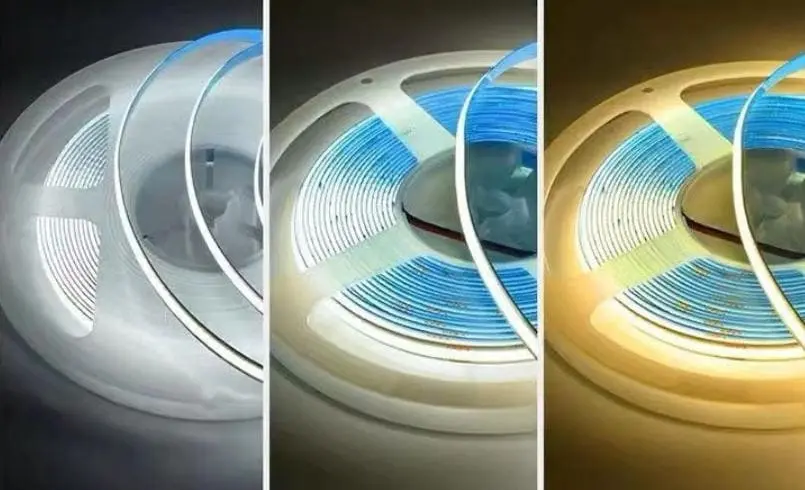
The Dominance of Warmth in Residential Design
When we calibrate our integrating spheres for Australian residential orders, the volume is heavily skewed toward the warm end of the spectrum. Approximately 60% to 70% of the residential volume we ship is in the 3000K range. This is not accidental; it is deeply rooted in the Australian lifestyle and architectural vernacular.
The "Warm White" standard (3000K) is the safe bet for general illumination. It mimics the halogen glow that many homeowners grew up with, providing a sense of comfort and relaxation. In open-plan living areas—which are a staple of Australian design—this color temperature helps bridge the gap between the kitchen and the lounge. However, a significant shift is occurring at the premium end of the market.
The "Native Timber" Factor and 2700K
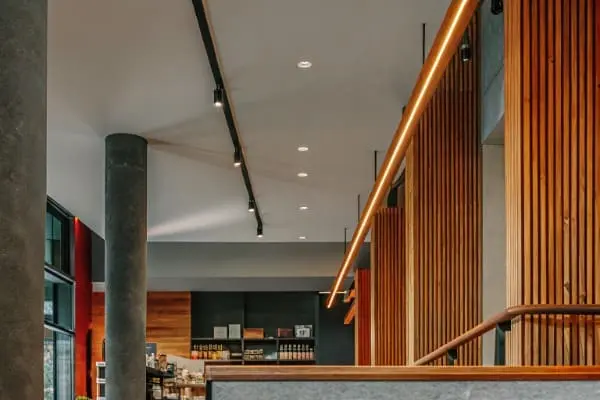
We are seeing a surge in requests for 2700K (Extra Warm White) COB strips. Why? Because Australian interior design heavily features native timbers such as Jarrah, Spotted Gum, Blackbutt, and Tasmanian Oak.
- 3000K/4000K Effect: Cooler temperatures can sometimes flatten the rich red and brown undertones of these woods, making them appear desaturated or greyish.
- 2700K Effect: The extra warmth enhances the natural grain and brings out the earthy tones that are central to the "bushland" or "coastal" aesthetic.
If your clients are working on high-end renovations involving significant joinery or timber flooring, recommending 2700K COB strips can be a major differentiator. The seamless nature of COB technology ensures that this warm light is delivered as a continuous, dot-free line, which feels much more luxurious than the spotted output of traditional SMD strips.
Indoor-Outdoor Flow
Another critical application for warm white is the "Alfresco" area. Australians treat their outdoor decks and patios as extensions of their living rooms. Here, 3000K is superior not just for aesthetics, but for functionality. Cooler lights (4000K–6000K) emit more blue wavelengths, which attract significantly more insects—a major pain point during an Aussie summer BBQ. By sticking to 3000K or even 2700K for outdoor COB strip installations, you provide a seamless visual transition from indoors to outdoors while minimizing the "moth effect."
Residential CCT Application Guide
To help you advise your customers, we have compiled this guide based on feedback from lighting designers we collaborate with:
| Zone | Recommended CCT | Why? |
|---|---|---|
| Living / Lounge | 2700K – 3000K | Promotes relaxation; enhances timber furniture and flooring. |
| Kitchen (General) | 3000K | Maintains consistency with the adjacent open-plan living area. |
| Kitchen (Task/Prep) | 4000K | Provides better contrast for chopping and cooking; best used under cabinets. |
| Bathroom / Vanity | 3000K or 4000K | 3000K is flattering for skin tones; 4000K is better for applying makeup. |
| Bedroom | 2700K | Mimics sunset/candlelight to support circadian rhythms and sleep hygiene. |
| Alfresco / BBQ | 3000K | Creates atmosphere and attracts fewer insects than cooler lights. |
| Garage / Workshop | 5000K – 6000K | High alertness and visibility for detailed mechanical work. |
Which CCT should I prioritize for commercial lighting applications in Australia?
When we supply large-scale commercial projects, such as office fit-outs in Brisbane or retail chains in Perth, the technical requirements shift dramatically from the residential focus. Our engineering team often has to explain to procurement officers why the cozy light they love at home will cause fatigue in a workspace.
For commercial applications, you should prioritize Natural White (4000K) as the standard baseline. This temperature offers a clean, alert environment suitable for offices, retail spaces, and hospitals without the harshness of Daylight (6000K). However, hospitality venues like bars and hotels still demand Warm White (2700K–3000K) to ensure guest comfort.
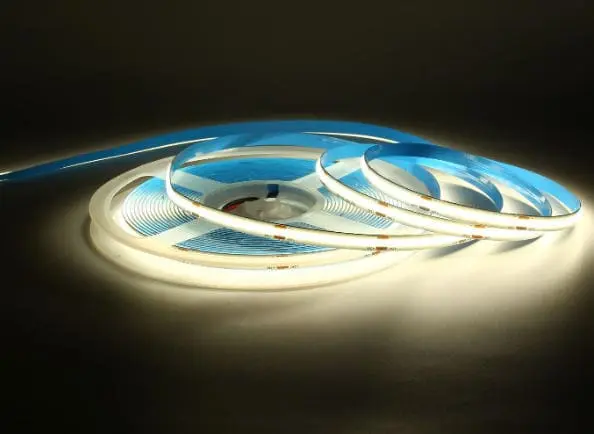
The 4000K Standard for Productivity
In the Australian commercial sector, 4000K (often called Cool White or Natural White) is the undisputed king. Unlike the residential market where mood is paramount, commercial lighting is about performance, safety, and clarity.
When we manufacture COB strips for office linear lighting or architectural profiles, 4000K is the default specification. This color temperature strikes a balance:
- Alertness: It contains enough blue spectrum to suppress melatonin slightly, keeping workers alert and focused during the day.
- Neutrality: It renders white paper and screens cleanly without the yellow cast of 3000K, which can be straining for eyes during reading tasks.
- Aesthetics: It feels modern and clean, which aligns with the glass-and-steel architecture prevalent in Australian CBDs.
The Decline of 6000K (Daylight)
A decade ago, we used to export large quantities of 6000K+ strips. Today, that number has dropped significantly. In the Australian market, 6000K is now widely considered "harsh," "clinical," and "cheap."
Unless you are supplying specific industrial sectors—such as jewelry display cases (where diamonds need blue light to sparkle), hospitals, or automotive workshops—we strongly advise against stocking heavy volumes of 6000K COB strips. Using 6000K in a standard office or retail environment is often viewed as a design error by modern Australian architects.
Retail and Hospitality Nuances
The commercial sector isn't a monolith. Hospitality (hotels, restaurants, bars) operates by residential rules but with higher durability requirements.
- Retail: High-end fashion retail in Australia often prefers 3500K or 4000K with a high CRI (Color Rendering Index) of >90. This ensures that the colors of the clothing look accurate. A COB strip with low CRI will make navy blues look black and reds look muddy, leading to customer returns.
- Hospitality: A wine bar in Melbourne or a boutique hotel in Sydney will almost exclusively request 2700K or even 2400K. They want intimacy. If you supply 4000K strips to a restaurant project, you will likely face a complaint that the venue feels like a "cafeteria."
Commercial CCT Matrix
Here is how we categorize our commercial production runs for the Australian market:
| Commercial Sector | Primary CCT | Secondary CCT | Key Consideration |
|---|---|---|---|
| Corporate Office | 4000K | 5000K | Focus on productivity and reducing eye strain. |
| Retail (Fashion) | 3500K - 4000K | 3000K | High CRI (>90) is more important than CCT here. |
| Supermarkets | 4000K | 5000K | Fresh food displays need specific CCTs (e.g., pinkish for meat). |
| Hotels / Bars | 2700K - 3000K | 2200K (Dim-to-warm) | Atmosphere is the product; avoid cool lighting. |
| Medical / Dental | 5000K | 4000K | Clinical accuracy and cleanliness perception. |
| Industrial / Warehouse | 5000K - 6000K | 4000K | Safety and maximum lumen output per watt. |
Should I include tunable white COB strips in my product lineup for Australian buyers?
We have noticed a sharp increase in inquiries regarding "CCT adjustable" or "Tunable White" strips from our Australian partners over the last 18 months. Our R&D team has prioritized stabilizing the color consistency of these dual-chip strips because the market demand is moving beyond static lighting.
Yes, Tunable White COB strips are essential for the Australian market. They solve the conflict between open-plan living and functional task lighting, allowing users to shift from cool task light during the day to warm relaxation light at night. This versatility is critical for high-end renovations and smart home integrations.
Solving the Open-Plan Conflict
Australian homes are famous for their open-plan design, where the kitchen, dining, and living areas are one continuous space. This creates a lighting conflict:
- The kitchen needs 4000K for safe food preparation.
- The living room needs 3000K for watching TV or relaxing.
If a contractor installs static 4000K strips in the kitchen and 3000K in the living room, the visual clash where the two lights meet is jarring. It creates an "invisible wall" that disrupts the flow of the house.
Tunable White COB strips (typically adjustable from 2700K to 6500K) are the perfect solution. The homeowner can set the entire space to 4000K while cooking dinner, and then transition the entire space to a warm 2700K for entertaining guests later in the evening. This flexibility is a massive selling point for lighting designers and high-end contractors.
Inventory Advantages for Wholesalers
From a business perspective, Tunable White strips are a strategic inventory choice. Instead of stocking three separate SKUs (3000K, 4000K, and 6000K) and risking dead stock on the less popular colors, you can stock one Tunable White SKU.
While the cost per meter is higher, the value proposition is stronger. It eliminates the risk of a customer buying 4000K, installing it, hating it, and demanding a refund. With Tunable White, the "wrong color" problem ceases to exist because the customer can simply adjust it.
Smart Home Integration
Australia has a high adoption rate of smart home technology (Zigbee, DALI, Matter). Tunable White COB strips are the hardware backbone of "Human Centric Lighting."
We are seeing more specifications for systems that automatically adjust the color temperature based on the time of day—mimicking the natural sun.
- Morning: Cool, bright light to wake up.
- Evening: Warm, dim light to prepare for sleep.
By offering Tunable White COB strips, you position your brand as future-proof and compatible with modern automation systems like Philips Hue, Lutron, or generic Tuya ecosystems widely used in Australia.
Comparison: Fixed vs. Tunable
| Feature | Fixed CCT COB Strip | Tunable White COB Strip |
|---|---|---|
| Cost | Lower | Higher (requires dual chips + controller) |
| Installation | Simple (2-wire) | Moderate (3-wire or 4-wire + controller) |
| Flexibility | None (One color forever) | High (Any color anytime) |
| Inventory Risk | Moderate (Must guess popularity) | Low (One product fits all needs) |
| Target Audience | Budget / Standard Renovation | High-end / Smart Home / Designers |
How does the local climate and geography influence CCT choices in Australia?
When we analyze our shipping manifests, we see distinct regional preferences that correlate with latitude. It is fascinating to observe how our clients in Darwin order differently from those in Hobart. We always advise our distributors to consider their specific geographic service area when planning their stock levels.
Geography significantly impacts preference: cooler southern states like Victoria and Tasmania favor warmer tones (2700K–3000K) for psychological warmth. Conversely, humid northern regions like Queensland often prefer slightly cooler neutrals (3500K–4000K) to create a refreshing, airy feel. Coastal "Hamptons" styles also lean towards a crisp 3500K.
The North-South Divide
Australia's climate variability is extreme, and this affects how people perceive light temperature.
- The South (VIC, TAS, SA): These regions experience genuine winters. In Melbourne or Hobart, where it can be grey and cold for months, homeowners crave "psychological warmth." A 4000K light in a cold Melbourne winter evening can feel stark and uninviting. Therefore, 2700K and 3000K are the absolute dominant choices here.
- The North (QLD, NT, Northern WA): In Brisbane or Cairns, where heat and humidity are constant, a very warm 2700K light can sometimes feel "stuffy" or oppressive, adding to the sensation of heat. Here, we see a higher tolerance and preference for 3500K or 4000K in residential spaces. It creates a "cool," refreshing psychological effect that counters the humid climate.
The "Coastal Hamptons" Niche (3500K)
There is a specific design aesthetic popular in coastal New South Wales and Queensland known as the "Australian Hamptons" style. This involves white weatherboards, shaker-style cabinetry, and airy interiors.
For this specific look, 3000K can look too yellow against the crisp white cabinetry, while 4000K can look too commercial. We have found that 3500K is the "secret weapon" for this market. It keeps the whites looking crisp but retains enough warmth to feel residential. If you serve coastal markets, stocking 3500K (or Tunable White that can hit 3500K) is a smart move.
Wildlife and Environmental Considerations
A unique Australian consideration is local wildlife. We have received specifications for projects near bushland corridors where 2700K or lower is mandatory.
Research suggests that blue-rich light (4000K+) scatters more in the atmosphere and disrupts the circadian rhythms of native nocturnal wildlife like possums, sugar gliders, and turtles (in coastal areas). Local councils are increasingly mandating warmer CCTs for exterior lighting to protect biodiversity. If your clients are bidding on council projects or eco-lodges, having a certified 2700K or even 2200K (Amber) COB strip is often a strict requirement.
Conclusion
Selecting the right CCT for the Australian market is not just about personal taste; it's about understanding the interplay between architecture, climate, and lifestyle. While 3000K remains the volume leader for residential warmth, 4000K dominates the workspace, and Tunable White represents the future of flexible, high-end living. By balancing your inventory across these key temperatures, you ensure you can meet the diverse needs of Aussie contractors and homeowners alike.