

We often see clients struggle with shipping terms, leading to unexpected costs or damaged goods. Choosing the wrong Incoterm for your LED strip order can severely impact your project's bottom line.
Choosing the wrong Incoterm 1
FOB (Free On Board) transfers risk and logistics control to you once goods are loaded at the origin port, offering transparency. In contrast, CIF (Cost, Insurance, and Freight) bundles costs but often hides destination fees and provides minimal insurance, leaving you vulnerable to damage claims.
Let's break down exactly how these terms affect your bottom line and supply chain security.
What specific liabilities do I assume once the goods cross the ship's rail under FOB terms?
When we load containers at our Shenzhen facility, we ensure every carton is secure. However, under FOB, once that crane lifts the cargo, the responsibility shifts entirely to you.
Under FOB terms, you assume full liability for the COB LED strips the moment they cross the ship's rail at the port of origin. This means you are financially responsible for any loss, damage, or delay during ocean transit and must handle all import clearance and final delivery arrangements.
When you agree to FOB (Free On Board) terms with us, it is crucial to understand exactly where our responsibility ends and yours begins. In the world of international trade, this is defined by the "ship's rail." Once the crane lifts the container of COB LED strips from the dock and places it onto the vessel we have agreed upon, the risk of loss or damage transfers instantly to you.
agree to FOB (Free On Board) 2
The Moment of Risk Transfer
This transfer point is critical for sensitive electronics like LED lighting. If the container is dropped while being loaded onto the ship, that is technically the seller's problem. However, if the ship encounters a storm five hours later and water breaches the container, damaging the LED circuitry, that is your liability. You must have your own insurance policy in place to cover these events. Without it, you are liable for the full cost of the goods even if they never reach your warehouse.
Your Responsibilities vs. Ours
Under FOB, we handle the local logistics in China. We truck the goods from our factory to the port, handle the export customs declaration, and pay the local port fees. Once the goods are on the ship, you take over. You must appoint a freight forwarder to handle the ocean freight, import clearance, and inland delivery to your site.
handle the export customs declaration 3
Below is a breakdown of who handles what under FOB terms:
| Responsibility | Seller (Glowin) | Buyer (You) |
|---|---|---|
| Export Packaging | Responsible | |
| Transport to Origin Port | Responsible | |
| Export Customs Clearance | Responsible | |
| Loading Charges at Origin | Responsible | |
| Ocean/Air Freight Cost | Responsible | |
| Cargo Insurance | Responsible | |
| Import Customs Clearance | Responsible | |
| Transport to Final Destination | Responsible |
Why This Matters for Project Timelines
Taking liability also means taking control. If there is a port strike or a shipping delay, you are the one who must coordinate with the forwarder to find a solution. You are not waiting for a supplier in a different time zone to give you updates. While this adds workload to your procurement team, it prevents the "black box" scenario where you have no idea where your valuable lighting products are located.
We frequently receive panicked emails from clients facing unexpected bills at their local port. CIF quotes look cheap initially but often mask expensive surprises upon arrival.
Yes, CIF quotes frequently exclude significant destination costs such as Terminal Handling Charges (THC), docking fees, and administrative surcharges. Freight forwarders selected by the seller often inflate these local fees to recoup low ocean freight rates, resulting in a much higher total landed cost than anticipated.
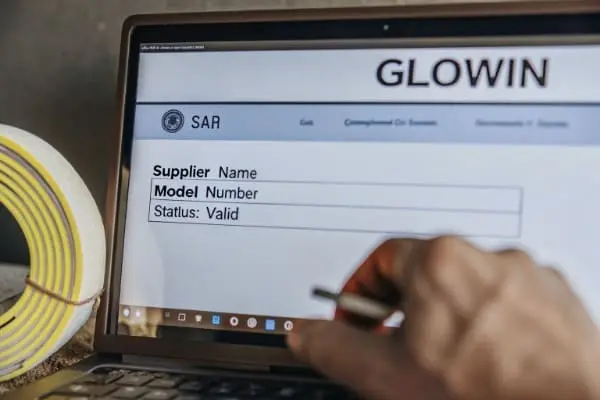
A CIF (Cost, Insurance, and Freight) price often looks very attractive on a proforma invoice. It seems to bundle everything together, saving you the hassle of finding a freight forwarder. However, in our experience exporting to Australia and Germany, we have seen buyers pay significantly more in total due to hidden costs that appear only when the ship arrives.
finding a freight forwarder 4
The "Cheap Freight" Trap
In a CIF arrangement, the seller selects the freight forwarder. To keep the CIF price low and competitive, sellers often choose the cheapest possible shipping option. Sometimes, forwarders offer sellers extremely low (or even zero) ocean freight rates. How do they make money? They charge exorbitant fees at the destination port. These are fees that you must pay to release your goods.
Common Hidden Fees
These charges are often labeled vaguely on the arrival notice. They can include:
- Destination Terminal Handling Charges (DTHC): Fees for moving the container off the ship. In "kickback" scenarios, these can be three times the standard rate.
- CISF (China Import Service Fee): A completely fabricated fee often added to LCL (Less than Container Load) shipments.
- Delivery Order Fees: Administrative costs for handing over the paperwork.
- Unloading Fees: Excessive charges for de-consolidating shipments.
Because you did not sign the contract with the freight forwarder, you have no leverage to negotiate these fees. You are held hostage: pay the inflated bill, or the goods do not leave the port.
Comparing Cost Structures
To visualize the difference, look at how costs are distributed. Under FOB, you see the freight cost upfront. Under CIF, the freight cost is hidden and often shifted to the destination side.
| Cost Component | FOB (Free On Board) | CIF (Cost, Insurance, Freight) |
|---|---|---|
| Product Cost | Lower (Excludes freight) | Higher (Includes freight/insurance) |
| Ocean Freight | Paid by Buyer (Transparent) | Paid by Seller (Hidden cost) |
| Destination Port Fees | Standard / Negotiated by Buyer | Often Inflated / Non-negotiable |
| Control Over Costs | High | Low |
| Total Landed Cost | Predictable | Unpredictable |
For project contractors working on tight margins, these unpredictable costs can destroy the profitability of a job. We always recommend asking for a "Landed Cost" estimate from a local forwarder before accepting a CIF quote, so you know the true price of the import.
asking for a 'Landed Cost' 5
How does choosing FOB give me better control over the freight forwarder and shipping schedule?
Our logistics team prefers coordinating with buyer-nominated forwarders because it streamlines communication. FOB puts you in the driver's seat regarding route speed and handling quality.
Choosing FOB empowers you to select your own freight forwarder, allowing you to negotiate rates, define transit times, and consolidate shipments from multiple suppliers. This direct control ensures better communication and prevents the seller from choosing a slow or unreliable carrier just to save money on shipping costs.

When you buy project-grade LED strips, timing is often just as important as quality. Construction schedules do not wait for delayed ships. This is where FOB offers a distinct strategic advantage over CIF.
Selecting the Right Carrier
Under CIF terms, the seller chooses the carrier. Their priority is almost always cost, not speed. They might choose a vessel that transships through three different ports, adding weeks to the delivery time. Under FOB, you choose the forwarder. You can specify that you need a direct sailing or a "fast boat" service because your installation deadline is approaching. You pay for the service level you need, not the one that saves the factory money.
The Power of Consolidation
One of the biggest benefits we see for our regular customers is "Buyer's Consolidation." If you are sourcing LED strips from us, but also buying aluminum profiles from a factory in Foshan and power supplies from a supplier in Ningbo, FOB allows you to combine these into one container.
Your designated freight forwarder can collect goods from all three factories and load them into a single Full Container Load (FCL). This is significantly cheaper and safer than shipping three separate Less than Container Load (LCL) shipments under CIF terms.
single Full Container Load 6
Operational Differences
Here is how the logistics workflow changes based on your choice:
| Feature | FOB (Buyer Controlled) | CIF (Seller Controlled) |
|---|---|---|
| Carrier Selection | You choose based on speed/cost. | Seller chooses based on lowest cost. |
| Route Optimization | You can request direct routes. | Route is often indirect/slow. |
| Communication | You talk directly to the local agent. | You must relay info through the seller. |
| Consolidation | Easy to combine multiple suppliers. | Difficult or impossible. |
| Tracking | Real-time updates from your agent. | Delayed updates from seller. |
Handling Sensitive Electronics
COB LED strips are sensitive to moisture and physical compression. When you control the forwarder, you can demand specific handling protocols, such as under-deck stowage to avoid temperature extremes or ensuring that heavy machinery is not stacked on top of your lighting pallets. Under CIF, you have no say in how the container is packed or where it sits on the ship.
Does the insurance provided under CIF terms cover the full value of my high-end LED products?
We manufacture high-precision COB strips that are sensitive to moisture and impact. Relying on standard CIF insurance policies often leaves project owners under-protected against specific damages.
Generally, CIF terms only require the seller to provide minimum insurance coverage under Institute Cargo Clauses (C), which excludes many common risks like theft, rough handling, or water damage. For high-value electronics, this is often insufficient, forcing you to purchase additional "gap" insurance to be fully protected.
A common misconception among buyers is that "Insurance" in CIF means they are fully covered. Unfortunately, international trade laws only require the seller to purchase the minimum level of coverage, typically known as Institute Cargo Clauses (C).
Understanding Institute Cargo Clauses
Clause C is very restrictive. It basically covers "major casualties." If the ship sinks, burns, runs aground, or explodes, you are covered. However, it does not cover the most common issues that happen to LED products:
- Rough Handling: If a forklift driver drops your pallet and crushes the LED chips.
- Theft: If a box goes missing at the port.
- Water Damage: If rain leaks into a container (unless the vessel itself is stranded).
For high-end architectural lighting, these are the real risks. If you receive a shipment of LED strips that has been crushed or water-damaged, a Clause C policy will likely deny your claim.
Why LED Strips Need Better Coverage
When we export mid-to-high-end products, we strongly advise clients to secure Institute Cargo Clauses (A). This is an "All Risks" policy. It covers almost everything unless specifically excluded (like war or willful misconduct).
If you buy under CIF, you are getting Clause C. To get Clause A, you have to ask the seller to upgrade the policy (which they will charge you for) or buy your own "gap" insurance. At that point, it is often cleaner and more cost-effective to just buy FOB and arrange your own comprehensive insurance policy locally.
Institute Cargo Clauses (C) 7
Insurance Claim Difficulties
Another practical issue with CIF insurance is the claims process. If the goods are damaged, you have to file a claim with the seller's insurance company. This company is likely located in China, operates in a different time zone, and may require documentation in a different language.
international trade laws 8
If you buy FOB and insure the goods yourself, you are dealing with a local broker in your own country. If there is a problem, you pick up the phone and talk to someone who understands your local laws and speaks your language. The speed of resolution is drastically faster.
defined by the 'ship's rail' 9
Summary of Coverage
| Risk Scenario | Clause C (Standard CIF) | Clause A (Recommended for FOB) |
|---|---|---|
| Ship Sinking / Fire | Covered | Covered |
| General Average | Covered | Covered |
| Theft / Pilferage | Not Covered | Covered |
| Rough Handling / Breakage | Not Covered | Covered |
| Rainwater Damage | Not Covered | Covered |
Conclusion
For most project-based LED importers, FOB offers superior control, cost transparency, and risk management compared to CIF. While CIF may seem convenient, the hidden costs and poor insurance coverage often outweigh the initial ease.
container of COB LED strips 10
Footnotes
- Official rules from the International Chamber of Commerce. ↩︎
- US Government guide to standard trade definitions. ↩︎
- Official guidance on required export documentation. ↩︎
- Academic definition of logistics roles. ↩︎
- Definition of total import costs by a logistics firm. ↩︎
- International standard defining shipping container dimensions. ↩︎
- Details on standard marine insurance coverage options. ↩︎
- Legal overview of global trade regulations. ↩︎
- Historical context of the risk transfer point. ↩︎
- Technical specifications from a major LED manufacturer. ↩︎



 English
 Spanish
 German
 Russian
 Arabic
 French
 Portuguese