
We often see contracts fail because buyers overlook specific COB technicalities. we know vague terms lead to costly disputes later.
To specify warranties effectively, define the start date as installation or shipment and set performance criteria based on L70 standards. Clearly allocate shipping costs for returns and replacements, while mandating specific color bin matching for replacements to ensure visual consistency across linear lighting projects.
Let's break down the critical clauses you need to include to protect your project.
What Specific Defects Must Be Covered in a 5-Year COB Strip Warranty?
When we engineer our 5-year strips, we focus heavily on heat dissipation. However, standard contracts often miss the unique failure modes of Chip-on-Board technology.
A comprehensive 5-year COB warranty must cover phosphor silicone cracking, peeling, and yellowing, alongside standard diode failure. It should explicitly define failure as lumen maintenance dropping below 70% (L70) or color shifting beyond a 3-step MacAdam ellipse, rather than just total light outage.

Defining "Failure" in Technical Terms
In the world of commercial lighting, a light that simply turns on is not necessarily a "working" light. For high-end projects, we always advise our clients to move away from binary definitions of failure (working vs. broken). Instead, your contract must define failure based on performance degradation.
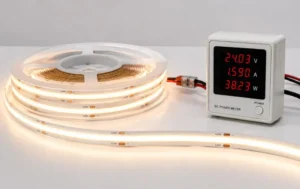
COB (Chip-on-Board) technology differs significantly from traditional SMD strips. In COB strips, the phosphor silicone layer is continuous. If this layer cracks or peels due to thermal stress or poor manufacturing, blue light leaks through, ruining the color temperature of the entire run. A standard warranty might not cover this if it only specifies "diode failure."
COB (Chip-on-Board) technology 1
The Three Pillars of Defect Coverage
When drafting your agreement, ensure these three specific defect categories are explicitly listed. We have compiled a comparison of what standard warranties cover versus what a project-grade warranty should cover:
| Defect Category | Standard Warranty Coverage | Project-Grade Contract Requirement |
|---|---|---|
| Lumen Output | Only covers total blackout (0% output). | Covers depreciation below 70% (L70) of original brightness. |
| Color Consistency | No specific metric for color shift. | Limits shift to < 3-step MacAdam ellipse (SDCM < 3). |
| Physical Integrity | Covers PCB breakage only. | Covers silicone cracking, yellowing, and adhesive failure. |
Material Quality and Warranty Length
The length of the warranty is directly tied to the materials we use on the production line. A 2-year warranty strip typically uses a single-layer PCB and standard adhesive. For a 5-year warranty, we utilize a double-layer, 3oz copper PCB to manage heat, along with branded chips (like San'an or Epistar) and genuine 3M VHB tape.
double-layer, 3oz copper PCB 2
If you are negotiating a 5-year term, you are essentially contracting for these higher-grade materials. Therefore, your contract should link the warranty to the operating conditions. For example, a 5-year warranty is valid for usage under 12 hours a day. If your project requires 24/7 operation, the warranty term might naturally drop to 3 years due to the accelerated aging of the phosphor.
Who Bears the Shipping and Labor Costs for Replacing Defective LED Strips?
Our logistics team frequently handles RMA requests. We notice that silence on shipping costs in the initial agreement causes the most friction during claims.
Standard industry practice dictates the buyer pays return shipping for defective units, while the supplier covers the cost of sending replacements. However, labor costs for removal and re-installation are rarely covered by manufacturers unless negotiated upfront through a specific labor allowance clause.
The "Labor Trap" in Linear Lighting
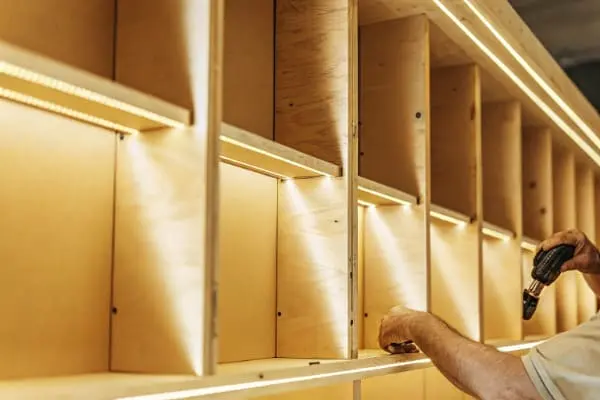
The most expensive part of a lighting failure is rarely the LED strip itself. In our experience supplying architectural projects, the cost of the LED strip might be $5 per meter, but the labor to remove it from intricate millwork or drywall coves can exceed $100 per hour.
Most manufacturer warranties, including standard templates from China, explicitly exclude "consequential damages," which includes labor. If you are a contractor or a distributor, this leaves you exposed. We recommend negotiating a "Labor Allowance" clause for large projects. This clause stipulates that if the product failure rate exceeds a certain percentage (e.g., 3%), the manufacturer contributes a fixed amount towards the re-installation costs.
Clarifying Logistics Responsibilities
Shipping defective goods back to the factory in China for inspection is often impractical due to high costs and customs delays. To avoid this stalemate, your contract should outline a "Digital Evidence" protocol.
customs delays 3
Instead of physically returning the goods, the contract can state that the warranty claim is valid upon submission of:
- High-resolution photos of the defect.
- Video evidence showing the power supply setup.
- A photo of the batch label (for tracking production dates).
Cost Allocation Matrix
To prevent arguments when a failure occurs, include a clear responsibility matrix in your purchase agreement. This removes ambiguity and sets expectations for both your procurement team and the supplier.
| Expense Item | Standard Responsibility | Negotiated "Pro" Responsibility |
|---|---|---|
| Return Shipping (to Factory) | Buyer pays. | Waived (Evidence-based claim). |
| Replacement Shipping (to Buyer) | Supplier pays (slow boat). | Supplier pays (Air Express). |
| Import Duties/Taxes | Buyer pays. | Supplier pays (DDP terms). |
| Re-installation Labor | Buyer pays (100%). | Supplier contributes if failure > 5%. |
By shifting the verification process to digital evidence, you save shipping costs and time. We prefer this method because it allows our engineers to analyze the failure remotely and issue a credit or replacement immediately, keeping your project on schedule.
How Do I Define Lumen Depreciation Limits in My Purchase Agreement?
In our testing lab, we run LM-80 reports to predict longevity. Yet, many buyers struggle to translate these technical data points into enforceable contract language.
run LM-80 reports 4
Define lumen depreciation by referencing the L70 standard, stating that output must not fall below 70% of the original lumens within the warranty period. Include clauses for color stability, limiting deviation to a specific Delta u'v' value, typically less than 0.006, to prevent visible aging.

Understanding L70 and L80
LEDs do not burn out like incandescent bulbs; they fade. This fading is called lumen depreciation. Without a specific clause, a manufacturer could argue that a strip emitting only 10% of its original light is still "working" and therefore not eligible for a warranty claim.
Your contract must reference the L70 standard. This means the product reaches its end of life when it produces only 70% of its initial brightness. For commercial projects, you might even demand L80 (80% brightness) for the first 3 years.
The Importance of Color Stability (Delta u'v')
Lumen depreciation is annoying, but color shift is disastrous for design. We have seen projects where warm white (3000K) strips turned pink or green over time due to poor phosphor quality.
color shift 5
To prevent this, your contract should specify a maximum allowable color shift. The technical term for this is Delta u'v'.
- Standard: Delta u'v' < 0.006 (Barely noticeable to the human eye).
- Strict: Delta u'v' < 0.003 (Required for museums or high-end retail).
By including these numbers, you force the factory to use better LED packaging and binning processes.
Verifying Claims with Data
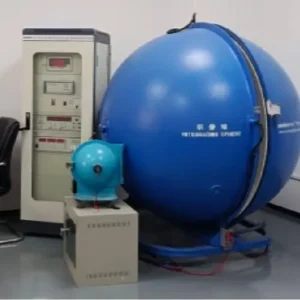
You cannot simply claim the light looks "dim." The contract should outline how depreciation is measured. Typically, this involves using an integrating sphere or a handheld spectrometer.
Sample Contract Clause for Performance
"The Product is guaranteed to maintain at least 70% of its original luminous flux (L70) for a period of 5 years. Furthermore, the Correlated Color Temperature (CCT) shall not deviate by more than a Delta u'v' of 0.006 from the original specification. Any product failing these metrics shall be deemed defective."
This clause protects you against the "slow fade" that cheaper manufacturers rely on to avoid warranty claims. It ensures that the product you bought retains its value and visual impact throughout the specified period.
What Is a Reasonable Turnaround Time for Warranty Claims on Commercial Lighting Projects?
We understand that project deadlines are unforgiving. Waiting weeks for a replacement decision can stall an entire site handover or delay final payments.
Correlated Color Temperature (CCT) 6
A reasonable turnaround time for warranty claims is 3 to 7 business days for initial assessment after receiving evidence. Replacement shipment timelines should match your original lead times, but negotiating an upfront spare parts ratio of 2% can eliminate downtime completely.
The RMA Workflow Timeline
Time is money on a construction site. If a section of lighting fails, you cannot wait 30 days for a factory in China to inspect a return. You need a pre-agreed timeline for the Return Merchandise Authorization (RMA) process.
L70 standard 8
We recommend structuring the timeline in your contract as follows:
- Claim Submission: Buyer submits photos/videos.
- Assessment: Supplier must accept or reject the claim within 3 business days.
- Resolution: If accepted, replacement parts must be shipped within 7 days (if in stock) or prioritized in the production queue (10-15 days).
The Spare Parts Strategy
The best warranty claim is the one you never have to make. Instead of relying solely on after-sales shipping, we advise our partners to negotiate a Spare Parts Ratio.
This means that for every order, the supplier provides free "overage."
- Standard Ratio: 1% spare units.
- Project Ratio: 2-3% spare units.
This buffer stock allows you to replace a defective unit immediately on-site without waiting for international shipping. You can then settle the paperwork with the supplier later. This is the most efficient way to handle warranties for overseas procurement.
consequential damages 9
Ensuring Color Consistency in Replacements
One major risk with delayed replacements is Binning. LED color varies slightly between production batches. If you receive a replacement strip six months later, it might be slightly different from the original installation, creating a visible "patch."
RMA Timeline and Expectations Table
| Stage | Action Item | Reasonable Timeframe |
|---|---|---|
| 1. Notification | Buyer sends defect evidence (Photo/Video). | Day 0 |
| 2. Review | Supplier engineering team reviews data. | 1 - 3 Business Days |
| 3. Approval | RMA number issued; solution proposed. | 3 - 5 Business Days |
| 4. Dispatch | Replacement goods handed to courier. | 7 - 14 Days (Production dependent) |
| 5. Delivery | Goods arrive at Buyer's warehouse. | 5 - 7 Days (Air Freight) |
Your contract should mandate that warranty replacements must match the original Color Bin. If the original bin is out of stock, the supplier should be required to replace the entire continuous run to ensure visual uniformity.
Conclusion
Clear contracts prevent disputes. Define defects, allocate costs, and set technical benchmarks to ensure your lighting projects succeed long-term.
genuine 3M VHB tape 10
Footnotes
- Major manufacturer documentation explaining the specific LED technology type. ↩︎
- The global trade association setting standards for printed circuit board manufacturing. ↩︎
- Official government resource regarding import/export trade compliance and logistics. ↩︎
- The authoritative industry standard for measuring LED lumen maintenance. ↩︎
- Academic research explaining the mechanisms of LED color stability and degradation. ↩︎
- General background definition of the fundamental lighting metric used in the clause. ↩︎
- International authority defining the specific colorimetric difference metric. ↩︎
- Official government explanation of LED lifetime metrics and the L70 benchmark. ↩︎
- Legal definition of the liability exclusion term discussed in the contract context. ↩︎
- Official product page for the specific adhesive component mentioned. ↩︎


 English
 Spanish
 German
 Russian
 Arabic
 French
 Portuguese