

We often see a mix of excitement and anxiety when a new client approves a sample. We know that holding a flawless 10-meter sample in your office is only the first step; the real challenge lies in replicating that perfection across 5,000 meters of product. We have seen too many buyers get burned by "bait and switch" tactics where the mass production uses cheaper phosphors or thinner PCBs than the prototype. This inconsistency not only delays projects but damages the trust you have built with your own contractors and end-users.
To ensure mass production matches your sample, you must contractually lock the Bill of Materials (BOM), including specific LED chip bins and PCB copper weight. You should also retain a sealed "Golden Sample" for comparison and demand detailed pre-shipment inspection reports covering color consistency (SDCM), lumen maintenance, and electrical stability.
The gap between a handmade sample and machine-run mass production is where quality often drifts. Let's look at the specific controls and documents you need to bridge that gap.
What kind of quality control reports should I demand before the shipment of my bulk COB LED order?
When we prepare a shipment for our partners in Germany or Australia, our engineering team spends considerable time generating data before the goods ever leave the loading dock. We believe that trust is good, but data is better. If a supplier hesitates to provide detailed test results for the specific batch being shipped, it is usually a red flag that they are relying on generic datasheets rather than actual batch performance.
You must demand a batch-specific Integrating Sphere Report showing actual Lumen, CCT, and CRI values, alongside a PCB copper thickness verification. Additionally, request an aging test report covering at least 48 hours of continuous operation to identify early failures and thermal stability issues before the goods leave the factory.

The "Must-Have" Technical Reports
Simply asking for a "QC Report" is too vague. In the LED industry, generic datasheets are often passed off as inspection reports. To truly verify quality, you need to ask for reports that are generated from the actual production run sitting on the factory floor.
At a minimum, your checklist should include the following specific documents. We have broken down what each report tells you and the common tricks some manufacturers use to hide defects.
Table 1: Essential QC Reports and What to Look For
| Report Type | Key Metrics to Verify | Common "Red Flags" |
|---|---|---|
| Integrating Sphere Report | Lumen Output (lm/m): Must match sample ±5%. CCT (Kelvin): Must be within the defined bin. CRI/Ra: Check R9 (Red) value specifically. | The date on the report is old (reused from a previous batch). The R9 value is missing or significantly lower than the sample. |
| Aging Test Data | Failure Rate: Should be 0% for the sample set. Voltage Drop: Voltage at the end of the run vs. input. Temperature: PCB surface temperature after 4 hours. | Report shows only "Pass/Fail" without actual temperature or voltage readings. Duration is less than 24 hours. |
| PCB Cross-Section | Copper Thickness: Verify 2oz or 3oz (70µm/105µm). Layer Structure: Double-sided vs. single-sided. | Manufacturer refuses to provide this, claiming it is "proprietary," often hiding the use of thinner 1oz copper which causes voltage drop. |
| BOM Verification | Chip Brand/Model: Matches the contract. Resistor Brand: Matches the sample. | Generic components listed without brand names (e.g., "High quality resistor" instead of specific specs). |
Why Traceability Matters
One insight we always share with our clients is the concept of traceability. A good report isn't just a list of numbers; it links back to the raw materials.
When we produce a batch, we record the specific "Bin Code" of the LED chips used. If your supplier cannot tell you which bin code was used for your mass production and prove it matches the sample's bin code, you have no guarantee of consistency.
Furthermore, pay attention to the LM-80 and TM-21 reports. While these are usually done at the chip level (not the strip level), ensuring the chips used in your strip have passed these long-term depreciation tests is crucial for project-grade lighting. If the mass production swaps to a cheaper, untested chip to save cost, your lights might look fine on day one but dim by 30% within a year.
How do I define color binning requirements in the contract to ensure batch-to-batch consistency?
In our experience supplying architectural projects, nothing frustrates a lighting designer more than two reels of "3000K" LED strips looking completely different when installed next to each other. We often see contracts that are too loose, simply stating "Warm White" or "3000K," which leaves a massive margin for error. To protect your projects, you need to speak the language of color science.
Define your color requirements using MacAdam Ellipse steps (SDCM), specifically requiring a 3-step or tighter binning for high-end projects. Explicitly state the target color coordinates (x, y) and require that the mass production batch falls within this specific quadrant to ensure visual uniformity across all reels.

Understanding SDCM and Binning
The human eye is incredibly sensitive to color differences. In the LED world, we measure this consistency using the Standard Deviation Colour Matching (SDCM), often referred to as MacAdam Ellipses.
- 1-Step MacAdam: Practically invisible difference. Used for museums or ultra-luxury retail. Very expensive.
- 3-Step MacAdam: The industry standard for professional commercial lighting. Differences are barely noticeable to the trained eye.
- 5-Step MacAdam: Common in entry-level or residential products. Visible differences are likely if strips are placed side-by-side.
How to Lock This in Your Contract
Don't just write "3000K". A 3000K LED can actually range from 2800K to 3200K and still technically be compliant if not specified otherwise. You need to lock down the Chromaticity Coordinates.
When we develop a custom product for a client, we agree on a center point on the CIE 1931 chromaticity diagram (e.g., x=0.440, y=0.403 for a specific warm white). We then commit to providing LEDs that fall within a 3-step ellipse around that point.
CIE 1931 chromaticity diagram 2
Table 2: Color Consistency Standards by Application
| Application Level | Recommended SDCM | Contract Requirement Example | Cost Implication |
|---|---|---|---|
| High-End Architectural | < 3 SDCM | "Must be within 3-step MacAdam Ellipse, centered on x=0.440, y=0.403." | High (Requires strict sorting) |
| General Commercial | < 5 SDCM | "ANSI Bin 3000K, within 5-step MacAdam." | Medium (Standard production) |
| Indirect / Cove Lighting | < 3 SDCM | "Single Bin Only. Batch-to-batch consistency required." | High (Critical because light is reflected) |
| Outdoor / Landscape | < 5-7 SDCM | "Tolerance ±150K allowed." | Low |
The "R9" Trap
Another critical factor is the R9 value, which represents saturated red. Many manufacturers can hit a high CRI (Ra) of 90 by boosting other colors while neglecting red, because red phosphor is expensive and reduces overall brightness.
However, without sufficient R9, skin tones look pale and wood finishes look flat. In your contract, explicitly state: "CRI > 90, R9 > 50". We have seen mass production batches where the R9 dropped to near zero because the manufacturer reduced the red phosphor content to save money, even though the total CRI was still technically around 80-85.
Should I hire a third-party inspection agency to verify the LED strips at the factory in China?
We actually welcome third-party inspectors into our factory because it saves us from arguing about quality after the goods have shipped. It is much easier for us to replace a few faulty reels while they are still on the production line than to process a return from Australia. If a manufacturer resists a third-party inspection, or claims it is "inconvenient," you should be very worried about what they are trying to hide.
Flip-Chip technology 3
For orders exceeding $10,000 or with new suppliers, hiring a third-party agency is highly recommended. Instruct them to perform an AQL inspection covering visual defects, power consumption tests, and adhesive peel strength tests to verify the physical durability of the mass-produced strips.

Setting the Inspection Standards (AQL)
Inspectors are only as good as the instructions you give them. If you just tell them to "check the lights," they might just turn them on and off. You need to provide a checklist based on Acceptable Quality Limit (AQL) standards.
Common AQL standards for LED strips are:
- Critical Defects (0 allowed): Safety issues, exposed live wires, wrong voltage.
- Major Defects (2.5 AQL): LED failure, wrong color, PCB damage, length shortage.
- Minor Defects (4.0 AQL): Smudged printing on the label, slight packaging misalignment.
Specific Tests to Request
Beyond the standard visual check, you should mandate three specific functional tests during the inspection:
Acceptable Quality Limit (AQL) 5
The "Peel" Test (Adhesive Quality):
One of the most common failures in COB strips is the adhesive backing failing, causing the strip to detach from the aluminum profile. This leads to overheating and failure. We use genuine 3M VHB tape, but many factories swap this for generic "fake 3M" tape in mass production. Instruct your inspector to test the peel strength. If the tape comes off the PCB too easily, or if the red liner lacks the genuine 3M watermark features, reject the batch.Full Load Power Test:
Have the inspector measure the wattage of a 5-meter reel. If you ordered a 14W/m strip, the total consumption should be around 70W (minus voltage drop losses). If the mass production comes in at 10W/m, the factory has likely used smaller chips or different resistors to cut costs.Voltage Drop Check:
Connect the strip from one end and measure the brightness/voltage at the tail end. Significant dimming at the end indicates the manufacturer used a PCB with insufficient copper weight (e.g., 1oz instead of the agreed 2oz or 3oz).
Table 3: Third-Party Inspection Checklist
| Inspection Category | What to Check | Pass Criteria |
|---|---|---|
| Visual | Soldering joints, Silicone clarity, PCB cleanliness. | Clean solder, no yellowing, no debris. |
| Dimensional | Width (8mm/10mm), Cut points, Total length. | Tolerance ±0.5mm width, ±10mm length. |
| Electrical | Power (Watts), Current (Amps), Voltage Drop. | Within ±10% of rated power. |
| Photometric | CCT (Color Temp) comparison to Golden Sample. | Visually matches Golden Sample. |
| Mechanical | 3M Tape adhesion, Bending test (flexibility). | Tape does not delaminate; PCB does not crack on bend. |
Is it common practice to request a 'golden sample' from the mass production run for final approval?
In our warehouse, we maintain a library of "Golden Samples" for every major client. These are not just random cuts; they are the physical benchmark for the contract. When a client asks if they should request one, our answer is always a resounding yes. It is the only way to physically bridge the gap between the R&D phase and the logistics phase.
saturated red 6
It is standard practice to keep an initial approved prototype as the "Golden Sample" and request a "Shipment Sample" from the mass production run to compare against it. You must verify that the flexibility, silicone tactile feel, and light consistency of the shipment sample match the signed-off Golden Sample exactly.
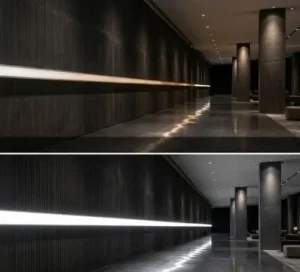
Standard Deviation Colour Matching 7
The Two Types of Samples
To avoid confusion, let's clarify the terminology:
- The Golden Sample (Benchmark): This is the R&D sample you approved initially. You should have one signed and sealed in your office, and the factory should have a duplicate.
- The Shipment Sample (Verification): This is a random unit pulled from the actual mass production run before the rest of the cargo is shipped.
What to Compare?
When you receive the Shipment Sample, place it directly next to your Golden Sample. Do not rely on memory; human memory for brightness and color is notoriously poor.
long-term depreciation tests 8
Tactile and Visual Check:
Touch the silicone. In COB strips, the encapsulation material matters. High-quality silicone feels smooth and dry. Cheaper silicone can feel tacky or sticky, which attracts dust. Also, check the refractive index. If the mass production silicone is cloudier than the sample, it will lower the lumen output and shift the color temperature.Internal Structure (Flip-Chip vs. Wire Bond):
This is a deep technical detail but vital for COB. High-quality COB strips use Flip-Chip technology where the chip is bonded directly to the PCB without wires. Cheaper versions use traditional Gold (or Alloy) Wire Bonding.- Why it matters: Wire bonds are fragile. In a flexible strip, bending can break the wire, causing the LED to fail. Flip-chips are much more robust.
- How to check: Look closely (use a magnifying glass) at the unlit strip. If you see tiny wires connecting the chips, and your Golden Sample was Flip-Chip, the manufacturer has downgraded the technology.
Traceability is Key
Finally, your Golden Sample must be traceable. A physical strip is good, but a physical strip with a label containing the PCB Version Number, Chip Bin Code, and Glue Model Number is better.
If your sample is just a bare strip with no data, you cannot prove the factory changed anything. When we send samples, we label them with the exact BOM details. We recommend you insist that your "Golden Sample" is accompanied by a technical datasheet that explicitly lists these component versions. This prevents the "silent update" where a factory changes the PCB supplier to save $0.10 per meter, inadvertently ruining the thermal management of your product.
insufficient copper weight 9
Conclusion
Ensuring consistency between your sample and mass production requires more than just trust; it requires a structured approach to quality control. By locking your BOM, defining strict color binning (SDCM), utilizing third-party inspections, and rigorously comparing shipment samples against your Golden Sample, you eliminate the guesswork. At Glowin, we believe that a transparent production process is the foundation of a long-term partnership. These protocols protect your business, your reputation, and ultimately, the quality of light you deliver to your clients.
lumen output 10
Footnotes
- Samsung provides industry-standard tools for calculating and understanding LED bin codes. ↩︎
- The CIE is the international authority that defines this color space standard. ↩︎
- Technical overview from a major LED manufacturer explaining flip-chip architecture. ↩︎
- Official product page for the specific adhesive brand mentioned in the text. ↩︎
- Official ISO standard page defining sampling procedures for inspection by attributes. ↩︎
- General background on the Color Rendering Index and the specific R9 sample index. ↩︎
- Academic resource from the Lighting Research Center explaining color consistency standards. ↩︎
- US Dept of Energy resource explaining LM-80 and TM-21 lifetime testing standards. ↩︎
- IPC-2221 is the industry standard defining PCB design requirements including copper thickness. ↩︎
- NIST maintains the national standards for photometric measurements like lumen output. ↩︎




 English
 Spanish
 German
 Russian
 Arabic
 French
 Portuguese