
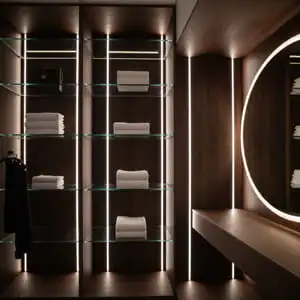
Finding the perfect continuous lighting effect for a high-end architectural project often hits a frustrating wall: the Minimum Order Quantity (MOQ). We frequently receive inquiries from contractors and lighting designers who need specific lengths to fit joinery or ceiling coves exactly, but they fear being forced to buy thousands of meters. The reality of production is that setting up an SMT line for a custom run takes time and resources, which is why factories hesitate on small orders. However, understanding the difference between "cutting to size" and "custom PCB manufacturing" can completely change your negotiation leverage.
Minimum Order Quantity 1
Negotiating MOQ for custom COB LED strips requires distinguishing between cutting standard reels, which often has no minimum, and creating custom circuit designs, which typically start at 500 meters. To lower these thresholds, buyers should propose paid pilot runs, agree to cover Non-Recurring Engineering (NRE) fees, or commit to annual blanket orders with staggered delivery schedules.
If you are preparing a bid for a commercial renovation or sourcing for a specific design, knowing how to speak our language regarding production cycles and material yields will help you secure the flexibility you need.
Will suppliers accept a lower MOQ for the first trial order of custom-length COB strips?
When we start working with new partners in markets like Australia or Germany, we understand that trust needs to be earned before bulk capital is committed. We know that you cannot risk installing 5,000 meters of lighting without verifying the color consistency and soldering quality first. The hesitation often comes from the fear that a factory will reject a small initial request, but the industry is shifting towards more flexible prototyping services.
soldering quality 2
Most suppliers will accept a lower MOQ for a first trial order, often classifying it as a "paid sample" or "pilot run" to validate the design. While you may pay a 20–30% premium or a setup fee on this initial batch, this approach allows you to test voltage drop and installation fit before committing to full-scale manufacturing volumes.

The Strategy Behind the "Pilot Run"
In the world of B2B manufacturing, a "Pilot Run" is the bridge between a handmade prototype and mass production. From our perspective on the factory floor, stopping a high-speed machine to run 50 meters of a custom product is inefficient. However, we view it as an investment in a potential long-term relationship. To successfully negotiate this, you need to frame your request correctly.
negotiate your request 3
Instead of asking "Can I buy just 50 meters?", ask for a "Validation Run for an upcoming project." This signals that there is future volume behind the request. Be prepared to pay a Non-Recurring Engineering (NRE) fee. This fee covers the cost of creating the stencil for the solder paste and programming the pick-and-place machines.
Understanding the Cost Implications
When you negotiate a lower MOQ for a trial, the unit price will almost certainly be higher. This is not price gouging; it is simple economics. The setup time for a 50-meter run is nearly identical to that of a 5,000-meter run.
Here is how the costs typically compare between a trial run and a standard bulk order:
| Cost Component | Trial Order / Pilot Run | Bulk Manufacturing Order |
|---|---|---|
| MOQ Requirement | 10m – 50m (Negotiable) | 500m – 1000m |
| Unit Price | High (Sample pricing + Setup fees) | Low (Base factory direct price) |
| Tooling/NRE Fees | Charged upfront ($100 - $300) | Often waived or amortized |
| Lead Time | 5 – 10 Days (Quick turn) | 15 – 20 Days (Scheduled slot) |
| Refund Policy | Sample fee often refundable against bulk | N/A |
Negotiating the Refundable Sample Fee
A powerful tactic is to agree to the higher upfront cost for the trial order on the condition that the NRE fee or the sample premium is deducted from the subsequent bulk order. We often agree to this because it mitigates our risk while incentivizing you to place the follow-up order. Explicitly ask: "If this 50-meter trial meets our QC standards, will you credit the tooling fee towards the final 1,000-meter contract?"
How much extra cost should I expect for cutting COB LED strips to specific project dimensions?
There is a common misconception that "custom length" always means manufacturing a new circuit board from scratch. In many of our engineering projects, the solution is much simpler: cutting existing high-quality stock to precise measurements. However, this introduces manual labor into a highly automated process. When we receive an order for 200 segments of exactly 1,250mm, we move from machine production to manual assembly.
Cutting COB LED strips to specific project dimensions typically adds a labor cost of $0.50 to $1.50 per segment rather than triggering a high MOQ. This fee covers manual cutting, soldering input leads, and reapplying waterproofing, whereas fully custom PCB manufacturing requires expensive tooling fees unless the order volume exceeds 500 meters.
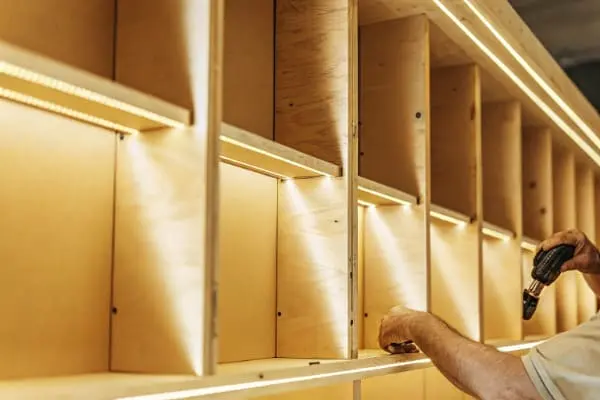
The Hidden Costs of "Cut-to-Size"
If your project requires specific lengths that align with the standard cut points of the LED strip (usually every 25mm or 50mm for COB strips), the "customization" is actually a finishing service. The extra cost you see on the invoice is primarily for labor and materials used at the connection points.
- Manual Soldering: Unlike the reel-to-reel soldering done by robots, connecting wires to a cut strip requires a technician to hand-solder the pads. This ensures a strong electrical connection but takes time.
- Waterproofing Restoration: If you are ordering IP65 or IP67 strips, cutting them breaks the silicone seal. We must manually glue and seal end caps on every single segment to ensure the waterproof rating holds. This is often where the bulk of the extra cost lies.
- Wire Leads and Connectors: You must specify if you need bare wires, DC connectors, or specific waterproof connectors. Each adds to the bill of materials (BOM).
Waste Factors and Pricing
Another factor that influences the cost is the "waste" generated by your specific length requirements. LED strips are produced in "Master Reels," often 50 or 100 meters long.
If you need 100 pieces of 0.9-meter strips, that totals 90 meters. However, if we cut this from 5-meter rolls, we are left with 0.5-meter scraps that may be unusable for your project. Suppliers will often charge you for the full reel used, not just the length you receive.
Cost Breakdown for Custom Sizing
To give you a clearer idea of what to expect when negotiating, we have broken down the typical surcharges associated with custom cutting services:
| Service Type | Typical Cost Adder | Notes |
|---|---|---|
| Simple Cut (No Wire) | Free - $0.20 / cut | usually free if buying full reels |
| Cut + Soldered Leads | $0.50 - $1.00 / end | Includes 15cm standard wire |
| IP65/IP67 Sealing | $1.00 - $2.00 / end | Includes glue, end cap, and curing time |
| Custom Connector | Cost of connector + Labor | e.g., 4-pin waterproof connectors |
| Labeling | $0.10 / label | Length/Location ID for installers |
By understanding these line items, you can decide if it is more cost-effective to have the factory do the work or to buy bulk reels and have your local electrical contractor handle the cutting and soldering on-site.
Can I negotiate a flexible MOQ if I commit to a long-term supply contract for my lighting projects?
Stability is the holy grail for any manufacturing business. When we look at our production schedule, we prefer a steady stream of orders over a massive, unpredictable spike. If you are a wholesaler or a contractor with a year-long project rollout, you have significant leverage. We are much more willing to waive setup fees and lower per-batch minimums if we know the total volume for the year is guaranteed.
manufacturing business 4
Negotiating a "Blanket Order" allows you to secure flexible MOQs by contractually committing to a total annual volume while scheduling smaller, staggered deliveries. This strategy significantly reduces your immediate warehousing costs and assures the supplier of consistent production, often eliminating setup fees and securing the lowest possible unit pricing.
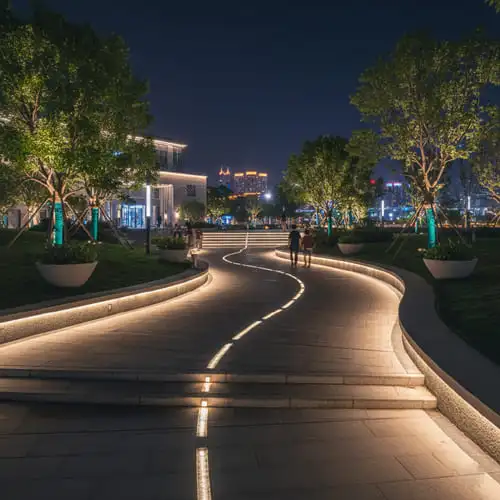
The Power of the Blanket Order
A Blanket Order is an agreement where you commit to buying, for example, 5,000 meters over the course of 12 months. In exchange, the factory agrees to produce the goods (or hold the raw materials) and ship them in batches—perhaps 500 meters every month.
This solves two major problems:
- Cash Flow & Storage: You do not need to pay for or store 5,000 meters of strip light immediately.
- Production Efficiency: We can plan our raw material purchasing (PCBs, phosphor, chips) in bulk, which lowers our costs. We pass these savings on to you.
Ensuring "Binning Continuity"
One of the most critical technical advantages of a long-term contract is Binning Continuity. In the LED industry, color consistency is measured in MacAdam ellipses. If you buy 500 meters in January and another 500 meters in June as separate "spot buys," there is a high chance the color temperature (e.g., 3000K) will look slightly different because the LED chips came from different production batches.
With a Blanket Order, we can reserve LEDs from the exact same "Bin" for your entire contract. This guarantees that the light installed in the lobby in Phase 1 matches the light installed in the hallway in Phase 2 perfectly. This is a massive selling point for high-end architectural projects.
Spot Buy vs. Blanket Order Comparison
Here is why shifting the conversation from "single order" to "annual contract" benefits your negotiation:
| Feature | Spot Buy (One-off Order) | Blanket Order (Annual Contract) |
|---|---|---|
| Price Level | Standard Wholesale Price | Tier 1 / Distributor Price |
| MOQ Per Shipment | Strict (e.g., 500m) | Flexible (e.g., 100m drops) |
| Color Consistency | Varies by batch | Guaranteed same bin for all shipments |
| Lead Time | 15-20 Days (Production starts after payment) | 2-3 Days (Stock held for you) |
| Payment Terms | 100% T/T before ship | Potential for credit terms (e.g., Net 30) |
When negotiating, bring your estimated annual usage to the table immediately. Even if your first order is small, showing the "big picture" changes how we classify you in our CRM system.
What is the typical minimum run for a custom PCB design versus just cutting standard strips to size?
There is a fundamental difference between cutting a strip and designing a new one. When we simply cut a strip, we are modifying a finished product. When you ask for a custom PCB—perhaps you need a specific wattage per meter, a unique width like 4mm, or a special circuit design for a long-run application—we are starting from raw copper and fiberglass. This involves the SMT (Surface Mount Technology) assembly line, which is the heart of our factory.
Surface Mount Technology 5
Custom PCB designs generally require a minimum run of 500 to 1,000 meters to justify the SMT line setup, stencil creation, and component procurement. In contrast, cutting standard strips to size has virtually no minimum requirement beyond a single reel, as it utilizes existing master stock, though it may incur additional labor charges for termination.
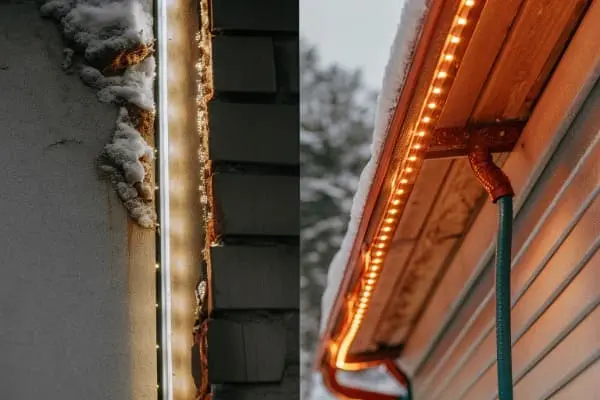
Why the 500-Meter Threshold Exists
To understand the MOQ, you have to visualize the SMT process. We use automated machines that pick tiny LED chips and place them onto the PCB board at high speeds.
Binning Continuity 7
- Stencil Creation: We must create a laser-cut stainless steel stencil to apply solder paste to your specific board design. This costs money and time.
- Machine Calibration: Loading the reels of components (resistors, ICs, LEDs) and programming the machine takes 1-2 hours. If the machine runs for only 10 minutes to produce 50 meters, the "downtime" costs more than the profit on the order.
- Material Yield: PCBs are manufactured in large panels. A custom width or length might not fit efficiently on our standard panel sizes, leading to material waste that we must account for.
Strategies to Lower Custom PCB MOQs
If you absolutely need a custom PCB but cannot reach the 500-meter mark, there are technical compromises you can offer to lower the barrier:
waterproof connectors 8
- Stick to Standard PCB Widths: Designing a strip that is 10mm or 8mm wide allows us to use standard fixtures. If you ask for a 7.5mm width, everything must be custom.
- Use Standard Components: If you require a specific lumen output, try to achieve it using our standard LED chips (e.g., 2835 or CSP chips) rather than specifying a niche emitter that we have to source specially.
- Accept "Master Reel" Multiples: Ask us what our "Master Reel" length is. If our raw PCB board comes in 50-meter lengths, ordering in multiples of 50 (e.g., 150m or 200m) is much easier for us to accept than an arbitrary number like 125m, which leaves us with scrap.
Technical Checklist for Negotiation
Before asking for a custom PCB, check if a standard product can be modified. If not, use this checklist to streamline the custom request:
IP65 or IP67 9
- Voltage: 12V, 24V, or 48V? (48V is better for long runs).
- Power: Watts per meter (affects copper thickness requirements).
- PCB Width: Can you use standard 8mm/10mm/12mm?
- Cut Points: Do you really need a 10mm cut point, or will standard 25mm suffice?
Conclusion
Negotiating MOQs for custom COB LED strips is not just about haggling over price; it is about demonstrating that you understand the manufacturing process. Whether you are requesting a pilot run for a new design, budgeting for labor costs on cut-to-size orders, or setting up a blanket order for long-term stability, clarity is your best tool. By aligning your project needs with our production efficiencies—such as utilizing standard PCB widths or planning for binning continuity—you can secure the custom lighting solutions you need without being blocked by rigid minimum requirements.
manufacturing volumes 10
Footnotes
- Defines the core concept of MOQ mentioned in the introduction. ↩︎
- Links to IPC standards, the authority on electronics assembly and soldering quality. ↩︎
- Government guide providing strategies for negotiating effectively with suppliers. ↩︎
- NIST resource on supply chain management and manufacturing stability. ↩︎
- Educational resource explaining the SMT process used in PCB manufacturing. ↩︎
- Leading COB manufacturer page highlighting color consistency technology. ↩︎
- Technical article from a major distributor explaining LED binning. ↩︎
- Major manufacturer product page illustrating the types of connectors discussed. ↩︎
- Official IEC page explaining the IP rating standards mentioned. ↩︎
- Official DOE page discussing LED manufacturing scales and supply chain considerations. ↩︎



 English
 Spanish
 German
 Russian
 Arabic
 French
 Portuguese