Sourcing lighting remotely feels risky. We usually see clients hesitate daily, fearing that the product arriving in Australia won't match the glossy photos sent from supplier.
To request free samples, email suppliers using a professional business domain and explicitly state your project scale. While most Chinese manufacturers provide standard COB LED strips for free, you must typically cover international shipping costs. Always negotiate a refund of these freight charges against your first official bulk order.
Let's explore the specific steps and technical details you need to secure the right samples for your project.
What specific technical parameters should I specify when asking for a COB LED strip sample?
Vague requests often lead to useless samples. Our engineering team cannot calibrate a production run or select the correct bin without precise data inputs from your design team.
DALI, 0-10V 1
You must specify the input voltage (12V/24V), PCB width, Color Rendering Index (CRI >90), and Color Temperature (CCT). Additionally, explicitly request the specific binning data and adhesive backing brand to ensure the sample matches your project's strict consistency and durability requirements.
The Importance of Precision
When you send us a request saying, "Send me a sample of your best COB strip," we honestly don't know what to send. A strip designed for a jewelry display case in Germany has completely different requirements than one intended for cove lighting in an Australian hotel lobby. To get a "Golden Sample"—one that serves as a binding legal standard for future mass production—you need to be specific.
Electrical and Optical Specifications
The visual performance of your project depends on these metrics. If you don't specify them, manufacturers might send "market standard" goods, which often have lower specs than "project grade" products.
Critical Parameters Checklist
We recommend using a table like this to structure your email to suppliers. It leaves no room for ambiguity.
| Parameter | Typical Project Requirement | Why It Matters |
|---|---|---|
| Input Voltage | DC 24V (preferred for long runs) | 24V reduces voltage drop, ensuring brightness consistency from start to end. |
| CRI | Ra > 90 | High CRI is non-negotiable for high-end retail or residential projects to render colors truly. |
| PCB Width | 8mm, 10mm, or 12mm | Must fit inside your specific aluminum profile. A 10mm strip won't fit a slim 8mm channel. |
| Power | 10W/m - 15W/m | Determines brightness and heat generation. Higher power requires better heat dissipation. |
| Adhesive | 3M VHB or 300LSE | Generic tape fails after months. Brand-name adhesive ensures the strip stays mounted. |
| Binning | 3-Step MacAdam Ellipse | Ensures color consistency across different batches and rolls. |
Physical and Durability Constraints
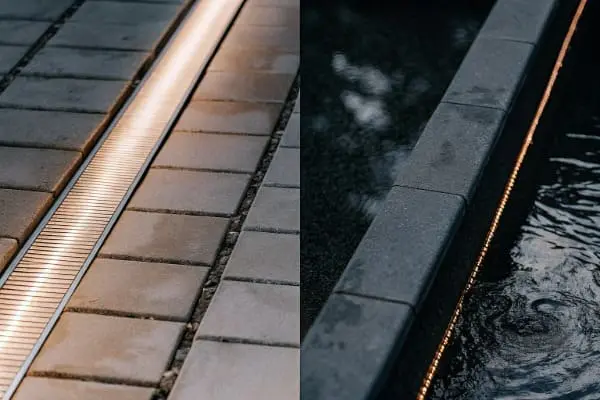
Beyond light quality, physical fit is crucial. We often see designers fail to check the cutting unit length. For COB strips, this can range from 25mm to 50mm. If your joinery requires a precise fit, a long cutting interval might leave dark spots at the corners. Furthermore, always specify the IP Rating. If you are installing this in a bathroom or outdoor facade, an IP20 sample is useless for testing. You need to see our IP65 (silicone coating) or IP67 (silicone tube) finish to judge the workmanship and flexibility.
The "Golden Sample" Strategy
Always ask the supplier to sign and date the sample they send. In our internal quality control process, we keep a duplicate of what we send you. This "Golden Sample" becomes the benchmark. If the mass production batch looks different, you have physical evidence to back up your claim. Without this specific request, a sample is just a sample—not a contract.
Do suppliers typically cover the shipping cost for LED strip samples or do I need to pay for freight?
Shipping costs can be a major friction point. In our export department, we handle this question from new clients every single day, balancing generosity with operational reality.
FedEx or DHL 3
Suppliers rarely cover international freight for samples; the buyer is almost always responsible for shipping costs via FedEx or DHL. However, many manufacturers, including us, are willing to deduct this sample shipping fee from the total invoice of your first official bulk order.
international shipping costs 4
The Industry Standard for Costs
It is important to understand the business logic here. For a manufacturer, the cost of a few meters of COB strip is negligible—often just a few dollars. We are happy to write that off as a marketing expense. However, international express shipping (DHL, FedEx, UPS) from China to Europe or Australia typically costs between $30 and $80 USD for a small package. If we paid this for every inquiry, our operating costs would skyrocket.
Free vs. Paid Samples
There is a nuance based on the product type.
- Standard Products: If you need a regular 3000K, 24V COB strip that we have in stock, the sample itself is almost always free. You only pay the freight.
- High-Value or Custom Products: If you need a custom CCT, a specific waterproof connector, or a high-power rigid bar, we may charge a "sample fee" in addition to freight. This covers the labor of setting up a machine for a single unit run.
Cost Responsibility Breakdown
| Expense Item | Standard Product | Custom/OEM Product |
|---|---|---|
| Product Cost | Free (Manufacturer pays) | Buyer pays (Refundable later) |
| Freight Cost | Buyer pays | Buyer pays |
| Mold/Tooling Fee | N/A | Buyer pays (Refundable on volume) |
How to Handle the Payment
To look like a professional buyer, do not argue about the freight cost. Instead, offer your corporate courier account number (FedEx/DHL) if you have one. This signals that you are an experienced importer. If you don't have an account, ask the supplier to prepay the freight and add it to a PayPal invoice. This is usually cheaper than "freight collect" rates.
The "Refund" Negotiation
Here is a tip from our sales floor: Always ask, "Will you refund this shipping cost when I place my first order of 500 meters?" 99% of the time, we will say yes. We want your long-term business, not your $50 shipping fee. This turns the shipping cost into a deposit rather than a sunk cost. It builds trust and shows you are serious about moving forward to a commercial transaction.
How long does it usually take to receive a custom COB LED sample from a Chinese manufacturer?
Project deadlines are tight. We constantly optimize our prototyping lines to ensure lighting designers don't wait weeks for a simple test run.
IP Rating 5
Standard off-the-shelf samples usually ship within 3 to 5 days, while custom PCB designs typically require 10 to 15 days for production. Shipping transit time adds another 3 to 7 days depending on your location and the courier service selected.
Understanding the Timeline
Time is money in construction projects. When you request a sample, you need to know exactly when it will arrive to schedule your client presentation. The timeline depends entirely on the complexity of your request.
Standard vs. Custom Timelines
If you ask us for a standard 4000K COB strip, we likely have a reel sitting on the shelf. We just need to cut it, solder the leads, pack it, and call DHL. However, if you need a custom PCB width or a unique color temperature that requires mixing phosphors, we have to schedule a production slot.
Estimated Lead Times
| Sample Type | Production Time | Shipping Time (Air Express) | Total Wait Time |
|---|---|---|---|
| In-Stock Standard | 1 - 3 Days | 3 - 5 Days | 4 - 8 Days |
| Minor Modification (e.g., custom connector) | 3 - 5 Days | 3 - 5 Days | 6 - 10 Days |
| Full Customization (New PCB/CCT) | 10 - 15 Days | 3 - 5 Days | 13 - 20 Days |
Factors That Cause Delays
In our experience, delays rarely happen on the production line; they happen in communication.
- Unclear Specs: If you don't specify the wire length or connector type, we have to email you back and wait for a reply. This can add days.
- Payment Confirmation: We cannot ship until the freight payment clears. Wire transfers can take 3 days. PayPal is instant. Use PayPal for samples to save time.
- Holidays: Be aware of Chinese New Year and the National Day Golden Week (October). Factories shut down completely.
How to Expedite Your Sample
If you are in a rush, tell us. We can often prioritize a sample order if we know a major project bid depends on it. Also, consider requesting "generic" samples first to test light quality while the "custom" sample is being made. This allows you to approve the brightness and color rendering immediately, leaving only the physical fit or connector check for the second sample. This parallel processing can save you a week of waiting.
Is it possible to get a fully functional sample kit including connectors and drivers for my project evaluation?
A strip alone won't light up. We encourage clients to test the entire ecosystem to avoid compatibility headaches on the job site.
3M VHB 7
Yes, reputable manufacturers can provide comprehensive sample kits that include compatible drivers, controllers, and solderless connectors. Requesting a full kit is crucial to verify system compatibility, especially since COB strips often have clearance issues with standard connectors due to their phosphor coating.
Why You Must Test the System
A COB LED strip is just one part of a system. We have seen too many contractors buy high-quality strips but cheap, incompatible connectors, resulting in flickering lights or dark spots. Testing a standalone strip tells you nothing about how it connects or dims.
The Connector Challenge
COB strips are unique because the yellow phosphor coating covers the entire top surface. Standard "clip-on" connectors designed for SMD strips often fail to pierce this coating effectively, or they block the light, creating a shadow. When you request a sample kit, ask for transparent, COB-specific connectors. You need to physically test these to see if they fit inside your aluminum channel. Many connectors add width to the strip—if your channel is 10mm wide and the connector is 12mm, you have a problem.
Driver and Dimming Compatibility
If your project requires dimming (DALI, 0-10V, or Triac), ask for a compatible driver in your sample kit.
- Flicker Test: Connect the strip to the driver and dim it down to 1%. Use your phone camera to check for flicker.
- Noise Test: Listen to the driver. Cheap drivers often emit a high-pitched whine when dimmed.
- Thermal Test: Run the full kit for 24 hours. Check if the driver gets too hot.
What to Include in Your Kit Request
Don't just ask for "accessories." Be specific to get a useful evaluation kit.
- Solderless Connectors: Ask for both "strip-to-wire" and "strip-to-strip" (middle joiner) types.
- Corner Joiners: Essential for 90-degree turns in cabinetry or signage.
- Mounting Clips: If you aren't using an aluminum profile, ask for silicone mounting clips.
- End Caps: Crucial for waterproofing tests if you are cutting the strip yourself.
By testing the full kit, you shift the responsibility of compatibility to us, the manufacturer. If the connector we sent doesn't work with the strip we sent, we have to fix it before you place a bulk order. It is a cheap insurance policy for your project.
Color Temperature (CCT) 9
Conclusion
Requesting samples is about minimizing risk. Be specific with your technical data, expect to pay for shipping, and always test the full ecosystem. This rigorous approach filters out weak suppliers and ensures your final project shines.
Color Rendering Index 10
Footnotes
- Industry organization managing the DALI lighting control standard. ↩︎
- Context for the major holiday affecting Chinese manufacturing schedules. ↩︎
- Major logistics company providing international shipping services. ↩︎
- Government trade administration guide on export logistics and fees. ↩︎
- International standards body defining Ingress Protection codes. ↩︎
- General background on the technical concept of color consistency. ↩︎
- Official manufacturer product page for the specific adhesive mentioned. ↩︎
- Educational resource from the Lighting Research Center on LED thermal management. ↩︎
- Department of Energy explanation of LED color characteristics. ↩︎
- Official government research institute defining color measurement standards. ↩︎

 English
 Spanish
 German
 Russian
 Arabic
 French
 Portuguese