
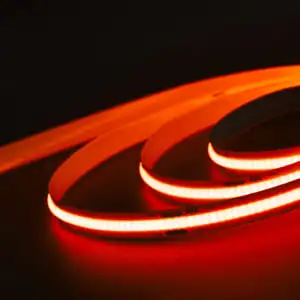
We often see vague requests delay production schedules significantly. At our Shenzhen facility, receiving precise specifications upfront allows our engineering team to calculate costs accurately and speed up your project timeline.
To obtain an accurate COB LED strip quotation, you must specify five core technical parameters: electrical voltage (12V/24V), physical dimensions (PCB width), light output (CCT, CRI, and lumens), environmental IP ratings, and total run length. Providing these details ensures precise pricing and prevents manufacturing delays.
Let's break down exactly what you need to tell us to get the perfect lighting solution.
How do I specify voltage and maximum run length to ensure consistent brightness across the entire strip?
We test voltage drop scenarios daily in our lab. Incorrect voltage specifications often lead to dim lighting at the end of long runs, which frustrates installers and end-users alike.
Specify 24VDC for runs up to 10 meters to minimize voltage drop, or 48VDC for longer continuous installations. You must explicitly state the maximum single run length required so we can calculate the necessary copper thickness and power injection points to ensure uniform brightness from start to finish.
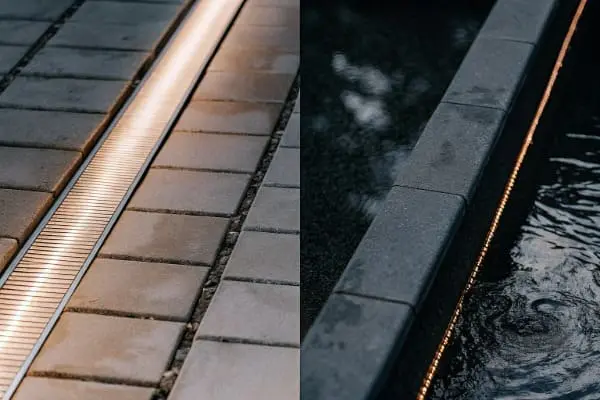
Understanding Voltage Drop in Projects
When you send us an inquiry, simply saying "I need LED strips" is not enough. The relationship between voltage and run length is physics, not magic. As electricity travels down the PCB (Printed Circuit Board), it encounters resistance. This causes "voltage drop." If the voltage drops too much, the LEDs at the end of the strip look dimmer than the ones at the start.
For most commercial projects, we strongly advise against 12V systems unless the run is very short (under 2 meters). 12V current is higher, which generates more heat and loses voltage faster.
The Importance of Copper Thickness
To combat voltage drop, we adjust the copper weight on the PCB. Standard strips might use 2oz copper. However, for high-end projects requiring long continuous runs, we often upgrade to 3oz or 4oz copper. This acts like a wider highway for the electricity, allowing it to travel further without traffic jams (resistance).
If you do not specify the run length, a supplier will quote the cheapest standard option. This might work on a test bench but will fail in a 15-meter ceiling cove installation.
Constant Current vs. Constant Voltage
For professional engineering contractors, we often recommend "Constant Current" (CC) designs for long runs. Unlike standard strips, CC strips have IC chips that regulate the current at every LED group. This ensures that the first LED and the last LED have exactly the same brightness, even if the voltage drops slightly.
Constant Current 1
Voltage Selection Guide
Use the table below to determine which voltage you should request based on your project's installation length.
| Voltage Specification | Max Run (Single End Power) | Best Application | Pros | Cons |
|---|---|---|---|---|
| 12V DC | ~2-3 Meters | Automotive, Cabinetry | Safer to touch, common batteries | High voltage drop, short runs |
| 24V DC | ~5-10 Meters | Residential, Commercial | Industry standard, good balance | Requires drivers, moderate drop |
| 48V DC | ~20-30 Meters | Large Architectural Projects | Very long runs, less wiring | Higher shock risk, specialized drivers |
By specifying "I need a 15-meter continuous run with no visible brightness drop," we know immediately to quote you a 48V solution or a heavy-duty 24V constant current strip. This saves you from receiving a product that looks terrible once installed.
What specific CCT and CRI values should I request to guarantee color consistency for high-end projects?
When we match colors for luxury hotels, even a slight deviation ruins the aesthetic. Your project deserves absolute consistency, and general terms like "warm white" are simply too broad.
Request a specific Correlated Color Temperature (e.g., 3000K ±100K) and a Color Rendering Index (CRI) of 90+ or 95+ for high-end projects. Always ask for SDCM < 3 binning to guarantee that the light color remains visually identical across different batches and individual LED chips.
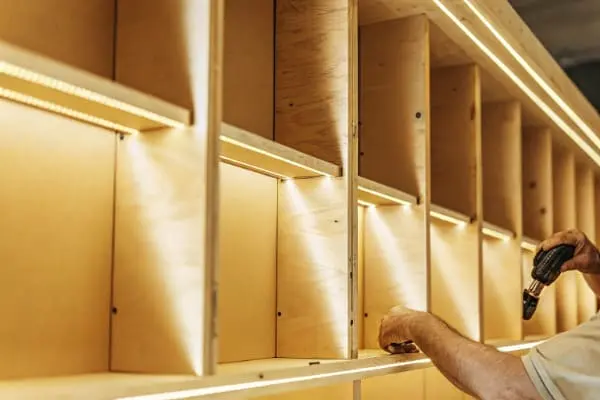
The Danger of "Warm White"
In the lighting industry, "Warm White" can mean anything from 2700K (very yellow, like incandescent) to 3500K (neutral warm). If you order "Warm White" from two different suppliers, or even two different batches from the same supplier without strict specs, you will get mismatched lights.
For architectural projects, you must be specific. Do not say "Warm White." Say "3000K."
CRI and the R9 Value
Color Rendering Index (CRI) measures how true colors look under the light. A standard LED has a CRI of 80. This makes skin tones look flat and food look unappetizing.
Color Rendering Index 2
For high-end retail or residential projects, you should request CRI 90+. However, there is a hidden metric called R9. R9 measures how well the light renders saturated red. Many "CRI 90" strips still have a low R9 value. If you are lighting artwork, timber, or skin, explicitly ask for "CRI>90 with R9>50". This ensures the red spectrum is rich and vibrant.
Binning and SDCM
Have you ever seen a long line of lights where one section looks slightly pink and the next looks slightly green? That is a binning issue.
LEDs are manufactured in massive batches. We sort these into "bins" based on color tolerance. This tolerance is measured in MacAdam Ellipses (SDCM).
- SDCM < 3: The difference is invisible to the human eye. (Required for high-end projects).
- SDCM < 5: Acceptable for general lighting, slight variance possible.
Critical Thinking: Consistency vs. Cost
Achieving SDCM < 3 requires strict sorting, which increases the cost. If you are lighting a warehouse, you do not need this. If you are lighting a jewelry store, you absolutely do.
Color Specification Checklist
| Parameter | Standard Commercial Spec | High-End Project Spec | Why it matters |
|---|---|---|---|
| CCT | 3000K / 4000K / 6000K | 2700K / 3000K / 3500K / 4000K | Sets the mood of the space. |
| CRI (Ra) | CRI > 80 | CRI > 90 or CRI > 95 | Determines color fidelity. |
| R9 Value | Not specified (usually < 10) | R9 > 50 or R9 > 80 | Critical for wood, skin, and food. |
| Binning | SDCM < 5 | SDCM < 3 | Ensures all strips look identical. |
By providing these numbers, you filter out low-quality suppliers immediately. A supplier who doesn't know what "R9" or "SDCM" means is not ready for your project.
Do I need to define the PCB width and wattage per meter for my custom lighting application?
Our engineers design PCBs to handle heat effectively, which is the number one killer of LEDs. Ignoring width and wattage often causes premature strip failure due to overheating.
Yes, defining PCB width (8mm, 10mm, or 12mm) ensures fitment within your aluminum profiles, while specifying wattage per meter determines brightness and thermal management needs. We recommend 10mm PCBs for wattages over 10W/m to provide sufficient heat dissipation and extend the product's operational lifespan.
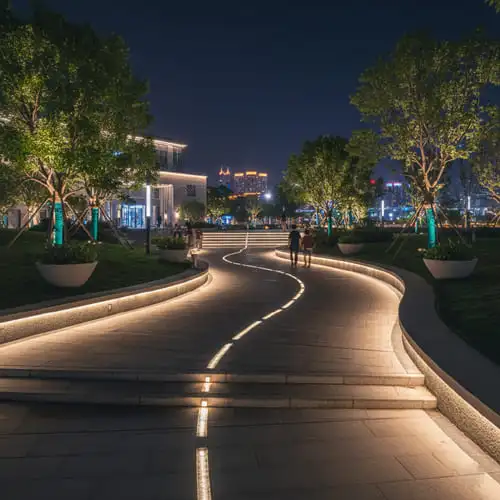
Why PCB Width Matters
The PCB (Printed Circuit Board) is the backbone of the LED strip. It holds the chips and conducts the heat away from them.
- 8mm PCB: Common for standard strips. Fits in almost all aluminum profiles.
- 10mm PCB: Better for high-wattage or high-density COB strips. The extra 2mm surface area significantly improves heat dissipation.
- 4mm/5mm PCB: Specialized for ultra-thin neon signs or narrow joinery.
If you are buying a high-brightness strip (e.g., 15W/m) but accept a narrow 8mm PCB, the strip will run hot. Over time, this heat degrades the phosphor on the LED, causing it to turn blue and lose brightness.
Wattage per Meter: Brightness vs. Efficiency
Wattage determines how much power the strip consumes and roughly how bright it is. However, more wattage is not always better.
- Accent Lighting: 5W/m to 8W/m.
- Task Lighting (Under cabinet): 10W/m to 14W/m.
- Main Lighting (Cove light): 15W/m to 20W/m.
If you request "maximum brightness," a factory might give you 20W/m. If you install this in a wooden groove without an aluminum profile for cooling, it will overheat and fail within a year. You must balance wattage with your installation method.
Cut Points and Customization
COB strips have specific "cut points." This is where you can safely cut the strip with scissors.
- 12V COB: Usually every 25mm.
- 24V COB: Usually every 50mm.
If you have precise millwork or cabinetry, a 50mm cut point might result in a dark spot at the end of the shelf. If precision is key, ask us for "high-density cut points" or custom lengths.
UV resistant 3
PCB Specification Guide
| Feature | Recommendation | Reason |
|---|---|---|
| PCB Width | 10mm (Standard for COB) | Better heat dissipation than 8mm. |
| Copper Weight | 2oz (Standard) / 3oz (Premium) | Reduces voltage drop and heat. |
| Finish | White (Standard) | Reflects light better. |
| Backing Tape | 3M VHB or 3M 300LSE | Ensures the strip doesn't fall off. |
Always check the inner width of your aluminum channel before ordering. Trying to jam a 10mm strip into an 8mm channel is a common and costly mistake.
IP code 4
How should I describe the IP rating and waterproofing method for outdoor or wet environment installations?
We have seen outdoor projects fail because "waterproof" was too vague in the order. Our testing ensures ratings match real-world conditions, but we need to know the specific environment.
3M VHB 5
Describe the exact installation environment, such as "submerged," "rain-exposed," or "humid bathroom." Request specific IP ratings like IP65 (silicone coating) for damp areas, IP67 (silicone tube) for temporary water exposure, or IP68 (solid extrusion) for permanent submersion to ensure long-term durability.
IP Ratings Decoded
"Waterproof" is a marketing term. "IP Rating" is an engineering standard. The IP code has two numbers (e.g., IP65). The first is dust protection (6 is max). The second is water protection.
SDCM 7
- IP20 (No protection): Bare PCB. For indoor, dry use inside aluminum profiles. Best heat dissipation.
- IP54/IP65 (Splash proof): Usually a thin silicone coating or "nano-coating." Good for kitchens or bathrooms where steam is present.
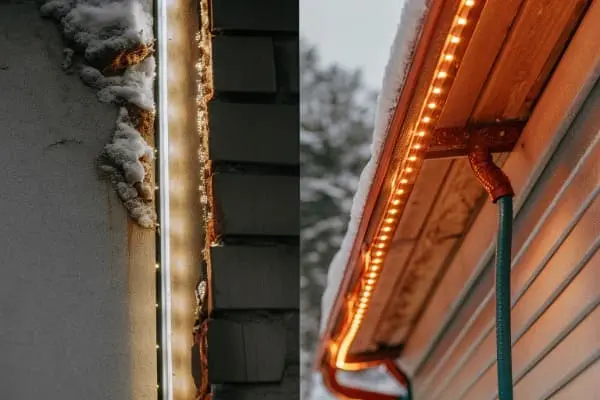
- IP67 (Temporary Submersion): Silicone sleeve or tube. Good for outdoor eaves, building facades, or gardens where rain hits directly.
- IP68 (Permanent Submersion): Solid silicone extrusion. Required for swimming pools or fountains.
Material Matters: Silicone vs. PVC or PU
This is a critical detail that many buyers overlook.
- Epoxy/PU Glue: Cheap. It turns yellow and cracks after 6-12 months of UV exposure. Avoid this for outdoor projects.
- PVC: Common. It is durable but stiffens in cold weather and can yellow over time.
- Silicone: The best choice. It is UV resistant (won't yellow), stays flexible in freezing temperatures, and dissipates heat better than PVC.
Always specify: "IP67 Silicone Extrusion" if you want the product to last outdoors.
The Connector Weak Point
The LED strip itself might be waterproof, but the connection point is the weakest link. Water usually enters where the wire is soldered to the PCB.
- DIY Connectors: Not waterproof.
- Factory Molded Connectors: We inject liquid silicone over the solder joint to create a watertight seal.
If you are cutting the strip on-site, you compromise the IP rating. For outdoor projects, we recommend ordering custom lengths from the factory with pre-molded waterproof connectors.
MacAdam Ellipses 8
Waterproofing Selection Table
| Environment | Recommended IP | Technology | Note |
|---|---|---|---|
| Bedroom / Living Room | IP20 | Bare PCB | Best thermal performance. |
| Kitchen / Bathroom | IP54 / IP65 | Silicone Spray / Thin Coating | Protects against steam/wiping. |
| Outdoor Facade | IP66 / IP67 | Silicone Tube / Extrusion | Must be UV resistant. |
| Swimming Pool | IP68 | Solid Silicone Filling | Must be chlorine/salt resistant. |
Do not over-specify. Using IP68 for a living room ceiling is a waste of money and traps heat, reducing the lifespan of the LEDs. Match the rating to the reality of the installation.
Correlated Color Temperature 9
Conclusion
Precise specifications prevent costly errors. By clearly defining voltage, CCT, PCB details, and IP ratings, you ensure the product matches your project needs. Contact us at Glowin for expert guidance.
encounters resistance 10
Footnotes
- Major industry manufacturer explaining LED driver types and control methods. ↩︎
- Leading university research center defining color rendering metrics. ↩︎
- Major chemical manufacturer detailing silicone material properties for lighting. ↩︎
- The official international body (IEC) that defines IP rating standards. ↩︎
- Official product page for the specific high-strength adhesive tape mentioned. ↩︎
- Government standard defining how LED lifespan and efficiency are measured. ↩︎
- Definition from the Illuminating Engineering Society (IES). ↩︎
- General background definition of the chromaticity diagram concept. ↩︎
- Official Department of Energy guide on LED color characteristics. ↩︎
- Educational physics resource explaining the fundamental concept of electrical resistance. ↩︎

 English
 Spanish
 German
 Russian
 Arabic
 French
 Portuguese