
When we finalize export paperwork for our Sydney partners, we often see them struggle with unexpected expenses beyond the factory invoice price.
To calculate the total landed cost, you must sum the FOB product value, international freight, insurance, Australian import duty (usually 5%), and GST (10% on the Taxable Importation Value). You also need to add local port charges and customs brokerage fees to reach your final unit cost.
Let's break down these numbers so you can accurately forecast your profit margins.
What import duty rates and GST will I have to pay on LED strips entering Australia?
Our logistics team frequently helps clients navigate tariff codes to ensure they do not overpay taxes on their custom lighting orders.
Standard LED strips generally incur a 5% import duty, but goods from China can enter duty-free under the China-Australia Free Trade Agreement (ChAFTA). Regardless of duty, you must pay 10% GST on the Value of Taxable Importation (VoTI), which includes the cost of goods, freight, and insurance.

Understanding HS Codes and Duty Rates
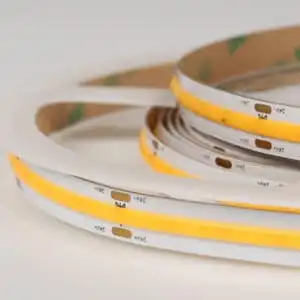
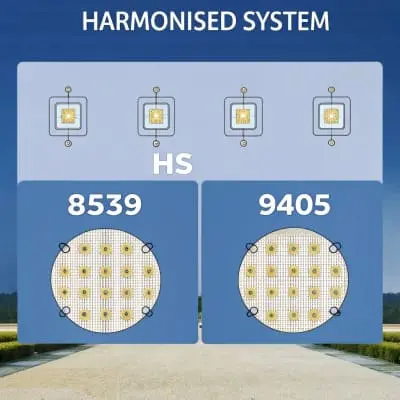
The first step in calculating your tax liability is correctly classifying your goods. tax liability 1 Our COB (Chip-on-Board) LED strips that typically fall under specific Harmonised System (HS) codes. Harmonised System (HS) codes 2 For Australia, LED modules and strips often fall under heading 8539 or 9405.
If you classify the product incorrectly, you risk either overpaying duty or facing penalties from the Australian Border Force (ABF). The standard duty rate for general lighting products from China is 5%. However, Australia and China have a Free Trade Agreement (ChAFTA). Free Trade Agreement (ChAFTA) 3 If we provide you with a valid Certificate of Origin (Co), the duty rate often drops to 0%. This is a critical document we prepare for our Australian partners to save them significant capital.
The GST Calculation Trap
Many new importers assume GST is just 10% of the factory price. This is incorrect. The Australian Taxation Office (ATO) calculates GST based on the Value of Taxable Importation (VoTI). The VoTI is a cumulative figure.
To find the VoTI, you must add:
- The Customs Value (FOB price converted to AUD).
- The Duty amount (even if it is 0%).
- The cost of international transport and insurance (T&I).
You pay 10% GST on that total sum. This means you are paying tax on your shipping costs, not just the product.
Duty and GST Cost Breakdown
Below is a comparison of how the costs look with and without the Free Trade Agreement exemption.
| Cost Component | Standard Rate (5%) | ChAFTA Rate (0%) | Notes |
|---|---|---|---|
| Customs Value (AUD) | $10,000 | $10,000 | Converted from USD at day of export |
| Import Duty | $500 (5%) | $0 (0%) | Requires Certificate of Origin |
| Intl. Transport & Ins. | $1,500 | $1,500 | Freight costs |
| VoTI (Subtotal) | $12,000 | $11,500 | Value + Duty + Transport |
| GST Payable (10%) | $1,200 | $1,150 | 10% of VoTI |
| Total Tax Payable | $1,700 | $1,150 | You save $550 |
By ensuring your supplier provides the correct paperwork, you directly increase your bottom line.
How do air freight versus sea freight costs impact my total budget?
When we coordinate shipments, we ask clients to balance speed against budget, as air transport significantly inflates the per-meter cost.
Air freight offers speed (4–10 days) but charges based on volumetric weight, making it expensive for bulky orders. Sea freight (20–40 days) is the most cost-effective method for bulk LED orders, drastically reducing the shipping cost per unit despite higher fixed port charges at the destination.
The Volumetric Weight Factor
In our experience shipping COB strips, weight is rarely the issue; volume is. LED strips are light, but when we spool them onto 5-meter reels and pack them into anti-static bags and master cartons, they take up space. LED strips 4
Air freight couriers (like DHL, FedEx, or UPS) and freight forwarders use a "chargeable weight" formula. They compare the actual weight (kg) against the volumetric weight volumetric weight 5 (Length x Width x Height / 5000). You pay for whichever is higher. Since lighting packaging contains air, you are often paying for volume. For a small sample order of 50 meters, air freight is logical ($300–$500 USD). However, for a project order of 2,000 meters, air freight costs can exceed the value of the products themselves.
Sea Freight Economics (LCL vs. FCL)
For larger orders, sea freight is the standard. You have two options:
- LCL (Less than Container Load): You share a container with other importers. You pay per cubic meter (CBM). This is ideal for orders between 2 CBM and 15 CBM.
- FCL (Full Container Load): You rent the entire 20ft or 40ft container. This is the cheapest method per unit but requires substantial volume (usually over $15,000 USD in goods).
While the sea freight rate itself is low, the trade-off is time. A shipment from Shenzhen to Sydney or Melbourne takes roughly 15 to 25 days on the water, plus 5–7 days for loading and customs clearance on both ends. customs clearance 6 You must plan your project inventory at least 6 weeks in advance.
Freight Cost Comparison Table
This table illustrates the difference for a hypothetical order of 1,000 meters of COB LED Strips (approx. 2 CBM volume).
| Feature | Air Freight (Express) | Sea Freight (LCL) |
|---|---|---|
| Transit Time | 5–8 Days | 25–35 Days |
| Basis of Charge | Volumetric Weight (High) | Per Cubic Meter (Low) |
| Approx. Cost (USD) | $2,500 - $3,500 | $300 - $600 (freight only) |
| Destination Fees | Low / Included | High (Port charges apply) |
| Risk of Damage | Low | Low to Medium |
| Best For | Samples, Rush Orders | Stock, Large Projects |
We see frustration arise when customers receive a second invoice from their local logistics agent that they did not budget for.
Yes, you must watch for "destination charges" such as the Import Processing Charge (IPC), port security fees, customs brokerage fees, and inland cartage. These local Australian costs are not included in standard CIF shipping quotes and can add $500 to $1,000 AUD to your final bill.
The "CIF" Misconception
Many of our clients ask for a CIF (Cost, Insurance, and Freight) price. Under CIF, we cover the costs to get the goods to the Australian port (e.g., Botany or Melbourne). However, once the ship docks, our responsibility ends, and your costs begin.
New importers often forget that getting goods to the port is different from getting them through the port. The local handling fees in Australia are among the highest in the world. Even for a small LCL shipment, the "destination terminal handling charges" (DTHC) can shock you.
Common "Hidden" Fees Explained
Here is a list of costs you will likely encounter after the ship arrives:
- Import Processing Charge (IPC): This is a mandatory fee charged by the Australian Government.
- For goods valued between $1,000 and $10,000 AUD, the fee is approximately $50–$100 depending on the mode of transport.
- For goods over $10,000 AUD, the fee increases heavily (approx. $152–$200+).
Compliance Costs: The Invisible Barrier
While not a "shipping" fee, regulatory compliance is a massive hidden cost. To legally sell LED strips in Australia, they must comply with RCM (Regulatory Compliance Mark) standards. Regulatory Compliance Mark 9 This involves:
- Testing: paying a lab for AS/NZS safety reports.
- Registration: registering on the EESS database. EESS database 10
If your goods are stopped by customs for an RCM check and you are not compliant, the goods can be seized or destroyed. This is the ultimate "hidden cost"—losing the entire shipment.
How can I estimate the final landed cost per unit to protect my profit margins?
Our goal is to help you build a sustainable business, so we recommend using a detailed spreadsheet to track every cent spent per meter.
To estimate the final landed cost, add your FOB product cost, freight, duty, GST, and all local port/brokerage fees together. Divide this total sum by the total number of units (meters or reels) to derive your true unit cost, which is often 20–30% higher than the factory price.
The Landed Cost Formula
To protect your profit margins, you cannot simply mark up the factory price. You need to calculate the "Landed Cost Multiplier." For many of our Australian clients, a general rule of thumb is that the landed cost is approximately 1.25 to 1.4 times the FOB USD price (after currency conversion).
Here is the step-by-step formula you should use in your spreadsheet:
- Convert Currency: Convert your Supplier Invoice (USD) to AUD using a conservative exchange rate (add 2-3% buffer for bank fees).
- Add Duty: Apply 5% to the FOB + Freight value (or 0% if using ChAFTA).
- Add GST: Apply 10% to the (FOB + Freight + Duty).
- Add Local Fixed Costs: Sum up your broker fee, port charges, and delivery to your warehouse.
- Divide: Total Cost / Total Units = Landed Cost Per Unit.
Real-World Example
Let's imagine you are buying 2,000 meters of our high-CRI COB LED strip.
- FOB Price: $3.00 USD/meter.
- Total Order: $6,000 USD.
- Exchange Rate: 1 AUD = 0.65 USD (approx).
Below is how the costs stack up to give you a final price.
Comprehensive Landed Cost Worksheet
| Cost Item | Amount (USD) | Amount (AUD) | Calculation Notes |
|---|---|---|---|
| Product Cost (FOB) | $6,000 | $9,230 | Base factory price |
| Sea Freight (CIF) | $400 | $615 | Paid to supplier/forwarder |
| Customs Value | - | $9,845 | Product + Freight |
| Duty (0% ChAFTA) | - | $0 | Assuming CoO provided |
| GST (10%) | - | $985 | 10% of (Value + Freight) |
| Import Processing (IPC) | - | $90 | Government fee |
| Port/Depot Charges | - | $450 | Unpacking & handling |
| Customs Broker Fee | - | $200 | Agent service fee |
| Local Delivery | - | $150 | Truck to your warehouse |
| TOTAL LANDED COST | - | $11,720 | Sum of all above |
| Cost Per Meter | - | $5.86 AUD | Total / 2,000 meters |
In this scenario, your factory price was roughly $4.61 AUD ($3.00 USD), but your final cost is $5.86 AUD. This is a 27% increase on top of the product price. If you had ignored these costs and set your sales price based only on the factory quote, you would be losing money.
Conclusion
Calculating landed costs requires diligence, but it is the only way to ensure profitability. By accounting for duty, GST, and local fees upfront, you avoid nasty surprises. If you need help estimating shipping for your next COB strip project, reach out to us—we are happy to assist.
Footnotes
- Official ABF page regarding import costs and compliance. ↩︎
- Official Australian Border Force page explaining tariff classifications. ↩︎
- Official government page detailing the China-Australia Free Trade Agreement. ↩︎
- General background on the technology and types of LED strips. ↩︎
- Major logistics provider explaining the industry-standard calculation. ↩︎
- Global organization representing customs brokers and their international standards. ↩︎
- Official system used for Australian customs clearance. ↩︎
- Official department managing Australian biosecurity regulations. ↩︎
- Official site for the EESS explaining the RCM mark requirements. ↩︎
- Official database for electrical equipment safety registration. ↩︎




 English
 Spanish
 German
 Russian
 Arabic
 French
 Portuguese