
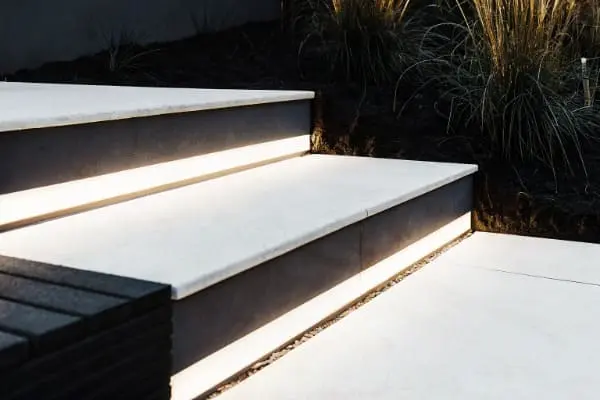
We often see contractors struggle with water damage returns. At our Shenzhen facility, we test countless strips against rain and humidity to solve this specific pain point for our clients.
For most outdoor landscape projects, IP67 is the optimal choice. It offers protection against heavy rain and temporary submersion up to one meter without the high cost and rigidity of IP68. However, for permanently submerged areas like ponds, you must strictly use IP68-rated COB strips to prevent failure.
Let's explore the specific differences to help you make the right purchasing decision for your next project.
What is the difference between IP67 and IP68 ratings for my exterior lighting needs?
When we export to Australia, our clients frequently confuse these ratings. We clarify this daily to ensure their installations survive the first rainy season without flickering or dimming issues.
The main difference lies in submersion capability. IP67 protects against temporary immersion up to 1 meter for 30 minutes, making it ideal for rain-exposed gardens. In contrast, IP68 is hermetically sealed for continuous underwater use, which is mandatory for fountains but unnecessary and costlier for general landscaping.
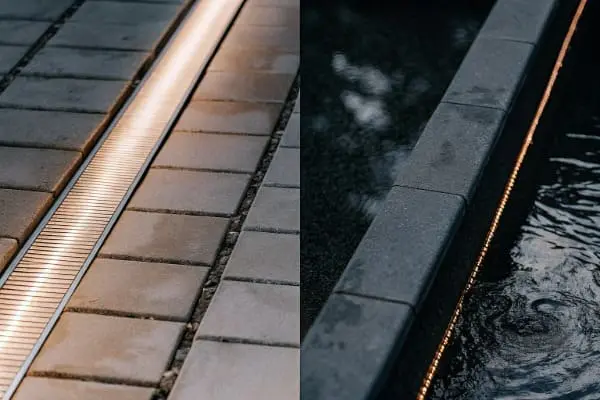
Understanding the Protection Levels
In the world of professional lighting, the IP (Ingress Protection) rating is not just a sticker; it is the primary indicator of product survival. From our production line perspective, the difference between IP67 and IP68 involves completely different manufacturing processes and material costs.
IP (Ingress Protection) rating 1
IP65 is often marketed for outdoor use, but we generally advise against it for low-level landscape applications. IP65 relies on a thin surface coating (often spray glue or a thin silicone layer) that protects against water jets but fails if water pools around the strip. In a garden setting, puddles form easily. If an IP65 strip sits in a puddle for an hour, water will eventually penetrate the PCB (Printed Circuit Board).
The Manufacturing Difference: Hollow vs. Solid
For IP67 and IP68, the construction is more robust. However, there is a nuance that many datasheets do not explain.
- IP67 (Hollow Tube): The strip is placed inside a silicone sleeve. It is flexible and cheaper, but air is trapped inside. If the temperature changes rapidly, condensation can form inside the tube, shorting the LEDs.
- IP67/IP68 (Solid Extrusion): This is what we recommend for high-end projects. We co-extrude silicone over the strip, filling every gap. There is no air pocket. This makes the strip extremely durable against pressure and moisture.
Where to Use Each Rating
To help you plan your inventory or project list, we have compiled this comparison based on our warranty claim data.
| IP Rating | Construction Type | Best Application | Risk Factor |
|---|---|---|---|
| IP65 | Surface Coating / Spray | Eaves, Soffits, Covered Patios | High failure rate if exposed to standing water or heavy snow. |
| IP67 | Silicone Sleeve or Solid Extrusion | Garden Borders, Pathways, Steps, Decking | Excellent balance. Can withstand heavy rain and temporary flooding. |
| IP68 | Fully Sealed Injection Molding | Swimming Pools, Fountains, Ponds | Essential for underwater. Overkill for grass or concrete installation. |
Critical Thinking: Is IP68 Always Better?
You might think, "Why not just use IP68 for everything to be safe?" This is a common misconception. IP68 strips are often thicker, more rigid, and retain more heat. Heat is the enemy of LED longevity. If you install a heavy-duty IP68 strip in a dry location like a patio ceiling, you are insulating the LEDs unnecessarily, which could shorten their lifespan. Furthermore, IP68 connectors are bulky and harder to hide in sleek landscape designs. Smart procurement involves matching the rating to the specific zone of the garden.
How do silicone extrusion coatings protect my strips from UV and yellowing?
In our aging test labs, we expose materials to intense UV radiation. We have seen cheap PVC coatings turn yellow within months, ruining the lighting effect completely.
High-quality silicone extrusion coatings block harmful UV rays that degrade LED phosphors. Unlike PVC, which yellows and cracks, marine-grade silicone remains transparent and flexible. This chemical stability ensures the color temperature remains consistent over years of exposure to direct sunlight in outdoor environments.
The Chemistry of Translucence
When we source raw materials, we pay close attention to the base polymer. Many budget manufacturers use PVC (Polyvinyl Chloride) or PU (Polyurethane) because they are cheap and easy to extrude. However, these materials have poor UV resistance. Under the harsh sun of Australia or the Middle East, the polymer chains break down. This results in the clear casing turning a sickly yellow or brown.
PVC (Polyvinyl Chloride) 2
This yellowing does two terrible things to your project:
- Light Loss: It acts as a filter, significantly reducing brightness.
- Color Shift: It shifts your crisp 4000K white light into a muddy, greenish-yellow hue that looks old and dirty.
Silicone Ratio and Color Temperature Shift
One insight we always share with our OEM partners is the importance of the silicone formula. Pure silicone is expensive, so some factories mix it with fillers. This affects the optical clarity.
At our factory, we also have to calculate the "Color Shift" during production. When you encapsulate a COB strip in thick silicone, the refractive index changes. A 3000K LED chip might look like 3200K or 2800K after the silicone is applied. We have to adjust the original chip selection to ensure that the final output matches the client's specifications. This is a precise science. If a supplier does not control this ratio, you will receive batches where the color does not match your previous orders.
refractive index 3
Material Performance Comparison
Here is how different coating materials perform over time based on our internal testing.
| Feature | PVC (Budget) | PU (Mid-Range) | Silicone (Professional) |
|---|---|---|---|
| UV Resistance | Poor (Yellows in <6 months) | Moderate (Yellows in 1-2 years) | Excellent (Stable for 5+ years) |
| Flexibility | Becomes brittle/cracks in cold | Good flexibility | Remains soft in extreme cold/heat |
| Thermal Management | Traps heat | Moderate heat transfer | Good thermal conductivity |
| Cost | Low | Medium | High |
The Impact on COB Aesthetics
COB (Chip on Board) strips are chosen for their seamless, dot-free line of light. If the coating cracks due to UV damage, water gets in, and sections of the strip fail. This creates "dark spots," which ruins the continuous effect that COB is famous for. Using high-grade silicone is not just about waterproofing; it is about preserving the visual integrity of the continuous light line. For landscape designers, this reliability is non-negotiable.
Do I need specific waterproof connectors for submerged or wet locations?
Our engineering team frequently troubleshoots project failures caused by poor connections. Even the best IP68 strip will fail if the connection point is not properly sealed.
Yes, standard clip connectors are not sufficient for wet locations. You must use IP68-rated gel-filled junction boxes or marine-grade heat shrink tubing with adhesive lining. These methods create a watertight seal that prevents moisture from wicking up the wire and corroding the solder pads inside the strip.
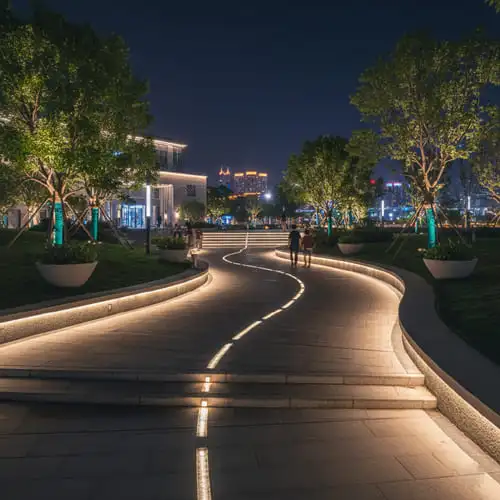
The "Wicking" Phenomenon
The most common failure mode we see is not the strip itself, but the wire. Water is surprisingly capable of traveling inside a wire jacket through capillary action. If you use a standard wire nut or a non-waterproof clip in a garden bed, moisture will enter the connection. Over time, it travels up the copper wire, right into the LED strip's solder pad. This causes corrosion from the inside out.
capillary action 4
We call this "wicking." To stop it, the barrier must be absolute.
Professional Connection Methods
For our project-grade clients, we recommend avoiding "easy clips" for outdoor use. While they are convenient, they rarely hold up against freeze-thaw cycles.
1. Soldering and Glue-Lined Shrink Tube
This is the gold standard.
- Solder the wires to the PCB.
- Apply a neutral-cure silicone sealant over the solder joint.
- Slide a piece of "dual-wall" heat shrink tubing over the area. This tubing has an inner layer of adhesive glue. When heated, the glue melts and fuses with the strip and wire, creating a hermetic seal.
2. IP68 Screw Connectors
For connections that might need maintenance, use waterproof screw connectors with O-rings. These are bulky but effective.
3. Gel-Filled Junction Boxes
If you are burying connections underground, use a junction box filled with potting gel. This encapsulates the wires completely, preventing any contact with groundwater.
Voltage Drop and Cable Selection
Another factor in outdoor connections is the length of the run. Landscape lighting often involves long distances.
- 12V Systems: High current, high voltage drop. Good for short runs (under 5 meters).
- 24V Systems: Lower current, less voltage drop. Better for longer runs (up to 10 meters).
Using 24V COB strips allows you to use thinner wires and have fewer injection points, which means fewer potential leak points in your system.
| Connection Method | Waterproof Rating | Installation Difficulty | Reliability |
|---|---|---|---|
| Plastic Clip | IP20 (None) | Very Low | Very Low (Do not use outdoors) |
| Heat Shrink + Glue | IP65/IP67 | Medium (Requires heat gun) | High |
| Resin/Gel Filled | IP68 | High (Messy) | Extreme (Permanent) |
Which IP rating ensures the best longevity for harsh weather conditions?
We design our product lifecycles to withstand extreme temperature fluctuations. Our data shows that selecting the correct rating directly correlates to reduced maintenance costs for contractors.
For harsh weather involving temperature swings and heavy rain, IP67 solid silicone extrusion offers the best longevity. Its thermal expansion matches the PCB, preventing internal wire breakage. While IP68 is tougher, its rigidity can cause stress fractures in freezing conditions if not specifically designed for that environment.
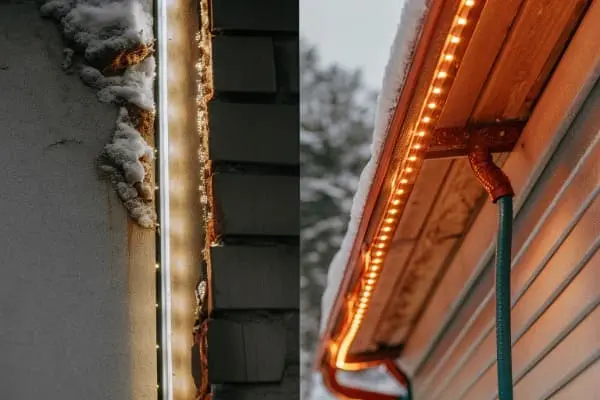
Thermal Expansion and Contraction
In outdoor environments, the temperature swing is a silent killer. A strip might face 40°C in the afternoon sun and drop to 5°C at night. Materials expand and contract at different rates.
heat sink 6
- The Problem: If the casing (plastic) expands more than the internal PCB (copper), it pulls on the internal wires and solder joints. Eventually, a connection breaks, and a section of LEDs goes dark.
- The Solution: Solid silicone extrusion. Silicone has excellent elasticity. It moves with the PCB rather than fighting against it. This reduces mechanical stress on the electronic components.
Heat Dissipation in Waterproof Strips
COB strips produce heat. When we wrap them in thick waterproofing material, we are essentially putting them in a winter coat. If that heat cannot escape, the LEDs will degrade faster.
thermal expansion 7
- IP67/IP68 Requirement: You must install these strips in an aluminum channel. The aluminum acts as a heat sink, pulling thermal energy away from the strip and dissipating it into the air or ground.
- Longevity Impact: A COB strip running at 60°C will last 50,000 hours. If it runs at 85°C because of thick waterproofing and no aluminum channel, it might only last 15,000 hours.
Environmental Resistance: Salt and Chemicals
For our clients in coastal regions (like parts of Australia) or those lighting pool areas, water isn't the only threat. Salt spray and chlorine are corrosive.
voltage drop 8
Standard IP67 silicone is generally resistant to salt. However, if you are near a swimming pool, you need to check if the silicone is "chlorine resistant." Standard silicone can become porous when exposed to high levels of chlorine gas over time. For these specific harsh environments, we often customize the outer casing formula to ensure chemical resistance.
marine-grade silicone 9
Summary of Longevity Factors
To ensure your installation lasts the full 5-year warranty period:
- Use 24V COB Strips: Lower current means less heat generation.
- Choose Solid Silicone IP67: Best balance of protection and thermal elasticity.
- Install in Aluminum: Essential for heat management.
- Seal Ends Properly: Use glue-lined caps, not just tape.
Conclusion
Choosing the right IP rating protects your reputation. We recommend IP67 for versatility and IP68 only for water features to ensure lasting project success.
condensation can form 10
Footnotes
- Official definition of the international standard for ingress protection. ↩︎
- Industry authority detailing the properties and uses of PVC. ↩︎
- General background information on the physics of light propagation. ↩︎
- Scientific explanation of how water moves through narrow spaces like wires. ↩︎
- International standard for corrosion tests in artificial atmospheres. ↩︎
- Department of Energy guidance on LED thermal management requirements. ↩︎
- Academic explanation of how materials change size with temperature. ↩︎
- Technical guidance from a marine electrical manufacturer on circuit sizing. ↩︎
- Manufacturer specifications on silicone rubber properties and durability. ↩︎
- Government scientific explanation of moisture formation due to temperature changes. ↩︎

 English
 Spanish
 German
 Russian
 Arabic
 French
 Portuguese