Every week, our team reviews LM-80 reports 1 from LED chip suppliers before we commit to any production run — and we've seen everything from pristine original documents to suspiciously vague one-page summaries.
To verify an LM-80 report, confirm it originates from the LED chip manufacturer, check that the testing lab holds recognized accreditation (such as NVLAP or CNAS), ensure the test ran at least 6,000 hours across multiple case temperatures, and review the raw lumen and color maintenance data — not just a summary statement.
This guide walks you through exactly what to check, what red flags to watch for, and how to use LM-80 data to protect your lighting project from long-term failures recognized accreditation 2. Let's start with the basics of authentication.
How can I verify that the LM-80 report provided by my LED supplier is authentic and up to date?
We have rejected suppliers in the past simply because they could not produce an original, unedited LM-80 report — and that single check saved our clients from installing subpar LED strips on a major hotel project DLC listings 3.
Verify authenticity by matching the LED model and bin codes on the report to your actual product, confirming the testing laboratory's accreditation on official directories like NVLAP or EPA's recognized lab list, and checking the report issue date is within a reasonable timeframe for the product generation.
Start With the Source: Who Issued the Report?
An LM-80 report should come from the LED chip or package manufacturer — companies like Lumileds, Samsung, Cree, or Osram chromaticity shift data (Δu'v') 4. LED chip manufacturer 5 It is not something a strip assembler generates. When our engineering team receives a report, the first thing we check is the header TM-21 extrapolation 6. The report must name the chip manufacturer and the accredited lab that performed the testing.
If your supplier hands you a report with their own company logo on it and no reference to a recognized test lab, that's a red flag. The report is either a copy with modifications or a self-generated summary — neither of which holds value for certification.
Check Lab Accreditation
The testing laboratory must be accredited. For projects targeting ENERGY STAR 7 or DLC listings, the lab needs to appear on the EPA's recognized laboratory list. For international projects, look for accreditation from bodies like NVLAP 8, A2LA, CNAS, or ILAC member organizations.
You can verify accreditation online. NVLAP maintains a searchable directory. CNAS 9 has one too. If the lab name on the report does not appear in any accredited directory, the report is unreliable.
Match the Product Details
The report must match the exact LED package you are using. This means verifying:
- LED model number
- Color temperature (CCT)
- Drive current
- Bin code or lot information
A report for a 3000K LED does not validate a 5000K variant. A report tested at 350mA does not cover a strip running at 700mA.
Confirm the Test Duration and Date
LM-80-20 requires a minimum of 6,000 hours 10 of testing. Many premium chip makers now test to 10,000 hours or beyond. Check the test initiation date and the report issue date. If a report is older than five years, ask whether the chip generation has changed. Older reports may still be technically valid, but they may not reflect current manufacturing processes.
| Verification Item | What to Check | Where to Confirm |
|---|---|---|
| Testing Lab | Lab name and accreditation number | NVLAP, CNAS, or EPA lab directory |
| LED Package | Model number, CCT, drive current | Compare to your BOM or supplier spec sheet |
| Test Duration | Minimum 6,000 hours | Look for data points at 1k, 2k, 3k, 4k, 6k hrs |
| Report Date | Issue date vs. product generation | Ask supplier for production date of chips |
| Raw Data | Full tables and graphs, not summaries | Request complete report, not excerpts |
Watch for Common Red Flags
Some suppliers provide a one-page "LM-80 certificate" with a single line saying the product "complies with LM-80." This tells you nothing. A real LM-80 report is often over 100 pages. It contains raw measurement data at every 1,000-hour interval, for every temperature subset, for every sample.
If the report is short, lacks data tables, or does not specify test temperatures, do not accept it. Ask for the full original file — ideally a PDF directly from the chip manufacturer.
What specific technical metrics should I look for in the report to ensure my LED strips maintain color consistency?
On our production lines, we test every reel of LED strip for color consistency before shipment — but that final-step QC only works if the upstream LED chip data is solid, and that starts with reading the LM-80 report correctly.
Focus on chromaticity shift data (Δu'v') reported at each temperature and time interval. The LM-80 report tracks changes in color coordinates over thousands of hours, and any shift exceeding 0.007 Δu'v' signals potential visible color drift that can ruin architectural lighting uniformity.
Understanding Chromaticity Maintenance Data
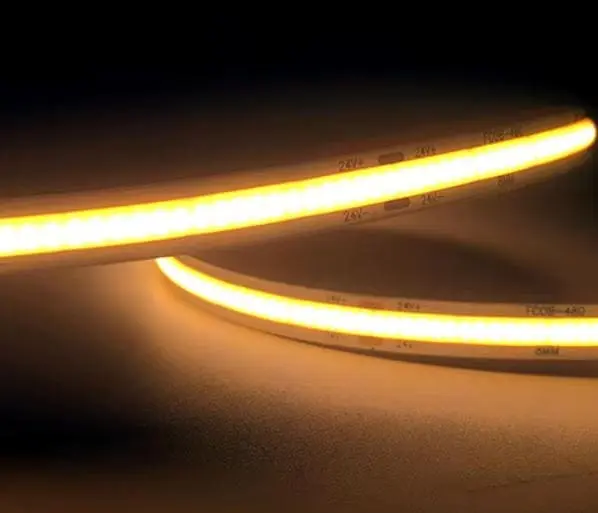
LM-80 does not only measure brightness. It also tracks color shift over time. The report records chromaticity coordinates (u', v') at every measurement interval — typically every 1,000 hours. The shift is expressed as Δu'v', which is the total change from the initial color point.
For architectural projects — cove lighting, facade illumination, hospitality interiors — even a small color shift becomes visible when strips are installed side by side over long runs. A Δu'v' above 0.007 is generally considered noticeable to the human eye.
Key Color Metrics in the Report
When reviewing the LM-80 report for color data, look for these specific items:
| Metric | What It Tells You | Acceptable Range |
|---|---|---|
| Initial chromaticity (u', v') | Starting color point of the LED | Should match your target CCT bin |
| Δu'v' at 6,000 hours | Total color shift after test period | < 0.007 for most architectural applications |
| Δu'v' at highest temperature | Worst-case color shift scenario | Lower is better; compare across temps |
| Color maintenance curve | Trend of shift over time | Should be stable, not accelerating |
Why Temperature Matters for Color
The LM-80 standard requires testing at a minimum of three case temperatures — typically 55°C, 85°C, and one additional temperature chosen by the manufacturer. Color shift tends to worsen at higher temperatures. This matters because the actual operating temperature of your LED strip inside an aluminum channel or behind a diffuser may be significantly higher than room temperature.
When we design custom strips for enclosed installations — like recessed profiles or outdoor IP67 extrusions — we pay close attention to the 85°C data set. If the chromaticity shift is already trending upward at 85°C after 6,000 hours, the LEDs may exhibit visible color change within two to three years in a real-world enclosed application.
Drive Current: The Hidden Variable
The LM-80 report tests LEDs at a specific drive current. If your LED strip operates at a higher current than what was tested, both lumen depreciation and color shift will accelerate. Always cross-reference the drive current listed in the LM-80 report with the actual operating current in your strip design.
For example, if the report tests at 65mA per LED and your strip drives each LED at 80mA, the LM-80 data underestimates degradation. This is a common oversight — and one we flag during our design review process with clients who request custom current configurations.
Don't Ignore the Raw Data
Some suppliers provide only averaged data or summary graphs. This can mask outliers. If one sample out of twenty shows rapid color drift, an average graph may hide that. Request the raw data tables. Look at individual sample readings. Consistency across samples matters as much as the average result.
How does the lumen maintenance data in the LM-80 report impact the long-term performance of my custom lighting project?
When we help clients spec out LED strips for five-year or ten-year project lifecycles, the conversation always comes back to one question: how much light will these LEDs lose over time? The LM-80 report is where the answer begins.
Lumen maintenance data from LM-80 shows the percentage of original light output retained over thousands of hours at specific temperatures. Combined with TM-21 extrapolation, this data predicts when LEDs will drop below acceptable brightness levels, directly influencing your project's maintenance schedule and total cost of ownership.
What Lumen Maintenance Actually Means
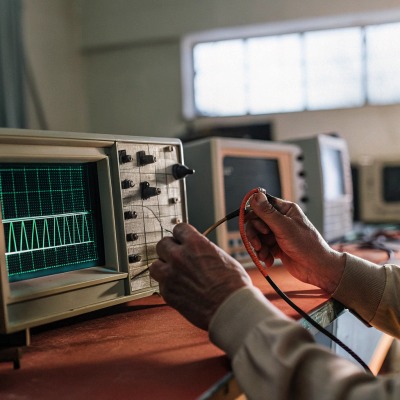
Lumen maintenance is expressed as a ratio: current lumens divided by initial lumens. A value of 0.95 at 6,000 hours means the LED retains 95% of its original brightness at the tested temperature after 6,000 hours of operation. This metric is reported for each temperature subset in the LM-80 report.
For project planning, the industry commonly references L70 — the point at which an LED retains 70% of its initial output. Most commercial and architectural specifications consider L70 to be the practical end of useful life. But LM-80 itself does not predict L70. That projection comes from TM-21.
How LM-80 and TM-21 Work Together
LM-80 provides the raw data. TM-21 is the mathematical standard that extrapolates that data to project future performance. If the LM-80 report shows steady, predictable decay over 6,000 or 10,000 hours, TM-21 can project an L70 lifetime — but only up to 6 times the test duration.
So if your LM-80 test ran for 10,000 hours, TM-21 can project up to 60,000 hours. This is a critical point: the longer the LM-80 test, the further TM-21 can project. This is why we always prefer working with chip suppliers who test to 10,000 hours or more.
Temperature and Lumen Life: The Real-World Connection
Here's where LM-80 data becomes directly actionable. The report provides lumen maintenance data at multiple temperatures. Higher temperatures always produce faster depreciation.
| Case Temperature | Lumen Maintenance at 6,000 hrs | Projected L70 (via TM-21) |
|---|---|---|
| 55°C | 97.5% | > 60,000 hours |
| 85°C | 94.2% | ~50,000 hours |
| 105°C (custom) | 90.1% | ~36,000 hours |
These numbers are illustrative but reflect real-world patterns. The difference between 55°C and 105°C can cut projected lifetime nearly in half. For our clients installing strips in tight aluminum profiles or behind decorative panels, we always recommend checking the higher-temperature dataset — because that's closer to real operating conditions.
In-Situ Temperature: Bridging the Gap
LM-80 tests LED packages in controlled lab conditions. Your actual luminaire has heat sinks, drivers, ambient temperatures, and airflow characteristics that the lab did not replicate. This is where in-situ temperature measurement (ISTMT) becomes important.
DLC, for example, now requires TMP_LED photos showing the actual LED case temperature inside the finished luminaire. If your strip runs at a case temperature of 75°C inside its profile, you should reference the LM-80 data closest to that temperature — typically the 85°C dataset — for a conservative estimate.
Planning Maintenance and Replacements
For a five-year project, an LED with L70 at 60,000 hours is likely fine — it will retain roughly 90% of its brightness by year five (assuming typical operating hours). But for a ten-year specification, you need to dig deeper. Request TM-21 calculations from your supplier. Ask which temperature dataset they used. If they used the 55°C data but your strip runs hotter, their claim overstates the real performance.
We've seen projects where the original specification promised 50,000-hour L70, but the actual installation temperatures pushed effective L70 down to 30,000 hours. That's a costly re-lamping cycle that nobody budgeted for. Reading the LM-80 report carefully — and matching it to your real conditions — prevents this.
Can I rely on my supplier's LM-80 report to meet the strict certification requirements for my project bidding?
Our clients in Australia and Germany regularly submit lighting documentation for project approvals, and we've learned the hard way that a technically valid LM-80 report can still be rejected if it doesn't meet the specific format and accreditation requirements of the certifying body.
You can use your supplier's LM-80 report for certification if it comes from an accredited lab recognized by the relevant program (ENERGY STAR, DLC, or local standards), covers the exact LED component in your product, includes complete raw data at all required temperature subsets, and is supplemented with a valid TM-21 projection.
Certification Bodies Have Specific Requirements
Different programs have different rules. DLC requires LM-80 reports from labs on their accepted list. ENERGY STAR has its own recognized laboratory directory. If your project targets a specific green building rating or government procurement standard, check which certifications are needed first — then verify the LM-80 report meets those exact requirements.
What Certification Reviewers Actually Check
When a DLC or ENERGY STAR reviewer evaluates your application, they don't just glance at the report. They examine:
- Lab accreditation status at the time of testing
- LED model number match to your product listing
- Complete data tables (not summaries)
- Temperature subsets (at least three)
- Test duration (minimum 6,000 hours)
- Chromaticity data alongside lumen data
- TM-21 report as a separate supplemental document
If any of these items are missing, your application gets rejected or delayed. We've seen clients lose bidding deadlines because their supplier provided an incomplete LM-80 package.
The Grandfathering Issue
Older LM-80 reports — those generated under LM-80-08 rather than LM-80-15 or LM-80-20 — may or may not be accepted depending on the program. ENERGY STAR has periodically updated its requirements and set cutoff dates for older report formats. Always confirm with the certifying body whether the report version is still accepted.
Common Reasons for Certification Rejection
| Rejection Reason | How to Prevent It |
|---|---|
| Lab not on recognized list | Verify lab accreditation before ordering chips |
| LED model mismatch | Cross-check LM-80 report model with your BOM |
| Missing chromaticity data | Request full report, not just lumen data |
| No TM-21 supplement | Ask chip manufacturer for TM-21 calculation |
| Test duration under 6,000 hours | Reject any report with less than 6,000 hours |
| Outdated report version (LM-80-08) | Confirm program accepts the report revision |
Practical Steps Before You Bid
Before you submit your bid, create a documentation package that includes:
- The original LM-80 report (full PDF, not excerpts)
- A TM-21 calculation report referencing the LM-80 data
- Lab accreditation certificate or link to the accreditation directory listing
- A product traceability document linking the LED chip model in the report to the exact LED strip model in your bid
When we prepare documentation for our clients, we compile all four items and review them against the target certification's checklist. This proactive approach has helped our partners win bids in competitive markets like Germany and Australia where documentation rigor is high.
The Bigger Picture: LM-80 Is Necessary But Not Sufficient
An LM-80 report covers the LED component — not the finished luminaire. For a complete certification package, you may also need LM-79 testing on the finished LED strip or luminaire, which measures total luminous flux, efficacy, color rendering, and power consumption at the product level. LM-80 and LM-79 serve complementary roles: LM-80 validates the LED component's longevity, while LM-79 validates the finished product's photometric performance.
If your project requires both, make sure your supplier can provide or facilitate both reports. Some testing labs offer bundled services, and working with a supplier who understands the full documentation chain — as we do for our OEM partners — saves significant time and avoids costly resubmissions.
Conclusion
Verifying an LM-80 report takes effort, but it protects your project from premature failures, certification rejections, and costly surprises. Demand the full original report, check every detail, and never settle for a summary.
Footnotes
- Explains the IES LM-80 standard for measuring LED lumen maintenance. ↩︎
- Found an authoritative government source (NIST) for NVLAP, which is a recognized accreditation body for testing laboratories. ↩︎
- Provides access to the DesignLights Consortium Qualified Products List. ↩︎
- Explains the CIE 1976 (u',v') chromaticity diagram and Δu'v'. ↩︎
- Provides an overview of companies manufacturing LED chips. ↩︎
- Official IES page for the TM-21 standard on lumen maintenance projections. ↩︎
- Provides information on ENERGY STAR certified lighting products. ↩︎
- Official site for the National Voluntary Laboratory Accreditation Program. ↩︎
- Found the official website for the China National Accreditation Service for Conformity Assessment (CNAS). ↩︎
- Confirms the minimum test duration requirement for LM-80. ↩︎


 English
 Spanish
 German
 Russian
 Arabic
 French
 Portuguese