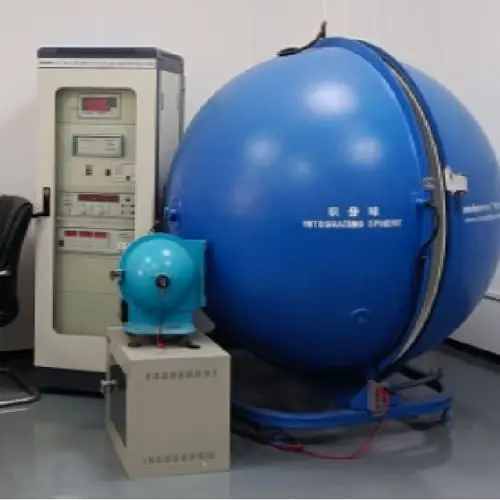
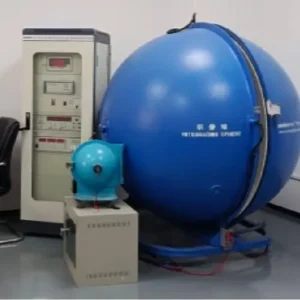
When we test new batches of COB strips in integrating spheres 1, we often find a significant gap between the theoretical brightness of the LED chip and the actual output of the finished strip. Many buyers focus purely on the price per meter, ignoring the hidden costs of inefficient lighting LED Source Efficacy 2. If you are sourcing for large commercial projects, vague data sheets can lead to massive energy waste and disappointed clients.
To accurately determine luminous efficacy, you must ask suppliers for the system efficacy of the fully assembled strip at its operating temperature, not the theoretical efficacy of the bare LED chip. Always calculate this by dividing the total measured lumen output by the total wattage consumed per meter.
Here is how you can dig deeper into the data and get honest answers from your lighting partners.
How can I verify the actual luminous efficacy of my COB LED strips before I place a bulk order?
Whenever we send samples to our clients in Germany or Australia, we encourage them to look beyond the printed label LM-79-08 or LM-79-19 test report 3. In our production facility, we know that the phosphor coating on COB strips—the very thing that makes them "dotless"—also acts as a filter that reduces light output compared to traditional SMD LEDs.
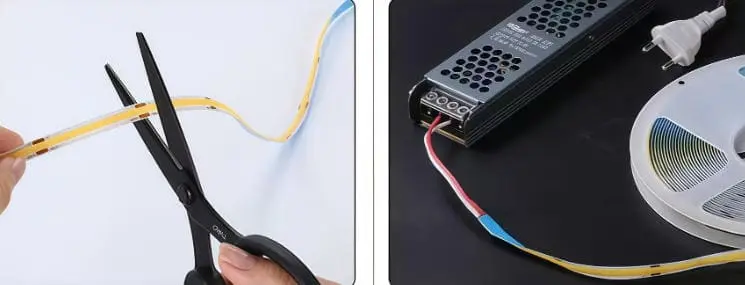
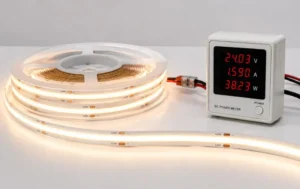
You can verify efficacy by requesting a working sample and measuring the current draw and illuminance using a bench power supply and a lux meter. Divide the measured lumens by the calculated wattage (Voltage × Current) to get the real-world lm/W figure, which often differs from marketing claims.
The Difference Between Chip and System Efficacy
The most common trick in the industry is quoting the LED Source Efficacy. This is the efficiency of the bare diode inside a lab environment, often tested instantly (pulse test) before heat builds up under-driving technique 4. However, COB strips are unique. They are covered by a continuous layer of silicone mixed with phosphor.
When we manufacture these strips, we apply this coating to create uniform light. However, this layer absorbs some light, and the Flexible PCB (FPCB) has resistance that consumes power. Therefore, you need the System Efficacy.
Practical Verification Steps
If you do not have an integrating sphere, you can still perform a "sanity check" verification:
- Power Draw Test: Connect 1 meter of the strip to a DC power supply. Set the voltage (e.g., 24V) and read the current (Amps).
- Formula: Volts × Amps = Actual Wattage.
- Insight: If the spec sheet says 10W/m but your sample draws 12W/m, the efficiency is already lower than promised because you are burning more power for the same light.
- Lux Comparison: Place the COB strip in a dark box at a fixed distance (e.g., 1 meter) from a lux meter. Compare it against a "Gold Sample" (a strip of known efficacy). While not a perfect absolute measurement, it immediately reveals if the new supplier is dimmer than your standard.
Understanding the "Dotless" Penalty
High-density COB strips (e.g., 480 chips/meter) look beautiful because of that thick phosphor layer. However, that layer creates a trade-off.
| Metric | Bare LED Chip (Source) | Finished COB Strip (System) |
|---|---|---|
| Measurement Point | Directly on the diode | After phosphor & PCB losses |
| Typical Efficacy | 160–180 lm/W | 100–120 lm/W |
| Heat Factor | Instant test (25°C) | Continuous run (45°C–65°C) |
| Reliability | Theoretical Maximum | Actual Performance |
When you ask for data, specifically ask: "Is this data from the bare chip testing or the finished strip testing?" The answer will tell you a lot about the supplier's honesty.
What specific IES test reports should I request from my supplier to confirm the lm/W performance?
When we prepare documentation for project bids, we know that a simple PDF datasheet is rarely enough for a professional lighting designer. Our engineering team spends considerable time generating standardized reports because "trust me" doesn't work for million-dollar installations.
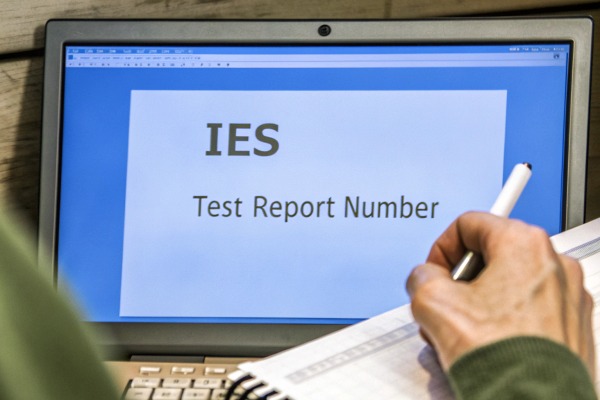
Request a valid LM-79-08 or LM-79-19 test report generated by an accredited laboratory for your specific specific model. This report provides the certified luminous flux, electrical power, and color characteristics needed to validate the supplier's efficacy claims objectively.
The Holy Grail: LM-79 Reports
The LM-79 (Approved Method for the Electrical and Photometric Measurements of Solid-State Lighting Products) is the industry standard. When you ask a supplier for this, you are telling them you know what you are doing.
A generic "CE Certificate" proves safety, not performance. An LM-79 report proves performance. It captures the strip's behavior after it has stabilized thermally (usually after 30 minutes of operation), not just at the moment it is turned on.
What to Look for in the Report
Do not just file the report away; read it. Here are the red flags we often see in competitors' reports:
- Test Date: Is the report five years old? LED technology improves every six months. Old reports mean old chip technology.
- Product Model: Does the model number on the report match the specific high-density COB strip you are buying? Suppliers often send a "best case" report for a different, high-efficacy product.
- Spectral Power Distribution (SPD): This graph shows the light quality.
Color Metrics vs. Efficacy
The report will also give you the Color Rendering Index (CRI) 6 and R9 values. There is a physical link between high light quality and efficacy.
- Low CRI (80): Higher Efficacy (easier to produce).
- High CRI (90+): Lower Efficacy (requires heavier phosphor mix).
If a supplier claims 150 lm/W and CRI 98 for a COB strip, be very skeptical. That is pushing the boundaries of current physics for mass-market products. You need to see the IES file to confirm this.
Checklist for Supplier Requests
Use this table to track what documents you have received.
| Document Name | Purpose | What to Check |
|---|---|---|
| LM-79 Report | Verifies current lumen output & wattage. | Check "Total Luminous Flux" vs. "Input Power". |
| LM-80 Report | Predicts the lifespan of the LED chip. | Check testing duration (e.g., 6000 hours). |
| TM-21 Projection | Estimates when the light will fade (L70). | Ensure it's based on the LM-80 data provided. |
| IES / LDT File | For lighting simulation software (Dialux). | Load it to see the actual beam angle and throw. |
How does the energy efficiency of high-density COB strips impact my project's total power consumption?
In our dealings with hotel contractors, we often see initial budget estimates that only account for the cost of the LED strips, completely missing the infrastructure costs. When we help them recalculate, they realize that a "cheap" inefficient strip is actually a budget killer.
High-density strips with low efficacy require significantly more power to achieve target brightness, forcing you to purchase larger power supplies and thicker cabling. Choosing a higher lm/W strip reduces the total electrical load, lowering installation hardware costs and long-term electricity bills.
The Multiplier Effect of Low Efficacy
High-density COB strips (320 to 512 LEDs per meter) are power-hungry by design. To get that seamless line of light, we pack chips closely together.
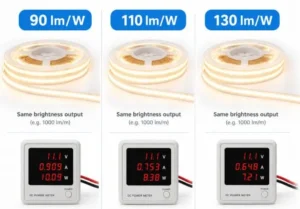
If you choose a strip with 80 lm/W versus a premium one with 110 lm/W, the difference might seem small. But to get the same 1000 lumens of light:
- 110 lm/W Strip: Needs ~9 Watts per meter.
- 80 lm/W Strip: Needs ~12.5 Watts per meter.
For a small room, this doesn't matter. For a hotel façade requiring 2,000 meters of light, that is a difference of 7,000 Watts.
Impact on Drivers and Cooling
That extra 7,000 Watts isn't just electricity cost. It dictates your hardware:
- Power Supplies (Drivers): You will need 30-40% more drivers. If you were using 100 units of 300W drivers, you now need 130 units. That is a massive capital expense.
- Cabling: Higher wattage means more current. More current requires thicker copper wires to prevent voltage drop and fire risks.
- Thermal Management: The "lost" energy in an LED turns into heat. The inefficient strip runs hotter. High-density COB strips already struggle with heat because the chips are so close. Adding inefficiency shortens the lifespan of the strip, leading to early failure and replacement costs.
Total Cost of Ownership (TCO) Analysis
Here is a simplified breakdown for a 500-meter project running 12 hours a day. Total Cost of Ownership (TCO) 7
| Feature | Standard COB Strip | High-Efficacy COB Strip |
|---|---|---|
| Efficacy | 80 lm/W | 120 lm/W |
| Brightness Target | 1000 lm/m | 1000 lm/m |
| Power Required | 12.5 W/m | 8.3 W/m |
| Total System Load | 6,250 Watts | 4,150 Watts |
| Driver Capacity (w/ 20% headroom) | ~7,500 Watts needed | ~5,000 Watts needed |
| Annual Energy Cost ($0.15/kWh) | ~$4,100 | ~$2,725 |
You save nearly $1,400 a year just on electricity, plus the upfront savings on buying fewer drivers.
How can I balance high brightness with luminous efficacy in my custom COB lighting design?
We frequently work with designers who want "everything"—maximum brightness, perfect color rendering, and low power consumption. At our factory, we have to explain the physics: you can have two, but rarely all three at the extreme level. Balancing these factors is an art of compromise.
To balance brightness and efficacy, avoid over-driving the LEDs; instead, select a strip with a higher chip count running at a lower current per chip. This "under-driving" technique increases efficacy and thermal stability while maintaining the high brightness levels required for your design.
The Current vs. Efficacy Curve
The secret to high efficacy in COB design is how hard you drive the chips.
- Over-driving: Pushing high current through the LED makes it very bright, but efficacy drops drastically, and heat skyrockets.
- Under-driving: Using more chips but running them at 50% capacity keeps them in their "sweet spot" of efficiency.
When you ask for a custom solution, ask us (or your supplier): "Can we increase the chip density but lower the current to hit my lumen target?" This usually costs a bit more (more chips used) but results in a far superior product.
The CRI Tax
We briefly mentioned this earlier, but it is critical for design balance.
- CRI 90+: Essential for high-end retail, museums, and residential spaces. The light looks natural, but you lose about 15-20% of your brightness per watt compared to CRI 80.
- CRI 80: Perfectly acceptable for indirect cove lighting, hallways, or outdoor signage.
If your design hides the light source in a cove (indirect light), do you really need CRI 97? Probably not. Dropping to CRI 90 or 85 can gain you significant brightness and efficiency.
Voltage and PCB Width
For high-brightness designs, the physical strip construction matters.
- 24V vs 12V: Always choose 24V (or 48V) for high-density COB. Higher voltage means lower current, which means less heat lost in the PCB copper.
- PCB Width: A 10mm wide PCB handles heat better than an 8mm PCB. A cooler LED is a more efficient LED.
- Copper Weight: Ask for "3oz" or "4oz" copper PCB for high-power strips. Standard is 2oz. More copper reduces resistance, boosting system efficacy.
Decision Matrix for Customization
| Priority | Design Adjustment | Trade-off |
|---|---|---|
| Max Efficacy | Use Cool White (6000K), Lower CRI (80), Under-drive chips. | Light may feel "sterile" or less cozy. |
| Max Quality | Use High CRI (95+), Warm White (2700K). | Efficacy drops; requires more power for same brightness. |
| Max Run Length | Use 48V or Constant Current IC design. | Higher cost per meter; specialized drivers needed. |
Conclusion
Asking for luminous efficacy on dotless COB strips is not just about getting a single number; it is about understanding the system behind the light. By shifting your questions from "theoretical chip data" to "measured system performance," requesting valid LM-79 reports, and considering the total impact on your power infrastructure, you protect your project from hidden costs and failures. As the industry moves toward higher efficiency, your ability to decipher these specifications will differentiate your projects, ensuring they are not just bright, but smart and sustainable.
Footnotes
- Explains how integrating spheres are used for precise luminous flux determination. ↩︎
- Explains LED package efficacy, which is the efficiency of the bare LED chip. ↩︎
- Official standard for optical and electrical measurements of solid-state lighting products. ↩︎
- Explains how a low drive current can increase LED fixture efficacy. ↩︎
- Differentiates luminous efficacy (source) from luminaire efficacy (system). ↩︎
- Defines CRI as a quantitative measure of a light source's ability to reveal colors. ↩︎
- Explains TCO as a calculation quantifying the total cost of a product or service over its lifecycle. ↩︎
- Provides a comprehensive definition of luminous efficacy and its measurement. ↩︎

 English
 Spanish
 German
 Russian
 Arabic
 French
 Portuguese