
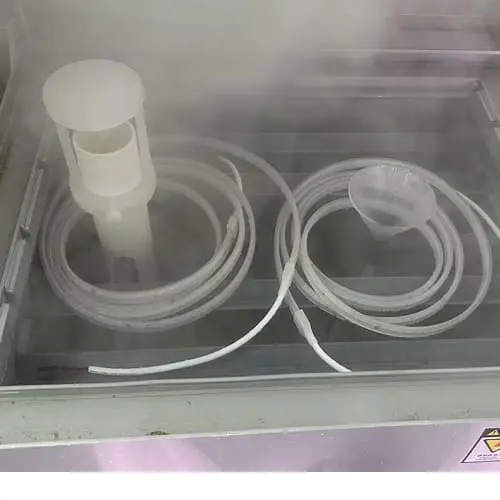
When we receive inquiries from contractors in Queensland or Western Australia, the conversation almost always turns to the harsh reality of the ocean air ILAC-MRA signatory 1. We have seen projects where standard lighting fixtures crumbled within months because the salt accumulation was underestimated. In our engineering lab, we treat salt spray testing 2 not just as a checkbox, but as a critical predictor of whether a product will survive the aggressive marine environments typical of Australian coastlines.
To ensure compliance and durability in Australian coastal areas, you need Neutral Salt Spray (NSS) test reports referenced to AS 2331.3.1 or its international equivalents, ASTM B117 and ISO 9227. These reports must verify that the product has withstood exposure for 48 to over 1000 hours, depending on the corrosivity zone, without showing signs of red rust, blistering, or electrical failure.
Here is a detailed breakdown of the specific documentation and verification steps you need to protect your project.
Which specific salt spray test certifications do I need for my Australian coastal lighting project?
In our experience supplying projects near Sydney Harbour, generic "weatherproof" claims simply do not hold up against the scrutiny of local inspectors National Construction Code 3. When we prepare documentation for these bids, we focus heavily on alignment with recognized standards to prove the longevity of our LED strips and connectors.
You specifically need test reports that certify compliance with AS 2331.3.1 (Methods of test for metallic and related coatings), which is the Australian standard for neutral salt spray testing. Alternatively, reports citing ISO 9227 or ASTM B117 are widely accepted if they specify the duration and pass/fail criteria relevant to Australian atmospheric corrosivity categories C3, C4, or C5.
Understanding the Hierarchy of Standards
Navigating the alphabet soup of certification standards can be confusing. However, for the Australian market, the hierarchy is relatively clear. While global standards are common, local standards take precedence in strict government or infrastructure projects.
The primary document you will encounter is AS 2331.3.1. This standard outlines the specific methodology for the Neutral Salt Spray (NSS) test 4. It dictates the concentration of the saline solution (usually 5% sodium chloride), the pH level (6.5 to 7.2), and the temperature of the chamber (35°C).
However, because many lighting products are manufactured globally, you will frequently see ASTM B117 (the American standard) or ISO 9227 (the International standard). Fortunately, the physical testing methods in these standards are nearly identical to the Australian version. The critical difference lies in how the results are interpreted regarding local environmental zones.
Corrosivity Zones and Required Testing Hours
A report is useless if it does not correlate to the environment where the lights will be installed. Australia is divided into corrosivity zones 5. A light installed in a warehouse in Alice Springs (Zone C1) has very different requirements than a facade light in Gold Coast (Zone C5).
We group these requirements to help our clients choose the right validation:
| Corrosivity Category | Typical Environment | ISO 9227 6 / AS 2331 Test Duration (Hours) | Typical Application |
|---|---|---|---|
| C1 / C2 | Dry, rural, or low pollution | 24 - 48 Hours | Indoor residential, dry commercial. |
| C3 | Medium pollution, some salt influence | 96 - 240 Hours | Sheltered outdoor areas, light industrial. |
| C4 | High salinity, coastal areas | 480 - 720 Hours | Direct coastal frontage, swimming pools. |
| C5 / CX | Extreme salinity, offshore | 1000 - 3000+ Hours | Piers, jetties, beachfront promenades. |
The Importance of "Neutral" Salt Spray
When requesting certifications, ensure the report specifies NSS (Neutral Salt Spray). There are other types, such as ASS (Acetic Acid Salt Spray) or CASS (Copper-Accelerated Acetic Acid Salt Spray), which are more aggressive and used for different material types like decorative copper-nickel-chromium coatings. For general LED lighting fixtures, aluminum housing, and PCB protection, the NSS test is the industry benchmark for verifying resistance to the chloride atmosphere found on the coast.
How do I verify if my supplier's salt spray test report meets Australian durability standards?
When we audit our own raw material providers, we often find reports that look professional but lack substance. We have learned to look past the cover page and scrutinize the data, ensuring that the test conditions actually match the reality of what the product will endure in a place like Perth or Darwin.
To verify a report, check that it is issued by a NATA-accredited lab or an ILAC-MRA signatory, ensuring the data is internationally recognized. You must confirm the report explicitly states the test duration, the specific salt solution concentration used, and includes photographic evidence of the sample before and after testing to validate the "pass" result.
The Accreditation Check
The first thing to look for is the accreditation logo. In Australia, NATA (National Association of Testing Authorities) is the gold standard. A report from a NATA-accredited lab 8 is virtually indisputable in a legal or compliance dispute.
Since many lighting products are imported, you might not always see a NATA logo. In this case, look for the ILAC-MRA (International Laboratory Accreditation Cooperation - Mutual Recognition Arrangement) mark. This indicates that the foreign lab's accreditation is recognized as equivalent to NATA. If a report comes from a factory's internal lab with no third-party stamp, treat it with extreme caution. It may be useful for internal R&D, but it carries little weight for official project compliance.
Scrutinizing the "Result" Section
A common trick in the industry is to claim a "Pass" without defining what that means. Does "Pass" mean the light still turns on? Or does it mean there is zero rust?
For Australian coastal standards, you should look for specific failure criteria in the report. The report should explicitly mention:
- Appearance: No signs of red rust on iron-based parts or white rust on aluminum/zinc parts.
- Blistering: No bubbling of the coating or silicone sleeve.
- Creep: No corrosion spreading from the edges or scribe lines (if scratched).
- Functionality: The unit must be electrically safe and operational after the test.
Verification Checklist
Use this checklist when reviewing supplier documentation:
| Verification Step | What to Look For | Red Flag Warning |
|---|---|---|
| Lab Status | ILAC-MRA or NATA logo | No accreditation or "Internal Lab" only |
| Test Standard | AS 2331, ASTM B117 9, or ISO 9227 | "Factory Standard" or unspecified method |
| Sample ID | Clear photos of your specific product | Generic stock photos or diagrams |
| Test Hours | Clearly stated (e.g., 720h) | Vague terms like "Long duration" |
| Date of Issue | Recent (last 2-3 years) | Reports older than 5 years (materials change) |
The "Hours" vs. "Years" Misconception
We often have to clarify to clients that test hours do not directly convert to years of service. A 1000-hour salt spray test does not guarantee the product will last 1000 hours (or 10 years) outdoors. The test is a method of comparison and quality control. It verifies that the coating quality is sufficient to give the product a fighting chance. However, if a supplier shows you a 1000-hour report, it is a strong indicator of high-quality materials suitable for C4 or C5 zones.
What are the risks to my project if I don't have the correct salt spray documentation?
We once rushed a replacement shipment to a client whose original supplier had provided fake test reports. The "waterproof" lights had corroded at the solder joints within three months, causing a section of the installation to go dark. It was a costly lesson for them, not just in money, but in reputation.
Failing to secure valid salt spray documentation exposes your project to rapid structural corrosion, electrical shorts, and potential fire hazards, which can void insurance policies. Furthermore, using non-compliant materials in coastal zones often breaches the National Construction Code (NCC), leading to costly liability claims and the need for total system replacement.
The Hidden Cost of "Invisible" Corrosion
The most dangerous risk isn't always visible rust on the outside. In LED strips, salt mist penetrates microscopic gaps in the silicone or enters through poorly sealed end caps. Once inside, the salt reacts with the copper PCB (Printed Circuit Board) and the solder points.
This creates "creeping corrosion." You might not see it immediately, but the resistance in the circuit increases. Eventually, this leads to:
- Voltage Drop: Segments of the light strip become dimmer than others.
- Overheating: Increased resistance creates heat, which can melt the silicone casing.
- Arcing: In severe cases, the salt bridge causes a short circuit, posing a fire risk.
Without a test report verifying the ingress protection and corrosion resistance of the entire assembly (not just the housing), you are gambling with safety.
Financial and Legal Repercussions
In Australia, the NCC (National Construction Code) references standards like AS 4312 (Atmospheric corrosivity zones). If a failure occurs and an investigation reveals that materials unsuitable for a C4 or C5 zone were installed, the liability falls on the contractor or the specifier.
If you cannot produce a valid salt spray report during a defect liability period claim, the manufacturer will likely reject the warranty, citing "improper usage in harsh environments." This leaves you covering the cost of removal, new product procurement, and re-installation.
Cost Analysis: Compliant vs. Non-Compliant
The initial saving on non-tested products evaporates quickly when failure occurs.
| Cost Factor | Certified Coastal Product | Non-Certified Generic Product |
|---|---|---|
| Initial Unit Cost | High ($$$) | Low ($) |
| Installation Labor | Standard | Standard |
| Maintenance (Year 1-2) | Zero | High (Spot repairs/replacements) |
| Replacement Risk | Low (<1%) | High (>50% in coastal zones) |
| Total 5-Year Cost | Stable | 2x to 3x Initial Cost |
Insurance Implications
Public liability insurance is a major concern for commercial projects. If a corroded light fixture falls or causes an electrical fire, the insurance adjuster will ask for the technical specifications of the installed products. If the documentation does not match the environmental conditions (i.e., installing a non-tested product in a marine zone), the insurer may deny the claim. A valid salt spray test report is your primary defense in proving due diligence.
How can I ensure my customized LED strips will survive the high-salinity environment in Australia?
When we design custom runs for high-end coastal homes, we don't just rely on the outer casing. We advise our clients to look deeper at the internal components. We have found that the lifespan of an LED strip in a salty environment is determined by its weakest link, which is usually the solder pad or the connector.
To ensure survival, specify customized LED strips with 3-4oz rolled copper PCBs, gold-plated solder pads, and IP68-rated silicone extrusion (not PVC). Additionally, you must require that all cut points and connectors are factory-sealed with glue-filled caps or injection molding to prevent salt mist ingress at the joints.

Material Selection: The Core of Durability
Documentation proves the result, but material selection creates the result. If you are ordering customized strips for Australia, you need to specify the right BOM (Bill of Materials).
- PCB Thickness: Standard strips use 1oz or 2oz copper. For coastal areas, we recommend 3oz or 4oz copper. Thicker copper resists corrosion longer and manages heat better, which is crucial because heat accelerates chemical reactions (corrosion).
- Gold Plating: Ask for ENIG (Electroless Nickel Immersion Gold) finishing on the solder pads. Gold is non-reactive and provides a robust shield against salt, whereas standard OSP (Organic Solderability Preservative) or tin finishes will oxidize rapidly.
- Silicone vs. PVC vs. PU:
- PVC: Avoid. It hardens and cracks under Australian UV, letting salt in.
- PU (Polyurethane): Avoid. It yellows and degrades in high heat/humidity.
- Silicone: Mandatory. High-quality food-grade silicone is UV stable, chemically inert, and repels water.
The Critical Importance of Connectors
The most common failure point we see in "failed" salt spray tests is not the strip itself, but the connector. A simple clip-on connector is a corrosion trap. The salt mist enters the mechanism and eats away the contact points.
For Australian coastal projects, we strongly recommend:
- Factory Injection Molding: The power cable and the strip are fused together with liquid silicone during manufacturing. This eliminates the gap entirely.
- Glue-Filled End Caps: If you must cut the strip on-site, use end caps that are filled with neutral-cure silicone sealant.
- IP68 Rating: Ensure the product is rated IP68 (submersible) rather than just IP65 or IP67. While you may not submerge the light, the IP68 rating implies a higher level of sealing pressure that keeps pressurized salt mist out.
Installation Protocols for Longevity
Even the best product will fail if installed poorly. We always advise our clients to use marine-grade 316 stainless steel mounting clips or aluminum channels that have been anodized to at least 25 microns.
If you use standard aluminum profiles, the salt will corrode the aluminum, creating "white rust." This oxide layer can expand and physically damage the LED strip. Always ensure that the mounting hardware has its own salt spray test report matching the lifespan of the LED lights.
Conclusion
Navigating the requirements for Australian coastal lighting projects demands more than just trusting a datasheet. The high salinity, combined with intense UV exposure, creates an environment where only the most robust products survive. By insisting on NATA-accredited reports referencing AS 2331.3.1 or ISO 9227, understanding the nuances of corrosivity zones, and verifying the physical materials of your LED strips, you protect not only your reputation but also your client's investment. Corrosion is a patient enemy; your documentation is your best defense.
Footnotes
- Official information on the International Laboratory Accreditation Cooperation Mutual Recognition Arrangement. ↩︎
- Explains the purpose and methodology of salt spray testing as an accelerated corrosion test. ↩︎
- Official source for Australia's primary set of technical design and construction provisions for buildings. ↩︎
- Describes the NSS test as per ISO 9227, a key international standard for salt spray testing. ↩︎
- Provides guidelines for classifying atmospheric corrosivity zones in Australia and their effect on metals. ↩︎
- Found an authoritative overview of the ISO 9227 standard. ↩︎
- Official Australian standard for neutral salt spray testing of metallic and related coatings. ↩︎
- Official website of Australia's national accreditation body for testing and inspection services. ↩︎
- Explains the widely adopted American standard for operating salt spray (fog) apparatus. ↩︎


 English
 Spanish
 German
 Russian
 Arabic
 French
 Portuguese