
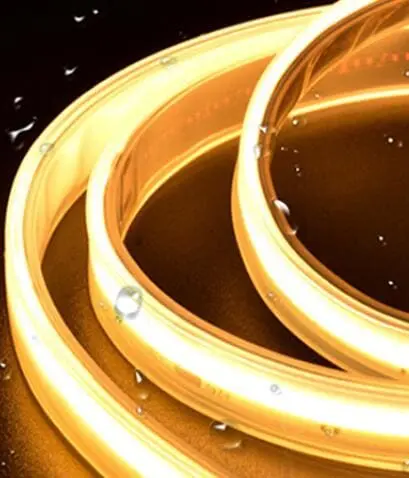
During our production runs, we often see clients struggle with sleeves that crack or turn yellow UV radiation 1. We want your projects to stay bright and clear for many years to come.
To judge silicone sleeve quality, check for high-grade food or medical-grade materials that resist UV and heat. High-quality sleeves remain flexible, maintain clear light transmission without yellowing, and provide a tight, waterproof seal that preserves the seamless, dotless effect of COB strips.
Understanding these technical details will help you choose the right protection for your lighting designs light transmittance 2.
How can I tell if the silicone material will yellow or degrade after long-term exposure in my outdoor installations?
When we test materials for our Australian partners, we simulate years of harsh sunlight to ensure the casing holds up Tensile Strength 3. Choosing the wrong material can ruin a project's aesthetics within months.
Identify quality by checking if the supplier uses high-grade silicone rather than cheap PVC or industrial-grade alternatives. High-quality silicone resists UV radiation and temperatures up to 200°C, ensuring the sleeve remains transparent, flexible, and free from yellowing or surface stickiness over time.
Material Composition and Aging
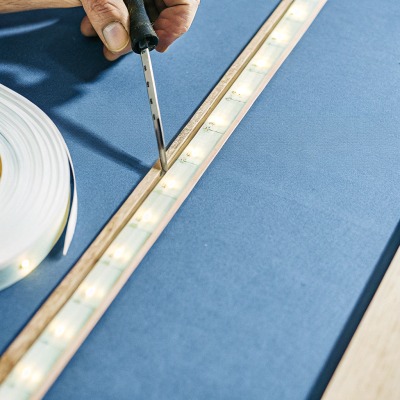
In our factory, we prioritize the chemical stability 4 of the silicone. Not all clear tubes are created equal. PVC is often mistaken for silicone by beginners, but PVC becomes brittle and turns a tea-brown color when exposed to the sun IP68 waterproof rating 5. Real silicone stays soft. We look for "high-anti-UV" additives in the raw material mix. These additives act like a sunscreen for the LED strip.
Long-term Stability Indicators
You should ask your supplier for an aging test report. When we run these tests, we put the sleeved strips in a high-temperature, high-humidity chamber. If the sleeve feels sticky after the test, it is a sign of low-quality polymers leaching out. A good sleeve will feel "dry" and smooth to the touch even after 1,000 hours of continuous lighting.
Comparison of Sleeve Materials
| Feature | High-Grade Silicone | Standard PVC | Industrial Grade Silicone |
|---|---|---|---|
| UV Resistance | Excellent (No yellowing) | Poor (Turns brown) | Moderate (Slight fading) |
| Temp Range | -50°C to 200°C+ | -10°C to 60°C | -30°C to 150°C |
| Flexibility | Permanent | Hardens over time | Becomes stiff |
| Surface Feel | Silky/Smooth | Waxy | Can become sticky |
Probing Supplier Claims
Don't just take a "yes" for an answer. Ask about the curing method. Platinum-cured silicone 6 is generally superior to peroxide-cured versions for optical clarity and long-term stability. If the price is too low, the manufacturer likely used recycled materials which contain impurities that accelerate degradation.
What tests should I perform to ensure the sleeve doesn't compromise the dotless light output of my high-density COB strips?
Our engineering team spends hours calibrating the thickness of our diffusers to maintain that "line of light" look. If the sleeve is too thin or the material is too clear, the dotless effect disappears.
Perform a light transmittance test and a diffusion check by lighting the COB strip inside the sleeve. The sleeve should eliminate hotspots while maintaining at least 85% light output and ensuring no color shift or "rainbow effect" occurs across the beam angle.

Assessing Optical Clarity and Diffusion
The primary reason to use COB (Chip on Board) strips is to achieve a seamless glow. When we design these sleeves, we balance diffusion and brightness. A sleeve that is too "milky" will swallow 40% of your lumens. A sleeve that is too clear will show the tiny components of the COB strip, defeating the purpose of the high-density layout.
Beam Angle and Glare
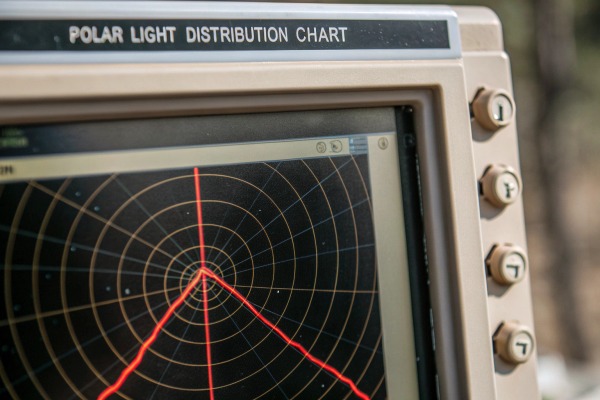
A high-quality sleeve should provide a wide beam angle, usually around 120 degrees. It should act as a secondary lens. If the sleeve is shaped incorrectly, it can cause the light to "beam" in one direction or create dark shadows at the edges. We check for a smooth 180-degree wrap of light in our premium architectural lines.
Light Quality Comparison Table
| Metric | Premium Diffused Sleeve | Clear Protective Sleeve | Low-Quality Milky Sleeve |
|---|---|---|---|
| Dotless Effect | Perfect (Seamless) | Visible "spots" | Seamless but dim |
| Light Loss | 10% - 15% | <5% | 30% - 50% |
| CRI Retention | Maintains 90+ | No change | Can lower CRI |
| Color Shift | None | None | Tends to look "cool blue" |
The "Color Shift" Trap
Many cheap sleeves have a slight blue or yellow tint even when brand new. This shifts the Color Temperature (CCT) of your LED. If you buy a 3000K strip but use a poor sleeve, it might look like 3500K. We always measure the CCT before and after sleeving to guarantee consistency for our design clients.
How do I evaluate the flexibility and thickness of the sleeve to avoid damage during my complex project setups?
In our testing lab, we bend and twist our sleeved strips hundreds of times to mimic a difficult installation. We know that if a sleeve is too stiff, it will put stress on the COB chips.
Evaluate flexibility by performing a "knot test"—bend the sleeve into a tight circle or figure-eight. High-quality silicone should not kink, crack, or show white stress marks, and its thickness should be uniform to ensure consistent protection and fit.
Bend Radius and Tensile Strength
High-density COB strips have many small components. If the sleeve is too rigid, it forces the strip to bend at sharp angles, which can break the internal copper traces. We recommend a sleeve that allows for a bend radius of at least 20mm. This is crucial for circular architectural features or tight corners in cabinetry.
Uniformity of Wall Thickness
Thickness isn't just about protection; it's about fit. If the walls of the sleeve vary in thickness, the strip will sit unevenly. This causes "dark spots" where the LED is further from the surface. In our QC process, we use calipers to check the top, bottom, and sides. A consistent 1.5mm to 2.0mm wall thickness is usually the sweet spot for durability and light quality.
Physical Property Comparison
| Property | Professional Grade | DIY/Consumer Grade |
|---|---|---|
| Tensile Strength | High (Hard to tear) | Low (Tears easily) |
| Shore Hardness | 50A - 60A (Soft) | 70A+ (Stiff/Plastic-like) |
| Recovery | Returns to shape instantly | Stays deformed after bending |
| Inner Space | Snug but allows expansion | Too tight or too loose |
Heat Dissipation Needs
High-density strips generate heat. If the sleeve is too thick and has no air gap, or if it is made of poor thermal-conducting material, the LEDs will overheat and fail early. We design our sleeves to allow a small amount of thermal expansion while keeping the strip in contact with the "floor" of the sleeve to help move heat away.
What specific QC markers should I look for to guarantee the silicone sleeve meets my required waterproof ratings?
When we supply strips for outdoor facades, the seal is everything. A single drop of water inside the sleeve can cause a short circuit or "fogging" that ruins the light's appearance.
Look for a seamless extrusion without bubbles, a smooth interior channel that matches the strip width, and compatibility with professional-grade end caps and neutral-cure silicone sealants to ensure a true IP67 or IP68 waterproof rating.
Structural Integrity and Extrusion Quality
Check the surface of the silicone under a bright light. You should see no air bubbles or black specks. These are weak points where water pressure can cause a rupture. In our production line, we use high-pressure extrusion to ensure the silicone density is perfectly even. If the surface is wavy, it means the cooling process was rushed, which can affect the seal.
End Cap and Sealant Integration
A sleeve is only as waterproof as its weakest point: the ends. We advise our clients to use matching silicone end caps. Plastic end caps often expand at different rates than silicone, creating gaps over time. Always use a neutral-cure silicone glue; "acidic" glues (which smell like vinegar) can corrode the copper on the LED strip and damage the phosphor.
The IP Rating Reality
Many suppliers claim IP68 (submersible), but this requires a very specific sleeve type—usually a "solid fill" or a dual-extrusion where the strip is completely encased. For most "hollow" sleeves, IP67 is the standard limit. This means it can handle rain and temporary splashes, but not being underwater in a pool for months.
Cleaning and Maintenance
Good silicone has a "low-static" finish. Cheap silicone acts like a magnet for dust and hair. If you are installing in a visible area, you want a sleeve that stays clean. We often apply a special coating to our high-end sleeves to give them a "skin-like" feel that resists dirt and makes cleaning with a damp cloth easy.
Conclusion
Judging silicone quality involves checking for high UV resistance, proper light diffusion, and long-term flexibility. By following these testing steps, you ensure your high-density COB installations remain vibrant and durable.
Footnotes
- Authoritative definition of the environmental factor causing material degradation. ↩︎
- Explains the optical property being tested for efficiency. ↩︎
- Defines the mechanical property listed in the comparison table. ↩︎
- Defines the material property essential for long-term durability. ↩︎
- Official international standard for water and dust resistance. ↩︎
- Compares platinum-cured and peroxide-cured silicone, highlighting benefits of platinum curing. ↩︎


 English
 Spanish
 German
 Russian
 Arabic
 French
 Portuguese