We often see projects stall because a factory cannot evolve its technology fast enough environmental chambers 1. In our engineering department, we know that technical stagnation is the biggest threat to your long-term market competitiveness market competitiveness 2 and project success.
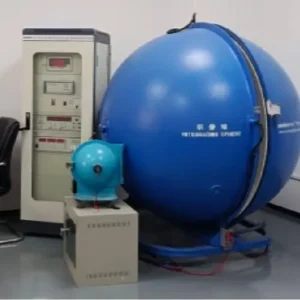
To assess a supplier's development ability, evaluate their reinvestment in R&D and their history of launching verifiable new products over the last 24 months. You must verify their in-house testing equipment, such as integrating spheres, and request a roadmap demonstrating their plan for emerging technologies like higher density COB strips.
Let’s examine the critical markers that separate true innovators from stagnant workshops.
What specific R&D resources should I look for in a COB LED strip manufacturer?
When we audit our own production lines, we look beyond basic assembly capacity. Lacking deep engineering resources means your custom requests for specific voltage or color rendering will likely hit a dead end.
Look for a dedicated engineering team comprising at least 10-15% of the staff, distinct from general production labor. Verify the presence of advanced equipment like goniophotometers and environmental chambers, which prove they can test theoretical designs against real-world heat and moisture conditions before mass production.

To truly gauge a supplier's capability, you must dig deeper than their marketing brochure. In the LED industry, many entities claim to be manufacturers but are merely assembly lines buying pre-made components. For long-term product development, the supplier needs "vertical depth" in their engineering department.
The Composition of the Engineering Team
A robust R&D department is not just one person drawing circuit boards. We recommend verifying the specific roles within their team. You should look for Electronic Engineers who specialize in flexible PCB layout and voltage drop management, particularly for 24V or 48V long-run systems. They also need Optical Engineers who understand phosphor placement on COB chips to ensure color consistency (MacAdam Ellipse steps) across different batches MacAdam Ellipse 3. Finally, Structural Engineers are vital for designing connectors and waterproof extrusions that actually work in harsh environments. If a supplier cannot introduce you to the head of each discipline, they likely outsource their innovation, which slows down your development cycle.
Essential Lab Equipment
You cannot innovate what you cannot measure. A factory that relies solely on third-party testing labs for every minor iteration will be too slow and expensive for a long-term partnership. We suggest using the following checklist when visiting a factory or requesting a video audit.
Table: R&D Asset Checklist for COB LED Strips
| Equipment Name | Primary Function | Risk if Missing |
|---|---|---|
| Integrating Sphere | Measures total light output, color temperature (CCT), and CRI. | Inconsistent color batches; inability to verify brightness claims. |
| Goniophotometer | Analyzes light distribution angles and creates IES files. | Impossible to support architectural projects requiring precise lighting data. |
| Programmable Temp/Humidity Chamber | Simulates extreme environments (aging tests). | High failure rates in outdoor or bathroom installations (silicone yellowing/cracking). |
| High-Pot Tester | Checks electrical insulation and safety breakdown voltage. | Serious safety hazards and inability to pass UL/CE certification. |
| Salt Spray Tester | Tests corrosion resistance of connectors and PCB. | Product failure in coastal or marine applications. |
How can I test the supplier's speed and accuracy in prototyping new custom designs?
We understand that waiting weeks for a simple prototype kills project momentum. Speed is irrelevant if the electrical specs arrive incorrect or the color temperature is off, forcing rounds of revisions.
Test their agility by requesting a specific modification, such as a custom PCB width or a non-standard color temperature, and measure the turnaround time against their quoted lead time. A capable partner provides a functional sample within 7-10 days, accompanied by accurate interim datasheets and engineering drawings.

Evaluating a supplier's "Agility Index" is crucial for B2B buyers who service dynamic markets. It is not enough for a supplier to say they can do customization; they must demonstrate a structured process for it.
The "Agility Index" Test
We recommend issuing a small, paid "challenge" before committing to a large contract. Request a modification that requires actual engineering thought, not just cutting a strip to a different length. For example, ask them to produce a sample of a "Dim-to-Warm" COB strip with a specific PCB width (e.g., 8mm instead of 10mm) or a non-standard voltage (e.g., 36V).
Watch how they respond. A trading company or a weak factory will hesitate, make excuses, or quote an absurdly high MOQ (Minimum Order Quantity). A genuine R&D-focused manufacturer will ask clarifying technical questions: "Do you need a specific copper thickness for heat management at that width?" or "What is your target cut unit length?" These questions show they are thinking about the feasibility of the design, not just the sale.
Evaluating the Sample Report
When the prototype arrives, the physical product is only half the story. The accompanying documentation reveals their process maturity. Did they send a raw strip in a bag, or did they include a test report?
For long-term partnerships, the "First Article Inspection" (FAI) report is non-negotiable. First Article Inspection 4 This document should detail the actual measured parameters of the prototype versus your target specs. If the sample is slightly off (e.g., 2900K instead of 3000K), an honest R&D team will note this deviation in the report and explain why it happened and how they will tune it for mass production. This transparency is more valuable than a "lucky" perfect sample with no data to back it up.
Table: Prototype Evaluation Rubric
| Criteria | Excellent Partner | High-Risk Supplier |
|---|---|---|
| Response Time | Provides technical drawing/PCB layout within 48 hours. | Takes days to reply; provides vague assurances without drawings. |
| Sample Lead Time | 7–10 days for custom PCB; 3–5 days for custom CCT. | 20+ days (likely outsourcing the sample production). |
| Communication | Asks technical constraints (thermal, voltage drop). | Says "Yes" to everything immediately without technical validation. |
| Documentation | Includes photometric data and temp rise test results. | Sends sample with no label or technical data. |
Does the factory have a clear roadmap to keep my product offerings competitive over time?
We always advise our clients to look ahead, not just at current stock availability. Without a shared vision for future technology, your product portfolio will become obsolete within two years as competitors upgrade efficiency.
Review the supplier’s 24-month product roadmap to ensure they are planning for upcoming trends like Chip Scale Package (CSP) integration or sustainable materials. A valid roadmap aligns with global efficiency standards and demonstrates a strategic partnership with upstream chip manufacturers for early access to next-generation components.
A product roadmap is the difference between a vendor and a partner. A vendor sells you what they have today; a partner helps you plan what you will sell tomorrow. In the fast-moving LED sector, relying on old technology means losing efficiency-conscious clients.
Analyzing the Technology Roadmap
You should ask your potential supplier for a presentation on their product strategy for the next two years. You are looking for specific evolution in three key areas:
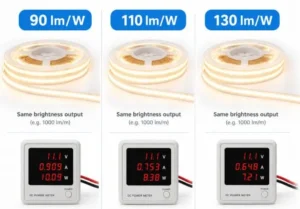
- Efficiency Improvements: Are they moving from 100lm/W to 130lm/W or higher? With energy regulations tightening in Europe and Australia, "standard" brightness is no longer enough. energy regulations tightening 5
- Miniaturization and Density: COB technology is driving towards dot-free illumination even in extremely shallow profiles. Look for plans involving "Flip-Chip" technology which removes wire bonds for better durability and higher density.
- Smart Integration: Does their roadmap include direct integration with protocols like DALI-2, Zigbee, or Matter protocols like DALI-2 6 at the board level, rather than just relying on external drivers? Matter at the board level 7 Zigbee, or Matter 8 DALI-2, Zigbee 9
Upstream Supply Chain Influence
A factory's ability to innovate is often capped by their access to raw materials. Strong manufacturers have strategic alliances with top-tier chip foundries (like San’an, Epistar, or Samsung).
If a supplier buys LEDs from the open market, they get "whatever is available," leading to batch inconsistencies. However, a supplier with R&D clout works directly with chip manufacturers to secure specific "bins" (color/brightness sorting) and early access to new chip structures. Ask them: "Which chip suppliers are you co-developing your next generation products with?" Their answer will reveal their standing in the industry supply chain.
How do I verify their track record in co-developing exclusive solutions for other brands?
In our collaborations with US distributors, we prioritize protecting intellectual property above all else intellectual property 10. You need proof that a factory respects exclusivity and can actually execute complex, custom specifications without leaking them.
Ask for anonymized case studies or references that detail a specific problem-solution scenario, such as solving voltage drop in long-run installations. Verify their use of Non-Disclosure Agreements (NDAs) and change management processes, which confirm they have disciplined systems to protect and manage unique client designs.

Trust is built on evidence, not promises. When you are looking for a partner to co-develop products, you need to verify that they have successfully navigated the "Valley of Death"—the gap between a cool concept and a mass-producible product.
The Problem-Solution Case Study
Ask the supplier to describe a difficult technical problem they solved for another client (without naming the client). For example, perhaps a client needed a COB strip that could run 20 meters from a single power feed without dimming at the end.
- Bad Answer: "We make high quality strips for everyone."
- Good Answer: "A client faced overheating issues with a 20-meter run. Our team redesigned the PCB to increase copper weight to 3oz and adjusted the circuit topology to constant current ICs, reducing heat by 30% and equalizing brightness."
This level of detail proves they understand the physics of the product and apply engineering to solve problems.
Intellectual Property and Change Management
Innovation requires protection. If you develop a unique connector system or a custom spectrum for retail lighting, you do not want to see it in their general catalog next month.
Review their Engineering Change Notice (ECN) system. In a professional factory, any change to a product—whether it's a new resistor supplier or a change in silicone glue—must be documented and approved. If they cannot show you an ECN log from a past project, it means they change materials on the fly. This is a disaster for long-term consistency.
Table: Red Flags vs. Green Lights in Supplier History
| Feature | Green Light (Reliable Partner) | Red Flag (Unreliable Supplier) |
|---|---|---|
| NDAs | Willing to sign specific, enforceable NDAs under local or HK law. | Refuses to sign or treats NDAs as a "formality" with no legal review. |
| Catalog Policy | Keeps OEM products separate from public catalogs. | Displays other clients' custom logos or designs in their showroom. |
| Version Control | Uses strict version numbers (e.g., v1.0, v1.2) for PCB files. | Relies on dates or filenames like "Final_Final_v2". |
| References | Provides contactable references (with permission). | Claims "big famous brands" but refuses to provide proof of supply. |
Conclusion
Assessing innovation capability ensures your supply chain remains robust. By verifying R&D assets, testing prototyping agility, and reviewing strategic roadmaps, you build a partnership that thrives on future growth rather than past successes.
Footnotes
- International standard for environmental testing of electronic equipment in harsh conditions. ↩︎
- Defines the business concept in the context of supplier evaluation. ↩︎
- Authoritative educational resource explaining color consistency standards. ↩︎
- Official definition from the American Society for Quality. ↩︎
- Official European Commission page detailing energy efficiency requirements for lighting products. ↩︎
- Official website of the Digital Illumination Interface Alliance. ↩︎
- Texas Instruments whitepaper on implementing the Matter protocol in connected lighting systems. ↩︎
- Wikipedia overview of the Zigbee wireless standard used in smart lighting ecosystems. ↩︎
- Official DALI Alliance site defining the DALI-2 protocol for smart lighting control. ↩︎
- Official definition from the World Intellectual Property Organization. ↩︎


 English
 Spanish
 German
 Russian
 Arabic
 French
 Portuguese