When we coordinate shipments for our Sydney partners, nothing frustrates us more than seeing premium COB strips stuck at the border due to paperwork errors. premium COB strips 1
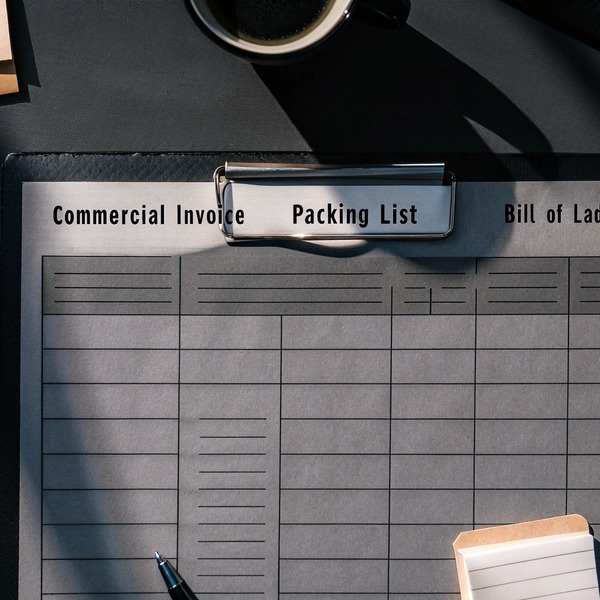
Essential documents for clearing Australian Australian Border Force 2 customs include a detailed Commercial Invoice, Packing List, Bill of Lading, and a valid Packing Declaration. Additionally, you must provide electrical safety compliance evidence like RCM/SAA certification and a Certificate of Origin to claim duty exemptions under ChAFTA.
Let’s break down exactly what you need to avoid costly delays.
Which safety certifications like RCM or SAA must I present to Australian customs?
We often remind our Australian clients that passing our internal QC isn't enough; the Australian Border Force requires specific regulatory marks to clear electrical goods.
You must present evidence of compliance with the Electrical Equipment Safety System (EESS), specifically the Regulatory Compliance Mark (RCM). While customs may not always demand the physical SAA certificate at the border, the product must be marked with the RCM to prove it meets AS/NZS 60598 safety standards.
When importing electrical equipment like COB LED strips into Australia, safety compliance is not optional. COB LED strips 3 The regulatory landscape is strict, and the Australian Border Force (ABF) works closely with the Electrical Regulatory Authorities Council (ERAC) to ensure non-compliant products do not enter the market. Electrical Regulatory Authorities Council 4 From our production floor to your warehouse, ensuring the correct markings are visible is critical.
The Role of the RCM
The Regulatory Compliance Mark (RCM) is the single most important symbol for your LED strips. It indicates that the product complies with all applicable Australian regulatory arrangements, including electrical safety and electromagnetic compatibility (EMC). Technically, the RCM replaced the older C-Tick and A-tick marks. For customs clearance, officers look for this mark on the product or packaging. If we ship products without this mark, or without the registration linked to it in the EESS database, the shipment can be flagged for inspection.
SAA Certification vs. RCM
There is often confusion between SAA certification and the RCM. SAA Approvals is a third-party body that tests products against Australian Standards (such as AS/NZS 60598 for lighting). AS/NZS 60598 for lighting 5 Once a product passes, an SAA certificate is issued. However, the SAA certificate itself is the proof used to register for the RCM. You generally do not present the SAA paper certificate to a customs officer physically, but you must have it on file. If the ABF decides to audit your shipment, they will ask for the Declaration of Conformity or the Certificate of Suitability (typically the SAA certificate) to verify that the RCM mark is legitimate.
EMC Compliance
In addition to electrical safety, LED drivers and strips must meet EMC standards to ensure they do not interfere with radio communications. LED drivers and strips 6 This is governed by the Australian Communications and Media Authority (ACMA). Your supplier needs to provide test reports showing compliance, which is also covered under the RCM umbrella.
Here is a breakdown of the certifications you should verify before shipping:
| Certification Type | Symbol/Mark | Purpose | Customs Requirement |
|---|---|---|---|
| RCM (Regulatory Compliance Mark) | Triangle with checkmark | Signifies safety & EMC compliance | Mandatory on product/label. |
| SAA Certificate | SAA-XXXXXX (Number) | Proof of safety testing (AS/NZS standards) | Required for audit/inspection. |
| EMC Report | N/A (Test Report) | Proof of non-interference | Supporting document for RCM. |
| RoHS | RoHS Logo | Restriction of Hazardous Substances | Checked for environmental safety. |
What essential information must be included in the commercial invoice and packing list for my shipment?
During our export operations, we meticulously double-check every invoice line item because vague descriptions often trigger unnecessary inspections for our distributors.
Your commercial invoice must include the seller’s and buyer’s full details, Incoterms, currency, and precise product descriptions including HS codes. The packing list needs to match the invoice exactly, specifying net and gross weights, package dimensions, and total quantity of COB LED reels.
The commercial invoice and packing list are the backbone of the customs clearance process. These are not just receipts; they are legal declarations of the cargo's value, origin, and nature. In our experience, discrepancies between these two documents are the leading cause of delays.
Crafting a Clear Commercial Invoice
The Australian Border Force requires specific data to assess duties and taxes correctly. Australian Border Force 7 A generic invoice that says "LED Lights" is insufficient and invites scrutiny. The invoice must list the Incoterms (e.g., FOB Shenzhen or CIF Sydney), which determine who pays for freight and insurance, ultimately affecting the taxable value. Furthermore, the currency must be clearly stated (e.g., USD or AUD).
Crucially, the invoice must include the Harmonized System (HS) Code. For LED strips, this is typically 9405.42.00 (Photovoltaic LED modules/strips). Using the wrong code can lead to overpaying duties or fines for misclassification. We also recommend adding a detailed product description, such as "24V COB LED Strip, 480 chips/m, 10mm width," to help customs officers identify the goods without opening the box.
The Packing Declaration and Wooden Packaging
Australia has some of the strictest biosecurity laws in the world. biosecurity laws 8 If your shipment is packed on wooden pallets or creates use of timber dunnage, you must provide a Packing Declaration. This document states whether the packing material is straw, timber, or bark. If timber is used, it must be treated (fumigated) according to ISPM 15 standards to prevent pests. ISPM 15 standards 9
We usually recommend our clients use plastic or plywood pallets (which are exempt from fumigation) to simplify this process. If you fail to provide a valid packing declaration, the ABF may order the entire shipment to be treated at your expense before release, or worse, destroyed.
Consistency is Key
The "Net Weight" and "Gross Weight" on your packing list must match the Bill of Lading exactly. Even a 1kg discrepancy can cause a hold. Below is a checklist of critical fields that must align across all your documents.
| Document Field | Commercial Invoice | Packing List | Bill of Lading |
|---|---|---|---|
| Consignee Name | Must match exactly | Must match exactly | Must match exactly |
| Total Weight | N/A | Required (Net & Gross) | Required (Gross) |
| Marks & Numbers | Recommended | Required | Required |
| Description | Detailed (Tech specs) | Brief summary | General Category |
| Piece Count | Total Units (Reels) | Total Cartons/Pallets | Total Packages |
How do I calculate the import duty and GST for my bulk LED strip order?
Our financial team frequently helps estimators budget their landed costs, as overlooking the tax implications can quickly erode profit margins on large projects.
Import duty is generally calculated at 5% of the customs value (FOB price) for LED strips, though this may be waived under free trade agreements. You must also pay 10% Goods and Services Tax (GST) on the total value of the shipment, including duty, freight, and insurance costs.

Calculating the landed cost of your COB LED strips is essential for maintaining profitability. Many new importers make the mistake of calculating GST based solely on the product cost, but the Australian Taxation Office (ATO) uses a specific formula known as the Value of the Taxable Importation (VoTI).
The Duty Calculation
The standard general tariff rate for LED lighting products (HS Code 9405.42) imported into Australia is 5%. This duty is calculated on the Customs Value, which is essentially the Free on Board (FOB) value of the goods. This means the duty is calculated on the cost of the goods at the port of export, before international freight and insurance are added.
The GST Formula
The Goods and Services Tax (GST) is 10%, but the base for this calculation is broader than the duty base. GST is calculated on the VoTI, which is the sum of:
- The Customs Value (FOB price).
- The Import Duty paid.
- The cost of International Transport and Insurance (T&I).
This creates a "tax on tax" effect where you pay GST on the duty amount. If you are a registered business with an Australian Business Number (ABN) and are registered for GST, you may be able to claim this 10% back as an Input Tax Credit on your Business Activity Statement (BAS), or use the Deferred GST (DGST) scheme to pay it later.
Low Value Threshold
If your total consignment value is under AUD 1,000, you are generally exempt from paying import duty and GST at the border. However, be careful not to split a large order into multiple small shipments artificially to bypass this, as the ABF monitors for order splitting.
Calculation Example
Let’s assume you are importing a bulk order of COB strips with a value of USD 10,000. Let's assume an exchange rate of 1 AUD = 0.65 USD.
| Cost Component | USD Value | AUD Equivalent (approx) | Calculation Note |
|---|---|---|---|
| Customs Value (FOB) | $10,000 | $15,384 | Base price of goods |
| International Freight | $1,500 | $2,307 | Shipping cost |
| Insurance | $50 | $77 | Cargo insurance |
| Import Duty (5%) | N/A | $769 | 5% of $15,384 (FOB) |
| VoTI (GST Base) | N/A | $18,537 | FOB + Duty + Freight + Ins |
| GST Payable (10%) | N/A | $1,853 | 10% of VoTI |
| Total Landed Cost | $11,550 | $20,390 | Goods + Logistics + Tax |
Do I need a Certificate of Origin to claim tariff benefits under the China-Australia Free Trade Agreement?
We always encourage our partners to utilize tariff preferences, as saving that extra percentage on duties allows them to be more competitive in local tenders.
Yes, a valid Certificate of Origin (ChAFTA COO) is required to claim the 0% preferential tariff rate on Chinese-made LED strips. This document must be issued by an authorized body in China and explicitly state that the goods meet the origin criteria to waive the standard 5% import duty.

The China-Australia Free Trade Agreement (ChAFTA) is a powerful tool for importers, potentially reducing the import duty from 5% to 0%. However, this benefit is not automatic. The burden of proof lies with the importer to demonstrate that the goods originated in China.
The Importance of the COO
To claim this preference, you need a specific document called the ChAFTA Certificate of Origin (COO). This is different from a standard manufacturer's declaration. The COO must be issued by an authorized body in China, such as the General Administration of Customs of China (GACC) or the China Council for the Promotion of International Trade (CCPIT). Promotion of International Trade 10
When we process an order for an Australian client, we apply for this certificate once the vessel details are confirmed. The certificate will reference the specific invoice and bill of lading numbers. If you attempt to claim the 0% rate without this document, customs may reject the entry and charge the full duty rate, plus potential administrative penalties.
Direct Consignment Rule
Another critical aspect of ChAFTA is the Direct Consignment Rule. The goods must be transported directly from China to Australia. If the shipment stops in a third country (like Singapore or Hong Kong) for transshipment, the goods must not undergo any processing there. They must remain under customs control. If you are consolidating goods in a third-party hub, you risk losing the ChAFTA benefit unless you can prove non-manipulation, which is often administratively difficult.
Common Pitfalls
A common error we see is a mismatch in the HS Code between the COO and the Australian Import Declaration. While the first six digits of the HS code are global, the last few digits can vary by country. The COO must use an HS code that is consistent with the product description and accepted by Australian customs. Additionally, the certificate is valid for one year and applies to a single shipment, though "blanket" certificates for multiple shipments of identical goods over a period are technically possible but less common for project-based lighting imports.
Steps to Secure Your Benefit
- Request Early: Ask us (or your supplier) for the ChAFTA COO at the time of order placement.
- Verify Details: Ensure the exporter name on the COO matches the commercial invoice.
- Check Origin Criteria: The COO will list a criterion (e.g., "WP" for Wholly Produced or "PSR" for Product Specific Rules). Ensure this is accurate for COB strips.
- Digital Submission: Australian customs accepts electronic copies of the COO, so a high-quality PDF scan from your supplier is usually sufficient for the broker to lodge the declaration.
Conclusion
Successfully clearing COB LED strips into Australia requires meticulous attention to consistency across your Commercial Invoice, Packing List, and Packing Declarations. By securing RCM compliance and a ChAFTA Certificate of Origin early, you ensure your project timelines stay on track and protect your bottom line from unexpected border costs.
Footnotes
- General background on LED technology and Chip-on-Board configurations. ↩︎
- Official government agency responsible for customs clearance and border security in Australia. ↩︎
- Global lighting leader providing documentation on professional LED strip technologies. ↩︎
- Official body coordinating electrical safety regulations across Australia and New Zealand. ↩︎
- Primary industry standard for luminaire safety in Australia and New Zealand. ↩︎
- Major manufacturer providing technical specifications for LED power supplies and drivers. ↩︎
- Official agency overseeing customs and border protection in Australia. ↩︎
- Australian university conducting research in biosecurity and environmental safety. ↩︎
- International standard for regulating wood packaging material in international trade. ↩︎
- Authorized body in China for issuing trade documents like Certificates of Origin. ↩︎



 English
 Spanish
 German
 Russian
 Arabic
 French
 Portuguese