When our engineering team reviews bid packages that lack specific technical requirements, we know the project is at risk of delays. Contractors often face costly on-site revisions simply because the initial documentation requests were too vague.
To ensure a successful bid, you must request a complete technical package containing detailed product specification sheets, architectural architectural CAD drawings 1 CAD drawings product specification sheets 2, valid third-party safety certifications, IES photometric files for lighting simulation, and comprehensive installation manuals. These documents verify safety compliance, validate design feasibility, and serve as a binding quality guarantee from the supplier.
Here is the breakdown of the critical documents you need to secure before signing any contract.
Which safety certifications and compliance reports are mandatory for my lighting project bid?
We often pause production for our Australian and German clients until every specific compliance report is verified by their local inspectors. Ignoring regional safety standards is the fastest way to get your products rejected at customs or failed during final building inspection.
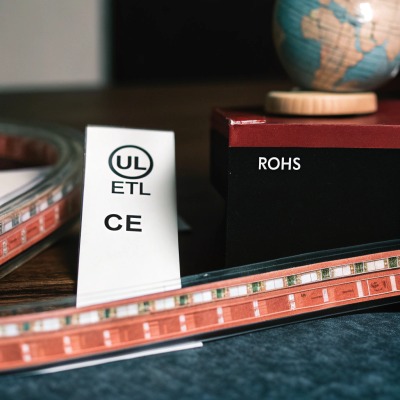
Mandatory documents include regional safety certificates such as UL or ETL for North American UL or ETL 3 projects and CE-LVD/EMC for European markets. You must also request specific IP rating test reports for water resistance and RoHS chemical compliance declarations to ensure the lighting system meets all legal and environmental safety standards.

When evaluating a bid, the "safety" section is often where suppliers try to cut corners. A simple claim of "CE certified" is rarely enough for a commercial engineering project. You need to verify the authenticity and the scope of these documents.
Differentiating Between Self-Declaration and Third-Party Testing
In our trade experience, we see many suppliers issue a "Declaration of Conformity" which is essentially a self-signed promise. While valid for some low-risk items, major engineering bids should demand reports from accredited third-party laboratories (like TUV accredited third-party laboratories 4, SGS, or Intertek). A third-party report proves that the LED strips were physically tested under stress conditions.
For example, if you are installing flexible COB LED strips in an outdoor facade, a standard CE certificate ISO 9001 Certificate 5 does not cover weatherproofing. You must specifically request an IP Rating Test Report (e.g., IP65 or IP67). This document details how the product performed when subjected to dust and water jets. Without this specific report, your "waterproof" lights might fail within months, leading to liability issues.
Regional Compliance Nuances
The world is not uniform in its electrical standards. We maintain different documentation libraries for different markets because the voltage safety thresholds and fire ratings differ. If you are a global buyer, you cannot use a "one size fits all" bidding template.
Mandatory Certification Checklist by Region
| Region | Primary Safety Cert. | Environmental/Chemical | Specific Test Reports Needed |
|---|---|---|---|
| North America | UL 2108 (Low Voltage Lighting Systems) or ETL | FCC (Radio Interference) | Flame Spread Rating (if used in plenums) |
| Europe | CE (LVD & EMC Directives) | RoHS (Hazardous Substances), REACH | Eco-design (ErP) Energy Efficiency Report |
| Australia/NZ | RCM (Regulatory Compliance Mark) | RoHS | AS/NZS 60598 Safety Report |
| Global/General | CB Scheme | ISO 9001 (Factory QC) | IP Rating (Ingress Protection) |
Chemical Safety and Sustainability
Modern bids are increasingly focused on sustainability. Beyond electrical safety, you should request RoHS (Restriction of Hazardous Substances) reports. These documents confirm that the PVC or silicone used in the LED strip jackets does not contain lead, mercury, or other toxic lead, mercury 6 heavy metals. For projects seeking LEED or WELL building certification, these material safety data sheets are non-negotiable.
Why do I need valid IES files and photometric data for lighting design verification?
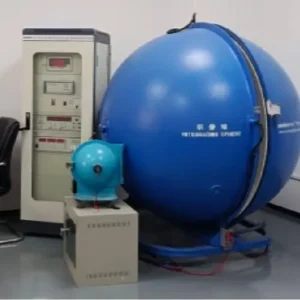
Our lab technicians spend hours in the integrating sphere ensuring that integrating sphere 7 the lumen output matches the promised specifications. Without accurate data, a lighting designer is essentially guessing, which can lead to dark spots or glaringly bright areas in the final installation.
Valid IES files are digital photometric data sets required to simulate lighting performance in software like DIALux or AGi32. They allow designers to calculate exact lux levels, uniformity ratios, and beam angles before installation, ensuring the physical reality matches the architectural design intent and preventing costly retrofits.

In the era of precision engineering, "bright enough" is not a technical specification. Photometric data acts as the DNA of the light fixture. It tells you exactly how light leaves the source, where it goes, and how intense it is at different angles.
verifying the "IES" Against the "Spec Sheet"
A common issue we encounter is a mismatch between the marketing brochure and the actual engineering file. A brochure might claim "1000 lumens per meter," but the IES file—derived from actual testing—might show only 850 lumens due to diffuser loss. During bidding, requesting the IES file allows your design team to run a quick render. If the supplier cannot provide an IES file for the specific model (or worse, sends a generic file renamed), it is a major red flag regarding their technical capability.
The Importance of Color Rendering Data (TM-30-15)
While older standards focused on CRI (Color Rendering Index), modern architectural Color Rendering Index 8 projects demand more. You should request TM-30 reports included in the photometric data.
- Rf (Fidelity Index): How similar the colors are to natural light.
- Rg (Gamut Index): Whether the light saturates or desaturates colors.
For a high-end retail project or an art gallery, a simple CRI > 90 is insufficient. You need to see the R9 value (strong red) in the photometric report. LED strips with poor R9 values will make skin tones look flat and wood finishes look dull.
Key Photometric Parameters to Validate
| Parameter | Why It Matters for Bidding | acceptable Standard (Commercial) | Premium Standard (Retail/Art) |
|---|---|---|---|
| Luminous Flux | Determines if the space will be bright enough. | +/- 10% tolerance | +/- 5% tolerance |
| CRI (Ra) | General color accuracy. | > 80 | > 90 or > 95 |
| R9 Value | Rendering of deep reds (critical for skin/wood). | > 0 | > 50 |
| Beam Angle | How wide the light spreads (e.g., 120° for strips). | Visual check | Measured curve check |
Avoiding the "Glare" Trap
IES files also help calculate UGR (Unified Glare Rating). If you are buying high-power LED strips for an office with low ceilings, the raw brightness might cause eye strain. By simulating the IES file in the room geometry, you can predict glare issues. If a bidder refuses to supply these files, they are preventing you from verifying visual comfort, which is a critical aspect of modern building codes.
How detailed should the wiring diagrams and installation manuals be for complex LED systems?
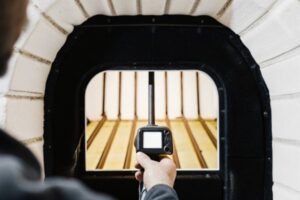
We frequently jump on video calls to troubleshoot overheating power supplies caused by electricians daisy-chaining too many strips together. These expensive on-site errors usually stem from manuals that lack clear voltage drop calculations and wiring topologies.
Diagrams must explicitly specify maximum run lengths, voltage drop calculations, and correct voltage drop calculations 9 driver load balancing. Installation manuals should detail cutting intervals, connector compatibility, thermal management requirements, and schematic layouts for dimming systems to prevent fire hazards and ensure system longevity.
The gap between a product sitting in a warehouse and a functioning lighting system is bridged by the installation manual. For [LED strips](https://glowinled.com/products "LED strips"), specifically flexible COB types, the installation documentation is often more critical than the product itself because these systems are "semi-finished" goods that require final assembly on site.
The Danger of Voltage Drop
One of the most technical aspects you must verify in the bidding documents is the Maximum Run Length. Every LED strip has copper resistance. If you connect 10 meters of a 5-meter rated strip, the LEDs at the end will appear dimmer and the beginning section may overheat.
A professional bid package will include a System Diagram showing:
- Feed Points: Where power enters the line.
- Wire Gauge Specs: Recommending thicker wires for longer distances to the driver.
- Amplifier Locations: If the run exceeds the limit, where does the signal repeater go?
If the bidder only provides a picture of how to peel the 3M tape, they are not preparing you for the electrical reality of the project.
Thermal Management and Aluminum Profiles
High-wattage LED strips generate heat. Unlike light bulbs, they don't have large heat sinks attached; they rely on the mounting surface. The documentation must state the Thermal Dissipation Requirement.
- Critical Question: Does this strip require an aluminum profile to maintain its warranty?
- Many 15W/m+ strips will fail within a year if stuck directly to wood or drywall. The manual must specify the required surface area for cooling.
Dimming and Control System Integration
Modern lighting is rarely just "on/off." It involves DALI, DMX, 0-10V, or Zigbee protocols. The wiring diagram must show how the LED driver communicates with the control system.
- DALI: Requires two extra control wires.
- DMX: Requires shielded cables and specific addressing.
If the diagrams provided in the bid do not show these control lines, the electrical contractor will likely miss them during the rough-in phase. This leads to tearing open walls later to run data cables—a disaster for the project budget.
Checklist for Installation Manual Validity
- Clear cutting increments (e.g., every 50mm).
- Polarity markings clearly defined in diagrams.
- Bending radius limits (crucial for flexible COB to avoid breaking the PCB).
- Waterproofing instructions for cut ends (if IP65+).
What specific quality assurance documents prove the lifespan and color consistency of the LED strips?
Our production line uses high-precision binning machines because we know that even a slight color shift between two rolls can ruin a linear lighting effect. Customers deserve proof that the lights they buy today will match the ones they buy next year.
You should demand LM-80 and TM-21 testing reports to scientifically verify the LED chip's projected lifespan. Additionally, require MacAdam MacAdam Ellipses 10 Ellipse binning confirmation documents to guarantee color consistency across different production batches and prevent visible chromatic variances in your installation.
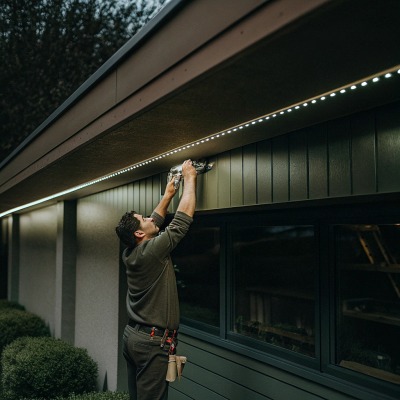
"50,000 hours lifespan" is a marketing claim found on every box, from the cheapest dollar-store light to high-end aerospace fixtures. How do you tell the difference during bidding? You ask for the evidence backing that number.
Understanding [LM-80 and TM-21](https://glowinled.com/how-to-handle-rapid-light-decay-in-cob-led-strips/ "LM-80 and TM-21")
These are the gold standards for LED longevity.
- LM-80: This is a physical test where the LED chips are run for at least 6,000 hours (about 9 months) at different temperatures (e.g., 55°C, 85°C). The lab measures how much brightness they lose.
- TM-21: This is a mathematical calculation. It takes the LM-80 data and projects it forward to estimate when the light will drop to 70% brightness (L70).
If a supplier cannot provide an LM-80 report for the specific LED chip used in their strip, their lifespan claim is unsubstantiated. In a bidding war, the supplier with valid TM-21 data offers a lower Total Cost of Ownership (TCO) because their product is proven to last.
The "One Bin" Promise: MacAdam Ellipses
Color consistency is measured in SDCM (Standard Deviation Colour Matching), often referred to as MacAdam Ellipses or Steps.
- 1-Step: Imperceptible difference (Lab grade).
- 3-Step: Virtually imperceptible to human eyes (High-end Commercial).
- 5-Step: Noticeable difference (Standard Residential).
In a large project, you might install 500 meters of strip light. If the supplier sends mixed batches (some 3000K leaning pink, some 3000K leaning green), the visual result is disastrous.
The Document to Request: A Binning Policy or Color Consistency Report. This document confirms that the manufacturer sorts their LEDs into specific bins and guarantees that all strips for your project (and future maintenance orders) will come from the same bin or a tightly controlled range (e.g., "3-Step MacAdam Guarantee").
Quality Assurance Document Hierarchy
| Document Name | Function | Risk if Missing |
|---|---|---|
| LM-80 Report | Test data on lumen depreciation over time. | Product may dim significantly after 1-2 years. |
| TM-21 Calculation | Official lifespan projection. | No way to validate "50,000 hours" claims. |
| SDCM / Binning Report | Defines color tolerance strictness. | Mismatched colors between rolls (The "Zebra Effect"). |
| Salt Spray Test | Corrosive resistance proof (for coastal areas). | Rapid corrosion and failure in seaside projects. |
| UV Exposure Test | Yellowing resistance of the silicone coating. | Outdoor strips turning yellow and cracking. |
Supply Chain Resilience
Finally, QA isn't just about the product; it's about the process. Advanced bidding packages might request an ISO 9001 Certificate, which proves the factory has a management system in place to catch errors. While it doesn't test the product itself, it tests the consistency of the factory's operations.
Conclusion
Requesting the right documentation—specs, IES files, wiring diagrams, and QA reports—is not just bureaucracy; it is risk management. These documents filter out inexperienced traders and ensure your lighting project is safe, visually accurate, and built to last.
Footnotes
- Explains the digital design format used for project planning. ↩︎
- Defines the standard technical document type for engineering products. ↩︎
- Links to the primary safety certification organization mentioned. ↩︎
- ISO page explaining the standards for laboratory accreditation. ↩︎
- Official page for the quality management standard mentioned. ↩︎
- EPA resource on the dangers of toxic heavy metals. ↩︎
- Describes the optical equipment used for measuring light output. ↩︎
- Defines the metric used to measure color accuracy. ↩︎
- Explains the electrical phenomenon critical for long cable runs. ↩︎
- Definition of the technical standard for color consistency. ↩︎