What Is a COB LED Strip Light and How Does It Work?
If you have ever installed standard LED tape and hated seeing those ugly “dots” reflecting off a granite countertop or glossy tile, you know exactly why the COB LED Strip Light was invented. It solves the biggest aesthetic complaint in the lighting industry: the hotspot.
Unlike traditional SMD (Surface Mounted Device) strips where individual chips are spaced out with visible gaps, COB stands for Chip on Board. In this design, we mount the LED chips directly onto the flexible circuit board (PCB) rather than packaging them inside individual plastic housings. This allows us to pack the chips incredibly close together—creating a high density LED strip that virtually eliminates dark spots.
Here is what is happening under the hood of a flip chip LED strip:
- Flip-Chip Design: We remove the need for gold wire bonding (a common failure point in older LEDs) and attach the chip directly to the board. This improves heat transfer and reliability.
- Phosphor Layering: Instead of placing a lens over each LED, we cover the entire row of chips with a continuous layer of phosphor silicone. This yellow coating acts as a built-in diffuser.
- High-Density Packaging: We are talking about 300 to 500+ chips per meter, compared to the standard 60 or 120 found on older tapes.
The optical result is stunning uniform LED illumination. Because the phosphor layer diffuses the light right at the source, you get a dot-free LED strip effect that looks more like a seamless neon tube than a traditional circuit board. Furthermore, while standard SMDs are limited to a 120° spread, the COB structure naturally provides a wide 180 degree beam angle LED output, filling your space with soft, even light.
The Technical Breakdown: COB vs SMD Comparison
| Feature | Traditional SMD LED Strip | COB LED Strip |
|---|---|---|
| Construction | Individual chips soldered with gaps | Chips mounted directly to PCB (Flip-chip) |
| Light Source | Point source (visible dots) | Linear source (seamless linear lighting) |
| Beam Angle | ~120 Degrees | 180 Degrees |
| Phosphor | Individual coating per chip | Continuous uniform coating |
Key Advantages of COB LED Strips Over Traditional SMD Strips
The shift from traditional SMD (Surface Mounted Device) to COB technology is a game-changer for linear lighting. The most immediate benefit you will notice is the dot-free LED strip appearance. Unlike older strips that create distinct “hotspots” or visible dots, COB strips provide a continuous, smooth line of light. This seamless linear lighting is critical when installing lights near reflective surfaces like granite countertops, glossy cabinets, or marble floors, where seeing individual LED reflection points ruins the aesthetic.
Beyond just looks, the technical performance is superior. Because the chips are placed directly on the PCB, we achieve a 180-degree beam angle LED output, compared to the standard 120 degrees of SMD strips. This wider spread eliminates shadow gaps and provides more uniform coverage. Additionally, the flip-chip design offers better heat dissipation, leading to improved longevity and consistent high CRI COB strip performance (often 90+), ensuring your colors look vibrant and true to life.
Here is a quick side-by-side COB vs SMD comparison:
| Feature | Traditional SMD Strip | COB LED Strip |
|---|---|---|
| Light Appearance | Visible dots (hotspots) | Dot-free / Seamless |
| Beam Angle | 120° (Directional) | 180° (Wide Spread) |
| Flexibility | Limited by chip size | Extremely flexible |
| Heat Management | Reliant on plastic packaging | Direct PCB cooling (Better) |
| CRI | Varies (often 80+) | High Fidelity (CRI 90-95+) |
If you are dealing with tight architectural details or need a discreet light source, our COB LED strip series offers the flexibility required for narrow profiles without sacrificing brightness. For extremely tight spaces, you might even consider a super narrow LED strip, which often utilizes COB technology to fit into channels as thin as 3mm or 4mm while maintaining that premium, hotspot-free look.
Why This Matters for Your Project
- Reflective Surfaces: No pixelated reflections on polished stone or glass.
- Color Consistency: High density LED strip packaging ensures uniform color temperature along the entire run.
- Durability: The phosphor coating protects the chips from dust and humidity better than exposed SMDs.
Critical Technical Features of COB LED Strip Lights
When you are spec’ing out a project, looking past the glossy marketing photos is crucial. The performance of a COB LED strip light comes down to specific engineering metrics. Here is the technical breakdown you need to know to ensure your installation doesn’t fail prematurely.
LED Density and Uniformity
The main selling point of COB technology is the seamless linear lighting effect. This is achieved through high chip density. While traditional strips might have 60 or 120 LEDs per meter, a high density LED strip using COB technology typically ranges from 320 to 528 LEDs/m.
- 320 LEDs/m: Good for general cove lighting.
- 480–528 LEDs/m: Essential for shallow profiles or visible installations to guarantee a completely hotspot-free LED strip.
Color Rendering and Temperature
For high-end residential or retail projects in the US, color quality is non-negotiable. You should look for a High CRI COB strip (Color Rendering Index) of 90+ or 95+. This ensures that woodwork, fabrics, and food look vibrant and accurate, not washed out.
- CCT Range: 1800K (Candlelight) to 6500K (Daylight).
- Consistency: We ensure strict binning control so that a 3000K roll bought today matches one bought next month.
Voltage and Run Lengths
Voltage determines how long you can run a strip before you see “voltage drop” (where the light gets dimmer at the end).
- 12V: Good for short runs (automotive or cabinet sections under 5ft).
- 24V: The professional standard. 24V COB LED tape allows for runs up to 16–32ft without noticeable brightness loss.
- 48V: Used for ultra-long linear architectural runs to minimize power injection points.
Waterproofing and Durability
Where are you installing it? If you are working on an exterior facade or a bathroom, an IP67 waterproof COB strip is required to withstand moisture and dust. For even more robust protection in harsh environments, pairing COB tape with a custom silicone extrusion LED strip housing creates a fully submersible, neon-like fixture that is virtually indestructible.
Quick Spec Reference Table
| Feature | Standard Spec | Premium/Pro Spec | Why It Matters |
|---|---|---|---|
| LED Density | 320 LEDs/m | 480–528 LEDs/m | Higher density = smoother light and zero dots. |
| CRI | CRI > 80 | CRI > 90 / 95+ | High CRI makes colors pop; low CRI makes rooms look dull. |
| Efficiency | 80 lm/W | 100–140 lm/W | Higher efficiency means more brightness for less electricity. |
| Cutting Unit | Every 50mm | Every 10mm–25mm | Shorter cut points allow for precise custom fitting. |
| IP Rating | IP20 (Indoor) | IP65 / IP67 / IP68 | Protects against dust, splashes, or full submersion. |
Top Applications for COB LED Strip Lights
Because COB LED strip lights deliver that continuous, hotspot-free LED strip effect right out of the reel, they have completely changed where and how we install linear lighting. In the past, we had to hide traditional SMD strips deep inside diffusers to mask the ugly “dot-dot-dot” reflection. With COB technology, the light source is already uniform, allowing us to install them in visible areas and shallow profiles where traditional strips just wouldn’t work.
Here is where we see dot-free LED strip technology making the biggest impact:
Kitchen Under-Cabinet and Task Lighting
This is easily the most popular application in the US market. If you have glossy countertops—like polished granite, quartz, or marble—standard LED strips reflect annoying individual dots back at you. Under cabinet COB lighting solves this instantly. The high density of the chips creates a solid bar of light that looks like a high-end fixture rather than a DIY tape job. The high brightness also provides excellent functional task lighting for chopping veggies or reading recipes.
Cove and Architectural Indirect Lighting
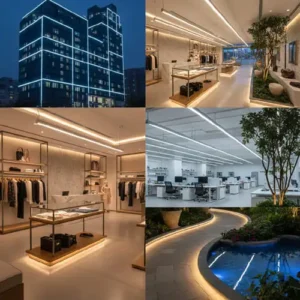
For crown molding and dropped ceilings, consistency is key. Cove lighting LED strip applications benefit massively from the 180-degree beam angle of COB tapes. This wider spread washes light further up the wall and across the ceiling, eliminating the shadowy dark spots often seen between widely spaced LEDs. Whether it is a residential living room or a commercial lobby, architectural COB tape light creates a smooth, soft gradient that feels luxurious.
Pro Tip: For dynamic mood setting in coves, many designers are now switching to our RGB LED strip options in COB format to mix color seamlessly without the “skittle” effect of visible colored diodes.
Retail Display and Shelf Illumination
In retail, how true the colors look (CRI) determines if a customer buys the product. A High CRI COB strip (90+) makes distinct reds, blues, and wood tones pop accurately. Because COB strips are flexible and can be very narrow, they fit perfectly into shelving grooves, jewelry cases, and cosmetic displays. The seamless light ensures the focus stays on the merchandise, not the light source.
Hospitality: Hotels, Restaurants, and Bars
Ambiance is everything in hospitality. COB strips are fantastic for bar under-lighting, stair treads, and pathway lighting. Because these environments often use dimmers, having a high-density strip ensures that even when dimmed down to 10%, the light remains a continuous line rather than breaking up into faint individual dots.
Outdoor Facade and Landscape Accents
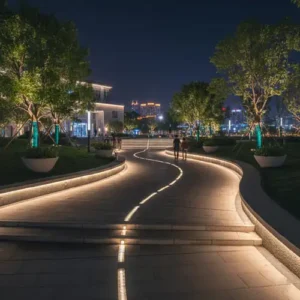
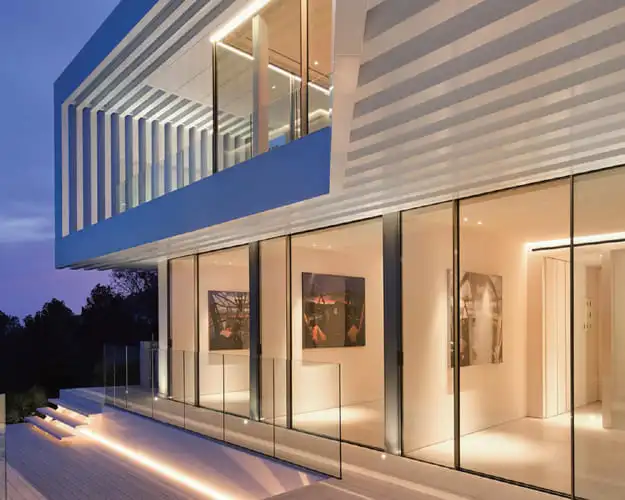
When you take lighting outside, durability is non-negotiable. Using an IP67 waterproof COB strip allows for distinct architectural outlining on building exteriors, patio steps, or retaining walls. The continuous neon-like appearance is perfect for modern landscape designs where you want a clean line of light visible at night without the harsh glare of floodlights.
Practical Installation Tips for These Scenarios
Even though COB strips are robust, professional installation requires the right accessories.
- Aluminum Channels: Always use an aluminum profile. While COB strips run cooler than older generations, the aluminum acts as a necessary heat sink to extend the lifespan. It also provides a clean mounting surface.
- Diffusers: With seamless linear lighting like COB, you don’t need a deep, milky diffuser to hide dots. You can use clear or semi-frosted covers to maximize brightness (lumen output) while still getting that solid tube-of-light look.
- Surfaces: Ensure the mounting surface is clean and dry. For porous surfaces like wood or drywall, the adhesive backing on the strip works best when adhered to an aluminum flat bar or channel rather than directly to the material.
If you are planning a large-scale project and need to verify specs across different applications, you can browse our complete range of LED lighting products to match the right voltage and IP rating to your specific environment.
Installation Best Practices for COB LED Strip Lights
Getting a professional finish isn’t just about buying the right light; it’s about how you install it. COB LED strip lights are easier to work with than traditional diodes because of their flexibility, but there are a few rules I always follow to ensure the system lasts for years.
Managing Power and Voltage Drop
The most common mistake I see in the field is underpowering the system or ignoring voltage drop. Always choose a power supply that handles your total wattage with a 20% buffer headroom.
- Voltage Drop: If you run a strip too long, the LEDs at the end will look dimmer than the start. For runs over 16 feet (5 meters), I strictly recommend 24V COB LED tape rather than 12V to keep brightness consistent.
- Injection: For very long perimeter installs, power the strip from both ends or the middle to maintain uniform illumination.
Heat Management with Aluminum Profiles
Even though COB technology is efficient, heat is still the enemy of longevity. Never stick high-output strips directly onto wood or drywall.
- Heat Sinking: Always install your dot-free LED strip inside an aluminum profile. The metal pulls heat away from the flip-chip diodes, extending their lifespan significantly.
- Adhesion: The aluminum provides a perfectly flat, clean surface for the 3M backing tape, ensuring the strip doesn’t peel off over time.
Connection Methods: Soldering vs. Solderless
For a truly bulletproof installation, soldering is the gold standard. It creates a permanent electrical bond that won’t loosen due to thermal expansion or vibration.
However, if you don’t have a soldering iron on site, high-quality “pierce-style” solderless connectors are a decent alternative. Just be aware that cheap clip-on connectors can sometimes cause flickering if they don’t make solid contact with the PCB pads. If you need specific lead lengths or pre-soldered connections for a large project, our customized service solutions can save you hours of labor on the job site.
Dimming and Smart Integration
Seamless linear lighting looks best when you can control the ambiance. COB strips are generally fully dimmable, but your power supply (driver) dictates how.
- Residential: Standard Triac or PWM dimming works with most wall switches.
- Commercial: For larger systems, look into 0-10V or DALI protocols for smoother, flicker-free dimming at low levels.
- Smart Home: If you want voice control via Alexa or Google Home, pair your strips with a Zigbee or Wi-Fi controller. This allows you to integrate your under-cabinet or cove lighting directly into your existing automation ecosystem.
How to Choose the Right COB LED Strip for Your Project
Selecting the correct COB LED strip light isn’t just about picking the brightest option; it is about matching specifications to your specific installation environment. I see too many projects fail because the voltage didn’t match the run length or the IP rating wasn’t right for the humidity.
Assessing Project Requirements
Before sourcing, you need to map out the physical demands of your space. A 24V COB LED tape is usually the standard for residential and commercial projects in the US because it allows for longer runs (up to 10 meters) without visible voltage drop compared to 12V.
Quick Selection Guide:
| Factor | What to Look For | Why It Matters |
|---|---|---|
| Run Length | 12V for short runs (<16ft); 24V/48V for long runs. | Prevents dimming at the end of the strip. |
| Environment | IP20 for dry areas; IP65/IP67 for bathrooms/outdoors. | Moisture destroys non-waterproof PCBs instantly. |
| Brightness | 300-500 lm/ft for task lighting; 150-250 lm/ft for accents. | High density isn’t needed for soft mood lighting. |
Budget vs. Performance and Batch Consistency
There is always a trade-off. Cheaper strips often use thinner copper PCBs (1oz), which retain heat and shorten the LED lifespan. For professional installations, you want at least a 2oz or 3oz double-layer PCB.
More importantly, if you are lighting a large area (like cove lighting in a hotel lobby), batch consistency is non-negotiable. You cannot have one section looking “cool white” and the next looking slightly pink because the manufacturer has poor binning standards. As a specialized LED solutions provider, we ensure that your strips come from the same strict color bin to maintain uniform illumination across the entire project.
Red Flags When Sourcing
If you are sourcing on your own, watch out for these clear signs of low quality:
- Rough Phosphor Layer: If the yellow silicone coating looks uneven or bumpy, the light output will be inconsistent.
- Poor Binning: If the seller cannot guarantee a 3-step MacAdam ellipse, you risk visible color mismatching.
- Low CRI Claims: A generic “CRI 80” often makes skin tones look washed out. Aim for a High CRI COB strip (90+) for true-to-life color rendering.
Why Choose Glowinled as Your Custom COB LED Manufacturer
When you are managing a large-scale commercial installation or building your own lighting brand, you need more than just a vendor—you need a partner who actually builds the product. At Glowinled, we aren’t just moving boxes; we are a custom COB LED manufacturer dedicated to precision and reliability. By working factory-direct, you cut out the middleman, ensuring you get transparent communication and engineering support that actually solves problems.
We understand the US market’s demand for high specs and consistency. Whether you need a specific high CRI COB strip for a luxury retail display or a unique voltage for an industrial project, we handle full OEM/ODM capabilities. We don’t force you into standard sizes; we customize the PCB width, color temperature (CCT), and lengths to fit your exact design requirements.
Our Customization & Quality Assurance
We take quality control seriously so you don’t have to worry about failures on the job site. Every batch undergoes rigorous testing, including 48–72 hour aging tests, to ensure seamless linear lighting performance from the moment you install it.
| Feature | What Glowinled Offers |
|---|---|
| Customization | Custom PCB width, wattage, CRI (90-98+), and private labeling. |
| Testing | 100% burn-in aging test (48-72 hours) before shipment. |
| Consistency | Strict binning controls to ensure color matching across batches. |
| Supply Chain | Reliable, factory-direct supply for contractors and designers. |
Partnering with us means getting factory-direct prices without sacrificing the professional support needed to execute complex projects flawlessly.
Frequently Asked Questions About COB LED Strip Lights
We field questions every day from contractors and homeowners about switching to COB LED Strip Lights. Since this technology is still relatively new compared to traditional SMDs, there are a few common sticking points. Here are the answers to the most frequent technical inquiries we receive at Glowinled.
Do COB strips require a diffuser to look good?
Technically, no. One of the main benefits of a COB LED strip light is that it provides seamless linear lighting right out of the reel. Because the chips are packed so tightly (high density), you get a hotspot-free LED strip even without a frosted cover. However, we still recommend installing them in an aluminum profile. While you don’t need the diffuser to hide dots, the metal channel acts as a heat sink, ensuring longevity.
Can they be cut to any length?
You can cut them, but not anywhere you want. You must cut strictly along the marked solder pads.
- High density LED strip advantages: Because the diodes are packed closer together, the cutting increments are usually much smaller than older strips (often every 1-2 inches), giving you more precision for fitting inside cabinets or architectural details.
What is the difference between 12V and 24V?
For most residential and commercial projects, we recommend 24V COB LED tape.
- 12V: Best for short runs, automotive applications, or PC case lighting.
- 24V: Best for under cabinet COB lighting and room perimeters. Higher voltage carries current further with less “voltage drop,” meaning the light stays bright from the beginning of the strip to the end.
How long do high-quality COB strips last?
If you are buying a professional-grade flip chip LED strip, you should expect roughly 50,000 hours of runtime. That is over 10 years if you run them for 12 hours a day. The key factor here is heat management; mounting them to a heat-dissipating surface (like aluminum) helps them reach that maximum lifespan.
Are COB strips suitable for outdoor use?
Yes, but you must check the IP rating.
- IP20: Indoor use only (dry locations).
- IP65: Splash resistant (great for bathrooms or cove lighting LED strip applications near moisture).
- IP67 waterproof COB strip: These are encased in a silicone sleeve and are suitable for outdoor landscaping or exterior architectural accents where they might get wet.
How does CRI affect color appearance?
CRI (Color Rendering Index) measures how accurately the light reveals the true colors of objects compared to natural sunlight.
- Low CRI (<80): Colors look washed out, gray, or sickly.
- High CRI COB strip (90+): Reds look red, wood grains pop, and food looks appetizing.
For any living space, retail display, or kitchen, never settle for less than CRI 90.