We frequently see project managers scramble when they realize their initial inventory calculations didn't account for real-world installation mishaps.
For standard commercial projects, request a 3% to 5% spare parts ratio to cover installation damage and early failures. However, for complex or enclosed installations where replacement is difficult, increase this allocation to 7% or higher to mitigate costly rework delays.
Understanding the specific variables that drive these numbers will save your project timeline and budget.
Is a 2% Spare Ratio Sufficient for Large-Scale COB Strip Installations?
When we review project specifications from contractors, a flat 2% allowance often raises red flags for our engineering team regarding long-term maintenance.
A 2% ratio is generally insufficient for large-scale COB installations due to the fragility of the technology. While acceptable for simple, accessible indoor runs, large projects with multiple cutting points and variable installer skill levels typically require a minimum buffer of 3% to 5% to prevent shortages.

The Reliability Paradox
In our production facility, we observe a distinct "reliability paradox" with COB (Chip on Board) technology. High-quality commercial-grade strips typically demonstrate failure rates of just 0.5% to 2% over their rated lifespan. However, this statistic assumes perfect installation conditions. On a real construction site, the environment is far from perfect.
If you are working on a large-scale deployment—such as a hotel or a retail chain—a 2% buffer leaves you dangerously exposed. For a project using 10,000 meters of strip, a 2% failure rate implies 200 meters of failed product. If your installers damage just 1% of the product during the rough-in phase (which is common due to the mechanical fragility of COB), you have already depleted your safety stock before the lights are even turned on.
3M adhesive tape 2
Installation Environment Variables
The complexity of the installation site is the primary driver for increasing your spare ratio. We categorize projects into three tiers to help our clients estimate their needs accurately.
- Accessible Locations: If the strips are mounted in open aluminum profiles that are easily reached, a lower ratio is acceptable because the cost of replacement is low.
- Complex Geometries: Projects requiring frequent cutting, soldering, and corner connections increase the risk of damaging the PCB pads.
- Enclosed Systems: Once a strip is sealed inside a cove or architectural feature, the cost of accessing it for repair dwarfs the cost of the LED strip itself.
Recommended Allocation Ratios
We have compiled a guideline based on data from hundreds of commercial orders we have fulfilled.
| Project Scenario | Installation Environment | Risk Level | Recommended Spare Ratio |
|---|---|---|---|
| Standard Commercial | Dry, open, accessible locations. Standard linear runs. | Low | 3% – 5% |
| Complex Custom | Non-standard lengths, frequent cutting, multiple corners. | Medium | 5% – 7% |
| Critical / Enclosed | Sealed coves, high ceilings, or 24/7 operation areas. | High | 8% – 12% |
The Cost of Underestimation
The financial impact of running out of spares is not just the cost of buying more lights. It is the administrative burden of raising a new purchase order, the shipping fees for a small parcel, and most critically, the labor downtime. If a crew has to return to a site specifically to replace a 2-meter section that wasn't in stock, the labor cost alone could exceed the value of the spare parts by ten times.
Should I Negotiate Free Spare LED Segments for Potential Shipping Damage?
We pack our shipments with heavy-duty protection, but international logistics can be unpredictable for delicate electronics like COB strips.
grid surges 3
You should absolutely negotiate a specific "Dead on Arrival" (DOA) clause rather than just asking for free segments. Reputable suppliers often include a standard 1-2% overage for shipping risks, but a contractual agreement ensures immediate, cost-free replacement of any spares damaged during transit without depleting your installation buffer.
The Importance of Batch Consistency
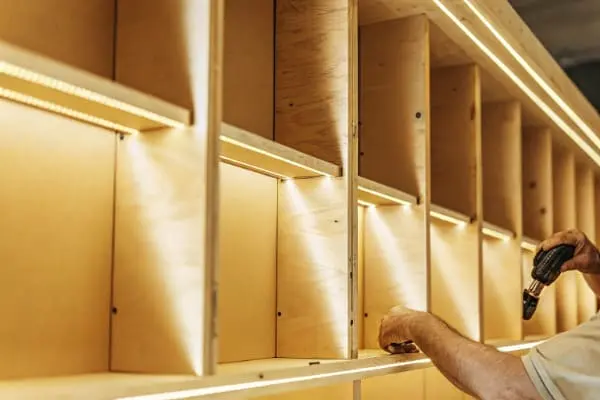
When we produce a batch of LED strips for a project, we use LEDs from a specific "Bin Code" to ensure the Color Correlated Temperature (CCT) is identical across the entire run. This is why simply asking for "free spares" later is dangerous. If you receive replacement parts three months later, they may come from a different production batch. Even a slight deviation in color—visible to the naked eye as a pink or green tint—can ruin the visual continuity of a linear lighting project.
Therefore, negotiating spares upfront ensures that your backup stock comes from the exact same manufacturing batch as your main installation. This guarantees that any repairs performed years down the line will match the original installation perfectly.
Defining "Overage" vs. "Spares"
It is helpful to distinguish between shipping overage and maintenance spares in your contract negotiations.
- Overage: This is a small percentage (usually 1-2%) provided to cover immediate breakage during transport or unpacking.
- Maintenance Spares: These are the 3-5% reserves intended for the long-term operation of the facility.
If you do not separate these, a rough shipment could wipe out your maintenance stock before installation begins.
solid-state devices 5
Contractual Protection Strategies
To protect your interests, we recommend including specific clauses regarding shipping damage and replacement protocols. This clarifies responsibility and prevents disputes.
| Contract Clause | Purpose | Benefit to Buyer |
|---|---|---|
| DOA Inspection Window | Allows 7-14 days to test spares upon arrival. | Ensures your "spare" stock is actually functional before you store it. |
| Bin Code Locking | Mandates spares must match the main batch. | Prevents color mismatch in future repairs. |
| Vacuum Packaging | Requires spares to be sealed. | Protects the phosphor and silver from degradation during storage. |
Handling Claims Efficiently
In our experience, the most friction occurs when a buyer discovers damaged spares months after delivery. By then, the shipping insurance has expired. We advise our clients to perform a "power-up test" on spare reels immediately upon receipt. You do not need to unroll them; simply connecting them to a power supply while on the reel (briefly, to avoid overheating) will reveal any dead sections or connectivity issues caused by shipping impact.
What Accessories and Connectors Should I Stock as Spares for Urgent Site Repairs?
In our factory testing labs, we frequently find that accessories and connection points fail long before the actual LED diodes do.
Bin Code 6
Stock at least 5% to 10% extra solderless connectors and 5% spare power supplies, as these components have higher statistical failure rates than the strips themselves. Additionally, keep fresh rolls of thermal adhesive and specific joining cables on hand, as re-using removed tape or connectors compromises long-term reliability.

The Weakest Link: Power Supplies
While LED strips are solid-state devices that degrade gradually, power supplies (drivers) tend to fail catastrophically. When a driver fails, the lights go dark instantly. Unlike a dimming LED, this is an emergency maintenance issue.
Power supplies are complex electronic devices containing capacitors that can dry out or fail due to grid surges. We recommend stocking spare power supplies at a 5% to 10% ratio. If your project uses 100 drivers, having 5 to 10 on the shelf is mandatory. Ensure these spares match the specific voltage and dimming protocol (e.g., DALI, 0-10V) of the installed units.
Connector Fragility
Solderless connectors are convenient for installation, but they are notorious failure points. They rely on mechanical pressure to pierce the PCB copper pads. Over time, thermal expansion and contraction can loosen these connections, causing flickering.
- Installation Reality: Installers often break connectors while trying to snap them closed.
- Reuse Issues: Once a connector is clamped down, it cannot be reused reliably.
- Overage Need: We suggest a 10% overage for connectors. They are inexpensive, but running out of them stops work immediately.
Essential Consumables Checklist
Beyond the hardware, there are "soft" consumables that are often forgotten. When a strip needs to be replaced, the old adhesive tape is destroyed. You cannot stick a new strip onto old, residue-filled aluminum.
Spare Parts Inventory Checklist
Use this table to plan your accessory procurement.
| Component | Recommended Spare % | Why It is Needed |
|---|---|---|
| Power Supplies (Drivers) | 5% – 10% | High failure risk from grid surges; catastrophic failure mode. |
| Solderless Connectors | 10% – 15% | Easily broken during installation; cannot be reused. |
| Thermal Adhesive Tape | 1 Roll per 10 Spares | Essential for re-mounting; old tape loses adhesion. |
| Mounting Clips | 5% | Often lost or snapped during maintenance access. |
The "System" Approach
Don't just think about the light. Think about the system. If a maintenance technician goes up a ladder to replace a strip, they will likely need to cut wires, strip insulation, and apply new tape. If you only provide the LED strip, they cannot complete the repair. We always advise packaging a "Repair Kit" that includes the strip, the connector, and a small amount of wire, ensuring a one-trip fix.
How Does the Fragility of COB Technology Affect My Inventory Planning for Spares?
We constantly remind our clients that COB strips behave differently than traditional SMD strips and require specific handling protocols.
rated lifespan 8
COB technology requires higher inventory planning because the continuous phosphor coating can crack if bent below a 50mm radius. Unlike SMD strips where single diodes can be replaced, a cracked COB segment often requires replacing the entire cut section, necessitating a larger inventory of full, uncut reels rather than short scraps.
Mechanical Vulnerability of COB
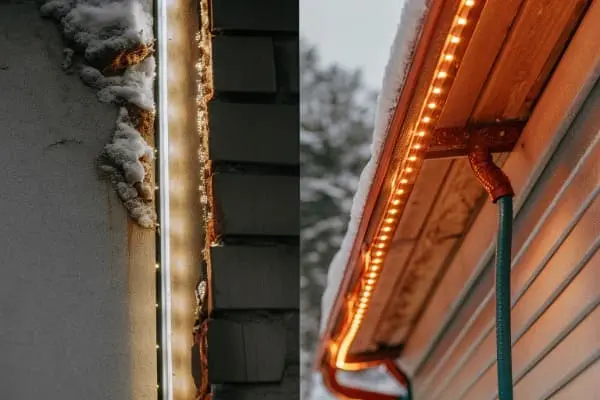
The beauty of COB (Chip on Board) is its continuous line of light, achieved by covering the LED chips with a layer of phosphor silicone. However, this construction makes it mechanically stiffer and more brittle than traditional SMD strips.
- Bending Radius: If a COB strip is bent sharply (usually less than a 50mm radius) or twisted, the internal gold wire bonds can break, or the phosphor layer can crack.
- Impact: A single point of impact can sever the circuit for a whole segment.
- Repair Difficulty: In traditional strips, you might replace a single LED. In COB, the "module" is often longer, and splicing a short piece into a continuous run is visually obvious and technically difficult.
Why "Scraps" Don't Work as Spares
Contractors often think they can use the leftover cut pieces from the installation as spares. This is a mistake.
- Oxidation: Leftover pieces left in a box are exposed to air. The copper pads oxidize, making soldering difficult later.
- Handling Damage: Scraps are often tossed into a bin, subjecting them to the very bending and twisting that damages COB strips.
- Length Mismatch: When a failure occurs, it rarely matches the length of your scrap pieces.
Storage Requirements for Longevity
To ensure your spares are actually useful when needed (potentially years later), storage conditions are critical.
- Anti-Sulfuration: LEDs are sensitive to sulfur in the air, which blackens the silver lead frame. Spares must be kept in vacuum-sealed anti-static bags.
- Humidity Control: Moisture ingress can degrade the phosphor. We recommend including desiccant packs in your spare parts storage.
- Shelf Life: The 3M adhesive tape on the back of the strip has a shelf life of about 12-24 months. After this, it may dry out. Your maintenance plan should include fresh rolls of thermal tape, as the pre-applied tape on the spare strip might be compromised after long storage.
Inventory Strategy: Full Reels vs. Cuts
We strongly recommend keeping your spares in full, uncut 5-meter reels.
It is much easier for a technician to cut the exact length they need from a fresh reel than to try and piece together multiple short scraps. This reduces the number of solder joints (points of failure) and ensures a cleaner, more professional repair. While it may seem like a higher upfront investment, the reduction in labor cost during a repair justifies the expense.
Conclusion
Proper spare parts planning prevents minor failures from becoming major headaches.
early failures 10
Footnotes
- Educational resource defining inventory planning and supply chain concepts. ↩︎
- Manufacturer of the specific thermal adhesive products mentioned in the article. ↩︎
- Professional organization setting standards for power quality and surge protection. ↩︎
- Leading manufacturer of LED drivers with technical data on reliability and failure rates. ↩︎
- Department of Energy overview of solid-state lighting technology and benefits. ↩︎
- Authority on lighting definitions, chromaticity, and binning standards. ↩︎
- Global trade association establishing standards for printed circuit board design and assembly. ↩︎
- Government standards for testing and rating LED product longevity. ↩︎
- Academic research center specializing in solid-state lighting technology and applications. ↩︎
- Explains the bathtub curve concept of infant mortality in electronics reliability. ↩︎