
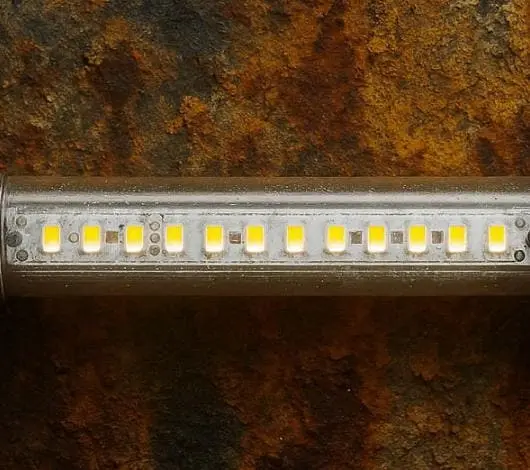
when we review failed lighting samples returned from chemical processing facilities explosion-proof certifications 1. The damage is always the same—corroded copper traces, crumbling silicone, and blackened LEDs. These failures don't just waste money. They create real safety hazards in environments already filled with risk.
LED strip lights for corrosive chemical plants require explosion-proof certifications (ATEX, IECEx), IP66–IP68 ingress protection, corrosion-resistant materials like 316L stainless steel or F1-rated silicone encapsulation, wide temperature tolerance from -20°C to +80°C, and strict chemical compatibility to ensure safe, long-lasting performance.
This guide breaks down each critical requirement so you can specify the right LED strip for your next chemical plant project IP66–IP68 ingress protection 2. Let's walk through protective coatings, IP ratings, color consistency, and the certifications that matter most.
How do I choose the right protective coating to prevent my LED strips from corroding in a chemical plant?
When we first started supplying LED strips for industrial clients in Germany, the most common complaint was early failure from corrosive gas exposure 316L stainless steel 3. Standard coatings simply could not hold up. The problem is invisible at first—corrosive vapors slowly eat through ordinary materials, and by the time you notice, the strip is dead AEC-Q102 robustness standards 4.
Choose a protective coating rated F1 or higher for gas-phase corrosion resistance, such as industrial-grade silicone encapsulation or fluoropolymer-based conformal coatings. These coatings must pass salt spray, acid-alkali immersion, and oil resistance tests to reliably shield LED strips from chemical degradation.
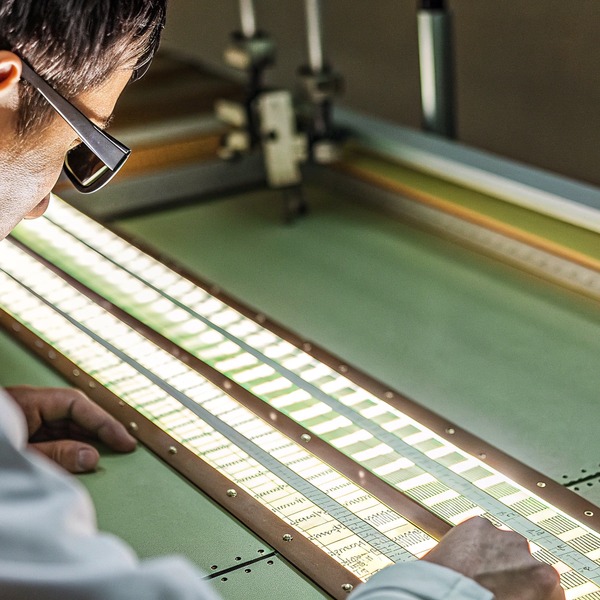
Why Standard Coatings Fail in Chemical Plants
Most LED strips on the market use basic silicone or epoxy coatings. These work fine in homes or offices. But in a chemical plant, the air itself is the enemy. Hydrogen sulfide 5, chlorine, ammonia, and acidic vapors are common. They attack copper traces 6 on the PCB, degrade phosphor layers inside the LED chip, and break down low-grade silicone over months.
From our production line testing, we have seen standard silicone turn brittle and crack after just 500 hours of accelerated acid vapor exposure. Once the coating cracks, moisture and chemicals reach the LED and circuit. The result is rapid lumen depreciation, color shift, or total failure.
What Makes a Coating "Chemical-Resistant"?
Not all silicone is the same. Industrial-grade silicone encapsulants are formulated to resist specific chemical families. An F1-rated silicone, for example, has passed rigorous tests including salt spray (per ASTM B117 7), acid and alkali immersion, and oil resistance. Some manufacturers also use fluoropolymer conformal coatings, which create an ultra-thin but extremely durable barrier.
Here is a comparison of common coating types:
| Coating Type | Chemical Resistance | Flexibility | Typical Use Case | Lifespan in Corrosive Air |
|---|---|---|---|---|
| Standard Epoxy | Low | Rigid, cracks easily | Indoor residential | < 6 months |
| Basic Silicone | Moderate | Good | Outdoor general | 6–18 months |
| F1-Rated Silicone | High | Excellent | Chemical plants, marine | 3–5+ years |
| Fluoropolymer Conformal | Very High | Moderate | Severe acid/alkali exposure | 5+ years |
Full Encapsulation vs. Surface Coating
There is a big difference between a surface-applied conformal coat and full encapsulation. A conformal coat is a thin layer sprayed or dipped onto the PCB. It helps, but it can have pinholes or thin spots. Full encapsulation means the entire LED strip—PCB, LEDs, resistors, and solder joints—is sealed inside a continuous silicone or polymer sleeve.
In our experience producing strips for harsh environments, full encapsulation is the safer choice. It eliminates weak points. The strip becomes a sealed unit. No air, no moisture, no chemical vapor can reach the internal components. This is especially important when the plant has mixed corrosive agents—say, both chlorine and sulfur compounds in the same area.
Don't Forget the Copper Traces
Even the best coating won't help if the underlying PCB uses bare copper. Corrosive gases like hydrogen sulfide react with copper to form copper sulfide, which is not conductive. This kills the circuit. We recommend specifying LED strips with gold-plated or nickel-plated copper traces for chemical plant applications. The plating adds a secondary barrier beneath the encapsulation.
What IP rating should I specify to protect my lighting from acidic vapors and liquid splashes?
One of the questions we hear most from procurement teams in Australia and Germany is about IP ratings. Many assume IP65 is "waterproof enough." But in a chemical plant, the threat is not just water—it's acidic liquids, caustic washdown sprays, and vapor-laden humidity that never stops.
For chemical plants with acidic vapors and occasional liquid splashes, specify a minimum of IP66 for general areas and IP67 for washdown zones. For areas with potential submersion or continuous chemical mist, IP68 is required to ensure full protection against liquid and particulate ingress.

Understanding IP Ratings for Industrial Use
IP stands for Ingress Protection 8. The first digit rates solid particle protection (0–6). The second digit rates liquid protection (0–9). In a chemical plant, you need the highest solid protection (6 = dust-tight) and high liquid protection.
Here is a quick breakdown of the most relevant ratings:
| IP Rating | Solid Protection | Liquid Protection | Chemical Plant Application |
|---|---|---|---|
| IP65 | Dust-tight | Low-pressure water jets | Light-duty indoor areas only |
| IP66 | Dust-tight | Powerful water jets | General processing floors |
| IP67 | Dust-tight | Temporary immersion (up to 1m) | Washdown zones, outdoor areas |
| IP68 | Dust-tight | Continuous submersion (depth specified by manufacturer) | Tanks, sumps, heavy mist areas |
IP66 Is the Starting Point, Not the Goal
Many standard industrial LED strips are rated IP65. That is not enough for a chemical facility. IP65 handles low-pressure water jets, but it does not protect against the fine chemical mists that hang in the air for hours. These mists find every gap.
IP66 handles high-pressure jets from any direction. This is the bare minimum for general floor areas in a chemical plant. If the area is subject to washdowns—common in pharmaceutical and chemical production—IP67 is the right choice. And for any area where strips could be submerged or where vapors condense heavily, IP68 is mandatory.
The Real Threat: Vapor Ingress
Here is something many buyers overlook. IP ratings are tested with clean water under controlled conditions. Chemical vapors behave differently. They are smaller molecules. They can penetrate seals that stop water. This is why the coating material matters just as much as the IP number.
Our engineering team always recommends pairing a high IP rating with a chemically resistant encapsulation. The IP rating keeps bulk liquid out. The encapsulation resists molecular-level vapor penetration. Together, they form a double defense.
Mounting and Seal Integrity
Even an IP68-rated strip can fail if the mounting system compromises the seal. Cable entry points, connectors, and end caps are the weak spots. We supply our chemical plant strips with fully molded end caps and sealed connector systems. Every junction point must maintain the same IP level as the strip itself. One exposed connector can doom an entire run.
Also, consider thermal cycling. Chemical plants often experience temperature swings. Materials expand and contract. Low-quality seals can open micro-gaps over time. This is why we test our sealed assemblies through thousands of thermal cycles before shipping.
How can I guarantee long-term color consistency and performance in my harsh industrial environment?
Color consistency is something our clients in architectural and commercial lighting obsess over. But it matters just as much in chemical plants—maybe more. Inconsistent lighting can hide safety hazards, confuse visual inspections, and signal to auditors that your facility is poorly maintained.
To guarantee long-term color consistency, specify LED strips with tight binning (within 3-step MacAdam ellipse), CRI ≥70, and components rated for corrosive environments per AEC-Q102 robustness standards. Pair this with thermal management and sealed encapsulation to prevent lumen depreciation and color shift over the strip's rated life.
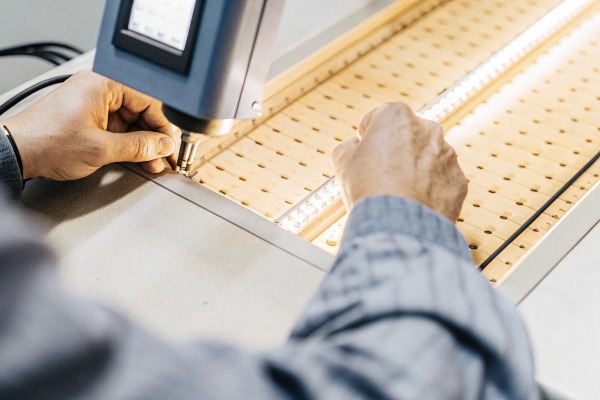
What Causes Color Shift in Harsh Environments?
Color shift happens when the LED phosphor degrades, the encapsulant yellows, or the drive current changes due to circuit corrosion. In a chemical plant, all three can happen at once. Sulfur compounds are especially harmful. They react with the silver-plated lead frames inside the LED package, causing darkening. Chlorine attacks solder joints and changes resistance, which alters drive current.
When we run accelerated aging tests with sulfur-rich atmospheres, unprotected LEDs can shift 5–10 SDCM (steps of deviation in color matching) within 2,000 hours. That is a visible, obvious change. Protected LEDs with sealed packages and robust materials hold within 3 SDCM for over 50,000 hours.
Binning and Batch Control
Binning is the process of sorting LEDs by their exact color temperature and brightness after manufacturing. Tight binning—within a 3-step MacAdam ellipse 9—means the human eye cannot detect differences between LEDs on the same strip or across multiple strips from different production runs.
For chemical plant projects, this matters because installations are often done in phases. You might install 200 meters this quarter and add 100 meters next quarter. If the bins don't match, the difference will be obvious, especially in long corridors or along tank walls.
We maintain strict bin code records for every batch. When a repeat order comes in, we match it to the same or adjacent bin codes. This is a core part of our quality control process.
Performance Metrics That Matter
| Performance Metric | Minimum Requirement | Recommended for Chemical Plants | Why It Matters |
|---|---|---|---|
| CRI (Color Rendering Index) | ≥70 | ≥80 for inspection areas | Accurate color rendering for safety signage and visual checks |
| Color Tolerance (MacAdam) | 5-step | 3-step | Prevents visible color variation across installation |
| Lumen Maintenance (L70) | 50,000 hours | 100,000 hours | Reduces replacement frequency in hard-to-access areas |
| Color Temperature Options | 4000K–5000K | 3000K–5700K range available | Match to task: cool white for inspection, warm for walkways |
| Sulfur Resistance | Not rated | AEC-Q102 Robustness Class A or B | Prevents darkening from sulfur compounds |
Thermal Management in Enclosed Spaces
Heat is the silent killer of LED performance. In a sealed encapsulation, heat has fewer paths to escape. If the strip is mounted in an enclosed channel or near a hot process pipe, junction temperatures rise. High temperatures accelerate phosphor degradation and drive lumen loss.
Our strips for chemical plants use thermally conductive silicone and aluminum-backed PCBs. The aluminum spreads heat along the length of the strip. The silicone transfers it outward. This keeps junction temperatures within safe limits even in enclosed installations.
We also recommend derating—running the strip at 80% of maximum power—in high-temperature zones. This small reduction in brightness extends the life dramatically and keeps color stable for years.
Which safety certifications do I need to verify before purchasing LED strips for my chemical facility project?
Before we ship any order to a chemical plant project, the first question our team asks is: "Which zones will these strips be installed in?" The answer determines everything—from the type of certification needed to the materials we can use. Getting this wrong is not a quality issue. It is a safety and legal issue.
Verify explosion-proof certifications such as ATEX (EU), IECEx (international), or UL Class I Division 1/2 (US/Canada) matched to the specific hazardous zone classification of your plant. Additionally, confirm CE, RoHS, and any local electrical safety marks required by your jurisdiction before specifying LED strips for chemical facilities.

Understanding Hazardous Zone Classifications
Chemical plants are divided into zones based on the likelihood of explosive atmospheres. The classification system differs between regions, but the core idea is the same: the more likely a flammable gas or dust is present, the stricter the certification requirement.
For gas hazards:
- Zone 0: Explosive atmosphere present continuously. LED strips are rarely used here.
- Zone 1: Explosive atmosphere likely during normal operation. Requires Ex-rated equipment.
- Zone 2: Explosive atmosphere unlikely but possible. Still requires certified equipment, but requirements are less strict.
For dust hazards:
- Zone 20, 21, 22: Parallel to Zones 0, 1, 2 but for combustible dust.
In the US and Canada, the system uses Class I (gases), Class II (dusts), and Division 1 (normally hazardous) or Division 2 (abnormally hazardous).
Which Certifications Apply Where?
| Certification | Region | What It Covers | Required For |
|---|---|---|---|
| ATEX (2014/34/EU) 10 | European Union | Equipment for explosive atmospheres | Zone 1, 2, 21, 22 installations in EU |
| IECEx | International | Global explosion protection standard | Zone 1, 2, 21, 22 worldwide |
| UL Class I Div 1/2 | USA / Canada | Hazardous location equipment | NEC-classified areas |
| CE Marking | European Union | General product safety and compliance | All products sold in EU |
| RoHS | EU and many others | Restriction of hazardous substances | Environmental compliance |
| SAA / RCM | Australia | Electrical safety and EMC | All electrical products in Australia |
When our Australian clients are bidding on chemical plant projects, they typically need IECEx plus RCM. For our German clients, ATEX plus CE is the baseline. Some projects require both ATEX and IECEx if the plant operates under international standards.
Temperature Class (T-Rating)
This is often overlooked. Every certified explosion-proof light has a T-rating that indicates its maximum surface temperature. This temperature must be below the auto-ignition temperature of any gas or dust in the area. For example, if hydrogen (auto-ignition 500°C) is present, a T1 rating (≤450°C) is required.
Most LED strips run cool—surface temperatures rarely exceed 80°C. But the certification must still explicitly state the T-rating. Without it, the product cannot be legally installed in a classified zone.
Protection Types for LED Strips
The most common explosion protection method for LED strip lights is Ex m (encapsulated protection). This means the entire strip is sealed in a compound that prevents any internal spark or heat from reaching the explosive atmosphere. It is ideal for flexible, low-profile installations.
Other methods include Ex e (increased safety) and Ex d (flameproof enclosure), but these are more common for rigid fixtures. For strip lighting, Ex m is the practical standard.
The Cost of Cutting Corners
We have seen projects where uncertified LED strips were installed in Zone 2 areas to save money. In one case, a facility audit caught the issue. The plant had to shut down the affected section, remove all lighting, and reinstall certified products. The total cost was more than ten times what the correct product would have cost initially.
Certifications are not optional in chemical plants. They protect lives. They protect your project from legal liability. And they protect your reputation as a contractor or supplier.
Integration with Plant Safety Systems
Advanced LED strip systems can connect to plant-wide safety networks. This allows remote monitoring, fault detection, and emergency-mode switching. In an evacuation scenario, the lighting can switch to a high-visibility emergency mode. This integration requires the strip to meet both lighting and communication safety standards, adding another layer of certification complexity.
If your project calls for smart integration, confirm that the control modules and drivers also carry the appropriate hazardous area certifications. A certified strip connected to an uncertified driver is still a compliance failure.
Conclusion
Choosing LED strips for corrosive chemical plants demands attention to coatings, IP ratings, color stability, and proper certifications. Every detail matters for safety and longevity. If you need guidance on specifying the right solution, reach out to our team at [email protected].
Footnotes
- Explains ATEX and IECEx, crucial safety standards for equipment in hazardous environments. ↩︎
- Details the specific IP ratings (66, 67, 68) for protection against solids and liquids. ↩︎
- Replaced HTTP 404 with a comprehensive article on 316L stainless steel properties and applications from a materials science information website. ↩︎
- Describes the Automotive Electronics Council standard for qualifying optoelectronic components in harsh environments. ↩︎
- Offers detailed information on the chemical properties and hazards of hydrogen sulfide. ↩︎
- Explains how copper traces on PCBs are susceptible to corrosion in harsh environments. ↩︎
- References the standard test method for salt spray (fog) apparatus, essential for corrosion testing. ↩︎
- Defines the international standard (IEC 60529) for classifying protection against solids and liquids. ↩︎
- Explains the concept of MacAdam ellipses for measuring and ensuring LED color consistency. ↩︎
- Provides official information on the European Union directive for equipment in explosive atmospheres. ↩︎


 English
 Spanish
 German
 Russian
 Arabic
 French
 Portuguese