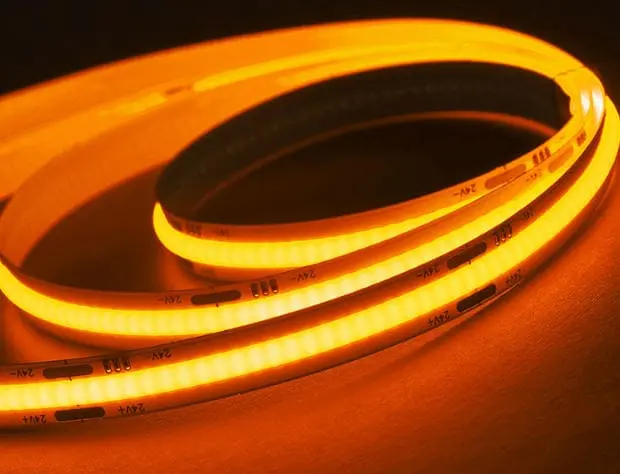
Every week on production floor, we see how a single chip choice ripples through an entire LED strip project 1 — affecting brightness, color, lifespan, and final cost.
Before negotiating LED chip prices, you should understand mainstream chip brand pricing ranges, current market trends, tiered quality differences, color consistency standards, and key technical specifications. This knowledge prevents suppliers from controlling the conversation and helps you secure fair terms backed by real data.
This article walks you through the four critical areas every procurement professional should master before sitting down with an LED chip or LED strip supplier phosphor conversion patents 2. Let's start with the brands themselves.
How do I distinguish between Tier 1 and Tier 2 LED chip brands to ensure my project's longevity?
When we source chips for our mid-to-high-end LED strips at Glowin, the brand tier is the first filter we apply — because it decides how a project performs five years down the line.
Tier 1 LED chip brands like Nichia, ams OSRAM, Samsung LED, and Seoul Semiconductor offer superior binning consistency, longer lifespan ratings, and proven reliability in demanding environments. Tier 2 brands can be cost-effective but often show wider performance variance, making thorough vetting essential before committing.
What Makes a Brand "Tier 1"?
Tier 1 is not just a marketing label. It reflects measurable differences. A Tier 1 chip maker typically invests heavily in epitaxy R&D 3, maintains tight wafer-level quality control, and publishes detailed datasheets with real-world test data. They also hold key patents — Nichia 4, for instance, holds foundational phosphor conversion patents that shape the entire white LED industry.
In our experience shipping to Germany and Australia, specifiers in both markets routinely ask which chip brand sits inside the strip. German architects often require documentation linking back to the chip manufacturer. Australian contractors need to know the chip can handle temperature extremes. A Tier 1 chip gives you that paper trail.
Tier 1 vs. Tier 2: A Practical Comparison
| Factor | Tier 1 (e.g., Nichia, Samsung, OSRAM) | Tier 2 (e.g., Regional Chinese brands) |
|---|---|---|
| Lumen maintenance at 50,000 hrs | Typically >L80 at rated current | May reach L70 or lack verified data |
| Color binning tolerance | Tight (often 2–3 SDCM 5) | Wider (5–7 SDCM common) |
| Datasheet completeness | Full thermal, optical, electrical data | Sometimes missing junction temp data |
| Price range per chip (mid-power) | Higher — roughly 1.5× to 3× Tier 2 | Lower baseline cost |
| Patent protection | Strong global IP portfolio | May rely on licensed or generic designs |
| Supply stability | Consistent across years | Can fluctuate with market conditions |
When Tier 2 Actually Makes Sense
Not every project needs a Tier 1 chip. For short-term retail displays or temporary event lighting, a well-vetted Tier 2 chip can deliver adequate performance at a lower cost. The key word here is "well-vetted." We always request LM-80 test reports 6, even from Tier 2 suppliers. If they cannot provide one, that is a red flag.
The global LED chip and module market is projected to reach USD 5.88 billion in 2026, growing to USD 10.09 billion by 2035 at a CAGR of 6.21%. This growth is fueled by both premium and budget segments. But as a buyer, your job is to match chip tier to project requirements — not simply chase the lowest price.
How to Verify a Supplier's Chip Claims
Ask for the chip's part number. Cross-reference it on the chip manufacturer's official website. Request the original reel label photos. During our QC process at Glowin, we photograph every chip reel before assembly. This simple step has caught substitution attempts more than once. If your supplier resists providing chip traceability, consider that a warning sign.
How can I guarantee color consistency and MacAdam ellipse standards when sourcing multiple batches?
One of the biggest complaints we hear from contractors is this: the first batch looked perfect, but the second batch shifted noticeably in color. That mismatch can ruin an entire architectural lighting scheme.
To guarantee color consistency across multiple LED strip batches, require suppliers to commit to a specific MacAdam step (ideally 3-step SDCM or tighter), provide binning documentation per shipment, and establish a chip inventory reservation system for ongoing projects. Written specs in your purchase order are your strongest tool.
What Is a MacAdam Ellipse?
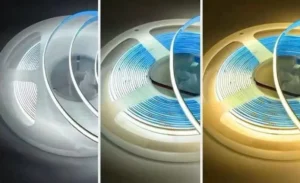
A MacAdam ellipse 7 defines how much color variation the human eye can perceive. It is measured in "steps." A 1-step MacAdam ellipse means virtually no visible color difference. A 3-step means a trained eye might notice slight variation. Beyond 5 steps, most people can see a clear difference.
For high-end architectural projects — the kind our clients in Germany and Australia typically specify — a 3-step SDCM (Standard Deviation of Color Matching) is the minimum acceptable standard. Some luxury hospitality projects demand 2-step.
MacAdam Step Reference Table
| MacAdam Step | Visible Difference | Typical Application |
|---|---|---|
| 1-step | Virtually none | Laboratory, medical lighting |
| 2-step | Imperceptible to most | Luxury hospitality, museums |
| 3-step | Barely noticeable | High-end architectural, retail |
| 5-step | Noticeable side by side | General commercial |
| 7-step | Clearly visible | Budget / temporary installations |
How Batches Drift — and What to Do About It
Color drift happens because LED chips are cut from different wafers, and each wafer has slight variations in phosphor deposition and die characteristics. Even within a single Tier 1 brand, two production runs can land in different color bins.
Here is what we do at Glowin to manage this. Before production begins on a multi-batch project, we reserve a specific chip bin code with our chip supplier. We document this bin code in the purchase order. If the project spans six months, we either buy all chips upfront or lock in a reserved allocation. This costs a bit more in working capital but saves enormous headaches later.
Practical Steps for Buyers
- Specify SDCM in writing. Do not rely on verbal promises. Your purchase order should state "3-step MacAdam maximum" or your chosen tolerance.
- Request bin code documentation. Every shipment should include the chip bin code. Compare it to the original sample.
- Order a pilot batch first. Before committing to a large run, test a small quantity under actual installation conditions.
- Use a reference sample. Keep a sealed reference strip from the first batch. Compare every subsequent delivery against it under controlled lighting.
When we calibrate our SMT lines for a new batch, our technicians compare the incoming chips against the stored reference. If the bin code has shifted, we flag it before any reels are loaded. This process catches 90% of potential color issues before they reach the assembly stage.
Color consistency is not just about chips either. The PCB substrate, the encapsulant, and even soldering temperature can influence the final color output. But the chip is the starting point — and if the chip is inconsistent, nothing downstream can fix it.
How do current LED chip market price fluctuations affect my procurement budget and lead times?
Before entering any pricing discussion, our sourcing team checks the latest chip market trends. Knowing whether the market is rising, stable, or falling changes everything about how we set quotes — and it should change how you evaluate them.
The global LED chip market is experiencing moderate price declines in commodity segments due to Asian oversupply, while specialty chips (Mini LED, UV, automotive) see stable or rising prices. Budget impacts range from 5–15% swings per quarter. Lead times stretch during supply tightening, so buyers should plan procurement 8–12 weeks ahead and lock pricing with volume commitments.

The Current Market Landscape
As of 2025–2026, the LED chip market 8 presents a split picture. General lighting chips — the kind used in standard LED strips — face pricing pressure from Chinese manufacturers who have expanded capacity aggressively. China accounts for over 50% of global LED chip production and sales. This oversupply keeps prices low for standard mid-power chips.
But specialty segments tell a different story. Mini LED chips for display backlighting are growing fast — the Mini LED TV market is projected to rise 40% in 2026. Micro LED is still early-stage but commands a staggering 133% CAGR in AR and AI wearable applications. UV LED chips for sterilization and horticultural LEDs also see firm pricing.
Price Trend Snapshot: 2025–2026
| Chip Category | Price Trend | Key Driver |
|---|---|---|
| Standard mid-power (e.g., 2835, 5050) | Slight decline (−3% to −8% YoY) | China oversupply, commodity competition |
| High-CRI / specialty white | Stable to slight increase | Premium architectural demand |
| Mini LED (backlighting) | Stable, volume-driven discounts | Display market growth (+40% in 2026) |
| UV LED (UV-C sterilization) | Rising (+5% to +10%) | Healthcare and water treatment adoption |
| Automotive-grade chips | Rising (+5% to +15%) | Matrix headlamp and interior lighting growth |
| COB (Chip-on-Board) modules | Stable with volume incentives | COB market growing at 13.9% CAGR |
What This Means for Your Budget
If you are buying standard LED strips for general commercial projects, you have leverage. The market has excess capacity, and many Chinese chip manufacturers are competing hard on price. Use this to your advantage — but do not push so hard that your supplier substitutes a lower-grade chip to maintain margins.
If your project requires specialty chips — high-CRI, tunable white, UV, or automotive-grade — expect firmer pricing. Suppliers have less room to discount because their own chip costs are stable or rising.
Lead Time Realities
Lead times for standard chips currently sit around 4–6 weeks from major Chinese manufacturers. Tier 1 brands like Nichia or OSRAM can take 8–12 weeks, especially for specific bin codes. If you need tight color bins reserved for a multi-phase project, add another 2–4 weeks for allocation confirmation.
Our advice from years of managing project timelines: place your chip-dependent orders at least 10 weeks before your installation date. This buffer absorbs unexpected delays — whether from chip shortages, shipping disruptions, or customs clearance.
A Personal Note on Negotiation Timing
Here is a point that many buyers overlook. If the chip market is flat or declining, and your supplier suddenly proposes a significant price increase, ask for the justification. Request a cost breakdown. At Glowin, we share raw material indexing with long-term clients so they can see exactly where costs moved. A trustworthy supplier should be able to show you the math. If they cannot, it is worth getting a second quote.
Conversely, if the broader semiconductor market is booming — global semiconductor sales are projected to hit USD 975 billion in 2026, a 26% increase — some upstream cost pressure is legitimate. The key is knowing the difference between a real market shift and an opportunistic markup.
Which technical chip specifications should I prioritize to meet my client's specific brightness and efficiency requirements?
When we sit down with a new client to discuss their project, the conversation always comes back to two things: "How bright?" and "How efficient?" These questions are chip-level decisions, and they deserve precise answers.
Prioritize luminous efficacy (lm/W), forward voltage, color rendering index (CRI), junction temperature rating, and lumen maintenance (LM-80 data) when evaluating LED chips. These five specifications directly determine whether your finished product delivers the brightness, energy savings, and lifespan your client expects. Always request full datasheets before committing.

The Five Specifications That Matter Most
Not all datasheet numbers carry equal weight. Here is where to focus your attention when reviewing chip specs for LED strip applications.
1. Luminous Efficacy (lm/W)
This is the single most important efficiency metric. It tells you how much light output you get per watt of electrical input. A modern mid-power LED chip should deliver 150–200 lm/W at the chip level. By the time it is packaged in a strip with optics and thermal losses, you might see 120–160 lm/W at the system level. Always clarify whether the quoted efficacy is chip-level or system-level.
2. Forward Voltage (Vf)
Forward voltage determines how much power each chip draws. A lower Vf at the same current means less heat and better efficiency. For a typical 2835 chip, expect Vf around 2.8–3.2V. Small differences multiply across a 5-meter or 20-meter strip run. Our engineers always calculate total power draw based on actual Vf measurements, not just nominal values.
3. Color Rendering Index (CRI)
CRI measures how accurately a light source reveals colors. For general commercial spaces, CRI 80+ is standard. For retail, hospitality, and residential, CRI 90+ is increasingly expected. Achieving CRI 95+ requires specific phosphor blends, which adds cost. Discuss your CRI requirement early — it directly affects which chip options are available.
4. Junction Temperature (Tj) Rating
Junction temperature is the operating temperature at the chip's semiconductor junction. A chip rated for Tj max of 150°C gives you more thermal headroom than one rated at 125°C. This matters for enclosed luminaires, cove lighting in hot climates, and any application where heat builds up. In Australia, we often specify chips with higher Tj ratings for outdoor projects that bake in summer sun.
5. LM-80 / TM-21 Lumen Maintenance Data
LM-80 is the standardized test that measures how much a chip's light output degrades over at least 6,000 hours. TM-21 extrapolates that data to predict useful lifetime. Ask for the LM-80 report. If a supplier says "50,000-hour lifespan" but cannot produce LM-80 data, that claim is unverified.
Specification Quick-Reference Table
| Specification | What It Measures | Target for Mid-to-High-End Strips | Why It Matters |
|---|---|---|---|
| Luminous efficacy | Light output per watt | 150–200 lm/W (chip level) | Determines energy cost and brightness |
| Forward voltage (Vf) | Voltage drop per chip | 2.8–3.2V (mid-power 2835) | Affects total power draw and heat |
| CRI | Color accuracy | ≥90 for commercial; ≥95 for premium | Critical for retail and hospitality |
| Junction temp (Tj max) | Thermal tolerance | ≥135°C | Ensures reliability in hot environments |
| LM-80 data | Lumen depreciation over time | L80 ≥ 50,000 hrs | Validates lifespan claims |
Beyond the Basics: Flip Chip vs. Lateral Chip
Chip architecture also matters. Traditional lateral chips have both electrodes on the top surface, which limits heat extraction. Flip chips invert this — the active layer faces the substrate, allowing heat to dissipate directly downward. This improves both thermal performance and current density. For high-output strip applications, flip chip designs offer better lumen maintenance over time.
Vertical chips fall somewhere in between. They offer improved current spreading compared to lateral designs but are not as thermally efficient as flip chips.
When evaluating chip specs, do not just compare numbers on a datasheet. Ask your supplier how the chip performs under your specific drive current, thermal environment, and expected operating hours. A chip that looks great at 60mA might show significant droop at 120mA. Our testing lab runs every new chip at multiple current levels before we approve it for production. This kind of due diligence is what separates a reliable LED strip from one that disappoints two years into a project.
Total Cost of Ownership Matters
Finally, shift your thinking from chip price to total cost of ownership. A chip that costs 20% more but delivers 30% better efficacy saves your client money on electricity over the project's life. A chip with verified LM-80 data at L80 for 60,000 hours means fewer replacements compared to a cheaper chip that degrades to L70 by 30,000 hours. When we present options to our clients, we always include a simple payback calculation. The "expensive" chip often wins on a 5-year TCO basis.
Conclusion
Understanding LED chip tiers, color consistency standards, market pricing dynamics, and core technical specs transforms you from a passive buyer into a confident negotiator — and that knowledge protects both your budget and your project's long-term success.
Footnotes
- Explains LED strip lights, their components, and common uses. ↩︎
- Details Nichia's significant contributions and patents in LED technology. ↩︎
- Defines epitaxy, a fundamental process in semiconductor manufacturing. ↩︎
- Official website of a leading LED chip manufacturer. ↩︎
- Explains Standard Deviation of Color Matching (SDCM) for LED color consistency. ↩︎
- Replaced HTTP 403 link with an authoritative Wikipedia explanation of LM-80, covering its purpose and relation to lumen maintenance. ↩︎
- Explains the MacAdam ellipse, a key concept in color perception and consistency. ↩︎
- Provides comprehensive analysis of the global LED chip market. ↩︎
- Provides an overview of Mini LED technology and its applications in displays. ↩︎
- Replaced HTTP 404 link with an authoritative Wikipedia definition and explanation of Luminous Efficacy (lm/W). ↩︎
 English
  Spanish
  German
  Russian
  Arabic
  French
  Portuguese