When we first started exporting our high-end LED strips to markets like Germany and Australia, we noticed a common hesitation among new clients: the fear of sending funds to a stranger in Shenzhen. It is a valid concern. You have found a supplier promising high-density COB strips, but the risk of losing your capital or receiving sub-par goods keeps you up at night. We often see buyers struggle to balance their security with the supplier's need for cash flow.
To safeguard your funds with a first-time supplier, insist on a 30% deposit to start production and a 70% balance payment only after a successful third-party inspection. Always use secure channels like Alibaba Trade Assurance or corporate bank transfers, and never send payments to personal accounts.
Let's break down the specific strategies we recommend to our partners to ensure financial safety and product quality.
What are the safest payment methods for a trial order of COB LED strips?
In our experience processing orders for engineering contractors, we understand that trust is built slowly. We often see new buyers wanting to use risky methods for convenience or overly expensive methods that hurt our margins. The goal is to find a middle ground where your money is safe, but the factory is also willing to proceed with the order.
For trial orders under $1,000, PayPal is the safest method due to its strong buyer protection policies. For larger bulk orders, switch to T/T (Telegraphic Transfer) to a verified corporate bank account or use an escrow service like Alibaba Trade Assurance to hold funds until shipment.
When you are sourcing project-grade LED strip lighting, the payment method you choose dictates your leverage in the event of a dispute. We have seen many buyers lose their leverage simply by choosing the wrong transfer channel.
The Hierarchy of Payment Safety
For a first-time trial order, usually involving a few rolls of COB strips or a sample kit, you must prioritize "chargeback" capability.
- PayPal: This is the gold standard for samples. If we send you a sample that doesn't light up or has color inconsistency, you can file a dispute. However, be aware that as manufacturers, we dislike the high transaction fees (often 4-5%). If you insist on PayPal for a $500 sample order, offering to cover the transaction fee is a gesture of goodwill that speeds up the process.
- Escrow Services (Alibaba Trade Assurance): This is increasingly popular. The funds are held by a third party and only released to us when we prove shipment. For you, this is excellent protection against non-delivery.
- Telegraphic Transfer (T/T): This is the standard for B2B trade. However, once the money leaves your bank, it is gone. We recommend this only after you have vetted the supplier or for the deposit portion of a larger order.
Why You Should Avoid "Cash" Methods
We strongly advise against using Western Union or transferring to personal bank accounts (even if the sales rep says it is the "boss's account" to save tax). In our industry, legitimate businesses operate through corporate USD accounts. A personal account transfer offers zero legal recourse if the supplier disappears.
Comparison of Payment Channels
Below is a breakdown of how these methods impact your risk profile and the supplier's willingness to accept them.
| Payment Method | Recommended Order Value | Buyer Risk | Supplier Preference | Key Advantage |
|---|---|---|---|---|
| PayPal | < $1,000 (Samples) | Low | Low (High Fees) | Easy dispute resolution and chargebacks. |
| Trade Assurance | $1,000 - $10,000 | Low-Medium | Medium | Funds held in escrow until shipment proof. |
| Bank T/T | > $5,000 (Bulk) | Medium-High | High | Standard for international B2B trade. |
| Letter of Credit | > $50,000 | Very Low | Low (Paperwork) | Bank guarantees payment; very secure but slow. |
| Western Union | Avoid | Extreme | High | No paper trail; high risk of fraud. |
Moving from Samples to Bulk
Once you move past the sample stage, you cannot expect a factory to accept PayPal for a $20,000 order. The fees are prohibitive. At this stage, the conversation must shift to payment terms (the timing of the payment) rather than just the payment method. This transition is where your negotiation skills are tested. You need to show us that you are a serious buyer, potentially a long-term partner like our clients in Australia, to get better terms.
What is the standard deposit percentage for custom OEM lighting projects in China?
When we calibrate our production lines for a new run of COB strips, we incur significant upfront costs. We have to purchase the specific PCB boards, the phosphor gel, and the LED chips. Because of this, no factory will start production without a commitment from the buyer.
The industry standard for custom OEM projects is a 30% upfront deposit to cover raw materials, with the remaining 70% paid before shipment. For highly customized products requiring unique molds or non-standard PCBs, suppliers may occasionally request a higher initial deposit of up to 50%.
Understanding the "30/70" rule is crucial for your negotiation strategy. It is not just a random number; it reflects the cost structure of manufacturing.
Why Manufacturers Demand 30%
In the LED industry, the profit margins for mid-to-high-end products are generally tight. The 30% deposit essentially covers the cost of raw materials. If a buyer cancels the order halfway through, the factory has not lost money out of pocket, but we haven't made a profit either.
- Raw Materials: PCBs, LED chips, resistors, and silicone.
- Risk Mitigation: It proves the buyer is committed.
Strategies to Negotiate Better Terms
While 30% is standard, everything is negotiable if you have the right leverage. If you are a large contractor or a wholesaler with a history of steady orders, you might push for a lower deposit, but for a first-time order, 30% is fair.
However, you can negotiate the conditions of the deposit.
- The "Golden Sample" Clause: Make the deposit contingent on the mass production matching the approved sample.
- Refundable Molds: If you are paying for a custom extrusion mold for a specific LED profile, negotiate a clause where the mold fee is refunded after you purchase a certain volume (e.g., 5,000 meters).
Managing the 70% Balance
The biggest risk is not the 30% deposit; it is the 70% balance. Never agree to pay the 70% balance "upon completion of production" without verification. The standard term should be "70% balance paid after passing QC inspection and before shipment."
Some suppliers might ask for "100% T/T in advance" for small orders (under $5,000) to save on bank fees. If you trust the supplier, this is fine, but for a first-time supplier, we recommend sticking to the 30/70 split even if you have to pay an extra $30 to cover the bank fees for the second transfer. It is a small price for insurance.
Deposit Structure Scenarios
| Order Type | Typical Deposit | Balance Term | Negotiation Tip |
|---|---|---|---|
| Standard Product | 30% | 70% Before Ship | Standard; hard to lower for 1st order. |
| Custom OEM | 30% - 50% | Balance Before Ship | Ensure mold fees are separate and refundable. |
| Large Volume | 30% | 70% Against B/L | Ask to pay balance after seeing Bill of Lading. |
| Small Trial | 100% | N/A | Use PayPal/Escrow to protect the full amount. |
Can I link the balance payment to a passing third-party inspection report?
We welcome third-party inspectors at our facility because we are confident in our color consistency and waterproof ratings. However, we know that not all factories feel the same. If a supplier hesitates when you mention an external audit, consider that a major red flag.
Against B/L 1
Yes, you should explicitly link the final 70% balance payment to a passing third-party inspection report in your contract. Legitimate manufacturers will accept this condition, as it validates their quality, whereas suppliers selling substandard goods will often resist or refuse this critical safeguard.

man-in-the-middle email hacks 2
This is your most powerful tool. The "Balance Payment" is your leverage. Once you pay it, you lose your ability to demand fixes.
3M tape holds firm 3
How to Structure the Inspection Clause
In your Proforma Invoice (PI) or Purchase Contract, do not just write "Inspection allowed." Be specific. You need a clause that states:
"The remaining 70% balance shall be paid only after the goods have passed a pre-shipment inspection (PSI) conducted by [Agency Name] based on AQL 2.5 standards. If the goods fail inspection, the Supplier is responsible for rework costs and re-inspection fees."
AQL 2.5 standards 4
What to Inspect for COB LED Strips
COB (Chip on Board) strips are different from traditional SMD strips. The inspection needs to focus on specific failure points. If you send a general inspector who doesn't know lighting, they might miss critical issues.
IP65 or IP67 5
Critical Checkpoints for COB Strips:
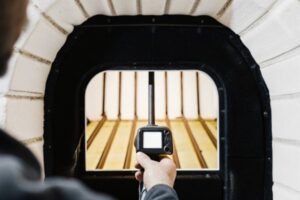
- Flexibility & Bonding: COB strips can be fragile. The inspector should perform a bending test to ensure the phosphor gel doesn't crack and the chips don't detach.
- Voltage Drop: For long-run strips (e.g., 10 meters or more), the inspector must measure the brightness at the beginning and the end of the strip. The drop should not be visible to the naked eye.
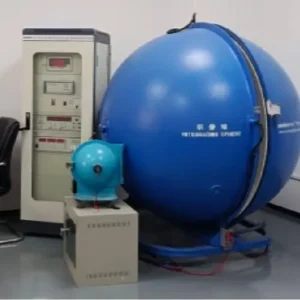
- Color Consistency (SDCM): This is vital for high-end projects. The inspector should use an integrating sphere to check if the CCT (Correlated Color Temperature) matches your requirements (e.g., 3000K ± 100K).
- Waterproof Rating: If you ordered IP65 or IP67, a simple visual check isn't enough. They need to perform a water immersion test.
Handling a Failed Inspection
If the inspection fails, do not panic. This is why you haven't paid the 70% yet.
- Minor Defects: You can negotiate a discount.
- Major Defects: Demand rework.
- Critical Defects: You have the right to cancel the order and demand a refund of the deposit (if your contract is strong), or demand a full remake.
Inspection Checklist for Negotiation
| Inspection Item | Standard Requirement | Why it Matters |
|---|---|---|
| Visual Check | No dark spots, clean soldering | Aesthetics are key for COB strips. |
| Function Test | 100% light up test | Basic functionality. |
| Power Consumption | Within ±10% of spec | Prevents overheating or under-driving. |
| Adhesion Test | 3M tape holds firm | Poor tape causes strips to fall off ceilings. |
| Aging Test | 4-8 hours burn-in | Identifies early failures before shipping. |
How do I verify the supplier's bank account legitimacy before transferring funds?
We have heard horror stories from industry peers where buyers were tricked by "man-in-the-middle" email hacks. The hacker intercepts the email, changes the PDF invoice, and swaps the bank details to a personal account. By the time the buyer realizes, the money is gone.
Color Consistency (SDCM) 6
Verify legitimacy by ensuring the beneficiary name on the invoice matches the company name on their business license exactly. Request a small trial transfer of $10 to confirm receipt, and call the supplier via video chat to visually verify their banking details before sending large sums.
Verification is the final gate before you release your funds. It is a simple administrative step that saves thousands of dollars.
T/T (Telegraphic Transfer) 8
The "Company Name" Rule
In China, a legitimate company's bank account name must match its English registered name (or the Pinyin of its Chinese name) exactly.
- Red Flag: The invoice says "Glowin Lighting Co., Ltd" but the bank beneficiary is "Zhang Wei" or "Golden Star Trading HK Limited."
- Green Flag: The invoice says "Glowin Lighting Co., Ltd" and the bank beneficiary is "Glowin Lighting Co., Ltd."
Note that some manufacturers use an export agent or a Hong Kong subsidiary. This is common, but you must verify the relationship. Ask for an authorization letter stamped by the factory confirming that the HK company is authorized to receive payments on their behalf.
PayPal is the safest method 9
The Video Call Verification
In the age of AI and deep fakes, email is not enough. Before sending a deposit for a large order:
- Schedule a WeChat/Zoom call.
- Ask to see the factory floor. This confirms they are who they say they are.
- Ask them to hold up the Proforma Invoice. Confirm the bank account number verbally during the call.
- Record the call. This serves as evidence if there is a dispute later.
The "Changed Account" Scam
If you ever receive an email stating, "Our bank account is under audit/maintenance, please send money to this new account," STOP.
99% of the time, this is a scam. Even if the email looks like it came from your contact (e.g., sophia@glowinleds.com instead of sophia@glowinled.com), do not trust it.
- Immediate Action: Call your contact immediately via phone or WeChat (not the number in the suspicious email) to verify.
- Our Policy: We tell our clients that we will never change our bank account details via email without a formal, stamped official letter sent via multiple channels.
Verification Steps Summary
| Step | Action | Objective |
|---|---|---|
| 1. License Check | Request Business License | Verify company name and legal status. |
| 2. Account Match | Compare PI to License | Ensure beneficiary is the company, not a person. |
| 3. Small Test | Send $10 - $50 | Confirm the account is active and correct. |
| 4. Video Confirm | WeChat/Zoom Call | Verbal confirmation of account numbers. |
| 5. Platform Check | Check Alibaba/Global Sources | See if the account is verified by the platform. |
Conclusion
Negotiating payment terms is not just about delaying payment; it is about aligning incentives. By using a 30/70 split, leveraging third-party inspections, and strictly verifying bank details, you transform a risky transaction into a controlled business process. As a manufacturer, we respect buyers who are professional and rigorous—it shows us you are building a business for the long term.
Alibaba Trade Assurance 10
Footnotes
- Defines the shipping document required for this payment term. ↩︎
- Government authority on the specific type of fraud described. ↩︎
- Manufacturer product page for the specific brand mentioned in the checklist. ↩︎
- Official ISO standard page for sampling procedures used in inspections. ↩︎
- Official International Electrotechnical Commission page defining IP codes. ↩︎
- Explains the technical concept of Standard Deviation Colour Matching. ↩︎
- Legal definition and explanation of this financial instrument from a university. ↩︎
- US Government guide on international payment methods including wire transfers. ↩︎
- Official policy page regarding transaction security and buyer protection. ↩︎
- Official service page explaining the escrow protection mentioned. ↩︎