
We have seen too many well-designed lighting projects stumble near the finish line, not because the product was wrong, but because the logistics failed the construction schedule Critical Path Method (CPM) 1. When we sit down with project managers to discuss their timelines, we often notice a disconnect between the procurement team's desire to "buy it all now" and the site manager's reality of having nowhere to store delicate electronics. This misalignment creates unnecessary stress, leading to damaged goods or frantic last-minute air shipments One-Bin Reservation Policy 2.
To successfully plan batch shipment timing, you must synchronize delivery windows with specific construction milestones rather than treating logistics as a single bulk event. This involves mapping the Critical Path Method (CPM) to your material needs, prioritizing long-lead items like custom LED drivers, and building buffer zones for customs clearance to ensure materials arrive exactly when the site is ready for installation.
It sounds complicated, but breaking it down into manageable phases makes it much simpler Attic Stock 3. Here is how we approach this logistical puzzle.
How do I coordinate my LED strip delivery schedule with different project construction phases?
When we coordinate with contractors in Germany or Australia, we often find that the biggest friction point isn't the price, but the synchronization of our production floor with their installation site Just-in-Time (JIT) 4. We know that if materials arrive too early, they get damaged by other trades; if they arrive too late, the electrical contractor charges penalty rates for standing time.
The most effective coordination strategy involves breaking your lighting order into three distinct phases: a mock-up verification batch, a main rough-in supply for primary zones, and a final finish batch for detailing. You should release these orders based on site readiness triggers—such as the completion of drywall framing—rather than calendar dates, ensuring the product arrives only when the physical space is prepared to receive it.
Understanding the Construction Timeline
In large-scale engineering projects, "efficiency" in logistics is often misunderstood Free on Board (FOB) terms 5. A procurement officer might think that shipping one full 40-foot container is efficient because it lowers the unit freight cost. However, from our perspective on the supply side, we see the hidden costs of this approach. If we ship 5,000 meters of high-end LED strips to a site that has only just started framing, those strips will sit in a dusty, unsecured container for months. Moisture, heat, and theft become real risks.
Instead, we advocate for a Progressive Release Strategy. This aligns with Lean Construction principles 6. You must look at the project schedule and identify the "Transfer Batches"—the specific quantity of work that allows the next trade to start. For lighting, this usually follows the ceiling closure.
The Mock-up Phase Strategy
We strongly advise against authorizing mass production for the entire project immediately. The first batch should always be a "Mock-up Batch 7." This is usually 5% to 10% of the total volume, specifically intended for a demo room or a typical floor.
Why is this critical? In our factory, we can produce perfect specs, but site conditions vary. Perhaps the aluminum profiles don't fit the actual groove depth cut by the joiners, or the voltage drop calculation 8 was based on a theoretical cable length that is actually 20% longer on site. By shipping a small initial batch, you validate the installation method. If an issue arises, we can adjust the production of the remaining 90% without incurring massive rework costs. This "wait-to-batch" time allows for feedback loops that save thousands of dollars later.
Mapping Deliveries to Milestones
To coordinate effectively, you need to map your shipments to specific construction triggers. Do not use arbitrary dates (e.g., "October 1st"). Use milestone triggers (e.g., "Two weeks after Level 5 framing approval").
Here is a breakdown of how to structure these phases:
Recommended Shipment Phases vs. Construction Milestones
| Shipment Phase | Timing Trigger | Content Focus | Risk Mitigation |
|---|---|---|---|
| Phase 1: Verification | Completion of structural framing in the sample area. | Mock-up kits, initial profiles, samples of drivers. | Verifies mechanical fit and visual effect before mass production. |
| Phase 2: Rough-in | 80% of ceiling framing complete; electrical cabling started. | Aluminum profiles, mounting clips, remote drivers. | Allows hardware installation without exposing sensitive LEDs to dust/paint. |
| Phase 3: Core Install | Painting complete; site clean-up initiated. | LED strips, diffusers, local controllers. | Prevents dust contamination inside the LED profile; reduces theft risk. |
| Phase 4: Spares & Adjustment | Final walkthrough / Punch list generation. | Spare parts, extra connectors, replacement segments. | Addresses installation damages or last-minute scope changes quickly. |
By adopting this staged approach, you transform logistics from a simple delivery task into a risk management tool. You are not just moving boxes; you are controlling the flow of work to match the site's capacity to absorb it.
How can I ensure perfect color consistency across multiple batches for my large-scale installation?
We have spent years refining our binning process because we know the pain of seeing a slightly pinkish white light next to a slightly greenish one on a continuous architectural cove. When clients ask us to ship in phases, their biggest fear is that the second shipment won't match the first. This is a valid concern, as LED manufacturing naturally varies from wafer to wafer.
To ensure perfect color consistency across split shipments, you must require your manufacturer to reserve the full quantity of LED components (from a single BIN code) at the very beginning of the project. While the final assembly and shipping can be staggered, the core light-emitting diodes must be drawn from one unified production inventory allocated specifically to your order.
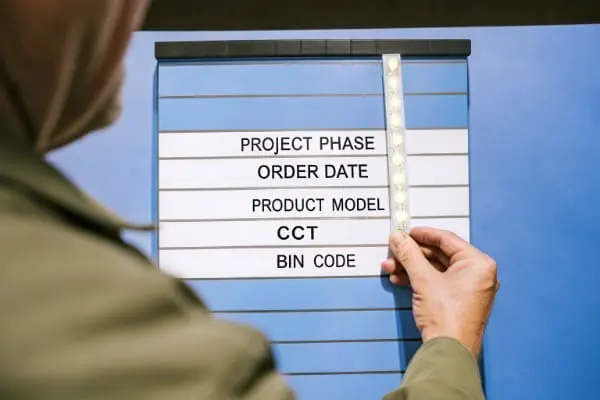
The Science of LED Binning
To understand why this is necessary, you have to look at how LEDs are made. In our production line, even with top-tier chips, there are microscopic variations in the phosphor coating and semiconductor materials during the manufacturing process. These variations result in different "Bins" of color temperature (CCT) and tint.
If you order 1,000 meters today and another 1,000 meters three months later without a reservation strategy, the new batch will likely come from a different production run. Even if both are technically "3000K," one might sit at a MacAdam Ellipse 9 step of 2.8 and the other at 3.1. To the naked eye, side-by-side, this difference is visible and unacceptable for high-end projects.
Inventory Reservation Strategies
When planning batch shipments, you cannot treat the manufacturing batch the same way as the shipping batch. They must be decoupled.
For our large-scale projects, we implement a "One-Bin Reservation Policy." This means that when the contract is signed, we calculate the total component requirement for the entire project. We then secure that specific reel inventory. We might assemble only 30% of the fixtures for the first shipment, but the LEDs for the remaining 70% are sitting in our climate-controlled warehouse, labeled with your project name.
This approach requires commitment. You may need to pay a deposit for the materials upfront, even if you don't want the finished goods shipped yet. This deposit secures your consistency.
Managing "Batch Anxiety"
A common issue we solve for lighting designers is the anxiety of "what if we run short?" If you use a One-Bin policy, running short is dangerous because a new production run won't match.
Therefore, your planning must include an Attic Stock percentage—typically 3% to 5% extra included in the initial reservation. This buffer accounts for cutting errors, site damage, or future maintenance. Do not wait until the project is finished to order spares; they must be part of the initial "DNA" of the project to ensure a visual match.
Risk of Color Variance by Batching Strategy
| Strategy | Methodology | Color Consistency Risk | Cost Implication | Recommended For |
|---|---|---|---|---|
| Open Market Ordering | Order Batch 1 now; Order Batch 2 later from whatever is in stock. | High. Visible differences are almost guaranteed. | Low initial cost; High risk of rejection. | Low-end residential or hidden areas. |
| Bin Code Matching | Requesting the same "Bin Code" for future orders without reservation. | Medium. Supplier may run out of that specific bin. | Medium. Relies on supplier stock levels. | Small commercial projects. |
| Full Component Reservation | Pre-purchasing all chips/LEDs from one run; Assembling/Shipping in stages. | None. (Zero deviation across batches). | Higher upfront deposit required for materials. | High-end hotels, museums, facades. |
By separating the "material lock-in" date from the "shipping" date, you solve the paradox of needing flexible delivery while demanding rigid consistency.
What is the best way for me to manage lead times to avoid site delays and storage issues?
Our team frequently navigates the unpredictability of global logistics, from raw material shortages to port congestion. We have learned that trusting a standard "lead time" quoted on a spec sheet is a recipe for disaster. Real-world project planning requires a dynamic approach that accounts for the weakest link in the supply chain.
The best way to manage lead times is to work backward from the installation date using a "Buffer-Index" approach. You must calculate the total time for production, transit, and customs, then add a 20-30% safety margin specifically for long-lead components like drivers or custom extrusions, while utilizing a "Hold-at-Origin" strategy to prevent goods from arriving too early.

Calculating the Real Buffer
In project management, relying on "best-case scenarios" is dangerous. If we tell you production takes 15 days and shipping takes 30 days, planning for exactly 45 days is reckless.
We recommend breaking down the lead time into three categories:
- Administrative Lead Time: Drawing approvals, deposit transfers, and bin selection. This often takes longer than production itself.
- Production Lead Time: The actual manufacturing time. Note that customized IP68 waterproof strips take significantly longer (curing time) than standard IP20 strips.
- Logistics Lead Time: Port handling, sea freight, customs clearance, and final mile delivery.
The "Buffer-Index" means assigning a risk multiplier. For standard items, add 10%. For custom items (like specific color temperatures or unique wattages), add 25%. This buffer accounts for the unexpected—a typhoon closing a port or a raw material supplier delaying a shipment of copper.
The Storage Paradox
One of the most counterintuitive insights we share with clients is: Don't ship it just because it's ready.
If your site isn't ready, "Just-in-Time" (JIT) can easily become "Just-Sit-There-and-Rot." On-site storage is a liability. We have seen boxes of expensive drivers crushed by forklifts or water-damaged because the roof wasn't sealed yet.
Instead of rushing to ship, use a Hold-at-Origin strategy. It is often cheaper and safer to keep the finished goods in our factory warehouse in China than to pay for bonded warehousing in Sydney or Hamburg, or worse, to store them in an unsecured construction zone. We can consolidate the order here and release it only when your project manager gives the green light (e.g., "Level 3 is locked up and clean").
Identifying Long Lead Items (LLI)
Not all parts of your order have the same timeline. The LED strips might be fast to produce, but the DALI drivers 10 or specialized connectors might have a 12-week lead time due to chip shortages.
You must decouple the procurement of LLIs from the rest of the batch.
- Action: Order drivers and control systems first.
- Action: Order aluminum profiles second.
- Action: Order LED strips last (to ensure the freshest adhesive and latest binning).
By staggering the ordering but synchronizing the arrival, you manage the lead time variance effectively.
How can I optimize my shipping costs when splitting a bulk order into several project-based shipments?
When we quote shipping for our clients, the immediate reaction to "split shipments" is often resistance due to the perceived higher cost. It is true that shipping three LCL (Less than Container Load) orders is more expensive per cubic meter than one FCL (Full Container Load). However, we need to redefine "cost" to include the hidden expenses of capital and risk.
To optimize shipping costs with split shipments, you should balance the freight premium against the savings in storage fees and cash flow interest. Consolidate your lighting orders with other trade materials leaving the same region to build fuller loads, and negotiate "Free on Board" (FOB) terms that allow you to control the consolidation point rather than paying premium rates for multiple small courier deliveries.

Freight Cost vs. Project Risk Cost
Let's look at the math. Splitting an order might increase your freight bill by $2,000. However, landing $100,000 worth of lighting equipment on site three months early ties up your cash flow. If your business operates on a 5% cost of capital, that early delivery costs you roughly $1,250 in interest alone. Add in the cost of renting a secure container on site ($500/month) and the risk of just 1% of the product being damaged ($1,000), and suddenly, the "expensive" split shipment is actually cheaper.
We encourage you to view shipping as an insurance premium. Paying a little more for staggered delivery ensures the project flow is uninterrupted and materials are fresh.
Consolidation Strategies
You don't have to bear the full brunt of LCL costs. Most of our successful partners use Buyer’s Consolidation.
Since you are likely sourcing other materials from China—perhaps tiles, furniture, or glass—you can use a third-party logistics (3PL) warehouse to combine our LED batch with your furniture batch.
- We ship Batch 1 (Mock-up) via Air Express (Speed is priority).
- We ship Batch 2 (Profiles) via Sea LCL consolidated with your flooring order (Weight is priority).
- We ship Batch 3 (LEDs) via Sea LCL consolidated with joinery (Volume is priority).
Volumetric Weight and Packing
Optimization also happens inside the box. LED profiles are long and heavy; LED strips are light but valuable.
If you split shipments, we can optimize the packing density.
- Heavy Batch: Aluminum profiles. These can be floor-loaded.
- Fragile Batch: LED strips. These should be palletized and top-loaded.
By separating them, you avoid the common issue where heavy profiles crush delicate electronics during transit.
Cost Analysis: Single Bulk Shipment vs. Staged Shipments
| Cost Factor | Single Bulk Shipment (FCL) | Staged / Split Shipments | Verdict |
|---|---|---|---|
| Freight Rate | Lowest per unit. | Higher (approx. 15-20% more). | Bulk wins on pure freight. |
| Storage Costs | High. Requires months of secure site storage. | Low. Just-in-Time arrival. | Staged wins significantly. |
| Cash Flow | High upfront. Capital tied up in inventory. | Distributed. Pay as you need. | Staged wins on liquidity. |
| Damage/Loss Risk | High. Long exposure to site conditions. | Low. Minimal exposure. | Staged wins on risk control. |
Ultimately, optimization isn't about finding the cheapest boat; it's about ensuring the shipment method supports the profitability of the entire project.
Conclusion
Planning batch shipment timing is ultimately an exercise in risk control, not just logistics. While the temptation to ship everything at once to save on freight is strong, the hidden costs of storage, damage, and cash flow strain often outweigh the benefits. By synchronizing your deliveries with construction milestones, reserving components to guarantee color consistency, and building realistic buffers into your lead times, you protect the project's bottom line. The goal is to have the lights turn on perfectly, exactly when the client is ready to see them—not a moment sooner or later.
Footnotes
- Wikipedia is an authoritative source for definitions. ↩︎
- Describes LED binning and how manufacturers manage color and performance variations to ensure consistency. ↩︎
- Defines attic stock in construction as extra materials for future repairs, ensuring aesthetic integrity and compliance. ↩︎
- Explains JIT inventory management, its goal of minimizing stock and aligning production with demand. ↩︎
- Clarifies FOB Incoterms, defining seller and buyer responsibilities for costs and risks in international shipping. ↩︎
- Details the core principles of Lean Construction, focusing on waste reduction and value generation. ↩︎
- Discusses the significance of mockups in construction for validating design, performance, and mitigating risks. ↩︎
- Provides methods and formulas for calculating voltage drop in electrical circuits, crucial for system performance. ↩︎
- Explains MacAdam ellipses as a standard for measuring and ensuring color consistency in LED lighting. ↩︎
- Introduces DALI as a digital lighting control standard, enabling precise control and interoperability of lighting components. ↩︎