At our place, we watch copper and gold wire prices 1 daily because they directly impact the cost of every reel we produce. You might be worried that a sudden spike in raw material costs will blow your project budget halfway through the year. We understand this anxiety because we face the same volatility in our supply chain. When we see copper prices climb, we know our clients are the next to feel the pressure.
To lock in COB LED strip prices, negotiate long-term framework agreements that define fixed rates based on annual volume commitments. You can also utilize stock-and-hold arrangements where you pay upfront for raw materials, allowing suppliers to purchase components at current low rates and store them for your future production runs.
Here are the specific strategies we use to help our partners stabilize their costs.
What Contract Clauses Protect My Budget Against Sudden Copper or PCB Price Hikes?
When we draft contracts for our long-term partners in Germany and Australia, we focus on transparency to build trust. We know that vague pricing terms create fear, so we prefer clear rules that explain exactly when and why a price might change.
Effective protection comes from price adjustment formulas tied to public commodity indices rather than supplier discretion. We recommend clauses that cap annual increases at 2–4% and require open-book costing. This ensures any price change is verifiable and strictly limited to raw material fluctuations, protecting your profit margins.

The Power of Index-Linked Pricing
In the manufacturing world, "price validity" is often short—sometimes only 15 to 30 days. This is because the cost of the Flexible Printed Circuit Board (FPCB), which is heavily reliant on copper, fluctuates constantly. To protect your budget, you should not accept open-ended price hike clauses. Instead, we recommend implementing a Price Adjustment Formula.
This clause ties the final unit price to a public index, such as the London Metal Exchange 2 (LME) for copper. The contract states that the price of the LED strip will only change if the raw material index moves beyond a certain threshold, such as +/- 5%. If the market fluctuation is minor, the price remains fixed. This prevents suppliers from using small market ripples as an excuse to raise prices across the board.
Open-Book Costing and Margins
Another powerful tool is Open-Book Costing. In this arrangement, we agree on a fixed profit margin (conversion fee) for the factory. You see exactly what we pay for the chips, the PCB, and the silicone. If raw material costs go up, you pay the exact difference, but our profit margin remains the same. This prevents "margin stacking," where a supplier might inflate the material cost increase to boost their own profits.
The Price Buffer Fund
For our most risk-averse clients, we sometimes set up a Price Buffer Fund. This is a creative financial structure within the contract. When raw material prices are low, you continue to pay a slightly higher "standard" rate. The difference between the actual cost and your payment goes into a fund. Later, if prices spike, we use that accumulated fund to subsidize the cost, keeping your invoice price stable.
Comparison of Pricing Contract Structures
| Contract Type | Price Stability | Transparency | Risk for Buyer | Best For |
|---|---|---|---|---|
| Spot Market Pricing | Low | Low | High | One-off, small orders |
| Fixed Price (6-12 Months) | High | Medium | Medium (Supplier may cancel) | Stable markets |
| Index-Linked Formula | Medium | High | Low | Volatile commodity markets |
| Open-Book Costing | Medium | Very High | Low | Strategic, long-term partners |
By using these clauses, you shift the conversation from "haggling" to "management." You are no longer fighting the supplier; you are working together to manage external market forces.
Can I Negotiate Long-Term Fixed Pricing by Providing an Annual Forecast to My Manufacturer?
Our production planning team loves customers who provide forecasts because it makes our job significantly easier. When we know what you need six months from now, we can optimize our own purchasing and labor scheduling.
Yes, providing a 12-month rolling forecast allows manufacturers to plan capacity and secure bulk materials early. In exchange for this visibility, suppliers often agree to fixed pricing for the duration of the forecast. This mutual commitment shifts risk away from spot market volatility and guarantees production priority.

Turning Forecasts into Leverage
A forecast is more than just a guess; it is a negotiation tool. When you provide us with a 12-month projection, you are essentially reserving capacity on our production line. In the LED industry, volume is power. If you can show us that you will purchase 50,000 meters of COB strips over the next year, we can go to our upstream chip suppliers (like Sanan or Epistar) and negotiate a better rate for the LED chips. We then pass those savings on to you in the form of a fixed price.
The "Key Account" Strategy
By consolidating your orders and providing a forecast, you elevate your status to a "Key Account." In our factory, Key Accounts get priority. This means that even if raw material prices rise for the general market, we will honor the agreed price for our Key Accounts first. We do this because the stability of your long-term business is more valuable to us than a short-term profit spike.
Tiered Pricing Structures
To make this work, we often structure agreements using Tiered Pricing. This incentivizes you to hit your forecast targets. The price per meter drops as you reach higher volume milestones. This structure protects you because the base price is locked in, and it gives you a clear path to lower costs as your business grows.
Sample Tiered Pricing & Forecast Benefit Model
| Annual Volume Commitment | Discount Level | Price Validity Period | Priority Level |
|---|---|---|---|
| 0 - 5,000 meters | 0% (Base Price) | 30 Days | Standard |
| 5,001 - 20,000 meters | 5% Off | 3 Months | Priority |
| 20,001 - 50,000 meters | 10% Off | 6 Months | High Priority |
| 50,000+ meters | 15% Off | 12 Months | VIP / Key Account |
Moving From Forecast to Commitment
It is important to note that a forecast alone is sometimes not enough to legally bind a price. To truly lock it in, we often ask for a "Frame Contract" where you commit to purchasing at least 80% of the forecasted amount. This gives us the confidence to buy the raw materials in advance. If you fall short of the 80%, there might be a small penalty or a price adjustment, but this is a fair trade-off for a year of price stability.
How Do Stock-and-Hold Agreements Work for Securing Inventory at Current Rates?
We often suggest this strategy to clients when we see a dip in exchange rates 4 or material costs. It is a proactive way to "buy the dip" in the manufacturing world, much like you might in the stock market.
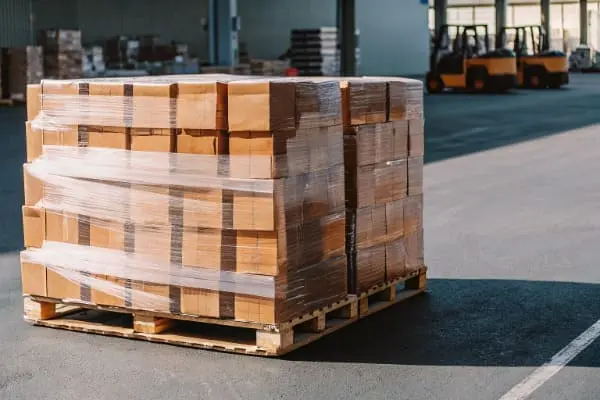
Stock-and-hold agreements involve paying for raw materials or finished goods upfront while the supplier stores them. This locks in the current price before market hikes occur. You take legal title of the inventory immediately, but the factory holds the physical stock until you request scheduled shipments.
The Mechanics of "Bill-and-Hold"
In a "Bill-and-Hold" or stock-and-hold scenario, you are essentially using our warehouse as your own. You place a large order—say, enough for the next six months—and pay for it (or a significant deposit) immediately. We produce the goods or purchase the raw materials right away. This freezes the cost basis. We then store the goods in our humidity-controlled warehouse. When you need stock for a project, you simply send a shipping instruction, and we dispatch the goods.
Locking in Raw Materials vs. Finished Goods
You do not always have to stock finished LED strips. A smarter, more flexible approach is to ask us to stock the Critical Raw Materials.
- The Strategy: You pay a deposit specifically for us to buy the LED chips and the PCB copper foil.
- The Benefit: These two components account for the majority of the price volatility. By owning these raw materials, you lock in the cost. However, you maintain the flexibility to decide later what specific color temperature (CCT) or power wattage you want us to produce, as long as it uses those base materials.
- My Personal Insight: I often advise clients to stock the PCB substrate. Copper prices change daily. If you pay for the copper when the market is low, we can keep the unpopulated PCBs in stock. This is cheaper than storing finished reels and allows for faster production when you finally place the order.
Managing Risks and Costs
There are logistical details to consider. Storing goods costs money. In our agreements, we usually offer free storage for the first 3 months. After that, we may charge a small monthly fee per pallet. You also need to ensure the contract states that the goods are segregated and labeled as your property. This protects you in the unlikely event that the factory faces financial trouble; your stock cannot be liquidated to pay other debts because it legally belongs to you.
Stock-and-Hold vs. Just-in-Time Sourcing
| Feature | Stock-and-Hold | Just-in-Time (Standard) |
|---|---|---|
| Price Certainty | 100% Locked at time of payment | 0% (Subject to market rates) |
| Cash Flow Impact | High upfront cost | Low (Pay as you go) |
| Lead Time | Very Fast (Goods are ready) | Standard (2-4 weeks) |
| Risk of Obsolescence | Medium (Must sell what you bought) | Low |
| Storage Cost | Potential fees after grace period | None |
This strategy requires good cash flow, but for our B2B clients serving large commercial projects, the certainty of price and supply is often worth the upfront investment.
copper foil 6
Should I Ask for a Raw Material Cost Breakdown to Better Understand Price Validity Periods?
When engineers visit our facility, we show them exactly where the money goes. We believe that an educated customer is a better partner, and hiding costs usually leads to suspicion rather than loyalty.
LED chips 7
Requesting a raw material cost breakdown is crucial for validating price expiration dates. It reveals the percentage of cost driven by volatile commodities like copper versus stable labor costs. This transparency helps you identify if a supplier's price hike request is justified by market data or simply an attempt to increase margins.

Deconstructing the Price Tag
To negotiate effectively, you need to know what you are paying for. A COB LED strip is not just one product; it is an assembly of several distinct markets.
- LED Chips (Flip Chips): These are semiconductor products. Their price drops over time as technology improves, but short-term shortages can cause spikes.
- PCB (Printed Circuit Board): This is heavily tied to copper prices. This is the most volatile part of the BOM (Bill of Materials).
- Silicone/Phosphor: These are chemical products. Their prices are generally stable but track with oil prices.
- Labor & Overhead: In China, this is rising slowly but is predictable.
Validating Price Validity Periods
Suppliers often say, "This price is only valid for 10 days." Why? If you have the cost breakdown, you can challenge this.
- If the PCB is only 20% of the total cost, and copper goes up by 10%, the total price of the LED strip should only increase by roughly 2% (20% * 10%).
- If a supplier tries to raise the total price by 10% because "copper went up," you can use the breakdown to show them the math does not add up.
The "BOM" Negotiation
We encourage you to ask for a "BOM Percentage Breakdown" (you don't need the exact dollar values, just the percentages).
- Example: "Please show me the cost weight of the Chip, PCB, and Accessories."
- With this data, you can agree on validity periods. You might agree that the "Labor" portion of the price is fixed for 12 months, while the "Material" portion is reviewed quarterly. This hybrid approach gives you stability on the fixed costs while treating the variable costs fairly.
Typical COB LED Strip Cost Structure (Estimates)
| Cost Component | Approx. % of Total Cost | Volatility Level | Primary Driver |
|---|---|---|---|
| LED Chips (Flip Chip) | 35% - 45% | Medium | Tech supply/demand |
| PCB (Copper + Substrate) | 25% - 30% | High | Copper commodity market |
| Phosphor & Silicone | 10% - 15% | Low | Chemical/Oil markets |
| SMT & Assembly Labor | 10% - 15% | Low/Stable | Local wage policies |
| Packaging & Accessories | 5% | Low | Paper/Plastic costs |
By understanding this table, you can see that nearly 70% of the cost (Chips + PCB) is material-driven. This explains why we, as manufacturers, are so sensitive to raw material prices. However, it also gives you the data you need to ensure that any price increase you accept is mathematically accurate, not just a guess.
Flexible Printed Circuit Board 9
Conclusion
Locking in prices requires shifting from spot-buying to strategic partnerships. By using index-linked contracts, sharing annual forecasts, and leveraging stock-and-hold strategies for raw materials, you can secure budget stability despite market volatility.
Sanan or Epistar 10
Footnotes
- Official USGS data on copper production and price trends to validate material cost concerns. ↩︎
- Primary global exchange for industrial metals, providing the benchmark for index-linked pricing. ↩︎
- Real-time news and tracking of global commodity indices for market-based pricing. ↩︎
- Official source for foreign exchange rates to monitor currency-driven price fluctuations. ↩︎
- Explains the accounting and legal framework for the bill-and-hold revenue recognition method. ↩︎
- Technical documentation from a leading manufacturer of the specific raw material mentioned. ↩︎
- Industry standard for measuring lumen maintenance of LED packages, chips, and modules. ↩︎
- Academic explanation of profit margin structures and open-book accounting in supply chain management. ↩︎
- Provides general background on the construction and utility of flexible circuits used in LED strips. ↩︎
- Official site of a key supplier mentioned in the text to provide technical context. ↩︎