We often see new clients approach our production line with hesitation, worried that their small volume request will be ignored technical parameters 1. small-batch trial orders 2 When we process these initial inquiries, we know that the frustration of being ghosted by large factories is real. You might find a supplier with the perfect product photos, but their communication vanishes the moment you mention a quantity below 500 meters. This signals a mismatch in values, not just capacity. A true manufacturing partner sees a trial not as a nuisance, but as the foundation of a long-term relationship.
To evaluate supplier cooperation, focus on their process and attitude rather than just the price. A reliable partner will confirm technical parameters, arrange specific testing, and provide a clear delivery schedule even for small volumes. If they are proactive and transparent during the trial phase, they are likely to handle larger orders efficiently later.
Here is how you can use specific criteria to determine if a supplier is truly ready for a partnership.
How can I verify that my trial order quality will remain consistent across future large-scale projects?
When we calibrate our flight controllers or set up the phosphor mix for a new run of COB strips 3, we understand that consistency is the hardest metric to maintain. Clients often worry that the "Golden Sample" they receive is hand-picked, while the bulk order will be mediocre. This fear is valid.
You must require the supplier to "lock" the Bill of Materials (BOM) and technical specifications during the trial. Verify that the specific LED chips, PCB copper weight, and color binning codes used in your sample are documented. If they agree to strict standard operating procedures now, consistency is engineered, not accidental.

The Importance of Locking the BOM
In the lighting industry, specifically with COB (Chip on Board) technology, the visual effect relies heavily on the yellow-orange phosphor line running through the center. A slight change in the phosphor formula or the translucent silicone sleeve can alter the color temperature 4 or the "seamless glow" you expect.
To ensure your trial order isn't just a lucky batch, you need to dig into the Bill of Materials (BOM) 5. Many factories might use a top-tier LED chip for the sample to win your business, then switch to a cheaper alternative for the mass production run to save costs. During your small-batch trial, ask the supplier to provide a specification sheet that explicitly lists the brand and model of the key components.
Reviewing Binning and Color Tolerance
Another critical aspect is color consistency, often referred to as "binning." For high-end projects, such as luxury hotels or retail displays, a variation of 200K in color temperature is visible to the naked eye. When we work with clients, we establish a specific "Bin Code" for their projects.
Ask your supplier how they manage their bins. Do they keep stock of the same bin for your potential repeat orders? For a trial order, they should be able to tell you exactly which bin your strips came from. If they say "it's just standard 3000K," be wary. A professional factory will say, "This is 3000K, Bin 3A, within a 3-step MacAdam ellipse 6."
Consistency Checklist
Use the following table to audit your supplier's consistency protocols during the trial phase:
| Verification Step | What to Ask For | Red Flag Response |
|---|---|---|
| Component Locking | A signed spec sheet listing PCB thickness (e.g., 2oz or 3oz) and chip brand. | "Don't worry, we always use good quality materials." |
| Color Consistency | The specific Bin Code or CCT report for the trial batch. | "It is standard white, roughly 4000K." |
| Visual Standards | Photos of the reel showing the matte white backing and glossy finish. | Stock photos sent instead of real production photos. |
| archive Management | Confirmation that they will keep a "Golden Sample" of your batch at the factory. | "We don't have space to keep samples for every order." |
By enforcing these standards on a 10-meter order, you are effectively testing their quality control system for a 10,000-meter order.
What criteria should I use to judge a supplier's technical support during our first small-batch collaboration?
Our engineering team often spends more time discussing voltage drop 7 and installation environments with clients than discussing price. We believe that if a supplier simply takes your order without asking how you plan to use the product, they are merely order-takers, not partners.
Judge their support by the quality of questions they ask you, not just how fast they answer yours. A capable supplier will proactively identify potential risks, such as voltage drop in long runs or waterproofing needs, and offer solutions before production begins. Their goal should be your project's success, not just shipping goods.

Reactive vs. Proactive Support
In the B2B world, technical support is often confused with customer service. Customer service is polite; technical support is knowledgeable. During a small-batch trial, you are likely testing a new application or a new design. This is the perfect time to stress-test the supplier's engineering team.
If you send a request for a 20-meter run of COB strips powered from one end, a good supplier should immediately flag this as a problem. They should explain that due to the resistance in the copper PCB, you will experience light dimming at the far end. They should then propose a solution: either powering from both ends or upgrading to a constant current design. If they just say "Okay, invoice attached," they have failed the technical support test.
Speed and Clarity of Communication
Time zones are a challenge in global trade, but a system must be in place. When we work with clients in Germany or Australia, we ensure that technical queries are answered within 24 hours. More importantly, the answers must be precise.
Does the supplier use clear diagrams to explain complex wiring? Do they provide IES files 8 for your lighting designers to run simulations? During the trial, ask a difficult technical question. For example, ask about the thermal dissipation requirements of the strip. A vague answer like "it doesn't get very hot" is insufficient. A good answer would be, "The max temperature rise is 15°C; we recommend mounting on an aluminum profile for heat dissipation if the ambient temperature exceeds 40°C."
Scoring Technical Capability
You can use a simple scorecard to evaluate their performance during the trial:
| Criteria | Excellent Partner | Average Supplier | Poor Supplier |
|---|---|---|---|
| Problem Identification | Spots errors in your request (e.g., incorrect voltage). | Executes exactly what you asked, even if it's wrong. | Ignores specs, ships standard product. |
| Data Availability | Provides IES files, cutting guides, and spec sheets instantly. | Provides data only after repeated asking. | "We don't have that data." |
| Customization Feasibility | Suggests viable alternatives if your request is impossible. | Says "Yes" to everything but fails to deliver. | Says "No" immediately to custom requests. |
| Response Detail | Detailed email with diagrams or video explanations. | Short, one-line WhatsApp messages. | Avoids answering the specific technical question. |
Can I evaluate a supplier's private labeling and custom packaging capabilities through a low-MOQ order?
We help many distributors launch their own brands, and we know that the "unboxing experience" matters even for industrial products. The minimalist white plastic reel and the anti-static bag are the first things your customer sees. If a supplier refuses to customize these because the order is small, they lack flexibility.
Yes, you can and should evaluate this. Even with low MOQs, a supplier should be able to apply custom stickers with your logo and part numbers. While full-color printed boxes may require high volumes, their willingness to provide neutral packing or simple labeling solutions for a trial reveals their commitment to your brand's growth.
The "White Label" Test
Many startups and project contractors want to hide the Chinese manufacturer's identity from their end clients. This is a standard request. However, large factories often automate their packaging lines and find it disruptive to stop the line to apply a special label for 50 reels.
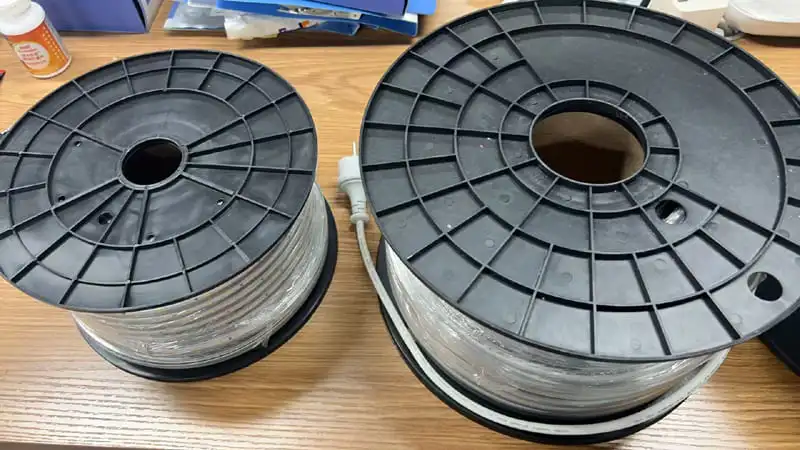
For your trial order, ask for "Neutral Packaging." This means the product should arrive with no Chinese characters, no factory address, and no generic branding that traces back to the source. The reel—typically a clean, white plastic design—should look professional. The COB strip itself, with its glossy silicone finish, should be free of any manufacturer markings unless requested. If they slip up and send their standard branded brochure inside the box, it shows a lack of attention to detail that could embarrass you in front of your customers later.
Scaling Up Packaging Options
You need to know what the future holds. While you might accept a simple sticker for the trial, you want to know if they can handle retail packaging once you grow. Ask for a digital mockup. A cooperative supplier will have their design team put your logo on a box template to show you what is possible, even if you aren't ordering it yet.
This "digital willingness" is a strong indicator of cooperation. It costs them nothing in materials, but it requires time and effort. If they provide a mockup, they are investing in your future potential.
Packaging Tiers for Evaluation
| Packaging Level | Expectation for Trial Order (Low MOQ) | Expectation for Bulk Order |
|---|---|---|
| Product Labeling | Custom sticker on the reel and bag with your SKU/Logo. | Direct printing on the PCB or laser etching on the strip. |
| Outer Protection | Standard anti-static bag (Silver/Clear). | Custom printed bags or retail blister packs. |
| Manuals/Inserts | PDF sent digitally or simple B&W printout. | Full-color glossy instruction manuals included. |
| Shipping Marks | Neutral marks or specific warehouse codes. | Palletization with custom outer carton branding. |
How do I assess if a supplier’s production speed and logistics are reliable enough for my project deadlines?
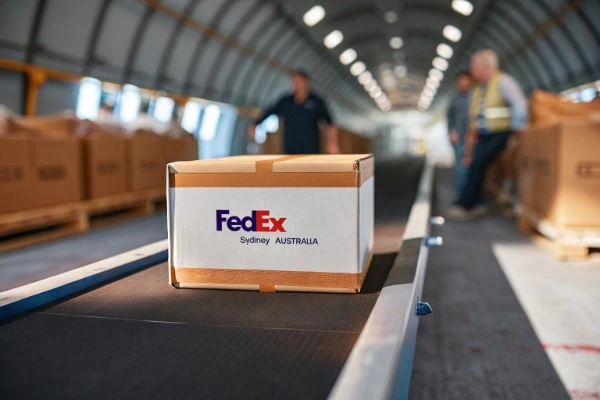
When we coordinate shipments to contractors in Australia or Europe, we know that "ready to ship" and "actually shipped" are two very different things. Delays in customs or missed pickup windows can ruin a project schedule. The trial order is your only chance to test their logistical competence in a low-risk scenario.
Compare their quoted lead time against the actual dispatch date, not just the delivery date. A reliable supplier provides a tracking number within 24 hours of production completion and proactively communicates documentation drafts. If they hide behind vague excuses like "waiting for the forwarder," expect severe delays when deadlines are tight.
Analyzing the Timeline
Production speed is easy to promise but hard to deliver. For a trial order of COB strips, the production process involves SMT (Surface Mount Technology), phosphor dispensing, curing, and aging testing. A realistic timeline for a custom small batch is 5-7 days. If a supplier promises 2 days, they might be skipping the aging test, which is crucial for weeding out early failures.
Monitor the gap between "Production Finished" and "Tracking Number Received." In our experience, inefficient internal processes often cause a 3-day lag here. The goods sit in the warehouse because the paperwork isn't ready or the finance team hasn't released the shipment. This internal friction will only get worse with larger orders.
Documentation Accuracy
Logistics isn't just about moving boxes; it's about paperwork. For international trade, the Commercial Invoice 9 and Packing List must be flawless to avoid customs delays.
During your trial:
- Check the HS Code: Did they use the correct code for LED strips to minimize your duty?
- Value Declaration: Did they declare the value exactly as discussed?
- Descriptions: Is the description on the invoice clear (e.g., "COB LED Strip Light")?
If you have to chase them three times to correct a typo on the invoice for a $500 order, imagine the chaos with a $50,000 container shipment.
The Logistics Stress Test
Try changing the shipping method last minute. If you initially asked for Express (DHL/FedEx), ask for a quote for Air Freight (airport to airport) or check if they have a dedicated forwarder.
- Good Sign: They quickly check with their logistics partner and give you a comparative quote with transit times.
- Bad Sign: They insist on using "their" courier only and refuse to let you use your own account, or they take days to get a simple shipping quote.
Conclusion
Evaluating a supplier through a small-batch trial order is about reading the subtle signals of their operation. It is not just about whether the LED strip lights up; it is about whether the BOM was respected, if the technical advice was sound, if the packaging protected your brand, and if the logistics were transparent. A supplier who treats your trial order with the rigor of a mass production run is a partner worth keeping. If they cut corners now, they will cut corners later. Use these small interactions to predict the future of your partnership.
Footnotes
- Explains process parameters and their importance in production control. ↩︎
- Defines small-batch production and its advantages. ↩︎
- Found a relevant and accessible article explaining COB LED strip lights. ↩︎
- Defines color temperature and its relevance in lighting. ↩︎
- Explains what a Bill of Materials (BOM) is and its purpose. ↩︎
- Explains the MacAdam ellipse for measuring color consistency in lighting. ↩︎
- Describes voltage drop in LED strips and its implications. ↩︎
- Explains IES files and their use in lighting design simulations. ↩︎
- Found a working, authoritative government (.gov) source defining a commercial invoice. ↩︎