We often see inquiries land in our inbox that are clearly copy-pasted to fifty different factories. It is frustrating for buyers when they receive fifty generic, robotic replies in return. You are likely overwhelmed by a flood of emails, struggling to filter the noise from the nuance. If you cannot distinguish a professional engineering team from a quick-turn trading desk, you risk project delays and quality failures before the first sample even ships.
To evaluate a supplier, assess their response speed, technical clarity, and willingness to admit limitations. A professional partner provides specific data on binning and heat dissipation within 24 hours, uses structured email signatures, and asks clarifying questions about your project rather than just agreeing to every request.
Let's look at the specific signals that separate reliable partners from risky vendors.
How do I assess if a sales rep truly understands technical COB specifications in English?
When we train our sales engineers, we emphasize that "dot-free" is not just a buzzword but a mathematical relationship between chip density and profile depth. You have probably dealt with reps who nod at every technical term but fail to grasp the physics behind the lighting.
A capable sales representative demonstrates understanding by explaining the relationship between voltage drop, PCB width, and run length without hesitation. They should proactively offer specific aluminum profile recommendations for heat dissipation based on your wattage requirements, rather than simply quoting a price per meter.
The "Yes" Trap vs. Consultative Selling
One of the most dangerous phrases in international trade is "Yes, no problem." In our daily operations, we know that almost every custom project has constraints. If you ask a supplier if they can produce a 20-meter continuous run of high-CRI COB strip without voltage drop, and they immediately say "Yes," be careful. A sales rep who understands technical English and engineering physics will pause. They should explain that while possible, it requires a specific PCB thickness (3oz or 4oz) or a 48V constant current design.
You can test this by asking an open-ended technical question. Do not ask, "Is this waterproof?" Instead, ask, "How does your IP67 silicone extrusion handle heat dissipation compared to a heat shrink tube?" A professional team will give you a comparative answer involving thermal resistance. A low-quality supplier will likely just reply, "Both are good quality."
Vocabulary as a Litmus Test
Pay attention to the specific nouns and verbs the representative uses. General sales staff use broad terms like "bright," "good," and "strong." Technical sales reps use industry-standard vocabulary. This distinction is crucial because it predicts how well they will understand your complaint if a batch arrives with color deviation.
We have compiled a list of terms that distinguish a layperson from a professional in the LED industry:
| Basic Sales Vocabulary (Low Trust) | Technical/Professional Vocabulary (High Trust) | What It Signals |
|---|---|---|
| "Color is same" | "SDCM < 3" or "MacAdam Ellipse Step 3" | Understanding of strict color consistency standards. |
| "Very bright" | "Luminous flux" or "Lumens per watt efficacy" | Reliance on data rather than subjective claims. |
| "Long life" | "LM-80 report" or "L70 lifetime" | Knowledge of standardized aging tests. |
| "No voltage drop" | "Constant current IC" or "Double-ended power feed" | Understanding of electrical engineering principles. |
Admitting Uncertainty
A true mark of professionalism is the confidence to say, "I need to check with our engineers." When we develop new OEM products, even our senior managers double-check thermal calculations. If a sales rep pretends to know everything instantly, they are likely guessing. A rep who says, "Let me confirm the exact copper thickness for that current load," is protecting your project from future failure.
What are the signs of a professional B2B export team in their first email response?
We spent months refining our email signatures and CRM workflows because we know first impressions matter. You might feel anxious when an email comes from a generic free domain with broken formatting, wondering if their production line is just as disorganized.
Professional export teams use corporate email domains and include structured signatures with physical addresses and direct phone numbers. Their initial response is organized logically, addresses every point in your inquiry, and provides a clear timeline for the next steps, signaling a mature internal quality management system.
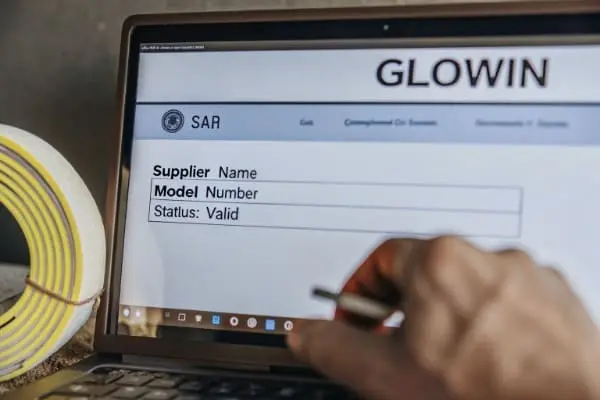
The Anatomy of a Professional Reply
When you open an email from a potential supplier, the visual structure tells you about their factory's organization. We believe that how a company handles data reflects how they handle raw materials. If the email is a wall of text with different fonts and colors, their warehouse is likely messy too.
Look for a "point-by-point" response style. If you asked four questions in your RFQ, the reply should have four distinct answers. This shows they have read your requirements carefully. A professional export team will often use a numbering system to match your questions. This reduces the cognitive load on you and prevents miscommunication.
Consistency in Branding and Details
Consistency is the hardest thing to maintain in manufacturing, and it starts with communication. Check the footer of the email. Does it have a working link to their website? Is the logo clear? Does the sender have a specific title like "Project Manager" or "Sales Engineer"?
We often see "fly-by-night" trading companies using Gmail or Hotmail addresses. While some small startups use these, for a project-grade supplier, a company domain (e.g., name@brand.com) is a minimum requirement. It implies they have an IT infrastructure and are planning to stay in business for the long term.
The "Next Steps" Indicator
A professional email never ends vaguely. It should propose a clear path forward. In our internal training, we insist that every email must end with a "Call to Action" or a timeline.
Compare these two closing styles:
- Amateur: "Hope to hear from you soon. Best regards."
- Professional: "I have attached the IES files you requested. Please review the spectral data. If this meets your requirements, I can prepare a sample kit for you by this Friday. Shall we proceed?"
The second example drives the project forward. It shows the supplier is proactive and values your time. This proactive attitude is essential when you are racing against a construction deadline.
Can I judge a factory's reliability based on their response time to my RFQ?
Our team operates across time zones to support clients in Germany and Australia, knowing that silence kills deals. You have likely experienced the frustration of sending an urgent RFQ and waiting three days for a simple acknowledgement, leaving your project timeline in limbo.
Reliability is often reflected in response speed; top-tier suppliers typically reply within 12 to 24 hours during business days. However, immediate automated replies are less valuable than a slightly delayed but personalized acknowledgement that confirms receipt and sets a realistic deadline for a full technical proposal.
The Goldilocks Zone of Timing
Speed is good, but instant speed is suspicious. If you receive a full quote five minutes after sending a complex custom request, it is likely an automated bot or a copy-paste template. They have not calculated your specific costs.
On the other hand, a delay of more than 48 hours usually indicates one of two things: either they are understaffed, or they do not prioritize new business. In our experience, the "Goldilocks" zone is between 2 and 24 hours. This shows they are alert but also taking the time to read your email.
If a supplier cannot reply in full immediately, a professional team will send a "holding reply." This is a short message saying, "We received your inquiry. Our engineers are calculating the voltage drop for your 30-meter run. We will get back to you by tomorrow morning." This builds immense trust.
Time Zones and Cultural Awareness
A supplier experienced in export knows your clock. If you are in Australia, they know their afternoon is your morning. If you are in Europe, they know their evening is your workday.
We track response times as a key performance indicator (KPI). You can use the table below to judge what a response time says about the supplier's internal operations:
| Response Time | Likely Operational Status | Risk Level |
|---|---|---|
| < 1 Hour (Generic) | Automated bot or desperate sales tactics. No technical review. | High |
| 2 - 12 Hours | Efficient team, likely has dedicated export staff. | Low |
| 12 - 24 Hours | Standard acceptable business practice. | Low |
| 24 - 48 Hours | Overloaded staff or inefficient internal communication. | Medium |
| > 48 Hours | Poor management or the company is closed/inactive. | High |
Handling Holidays and Weekends
China has different holidays than the West. A professional supplier will have an auto-responder set up during Chinese New Year or National Day. If you send an email in early October and get radio silence for a week without an auto-reply, that is a red flag. It suggests they do not care about their international clients' schedules. A reliable partner warns you weeks in advance about upcoming holiday closures so you can stock up.
What specific questions reveal if a supplier has experience with Western quality standards?
We frequently have to explain to new staff why a CE certificate for a power supply does not cover the LED strip itself. You need to ensure your supplier understands the strict safety and performance regulations in your market to avoid liability issues later.
To test experience, ask specific questions about SDCM color consistency standards and how they handle binning for repeat orders. Experienced suppliers will immediately reference MacAdam ellipses and provide UL or CE-LVD test reports that apply specifically to the LED tape, not just the components or power supply.

The "System" Approach to Certification
Many suppliers try to trick buyers by showing a certificate for the raw LED chip or the power driver, claiming it covers the whole strip. This is false. Normally, we ensure the entire assembly is tested.
PWM dimming driver
When you interview a supplier, ask for the "LVD Report" for the specific model you are buying. If they hesitate or send you a generic document for a different product series, be cautious. For the Australian market, ask about RCM compliance. For the US, ask about UL listing numbers. A supplier who actually exports to these regions will have these file numbers memorized or saved in a ready-to-send folder.
The Batch Consistency Question
The nightmare of every lighting designer is installing a new section of strip light two months later and finding it is a slightly different shade of white. This is called "binning."
You must ask this specific question: "How do you guarantee color consistency for repeat orders over 2 years?"
A trading company will say, "We keep same color."
A professional manufacturer will say, "We use a specific bin code (e.g., 2700K, Bin 3A) and we stock the phosphor powder to ensure future batches stay within a 3-step MacAdam ellipse."
Testing Their Knowledge of Installation Realities
Suppliers who only sell products do not know how they are installed. Suppliers who work with contractors know the pain of installation. Ask them about voltage drop in real-world scenarios.
Here is a checklist of questions to separate the experts from the novices:
| Question to Ask | Amateur Answer | Professional Answer |
|---|---|---|
| "What is the max run length for one power feed?" | "5 meters." (Standard answer) | "It depends on the PCB copper thickness. With 3oz copper, we can do 10m. With 2oz, only 5m." |
| "Can I dim this COB strip?" | "Yes, dimmable." | "The strip is dimmable, but you must match it with a PWM dimming driver or a TRIAC system. Which system are you using?" |
| "Is the adhesive strong enough for aluminum?" | "Yes, 3M tape." | "We use 3M VHB (Very High Bond) red tape for outdoor profiles, and 300LSE for standard indoor use." |
By asking these detailed questions, you force the supplier to reveal their depth of knowledge. If they struggle to answer in English or give vague replies, they will likely struggle to support you when a technical issue arises on a job site.
Conclusion
Evaluating a supplier is not just about checking prices; it is about auditing their communication culture. A partner who responds with speed, technical precision, and honesty during the first week is likely to maintain those standards for years. Look for the team that asks you "why" before they tell you "how much." Their ability to communicate in clear, technical English is your best insurance policy against future project failures.