We often see clients frustrated by inconsistent batches that ruin expensive commercial installations Return Merchandise Authorization 1. When we source raw materials for our own production lines, we face the same risks you do.
To establish a robust supplier scoring system, evaluate manufacturers on four core pillars: technical performance consistency (SDCM <3), production scalability for repeat orders, customization flexibility (OEM support), and financial stability. Assign weighted scores to these metrics to objectively filter out high-risk vendors and identify reliable long-term partners.
Here is how you can build a detailed scoring framework that protects your business interests scoring framework 2 and ensures project success.
What technical metrics matter most when I test COB LED strip samples for project durability?
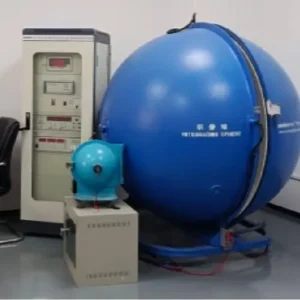
In our testing lab, we push strips to failure because a warranty claim is costlier than rigorous testing. You need data, not just promises, to ensure longevity.
Focus your testing on the PCB copper thickness for heat dissipation, the flip-chip bonding strength, and phosphor coating uniformity. Verify that the luminous efficacy exceeds 100 lm/W and that the Color color temperature (CCT) 3 Rendering Index (CRI) remains stable after thermal stress testing to ensure long-term project durability.

When you receive samples from a potential partner, the physical evaluation is your first line of defense. In the COB (Chip on Board) LED sector, the technology differs significantly from traditional SMD strips Chip on Board 4 COB (Chip on Board) 5, and therefore, your testing criteria must adapt. We have found that many buyers overlook the structural integrity of the phosphor layer, which is fatal for project longevity. phosphor layer 6 Unlike SMD LEDs which have individual plastic housings, the COB phosphor covers the entire circuit. If this silicone mix is too brittle or too thin, it will crack during installation around corners, leading to "dead spots" or blue light leakage.
Assessing Thermal Management and PCB Quality
Heat is the number one killer of LED lifespan. In our production facility, we strictly use double-layer PCBs with a minimum of 2 ounces (oz) of copper, and often 3 oz for high-power versions. When you test samples, you should peel back the 3M tape and measure the PCB thickness. 3M tape 7 A thin, flimsy PCB cannot dissipate the heat generated by the dense array of flip-chips. If the heat stays trapped, the phosphor will yellow prematurely, causing a significant color shift within just a few thousand hours.
You should establish a "Pass/Fail" metric for heat rise. Power on the sample for 4 hours and measure the temperature at the solder points. If the temperature rise exceeds 40°C above ambient temperature without an aluminum profile, it is a red flag. This indicates poor thermal efficiency, which will lead to rapid lumen depreciation in a real-world enclosed cove application. thermal efficiency 8
The Flip-Chip Bonding Strength
COB strips use flip-chip technology where the chip is bonded directly to the PCB without gold wires. This theoretically reduces failure points. However, we have seen low-quality suppliers use inferior conductive glue (die attach adhesive) to save costs. To test this, perform a simple bending test. Wrap the strip around a 20mm diameter cylinder and power it on. If sections flicker or go dark, the bonding is weak. A project-grade strip should withstand reasonable bending without breaking the internal circuit connectivity.
Below is a scoring matrix you can use for your initial sample evaluation:
| Technical Metric | Passing Standard (Project Grade) | Red Flag (Do Not Source) | Score Weight |
|---|---|---|---|
| PCB Thickness | Double-layer, ≥2oz Copper, usually wider width (10mm+) | Single layer, <2oz, very flexible/flimsy | 25% |
| Phosphor Quality | Uniform orange color, no dark spots, flexible silicone | Brittle surface, cracks when bent 90° | 25% |
| Luminous Efficacy | >100 lm/W (System efficiency) | <80 lm/W (Indicates cheap chips/phosphor) | 20% |
| CRI / R9 Value | CRI >90, R9 >50 (Crucial for retail/hospitality) | CRI <80, R9 <0 | 15% |
| Voltage Drop | <10% drop over 5 meters (24V) | Visible dimming at the end of 5 meters | 15% |
How can I verify a factory's ability to maintain strict color consistency across different batches?
Nothing hurts our reputation more than mismatched whites on a long run or a project extension. We know that maintaining the exact same bin across months requires strict discipline.
Request MacAdam Ellipse (SDCM) reports for at least three consecutive production batches to verify consistency. Ensure the supplier uses a strict binning system and stores specific LED bins for your repeat orders to guarantee that the color temperature remains identical for future project phases.

For distributors and contractors, color consistency is often more important than absolute brightness. A 5% drop in brightness is invisible to the human eye, but a slight deviation in color temperature (CCT) between two reels of "3000K" is immediately obvious. When we manage orders for our long-term clients in Australia and the US, we lock in specific "Bin Codes." This means the factory must set aside chips from the exact same chromaticity coordinate range for that client's future orders.
Understanding the MacAdam Ellipse
You cannot rely on simple CCT designations like "Warm White." One factory's 3000K might look pinkish, while another's looks greenish. You must demand data based on the MacAdam Ellipse standard. For professional projects, the industry standard is a 3-step SDCM (Standard Deviation Colour Matching). This ensures that the color difference is virtually indistinguishable to the human eye.
When vetting a supplier, do not just ask "Is it 3-step?" Ask for the Binning Map or the IES test reports from three different dates. If the supplier cannot produce historical data showing that they consistently hit the center of the ellipse, they likely buy whatever cheap chips are available on the spot market. This is a massive risk for you.
The "One Bin" Policy
In our warehouse, we reserve specific batches for recurring projects. You should verify if your potential supplier has a system for this. Ask them: "If I buy 500 meters now and 200 meters in six months, how do you guarantee they match?" A high-score answer involves them recording your unique "Bin Code" in their ERP system. A low-score answer is "We will try our best."
The human eye is incredibly sensitive to color variations, especially when strips are installed adjacent to each other. If a supplier does not understand the concept of "One Bin Only" per order (and preferably per client account), they are not ready for architectural lighting projects.
Validating the Source of Chips
COB consistency also depends heavily on the phosphor mixing process. Since the phosphor is applied over the whole strip, the mixing ratio must be precise. Ask the supplier if they have their own packaging lines or if they buy pre-made COB rolls. Suppliers who control the phosphor silicone mixing process in-house (or have deep partnerships with package factories) have much higher control over consistency than those who just solder wires to finished PCBs.
| SDCM Level | Visual Appearance | Application Suitability | Supplier Score Impact |
|---|---|---|---|
| < 3 Steps | No visible difference | High-end hotels, museums, luxury retail | High (Preferred) |
| < 5 Steps | Slight difference visible | General residential, indirect coves | Medium (Acceptable) |
| > 5 Steps | Obvious mismatch possible | Low-budget signage, hidden backlighting | Low (Reject) |
What questions should I ask to assess a supplier's flexibility with OEM customization and MOQs?
When we develop custom solutions for commercial clients, rigid factory policies often kill creativity. You need a partner who adapts to your project's reality, not just their own production convenience.
Ask specifically about their minimum order quantities for non-standard PCBs and their lead time for custom tooling. Determine if they have in-house engineering teams capable of rapid prototyping and whether they charge exorbitant fees for private labeling or custom packaging on smaller initial orders.

Many suppliers claim to offer OEM (Original Original Equipment Manufacturer 9 Equipment Manufacturer) services, but in reality Original Equipment Manufacturer 10, they only mean they will print your logo on a generic bag. True OEM capability means the ability to modify the product itself to fit your specific market needs. In our daily operations, we frequently adjust PCB widths to fit niche aluminum profiles or change the cutting intervals for precise cabinetry work. A supplier's willingness to accommodate these requests—without demanding a container-load order—is a key indicator of their partnership potential.
Digging into Engineering Responsiveness
You need to test their R&D team's agility. A good way to do this is to issue a hypothetical (or real) modification request. For example, ask them: "I need a 48V COB strip with a CRI of 97 and a specific cut length of 25mm. Can you do this, and what is the MOQ?"
- The bad answer: "No, take our standard 24V."
- The average answer: "Yes, but MOQ is 5000 meters."
- The partner answer: "We can do this. For a trial, we can run 500 meters, but there will be a setup fee of $200. The lead time is 15 days."
The "partner answer" shows they understand the cost of engineering but are willing to support product development. They are not blocking you with impossible volumes; they are simply covering their tooling costs. This transparency is valuable.
Packaging and Private Labeling
For wholesalers and distributors, branding is everything. You should ask about the MOQ for custom bags and reel stickers. Some factories force you to buy 10,000 printed bags upfront. A more flexible partner might allow you to print 1000 bags and store them at their warehouse for future orders. This reduces your upfront cash flow pressure.
Also, inquire about "neutral packing." If you need to drop-ship directly to a project site, you don't want the factory's Chinese address on the box. A sophisticated supplier will have a process for "blind shipping" or using your specific packing list. This attention to detail protects your business identity.
H3: The NRE (Non-Recurring Engineering) Fee
Pay attention to how they handle NRE fees. If a supplier waives NRE fees for reasonable volume commitments, it shows they are investing in the relationship. If they charge high fees for simple PCB layout changes, they might be treating you as a one-off transaction.
Which key performance indicators help me predict a partner's long-term supply chain stability?
We have seen competitors vanish overnight, leaving buyers stranded with unfulfillable warranties. Assessing financial and operational health is just as critical as testing the lights themselves.
Monitor the supplier's on-time delivery rate over the past year and their raw material inventory levels for critical components. Evaluate their upstream supply chain control, specifically their relationships with chip manufacturers, to predict their ability to withstand market shortages and price volatility over the long term.

Stability is the silent killer of partnerships. You might find a factory with great samples and prices, but if they cannot ship on time or go bankrupt next year, your business suffers. When we evaluate our own upstream vendors, we look beyond the product. We look at the health of their operations. You are not just buying a LED strip; you are buying a slot in their production schedule.
Evaluating Upstream Control
The COB market is volatile. Prices for raw chips and phosphor fluctuate. A stable supplier has strong relationships with major chip manufacturers (like Sanan or TC). Ask them: "Do you buy chips directly from the manufacturer or through agents?" Direct purchasing power usually implies better pricing stability and priority allocation during shortages. If they buy from third-tier agents, your lead times will skyrocket the moment the market gets tight.
Response Time and Claims Ratio
One of the most telling KPIs is the RMA (Return Merchandise Authorization) Response Time. Ask for their official warranty policy. A good score goes to suppliers who offer "advanced replacement" for small failure rates (shipping new goods before receiving the bad ones back). This shows confidence in their quality.
Furthermore, ask about their On-Time Delivery (OTD) rate. A supplier claiming 100% is lying. A supplier claiming 95-98% and explaining that "Chinese New Year caused delays last year" is being honest. Honesty is a predictor of stability.
Financial Health and Payment Terms
While you cannot easily audit a private Chinese factory's bank account, their payment terms reveal a lot. If a supplier aggressively demands 100% T/T before production for small regular orders, they might have cash flow issues. A stable partner will typically offer standard terms (e.g., 30% deposit, 70% before shipment) and may eventually offer credit terms (Net 30) after a year of trading. Their willingness to support your cash flow indicates their own financial robustness.
Here is a weighted scorecard to finalize your decision:
| KPI Category | Metric to Evaluate | High Score Indicator | Low Score Indicator | Weight |
|---|---|---|---|---|
| Supply Chain | Chip Sourcing Channel | Direct from manufacturer | Spot market / Traders | 30% |
| Reliability | On-Time Delivery (OTD) | >95% documented | Vague promises / <80% | 25% |
| Support | Claim Resolution Speed | <3 days for plan, replacements sent | "Send it back first" (weeks delay) | 25% |
| Flexibility | Payment Terms | Standard (30/70) or Credit | 100% Upfront always | 20% |
Conclusion
Establishing a supplier scoring system is not about finding the cheapest option; it is about filtering out risk. By rigorously testing technical durability, demanding proof of color consistency, validating OEM flexibility, and auditing supply chain stability, you move from transactional buying to strategic partnering. Use the tables provided to score your potential vendors. A score above 80% usually indicates a partner worth investing in for the long haul.
Footnotes
- Defines the standard logistics term RMA used for returns and warranty claims. ↩︎
- Links to CIPS, the industry standard body for procurement, defining supplier evaluation methods. ↩︎
- References the Lighting Research Center (.edu) for the scientific definition of CCT. ↩︎
- General background on the Chip on Board manufacturing process and its advantages. ↩︎
- Provides a technical overview of Chip on Board technology from an authoritative scientific database. ↩︎
- Scientific overview of phosphor coating techniques and materials in LED manufacturing. ↩︎
- Technical specifications for high-performance adhesive tapes used in LED thermal management. ↩︎
- Peer-reviewed research on thermal management and heat dissipation in high-power LED systems. ↩︎
- Definition and business context for original equipment manufacturer partnerships. ↩︎
- Defines the business term OEM within the context of manufacturing and supply chains. ↩︎