We often see promising projects stall because a "high-power" request in London means something entirely different to an engineer in China. Misaligned technical vocabulary leads to wasted samples and costly delays.
To avoid technical misunderstandings, always attach unit-specific values like "15W/m" instead of vague adjectives. Use visual datasheets for CRI and SDCM standards rather than translated text. Implement a bilingual glossary for your project and verify understanding by asking suppliers to explain specifications back to you in their own words.
Here is how you can secure your specifications and bridge the communication gap effectively.
How do I ensure my supplier understands my specific LED binning and color consistency requirements?
We frequently receive orders asking for "warm white" without a specific Kelvin rating, which confuses our production team MacAdam Ellipse steps 2. This ambiguity often results in visible color differences that ruin the aesthetic of high-end installations.
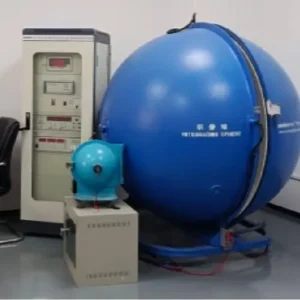
Specify MacAdam Ellipse steps, such as "3-step SDCM," rather than just requesting "consistent color." Provide a reference sample or exact CCT bin code from a major LED chip manufacturer. Always require a sphere test report for every batch to visually verify that the chromaticity coordinates fall within your allowed tolerance.
When we discuss color consistency, the biggest enemy is subjective language UL or CE 3. Terms like "warm white," "nature white," or "pure white" are dangerous because they are interpreted differently across the industry. A "warm white" in one factory might be 2700K (incandescent glow), while another factory interprets it as 3000K (halogen glow) Certificate of Conformity (CoC) 4. Even within the same Kelvin rating, the tint can shift towards green or pink if the "Binning" is not controlled.
The Science of SDCM (Standard Deviation Colour Matching)
To fix this, you must move away from names and start using SDCM (Standard Deviation Colour Matching) steps, also known as MacAdam Ellipses Luminous Efficacy (lm/W) 5. This is the universal language of color tolerance that transcends translation errors.
- 1-Step SDCM: Virtually no visible color difference between LED chips IK Rating (Impact Protection) 6. This is extremely expensive and rare.
- 3-Step SDCM: The industry standard for professional commercial lighting. To the human eye, the light looks consistent.
- 5-Step or 7-Step SDCM: Often found in budget products. You will likely see noticeable color variations between different reels of strip light.
When you send an inquiry, explicitly state: "We require 3-step SDCM for 3000K." This tells the supplier that you are a professional buyer who understands technical quality, and they will likely assign a higher grade of LED chip to your quote.
Visualizing the Chromaticity Coordinates
Do not rely on the text description of a test report. Instead, look at the CIE 1931 Chromaticity Diagram 7 included in the Integrating Sphere Report. Every batch of LEDs has a specific X and Y coordinate.
If you are sourcing for a long-term project with multiple shipments, you must lock in these coordinates. We recommend asking your supplier for their "Bin Code" structure. For example, if your first shipment used Bin Code "30A," your second shipment six months later must also use "30A." If the supplier switches to "30B," the light might still be 3000K, but it will look different next to the old strips.
Vague vs. Precise Terminology
Below is a comparison of how most buyers communicate versus how professional procurers communicate to avoid errors.
| Vague Request (High Risk) | Professional Specification (Low Risk) | Why It Matters |
|---|---|---|
| "I want good color quality." | "CRI > 90, R9 > 50." | High CRI ensures accurate color rendering, especially for red tones (R9). |
| "Make sure the color matches." | "3-step MacAdam Ellipse (SDCM < 3)." | Defines exactly how much color deviation is allowed. |
| "I need 3000K warm white." | "CCT: 3000K ±100K." | Sets a strict numerical tolerance for the color temperature. |
| "Don't use cheap chips." | "LED Chip Brand: San’an or Epistar, Gold Wire Bond." | Specifies the material quality and expected lifespan logic. |
By using the terms in the right-hand column, you eliminate the need for the supplier to "guess" your quality standard. You also protect yourself against "fade" issues later, as higher quality chips and gold wire bonding are critical for long-term stability.
What steps can I take to verify that the technical specifications in the quote match my project’s local standards?
When we quote for Australian or European projects, we often notice buyers overlooking voltage drop limits or fire ratings. Ignoring these local compliance requirements creates significant safety risks and can lead to expensive re-wiring work after installation.
Cross-reference the quoted component certifications, such as UL or CE, directly with the issuing body's database before paying a deposit. Request a line-by-line technical compliance sheet that maps your local regulations, like voltage drop or fire safety classes, against the factory's proposed product specifications.

A common trap in sourcing is assuming that a product sold as "Standard" in China meets the "Standard" in your country. In reality, Chinese domestic standards (GB standards) differ significantly from UL (USA), CE (Europe), or SAA (Australia). A quote that looks cheaper often achieves that price by omitting the specific materials required to meet your local safety codes.
The "Equivalent" Component Trap
Suppliers often use phrases like "UL compliant" or "CE equivalent." These are red flags. "Compliant" means the factory believes it meets the standard but hasn't paid for the testing. "Certified" means a third-party lab has verified it.
For example, in Europe, the ERP (Energy-related Products) directive 8 requires strict energy efficiency labeling. If your supplier quotes a cheap power supply that isn't ERP certified, you cannot legally resell it in the EU. You must ask for the Certificate of Conformity (CoC) and the Test Report.
Action Step: When you receive a certificate PDF, do not just file it. Go to the website of the testing agency (like Intertek, TUV, or SGS) and enter the certificate number. We have seen instances where suppliers photoshop old certificates. Verification is the only way to be sure.
Voltage Drop and Safety margins
Another technical disconnect involves electrical design. In China, shorter cable runs are often assumed during testing. If your project involves long-distance runs (e.g., a hotel facade), you must verify the voltage drop specifications.
Ask your supplier: "What is the maximum run length (max run) before voltage drop exceeds 5%?"
If the supplier cannot answer this or gives a generic answer like "10 meters," they likely haven't tested it. A professional supplier will have a voltage drop chart or calculator.
Compliance Checklist for Major Regions
Use this table to ensure your quote includes the specific technical markings required for your region.
| Region | Key Certification | Critical Technical Spec to Verify | Common misunderstanding |
|---|---|---|---|
| North America (USA/Canada) | UL / ETL (cUL / cETL) | Class 2 Power Supply compliance. | Thinking "CE" is accepted in the US. It is not sufficient for electrical safety. |
| Europe (EU) | CE (LVD + EMC), RoHS | ERP Energy Efficiency Class. | Assuming all "CE" marks are real. Check if it's self-declared or TUV/SGS issued. |
| Australia | RCM / SAA | Plug and cable safety tests. | Ignoring specific Australian plug standards and using generic CN/US plugs with adapters. |
| Global Projects | CB Scheme | Universal safety test reports. | Believing CB is a certification mark. It is a test report used to get local marks. |
Fire Ratings and PCB Material
For commercial projects, fire rating is non-negotiable. The FR-4 PCB material is standard for rigid boards, but for LED strips, the FPCB (flexible printed circuit board) material matters.
Ask: "Is the PCB material UL 94 V-0 rated?"
V-0 means the material stops burning within 10 seconds on a vertical specimen. If the supplier doesn't know what V-0 is, their product likely poses a fire risk in plenum spaces.
How do I communicate my custom PCB design and brightness needs to avoid errors during the prototyping phase?
Our engineering team often struggles when clients describe brightness simply as "very bright" without specifying lumens per meter. This lack of clarity forces us to guess your requirements, which frequently leads to multiple rounds of revisions and delays.
Submit vector-based Gerber files for PCB layouts instead of PDF sketches to ensure exact circuit paths. Define brightness using "lumens per meter" and "lumens per watt" with a defined tolerance. Create a single "Golden Sample" prototype for final approval before mass production begins.

In custom manufacturing, English is not the primary language—Mathematics is. When you rely on adjectives like "super bright" or "heavy duty," you are inviting error. To a factory producing streetlights, 1000 lumens is dim. To a factory producing under-cabinet lighting, 1000 lumens is blinding.
The Power of Gerber Files
If you are customizing the circuit board (PCB)—for example, to change the cut intervals or increase the copper thickness—never send a drawing in PDF or JPG. These formats are static images.
You must send Gerber files. This is the universal file format for PCB manufacturing. It tells the machine exactly where to place the copper, the solder mask, and the silk screen text.
If you don't have an engineer to create Gerber files 9, ask the supplier: "Can you create the Gerber file based on my requirements and send it to me for approval?"
Reviewing the Gerber file layout is the only way to catch errors like incorrect resistor placement or cut points that don't match your installation needs.
Defining Brightness Mathematically
Brightness is a function of current, efficiency, and heat. To communicate this accurately, you need to specify three things:
- Luminous Flux (lm/m): The total light output. E.g., "1200 lm/m".
- Power Consumption (W/m): How much energy it uses. E.g., "14.4 W/m".
- Luminous Efficacy (lm/W): How efficient the chip is. E.g., "1200 lm / 14.4 W = 83 lm/W".
If you only ask for "high brightness," a supplier might overdrive the LEDs (pump more current through them). This makes the light bright initially but generates excessive heat, causing the light to dim (depreciate) quickly over time. By specifying the efficiency (lm/W), you force the supplier to use better quality chips rather than just more current.
PCB Physical Specifications
The physical construction of the strip affects its ability to handle heat and current. A common way suppliers cut costs is by using thinner copper.
- 2oz (Ounce) Copper: Recommended for high-power or long-run strips. It conducts heat better and reduces voltage drop.
- 1oz Copper: Standard for low-power, cheap strips.
If you don't specify, you will get 1oz.
Specification Checklist for Custom Prototyping
Use this table to fill in your "Requirements Sheet" before asking for a sample.
| Feature | Measurement Unit | Recommended Spec (High Quality) |
|---|---|---|
| PCB Copper Thickness | Ounces (oz) | 2oz Double-sided Rolled Copper (Better flexibility & heat dissipation). |
| PCB Width | Millimeters (mm) | 10mm or 12mm (Wider = better heat management). |
| Brightness | Lumens/meter (lm/m) | Specific value ±10% tolerance (e.g., 1000lm ±100lm). |
| Current Control | Component Type | Constant Current ICs (Ensures same brightness at both ends of the strip). |
| Adhesive Tape | Brand / Model | 3M 300LSE or 3M VHB (Red). Generic blue tape often falls off. |
By defining these parameters, you remove the "guessing game" from the prototyping phase.
Which technical test reports should I request to confirm the waterproof ratings and long-term durability of my order?
We frequently test "waterproof" strips that fail because buyers did not specify the context for the IP rating. Without defining the chemical environment or installation depth, your outdoor lighting might turn yellow or short-circuit within months.
Demand an IP rating test report from an accredited third-party lab, specifically checking for IP65 or IP67 based on your installation environment. Request LM-80 data for the LED chips to verify long-term lumen maintenance. Ask for a salt spray test report if your project is near coastal areas to ensure corrosion resistance.

Waterproofing is one of the most misunderstood areas in technical sourcing. A supplier will say "Yes, it is waterproof," but they might mean "Splash Proof" (IP54) while you need "Submersible" (IP68). Furthermore, the material used for waterproofing is just as important as the rating itself.
Beyond the IP Number: Glue Chemistry
If you are sourcing waterproof products (like outdoor neon flex or garden lights), you must specify the glue material.
- Epoxy Glue: Cheap. Turns yellow and cracks under sunlight (UV) within 3-6 months. Avoid this for outdoor use.
- PU (Polyurethane): Better transparency but can still yellow over 1-2 years. Good for indoor wet areas (kitchens/bathrooms).
- Silicone: The gold standard. Resists UV radiation, remains flexible in freezing temperatures, and does not yellow.
When communicating, do not just ask for "IP67." Ask for: "IP67 Silicone Extrusion." This technical distinction ensures you get a product that lasts years, not months.
Long-term Reliability: LM-80 and TM-21
How do you know the light won't go dim in a year? You cannot test this yourself without waiting a year. Instead, you rely on the LM-80 report.
This is a standard test where LED chips are run for 6,000 to 10,000 hours, and their brightness decay is measured.
Based on LM-80 data, a TM-21 calculation predicts the total lifespan (L70—the time it takes for light to drop to 70% of initial brightness).
Ask your supplier: "Please provide the LM-80 report 10 for the specific LED chip used in this strip."
If they cannot provide it, they may be using inferior chips from an unknown manufacturer.
Environmental Stress Testing
If your project is near the ocean or in a harsh environment, standard tests aren't enough. You need to verify corrosion resistance.
- Salt Spray Test: Essential for coastal projects. Verifies that metal connectors and the PCB won't rust.
- IK Rating (Impact Protection): Essential for in-ground lights. Verifies that the light can withstand being stepped on or hit.
Report Request Checklist
When finalizing your order, attach this checklist to your Purchase Order (PO) to ensure all durability claims are backed by data.
| Test Report Name | Purpose | When to Request It |
|---|---|---|
| IP Rating Report | Verifies dust and water tightness (e.g., IP65, IP67). | Any outdoor or bathroom application. |
| LM-80 / TM-21 | Verifies lifespan and lumen depreciation. | Projects requiring a warranty > 3 years. |
| Salt Spray Test | Verifies resistance to salt and corrosion. | Seaside resorts, boats, or marine applications. |
| UV Aging Test | Verifies resistance to yellowing/cracking. | Outdoor projects exposed to direct sunlight. |
| Thermal Test | Verifies heat dissipation capabilities. | High-power products (>15W/m) or enclosed installations. |
By requiring these specific technical documents, you signal that you are verifying quality scientifically, not just visually.
Conclusion
Avoiding technical misunderstandings when sourcing from China is rarely about fixing "broken English"; it is about fixing broken specifications. By switching from vague adjectives to precise units, demanding vector files over sketches, and verifying claims with standardized test reports, you eliminate the gray areas where errors hide. Precision is the only language that translates perfectly.
Footnotes
- Explains both Color Rendering Index (CRI) and Standard Deviation Color Matching (SDCM) and their relationship. ↩︎
- Replaced with an article explaining SDCM and MacAdam Ellipses from a lighting manufacturer. ↩︎
- Explains the key differences and purposes of UL and CE product safety certifications. ↩︎
- Replaced with an article from ECQA explaining the Certificate of Conformity. ↩︎
- Replaced with the Wikipedia page on Luminous Efficacy, an authoritative source. ↩︎
- Describes the international standard for protection of electrical enclosures against mechanical impacts. ↩︎
- Provides a foundational understanding of the universal color space for color tolerance. ↩︎
- Defines the EU directive for energy efficiency of products and its impact. ↩︎
- Describes the standard file format essential for Printed Circuit Board (PCB) manufacturing. ↩︎
- Explains the standard test for measuring LED lumen maintenance and color shift over time. ↩︎