In our years of supplying lighting lighting industry 1 to strict markets like Australia and Germany, we often see project specifications Australia and Germany 2 that ignore photobiological safety until the final inspection. Our engineering team prioritizes this during the design phase to avoid costly replacements later.
To ask suppliers about blue light hazard ratings, you must explicitly request the IEC 62471 Photobiological Safety Test Report and confirm the Risk Group (RG) classification Age-related Macular Degeneration 3. Ask specifically if the COB strip is rated RG0 (Exempt) or RG1 (Low Risk), and demand the Spectral Power Distribution (SPD) graph to verify the blue light peak relative to the total spectrum.
Here is how you can navigate these technical conversations and ensure your lighting projects remain safe and compliant.
Which specific photobiological safety standards should I request from my LED supplier?
When we prepare documentation for our European European clients 4 clients, we find that vague safety claims like "eye-safe" are never enough for compliance officers. We always provide accredited test data to back up our specifications.
You should specifically request the full IEC/EN 62471 test report, which is the international standard for the photobiological safety of lamps and lamp systems. This document evaluates the Blue Light Hazard (BLH) specifically for retinal damage and classifies the product into a safety risk group based on exposure limits.

Understanding the IEC 62471 Standard
The lighting industry relies on IEC 62471 (or its European equivalent, EN 62471) as the gold standard for photobiological safety. Unlike standard CE or UL certifications which focus on electrical safety and fire prevention, this standard looks strictly at how light interacts with human tissue, particularly the skin and eyes.
When you are sourcing COB (Chip on Board) strips, the high density of the chips creates a continuous Chip on Board 5 line of light. This is visually appealing, but it concentrates the light energy. If a supplier simply sends you a CE certificate, they have not answered your question. You need the specific report that details the Retinal Blue Light Hazard (LB).
The Critical Difference Between Chip and Strip Testing
One common issue we encounter in the supply chain is manufacturers providing a test report supply chain 6 for the LED chip rather than the finished COB strip. This is misleading.
- Component Level: The individual diode might be tested at a low current.
- System Level: The finished COB strip packs hundreds of these diodes per meter, often driven at higher currents.
The cumulative radiance of a [COB strip ](https://glowinled.com/cob-led-strip "COB strip ")is significantly higher than a single SMD chip. Therefore, you must insist that the standard applied (IEC 62471) was tested on the finished product assembly, not just the raw component.
Key Data Points to Look For
When you receive the standard report, do not just look at the "Pass" stamp. You need to look for specific values in the technical data tables.
| Parameter | What it Measures | Why it Matters for COB Strips |
|---|---|---|
| Spectral Irradiance ($E_\lambda$) | Power per unit area per wavelength. | Shows the intensity of the blue peak (400-500nm). |
| Blue Light Weighted Radiance ($L_B$) | Radiance weighted by the blue light hazard function. | This is the core metric determining the risk group. |
| Maximum Permissible Exposure (MPE) | The maximum time a human can look at the light safely. | Determines if the light is safe for continuous use. |
If your supplier cannot provide a report containing these specific metrics under the IEC 62471 standard, they likely have not performed the necessary testing for photobiological safety.
How do I interpret the Risk Group classifications on a COB strip datasheet?
I often walk our distributors through datasheets where the "safety" section is buried in fine print or misunderstood. In our internal quality control, we automatically reject any batch that exceeds specific risk thresholds for indoor use.
You interpret the classifications by checking if the product is RG0 (Exempt), meaning no risk, or RG1 (Low Risk), which is safe for normal usage. You must reject any COB strips classified as RG2 (Moderate Risk) or RG3 (High Risk) for general lighting, as these pose genuine hazards to the retina within short exposure times.

Decoding the Risk Groups (RG)
The IEC 62471 standard categorizes light sources into four distinct Risk Groups. Understanding these is vital because COB strips, due to their phosphor coating, can sometimes mask the intensity of the blue pump diode underneath.
RG0: Exempt Group
This is the gold standard for residential and commercial lighting.
- Definition: No photobiological hazard.
- Exposure Time: Safe for more than 10,000 seconds (essentially unlimited).
- Application: Ideal for nurseries, schools, and homes.
RG1: Low Risk Group
This is acceptable for most general lighting applications but requires awareness.
- Definition: No hazard due to normal behavioral limitations on exposure.
- Exposure Time: Safe for 100 to 10,000 seconds.
- Context: The natural aversion response (blinking or looking away) protects the eye. Most standard commercial LED strips fall here.
RG2: Moderate Risk Group
- Definition: Does not pose a hazard due to the aversion response to bright light or thermal discomfort.
- Exposure Time: Safe for only 0.25 to 100 seconds.
- Warning: These usually require warning labels. We do not recommend these for spaces where people might stare at the light source, even indirectly.
The COB Strip Nuance
With COB technology, the phosphor layer (the yellow strip you see) converts the blue light from the underlying diode into white light.
- High CCT (Cool White, 6000K+): These have a thinner phosphor layer or a different chemical composition, allowing more blue light to "leak" through. These are more likely to push into RG1 or borderline RG2.
- Low CCT (Warm White, 2700K): These have thicker phosphor densities, absorbing more blue light. These are almost always RG0.
Exposure Time Reference Table
To help you visualize the danger, here is a breakdown of how long it takes for potential damage to occur based on the classification.
| Risk Group | Classification | Safe Exposure Time ($t_{max}$) | Typical Application Suitability |
|---|---|---|---|
| Exempt (RG0) | No Risk | $> 10,000$ seconds (Unlimited) | Hospitals, Schools, Homes, Reading Lights |
| Group 1 (RG1) | Low Risk | $100 - 10,000$ seconds | Offices, Retail, Industrial General Lighting |
| Group 2 (RG2) | Moderate Risk | $0.25 - 100$ seconds | Stage Lighting, Specialized Spotlights (Requires Labeling) |
| Group 3 (RG3) | High Risk | $< 0.25$ seconds | Industrial Lasers, Searchlights (Professional Use Only) |
When reviewing a datasheet, if you see "RG2" on a strip intended for under-cabinet kitchen lighting, it is a design failure. The light source is too intense for that proximity to the user's eyes.
Why is verifying blue light hazard ratings critical for my sensitive lighting projects?
Our team treats every inquiry for school or hospital lighting with extreme caution, often double-checking spectral data before quoting. We know that installing high-blue-light fixtures in these environments can lead to immediate client complaints and potential retrofits.
Verifying blue light hazard ratings is critical because high-energy blue light (400-450nm) causes photochemical damage to the retina and disrupts circadian rhythms. In sensitive projects like schools, hospitals, or art galleries, failing to verify RG ratings can lead to occupant eye strain, sleep disruption, and potential legal liability for the installer.

The "Blue Pump" and Retinal Safety
White LEDs do not naturally emit white light. They use a blue LED pump coated with phosphor. If the phosphor coating on a COB strip is uneven or of poor quality—common in budget manufacturing—significant spikes of blue light can escape.
This high-energy visible (HEV) light penetrates deep into the eye, reaching the retina. high-energy visible (HEV) light 7 Over time, excessive exposure can accelerate accelerate Age-related Macular Degeneration 8 Age-related Macular Degeneration (AMD). In sensitive populations, such as children (whose lenses are clearer and filter less blue light) or the elderly, this risk is amplified.
Circadian Rhythm Disruption
Beyond physical damage, blue light regulates our sleep-wake cycle.
- Melanopic Ratio: This measures how much a light source suppresses melatonin.
- The Problem: A generic "4000K" COB strip might look neutral white but have a massive spike at 450nm (blue). This tells the brain it is noon, even if it is 9 PM.
For projects like hospitals (recovery wards) or residential aged care, verifying the BLH rating often correlates with checking the Melanopic/Photopic (M/P) ratio. You want light that is visually bright (Photopic) but biologically low-impact (Melanopic) for evening use.
Project Liability and Longevity
From a contractor's perspective, installing unverified strips is a liability time bomb.
- Material Degradation: High blue light emission is essentially high-energy radiation. It can degrade organic materials. In museums or retail displays with delicate fabrics, unverified LEDs can cause fading faster than expected.
- Compliance Checks: As regulations tighten (especially in the EU and Australia), building inspectors are becoming more savvy. regulations tighten 9 Being unable to produce an RG0 certificate for a kindergarten project could stall the handover.
Health-Centric Lighting Checklist
When working on sensitive projects, use this checklist to ensure you are protecting the end-users:
- Spectrum Check: Does the SPD graph show a suppressed peak in the 415-455nm range?
- CCT Selection: Are you prioritizing 3000K or lower for evening/residential zones?
- Certification: Is the product certified RG0 explicitly?
- Flicker: While different from blue light, high flicker + high blue light is a recipe for migraines.
How can I confirm that the factory's blue light test reports are genuine?
We regularly audit our own supply chain for raw components, and I have seen my fair share raw components 10 of "photocopy engineering" where suppliers alter dates on old PDF reports. It is vital to look for specific markers of authenticity before approving a supplier.
You can confirm a report is genuine by verifying it was issued by an accredited third-party lab (like TUV, SGS, or Intertek) rather than the factory itself. Cross-reference the report number on the laboratory's public database, check that the tested model strictly matches your product, and ensure the testing date is recent enough to account for material changes.
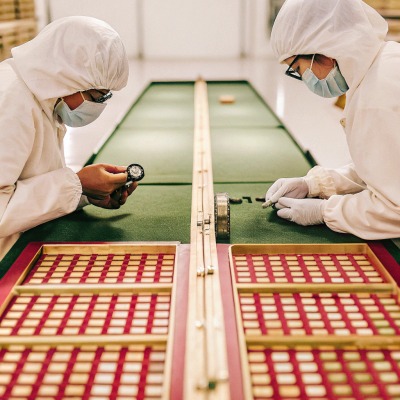
Third-Party Accreditation vs. In-House Testing
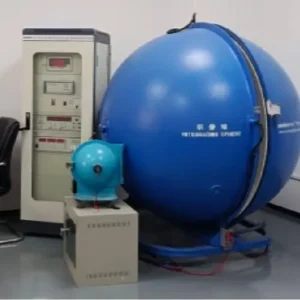
Many LED factories in Shenzhen have their own integrating spheres. While good for internal quality control, these internal reports are not sufficient for compliance verification.
- In-House Report: Good for quick checks, but biased. Often lacks the precise equipment to measure spectral radiance ($W \cdot m^{-2} \cdot sr^{-1}$) accurately.
- CNAS/ILAC Accredited Report: These come from labs that are audited. They carry the ILAC-MRA mark. This is what you need.
The "Golden Sample" Trap
A common trick in the industry is the "Golden Sample." A factory might send a high-spec, thick-phosphor COB strip to the lab to get an RG0 rating. However, the mass production run might use a cheaper phosphor mix that leaks more blue light.
How to spot this:
- Compare Electrical Specs: Does the test report show a forward current ($I_F$) of 500mA, but you are buying a strip driven at 1000mA? Overdriving an LED shifts the spectrum and increases blue intensity.
- Compare Efficacy: If the production strip is significantly brighter (higher lumens/watt) than the tested sample, they may have reduced the phosphor density to boost brightness at the cost of safety.
Verification Steps: A Practical Guide
Don't just file the PDF away. Perform these checks:
| Step | Action | Red Flag |
|---|---|---|
| 1. Database Check | Go to the website of the issuing lab (e.g., TUV Rheinland Certipedia) and type in the certificate number. | Report number "not found" or belongs to a different company. |
| 2. Model Matching | Check the "Product Description" section of the report. | The report is for a "2835 SMD Strip" but you are buying a "COB Strip." |
| 3. Spectral Graph | Look at the SPD graph on the last pages. | The graph looks pixelated or copied from a different document; no raw data tables. |
| 4. Date Check | Check the date of issue. | Report is >3 years old. LED technology changes fast; old reports don't cover new chip iterations. |
Asking the Hard Questions
When you challenge a supplier, their reaction tells you everything.
- Bad Supplier: "Don't worry, it is standard." / "We can buy the certificate for you."
- Good Supplier: "Here is the report for the 4000K model. Since you are ordering 6000K, the blue peak will be higher. We can arrange a new test for your specific batch if the order volume supports it."
Conclusion
Asking about blue light hazard ratings is not just about ticking a compliance box; it is about ensuring the long-term safety and comfort of the people living and working under your lights. By demanding IEC 62471 RG0/RG1 reports, analyzing the Spectral Power Distribution, and verifying the authenticity of third-party testing, you filter out low-quality suppliers and position yourself as a responsible, high-end lighting professional.
Footnotes
- General reference for the industry context of the safety standards discussed. ↩︎
- Provides geographical context for the strict lighting markets mentioned in the introduction. ↩︎
- WHO fact sheet detailing the medical condition linked to excessive blue light exposure. ↩︎
- Contextual link for the regulatory environment of the European market mentioned. ↩︎
- Technical definition of the COB technology which is the primary subject of the article. ↩︎
- Reference to international standards for supply chain management and quality control. ↩︎
- Technical term for the specific spectrum of blue light that poses a retinal hazard. ↩︎
- References the medical condition mentioned. ↩︎
- Reference for the general concept of regulatory compliance and environmental health standards. ↩︎
- ISO standards reference for the quality control of raw materials in manufacturing. ↩︎