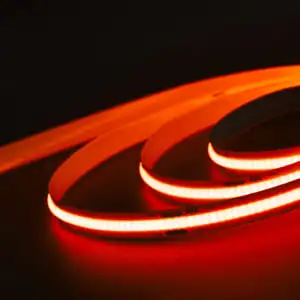
Every week, our production team fields calls from frustrated lighting designers who thought they ordered high-CRI LED strips 1—only to discover the reds looked washed out and lifeless once installed. The problem is almost never the overall CRI score. It's the R9 value 2 hiding behind it.
To check specific parameters for high R9 red light CRI projects, request the full extended color rendering index report (R1–R15) from your supplier, not just the Ra average. Verify R9 independently using a spectrophotometer, and cross-reference the spectral power distribution to ensure strong output above 600 nm wavelengths.
This guide breaks down exactly what to look for, how to read test reports, and how to avoid the most common traps when sourcing LED strips for color-critical projects integrating sphere and spectroradiometer 3. Let's walk through each step.
How can I verify the R9 test reports to ensure my project meets strict color rendering standards?
We have seen dozens of test reports cross our desks from competing factories, and the single biggest red flag is when a supplier only provides the Ra value without breaking out R9 separately.
To verify R9 test reports, demand the full R1–R15 color rendering data from your supplier, confirm testing was performed with a calibrated integrating sphere and spectroradiometer, check that the reported CCT matches your order spec, and compare R9 values against the TCS9 saturated red test color sample.
Understanding Ra vs. R9
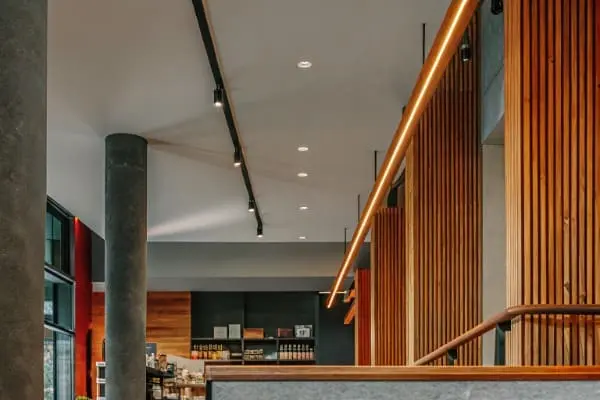
The general CRI score—commonly called Ra—is the arithmetic average of only the first eight test color samples (R1 through R8). These are all pastel, desaturated shades. R9, which measures deep saturated red, is not included in that average. This means a product can score Ra 95 while its R9 sits below 20. That is a real scenario we encounter regularly.
When you receive a test report, look for a table or chart that lists each individual R value. If the report only shows "CRI: 92" with no breakdown, send it back and ask for the complete data.
What a Proper Test Report Should Include
A credible test report from a qualified lab will contain at minimum:
| Report Element | What to Look For | Why It Matters |
|---|---|---|
| Ra (General CRI) | 90+ for high-end projects | Baseline quality indicator |
| R9 (Saturated Red) | 50+ good; 90+ excellent | Directly measures red accuracy |
| R13 (Skin Tone) | 90+ for retail/hospitality | Affects how people look under the light |
| CCT (Correlated Color Temperature) | Match to your spec (e.g., 3000K) | R9 values shift with CCT |
| Spectral Power Distribution 4 (SPD) Graph | Strong presence above 600 nm | Confirms red wavelength energy |
| Test Equipment Model | Calibrated spectroradiometer or integrating sphere | Validates measurement accuracy |
How to Cross-Check the Numbers
If your supplier provides a report and you want to verify it independently, here is a practical approach. First, request physical samples from the same production batch referenced in the report. Second, test those samples yourself using a handheld spectrophotometer 5—devices from Sekonic, UPRtek, or Lighting Passport are popular in the industry. Third, compare your measured R9 to the supplier's claimed R9. A tolerance of ±3 points is acceptable. Anything beyond that indicates either the report was generated from cherry-picked samples or a different batch entirely.
Also pay attention to the CCT. If you ordered 3000K strips but the report shows testing at 4000K, the R9 number is meaningless for your project. R9 performance varies with color temperature, and many LED phosphor blends perform better at warmer CCTs.
Watch Out for TM-30 as a Complement
While CRI and R9 remain the industry standard for specifications, the newer IES TM-30 metric 6 provides a more comprehensive picture. TM-30 uses 99 color evaluation samples instead of just 8 or 15. It produces two key numbers: Rf (Fidelity Index) and Rg (Gamut Index), plus a Color Vector Graphic that shows exactly how each hue shifts. For red-critical projects, the TM-30 color vector graphic can reveal whether reds are being desaturated, shifted toward orange, or over-saturated—details that R9 alone cannot convey.
Our recommendation: use R9 as your primary filter, and request TM-30 data as a secondary verification when the project demands absolute precision.
Why should I prioritize high R9 values over standard CRI for my high-end retail lighting installations?
When our team works with retail lighting designers in Germany and Australia, the conversation always comes back to one thing: how do products look under the light?
High R9 values should be prioritized over standard CRI for retail because saturated reds dominate the visual experience in clothing, food displays, cosmetics, and skin tones. A low R9 makes merchandise appear dull and customers look pale, directly reducing perceived product value and purchase intent.
The Red Problem in Retail
Red is everywhere in retail environments. Fresh meat, ripe fruit, red wine labels, warm-toned clothing, lipstick displays, wooden furniture—all of these contain significant red spectral content. When your lighting has a weak R9, these items lose vibrancy. Meat looks grey. Skin looks sallow. Red fabrics appear muddy brown.
Standard CRI (Ra) cannot catch this problem because it tests against eight pastel references. The saturated red test sample, TCS9, has its reflectance concentrated almost entirely above 600 nm. If the LED's spectral power distribution drops off sharply in the deep red region, R9 collapses even while Ra stays high.
Real-World Impact on Sales
Multiple studies in retail lighting have shown that customers spend more time in spaces where color rendering feels natural and appealing. While it is hard to isolate R9 as the single variable, lighting consultants consistently report that switching from Ra 90/R9 30 to Ra 95/R9 90+ improves subjective assessments of product quality.
Here is a comparison that illustrates what different R9 levels mean in practice:
| R9 Range | Visual Effect on Reds | Typical Application Suitability |
|---|---|---|
| Below 0 (negative) | Reds appear grey or greenish | Industrial, parking garages only |
| 0–25 | Reds are noticeably dull | General office, warehouses |
| 25–50 | Reds are acceptable but flat | Standard retail, general commercial |
| 50–75 | Reds appear natural and warm | High-end retail, restaurants |
| 75–90 | Reds are vivid and accurate | Galleries, luxury retail, food display |
| 90+ | Reds are excellent, near-reference | Museums, medical, photography studios |
Skin Tones Depend on R9
This is the detail many people miss. Human skin—regardless of ethnicity—contains hemoglobin 7, which reflects strongly in the red spectrum. When R9 is low, people look unhealthy under the light. In fitting rooms, hospitality lobbies, and beauty counters, this directly impacts the customer experience.
R13 (another extended CRI value representing Caucasian skin tone) is also important, but R9 provides the foundation. Without adequate deep red rendering, even a decent R13 cannot save the overall appearance.
Why Standard CRI Misleads Buyers
The core issue is mathematical. Ra averages eight values. If seven of those are excellent (say, 97 each) and one dips to 85, the average is still around 95. Now imagine R9 sitting at 15 while Ra shows 95. The spec sheet looks perfect. The installation looks terrible.
This is not theoretical. We have tested competitor products claiming Ra 92 where R9 measured only 12. The lesson: always ask for the full data. If a supplier hesitates to share R9, treat that as a warning sign.
How do I maintain consistent red light performance across different batches of my LED strip order?
Batch consistency is one of the toughest challenges in LED manufacturing. On our production line, we have invested heavily in binning protocols and incoming quality inspection specifically because our buyers in Australia and Germany cannot tolerate visible color shifts between rolls.
To maintain consistent R9 performance across batches, specify tight LED chip binning tolerances (2-step or 3-step MacAdam ellipse), require per-reel R9 test data, request single-bin shipments for each project order, and establish an agreed-upon R9 minimum threshold with your supplier in writing before production begins.
Why Batch Variation Happens
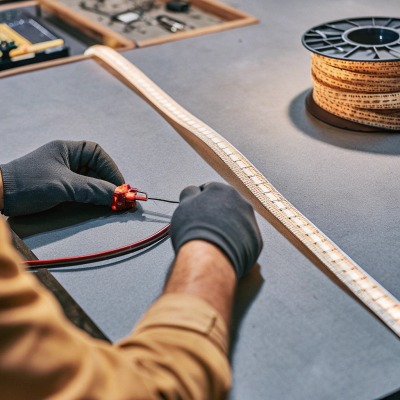
LED chips are manufactured in large wafers, then sorted (binned) by color temperature, forward voltage, luminous flux, and CRI. LED chip binning 8 Even within a single wafer, chips at the center and edge can differ in spectral output. When those chips are mounted onto LED strips, small differences in phosphor coating thickness further shift the spectrum.
The red phosphor component is particularly sensitive. A slight change in phosphor particle size distribution or coating uniformity can swing R9 by 10–20 points without significantly affecting Ra. This is why you can receive two reels that both test Ra 93, but one has R9 of 85 and the other R9 of 62.
Binning and MacAdam Ellipses
MacAdam ellipse 9s define the boundaries of color consistency. A 3-step MacAdam ellipse means that most people cannot see the color difference between any two points within that boundary. For color-critical projects, you want 2-step or tighter.
However, MacAdam ellipses primarily address chromaticity (color point), not R9 directly. You need to pair tight chromaticity binning with an explicit R9 specification. Here is how to structure your requirements:
| Specification | Recommended Threshold | Notes |
|---|---|---|
| MacAdam Ellipse | 2-step or 3-step max | Controls visible color variation |
| Ra (General CRI) | ≥ 95 | Baseline quality floor |
| R9 Minimum | ≥ 80 (project-dependent) | Must be stated separately from Ra |
| CCT Tolerance | ± 100K of target | Tighter = better for R9 consistency |
| Testing Frequency | Per reel or per 5-meter segment | Catch outliers before shipping |
| Phosphor Lot Control | Single lot per order | Prevents phosphor-driven R9 drift |
Practical Steps for Buyers
First, write R9 minimums into your purchase order or supply agreement. Do not assume it is implied by a CRI specification. Second, request that your supplier hold a single LED chip bin and a single phosphor batch for your entire order quantity. This is the single most effective way to minimize R9 variation. Third, ask for sample reels from the beginning, middle, and end of a production run for your own incoming inspection.
If you are ordering large quantities across multiple shipments, establish a retained sample system. We keep sealed reference samples from each batch at our warehouse so that any future complaint can be traced back to a specific production lot.
Long-Term Spectral Stability
LED degradation over thousands of operating hours can cause spectral shifts. The red phosphor component can degrade at a different rate than the green or yellow phosphor, gradually lowering R9 even if initial values were excellent. When selecting LED chips, ask your supplier about L70 and spectral maintenance data. Premium chip manufacturers like Seoul Semiconductor, Nichia, and Lumileds publish this information. Budget chips often do not.
For projects with a 5-year or 10-year performance expectation, choose LED chips with documented spectral stability, not just lumen maintenance.
What technical specifications should I look for when sourcing high R9 LED strips for my architectural design?
When our engineering team sits down with architectural specifiers, we always start with the same question: what does the space need to do? The answer shapes everything from chip selection to driver configuration.
When sourcing high R9 LED strips for architectural projects, look for R9 ≥ 80, Ra ≥ 95, a spectral power distribution with strong output above 600 nm, 2-step MacAdam ellipse binning, documented phosphor technology (multi-phosphor or red LED hybrid), and TM-30 Rf/Rg data as supplementary verification for saturated color accuracy.
The Specification Checklist
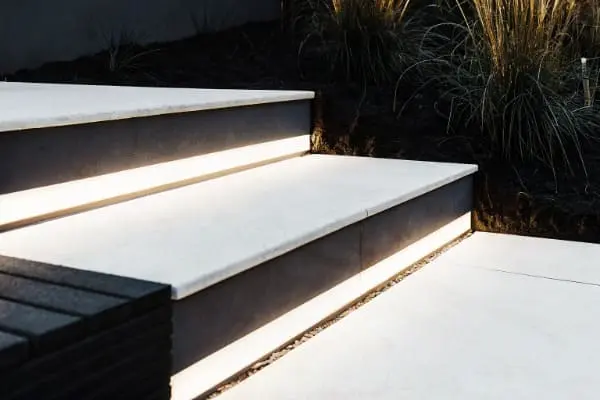
Architectural lighting projects demand more than just a CRI number on a datasheet. Here is a comprehensive checklist we recommend to every specifier and procurement officer:
Optical Parameters:
- Ra ≥ 95 (non-negotiable for premium projects)
- R9 ≥ 80 (≥ 90 for galleries, museums, healthcare)
- R13 ≥ 90 (for spaces where people are the focus)
- CCT options with R9 verified at each temperature
- TM-30 Rf ≥ 90, Rg between 97–103
Electrical and Mechanical:
- Constant current driver compatibility
- Thermal management (aluminum PCB, adequate heatsink profile)
- IP rating appropriate for installation environment
- UL, CE, SAA, or other regional certifications
How LED Chip Technology Affects R9
Not all LED architectures produce high R9 equally. The most common approach uses a blue LED chip coated with yellow and red phosphors. The quality and ratio of the red phosphor directly determines R9 performance.
More advanced solutions add a dedicated deep red LED die (typically around 660 nm) alongside the phosphor-converted white LED. This "hybrid" approach can push R9 above 95 reliably but increases cost and complexity.
Here is a comparison of common LED technologies and their typical R9 capabilities:
| LED Technology | Typical Ra | Typical R9 | Cost Level | Best For |
|---|---|---|---|---|
| Blue chip + yellow phosphor | 70–80 | Negative to 10 | Low | Industrial, basic commercial |
| Blue chip + multi-phosphor (YAG + red nitride) | 90–95 | 40–75 | Medium | General high-CRI retail |
| Blue chip + premium multi-phosphor blend | 95–97 | 80–95 | Medium-High | Architectural, hospitality |
| Blue chip + phosphor + dedicated red LED die | 97–98 | 90–98 | High | Museums, galleries, medical |
| Violet chip + RGB phosphor (full spectrum) | 95–98 | 85–97 | High | Specialty, photography |
CCT and R9 Interaction
This is a critical point that many designers overlook. R9 performance is not constant across color temperatures. Warm white LEDs (2700K–3000K) generally achieve higher R9 values more easily because their spectral power distribution naturally extends further into the red region. As you move toward cooler temperatures (4000K–6500K), maintaining high R9 becomes more difficult and expensive.
If your project specifies tunable white (CCT-adjustable) LED strips, verify R9 at both the warmest and coolest endpoints. Some tunable systems achieve excellent R9 at 2700K but drop below 50 at 5000K.
Beyond the Datasheet: What to Request
When you are at the sourcing stage, do not settle for a generic product datasheet. Request the following from your potential supplier:
- Full R1–R15 data at your specified CCT
- SPD graph showing the spectral curve from 380 nm to 780 nm
- TM-30 Color Vector Graphic if available
- Binning documentation showing the specific bin codes used
- Aging test data demonstrating R9 stability after 3,000+ hours
- Third-party lab certification (not just in-house testing)
If a supplier can provide all six, you are dealing with a serious manufacturer. If they can only provide items 1 and 2, proceed with caution and consider independent testing.
Integration with Control Systems
For architectural projects using DALI, DMX, or 0-10V dimming 10, verify that R9 holds stable across the dimming range. Some LED strips experience spectral shift at low dimming levels due to current reduction affecting different phosphor components unequally. Test at 100%, 50%, and 10% output to confirm.
Conclusion
For any high-R9 project, never accept Ra alone. Always demand the full R1–R15 data, verify R9 independently, control batch consistency through binning specs, and match your LED technology to the project's true color requirements.
Footnotes
- Provides a comprehensive definition of high-CRI LED lighting. ↩︎
- Explains the R9 value's definition and importance for red color reproduction. ↩︎
- Describes how these instruments are used together for accurate light measurement. ↩︎
- Explains how light's power at each wavelength characterizes color. ↩︎
- Defines a spectrophotometer and its use in measuring light intensity. ↩︎
- Introduces an advanced metric for comprehensive color rendering assessment. ↩︎
- Replaced with an authoritative academic source (NIH) providing a definition and explanation of hemoglobin. ↩︎
- Describes the process of sorting LED chips for consistent quality. ↩︎
- Explains a standard for LED color consistency and binning. ↩︎
- Compares common lighting control protocols used in architectural projects. ↩︎
 English
  Spanish
  German
  Russian
  Arabic
  French
  Portuguese